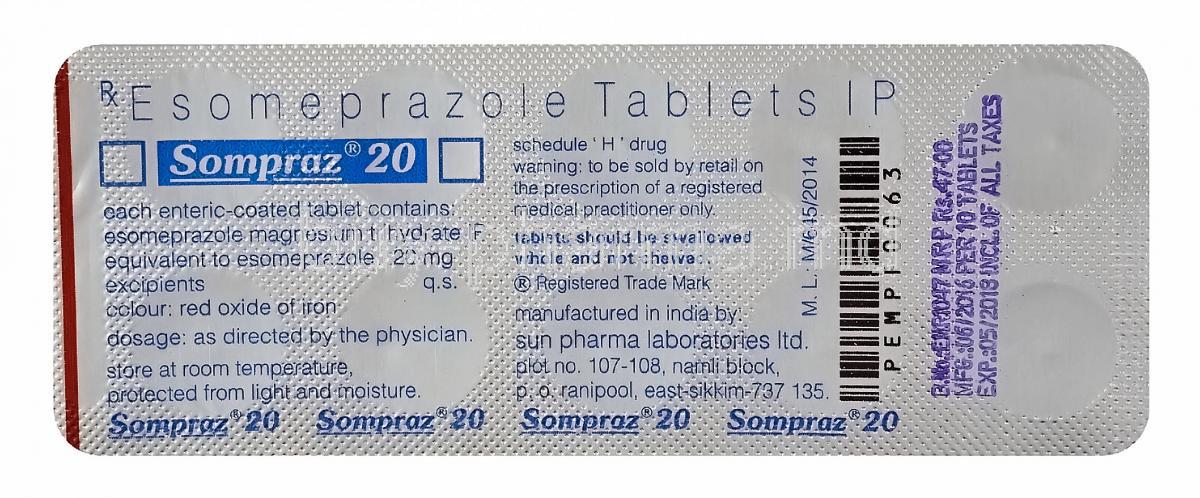
Introduction to Sompraz (Esomeprazole)
Sompraz is a widely prescribed medication belonging to the class of proton pump inhibitors (PPIs). It is primarily utilized to suppress excessive gastric acid secretion, a central pathological factor in numerous acid-related gastrointestinal disorders. Through sustained acid control, Sompraz plays a pivotal role in symptom alleviation, mucosal recovery, and complication prevention.
Therapeutically, Sompraz is positioned as a cornerstone treatment in modern gastroenterology. It is clinically relevant for both short-term symptom control and long-term disease management. Compared with earlier acid-suppressing agents, PPIs demonstrate superior potency and durability of effect.
Esomeprazole, the active component of Sompraz, is the S-isomer of omeprazole. This stereochemical refinement results in improved bioavailability, more consistent acid suppression, and reduced interpatient variability. As a branded and generic formulation, Sompraz is extensively used in the management of acid-related disorders across diverse clinical settings.
Composition and Pharmaceutical Formulation
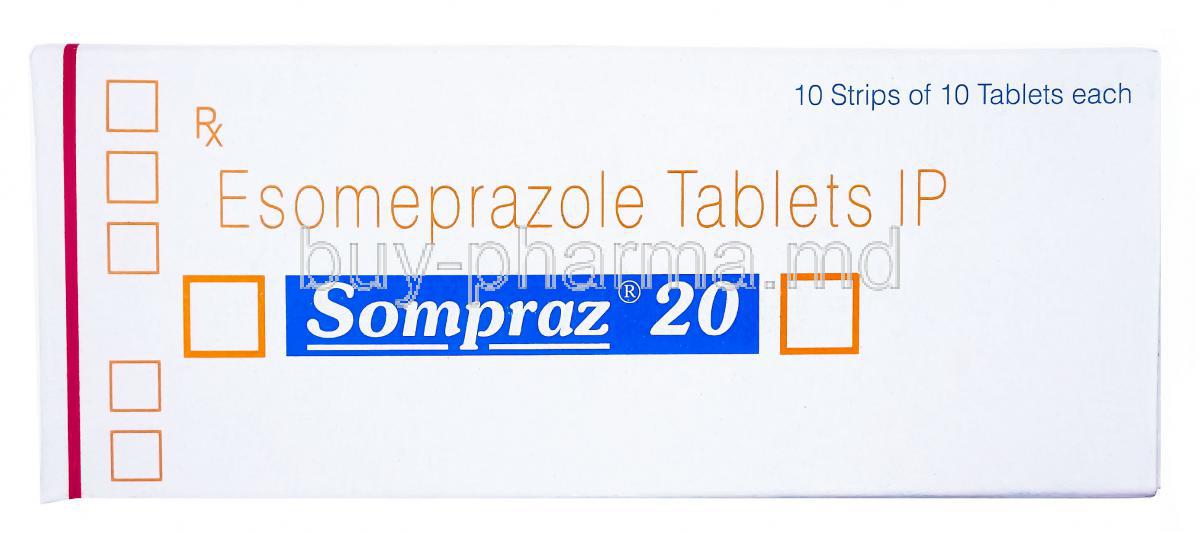
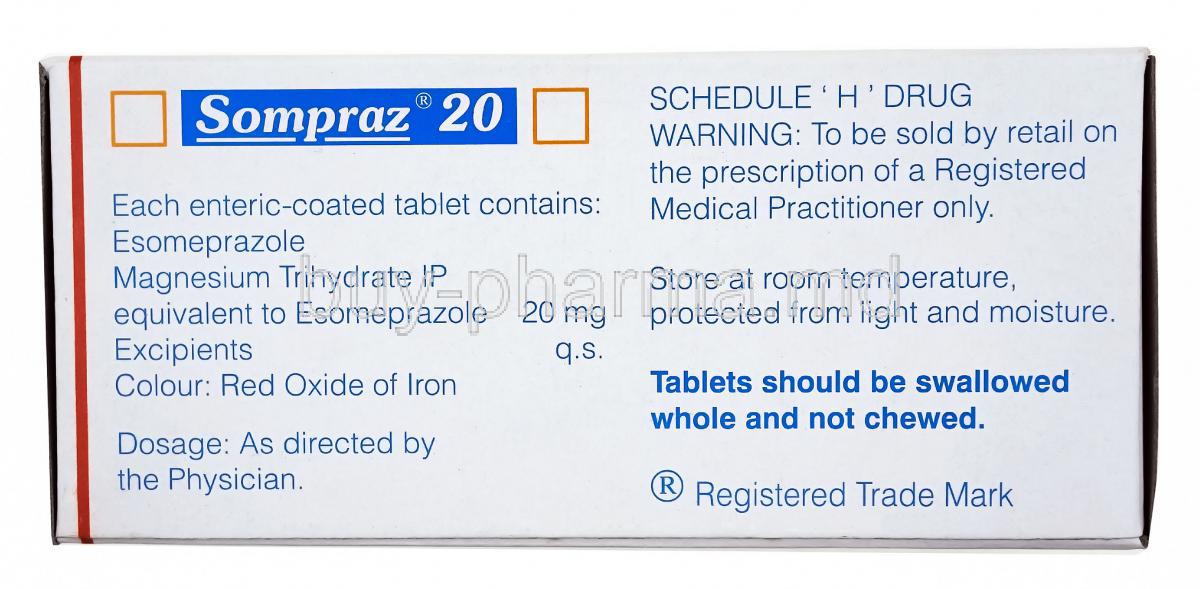
The active ingredient in Sompraz is esomeprazole magnesium, a chemically stable salt designed for oral administration. This compound is engineered to withstand degradation in acidic environments until it reaches its site of absorption.
- Available strengths tailored for mild to severe acid-related conditions
- Oral dosage forms including tablets and capsules
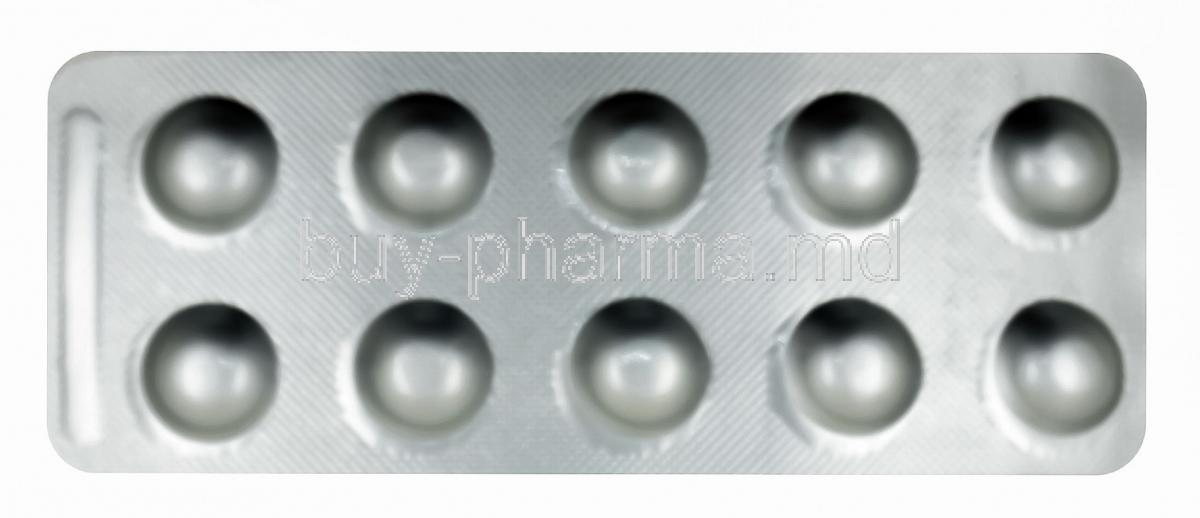
- Enteric-coated technology to ensure targeted drug release
The enteric coating is of particular clinical significance. It prevents premature dissolution in the stomach, allowing the drug to pass intact into the small intestine. Excipients are carefully selected to maintain stability, enhance absorption, and ensure uniform drug delivery.
Esomeprazole magnesium
Esomeprazole is used to treat certain stomach and esophagus problems (such as acid reflux, ulcers). It works by decreasing the amount of acid your stomach makes. It relieves symptoms such as heartburn, difficulty swallowing, and cough.
Esomeprazole vs omeprazole
Esomeprazole (Nexium) and Omeprazole (Prilosec) are both highly effective, similar Proton Pump Inhibitors (PPIs) used for GERD and acid-related conditions. Esomeprazole is a refined version of omeprazole that may offer slightly stronger and more prolonged acid suppression, making it slightly more effective for severe erosive esophagitis, though they share identical, mild side effect profiles.
Pantoprazole vs esomeprazole
Esomeprazole (40 mg40 mg 40 mg) often provides faster, more potent acid suppression and superior healing rates for severe GERD/erosive esophagitis compared to pantoprazole (40 mg40 mg 40 mg). While both are equally effective at relieving symptoms over 4–8 weeks, esomeprazole acts faster, typically within the first 5 days. Pantoprazole is frequently used for its better safety profile and fewer drug interactions.
Famotidine vs esomeprazole
Famotidine (Pepcid) and esomeprazole (Nexium) are both effective for reducing stomach acid, but they serve different needs: famotidine is a fast-acting (within 1 hour) H2 blocker better for immediate, occasional, or nighttime heartburn, while esomeprazole is a stronger, longer-acting PPI for frequent, severe heartburn (GERD), taking 1–4 days for full effect.
How Sompraz (Esomeprazole) Works – Mechanism of Action
Sompraz exerts its therapeutic effect by irreversibly inhibiting the hydrogen-potassium ATPase enzyme system located in gastric parietal cells. This enzyme, commonly referred to as the proton pump, represents the final pathway for acid secretion.
By blocking this mechanism, Sompraz suppresses both basal acid production and acid secretion stimulated by food, histamine, or gastrin. The onset of action typically occurs within hours, while maximal acid suppression is achieved after several consecutive doses.
The pharmacodynamic advantage of esomeprazole lies in its stereoselective metabolism. As the S-isomer, it demonstrates slower hepatic clearance and more predictable plasma concentrations, translating into prolonged and consistent acid control.
Approved Medical Uses of Sompraz (Esomeprazole)
Gastroesophageal Reflux Disease (GERD)
Sompraz is extensively used in the management of GERD. It provides effective relief from hallmark symptoms such as heartburn and acid regurgitation while promoting healing of esophageal mucosal damage.
Both erosive and non-erosive forms of reflux disease benefit from sustained acid suppression, reducing symptom recurrence and improving quality of life.
Peptic Ulcer Disease
In gastric and duodenal ulcer disease, Sompraz facilitates ulcer healing by maintaining an optimal intragastric pH. Acid suppression accelerates tissue regeneration and mitigates ulcer-related pain.
Long-term therapy may also reduce the risk of ulcer recurrence, particularly in patients with ongoing risk factors.
Zollinger–Ellison Syndrome
Sompraz is indicated for the control of pathological hypersecretion of gastric acid in Zollinger–Ellison syndrome. High-dose regimens are often required to counteract excessive gastrin-mediated acid production.
NSAID-Associated Ulcer Prevention
For patients requiring prolonged nonsteroidal anti-inflammatory drug therapy, Sompraz provides prophylactic gastric protection. It significantly lowers the incidence of NSAID-induced ulcers and related complications.
Helicobacter pylori Eradication Therapy
Sompraz is an integral component of combination regimens for Helicobacter pylori eradication. By elevating gastric pH, it enhances the efficacy of co-administered antibiotics.
Off-Label Uses of Esomeprazole
Beyond its approved indications, esomeprazole is employed in several off-label clinical scenarios. These include functional dyspepsia, where symptom relief is achieved through acid modulation.
Additional applications include laryngopharyngeal reflux, stress ulcer prophylaxis in high-risk patients, and adjunctive therapy in Barrett’s esophagus. In selected cases, esomeprazole is used to reduce the risk of upper gastrointestinal bleeding.
Dosage and Administration Guidelines
Esomeprazole dosage
Dosage varies according to the underlying condition.
Adults—40 milligrams (mg) 2 times a day. Your doctor may adjust your dose as needed. ·
Children—Use and dose must be determined by your doctor.
GERD and uncomplicated ulcers are typically managed with once-daily dosing, while severe or refractory conditions may necessitate higher or divided doses.
The duration of therapy is indication-specific and may range from short-term courses to extended maintenance treatment.
Timing of Administration
Optimal efficacy is achieved when Sompraz is taken before meals, preferably in the morning. This timing aligns peak plasma concentrations with maximal proton pump activity.
Depending on disease severity, regimens may involve once-daily or twice-daily administration.
Missed Dose and Dose Adjustment
If a dose is missed, it should be taken as soon as remembered unless the next scheduled dose is imminent. Doubling doses is generally discouraged.
In patients with persistent symptoms, dose escalation or extended therapy may be considered under medical supervision.
Administration in Special Populations
Administration to Elderly Patients
Elderly individuals may exhibit increased sensitivity to prolonged acid suppression. While standard dosing is often appropriate, careful monitoring is recommended due to long-term safety considerations.
Administration to Pregnant Women
Available data suggest a favorable safety profile during pregnancy. However, treatment decisions should be based on a thorough risk-benefit assessment.
Administration to Nursing Mothers
Esomeprazole may be excreted into breast milk in small quantities. Clinical judgment is required to balance maternal benefit against potential infant exposure.
Administration to Children
Pediatric use is indicated for specific acid-related disorders. Age-appropriate dosing and careful assessment of safety and efficacy are essential.
Esomeprazole Side Effects
Common Side Effects
- Headache
- Abdominal discomfort
- Nausea and diarrhea
- Flatulence and constipation
Less Common and Rare Side Effects
Occasionally, patients may experience dermatological reactions, dizziness, or fatigue. Electrolyte imbalances, though uncommon, have been reported.
Long-Term Side Effects
Extended use has been associated with vitamin B12 deficiency, hypomagnesemia, and an increased risk of bone fractures. There is also a heightened susceptibility to certain gastrointestinal infections due to sustained acid suppression.
Esomeprazole Interactions
Sompraz may interact with medications metabolized via the CYP2C19 pathway, potentially altering their plasma concentrations. Notably, it can reduce the antiplatelet activity of clopidogrel.
Drugs requiring an acidic gastric environment for absorption, including certain antifungals and antivirals, may exhibit reduced efficacy. Careful evaluation of concomitant therapy is advised to minimize clinically significant interactions.
Warnings and Safety Information
Sompraz (esomeprazole) should be used with clinical vigilance, particularly in patients presenting with alarm symptoms. Suppression of gastric acid can attenuate hallmark signs of serious gastrointestinal pathology.
Risk of Masking Underlying Gastric Malignancy
Symptomatic improvement following acid suppression does not exclude the presence of gastric or esophageal malignancy. Delayed diagnosis may occur if persistent or progressive symptoms are not appropriately investigated.
- Unexplained weight loss
- Persistent vomiting
- Dysphagia or gastrointestinal bleeding
Long-Term PPI Use Warnings
Prolonged use of proton pump inhibitors has been associated with systemic effects extending beyond gastric acid control. These risks tend to increase with duration and cumulative exposure.
Risk of Clostridioides difficile-Associated Diarrhea
Reduction of gastric acidity may facilitate bacterial colonization. Cases of Clostridioides difficile-associated diarrhea have been reported, particularly in hospitalized or immunocompromised individuals.
Monitoring Recommendations During Prolonged Therapy
Patients requiring extended therapy should undergo periodic clinical review. Laboratory monitoring may be warranted to assess electrolyte balance, micronutrient status, and bone health.
Contraindications
Sompraz is contraindicated in specific clinical scenarios where its use may result in adverse outcomes.
Known Hypersensitivity to Esomeprazole or Other PPIs
Patients with a documented history of hypersensitivity reactions, including anaphylaxis, angioedema, or severe cutaneous reactions, should not receive esomeprazole.
Use With Contraindicated Interacting Medications
Concomitant administration with certain drugs may result in clinically significant interactions. These include medications whose absorption or activation is critically dependent on gastric acidity or CYP2C19 metabolism.
Specific Hereditary Conditions Related to Excipients
Individuals with rare hereditary disorders such as fructose intolerance or glucose-galactose malabsorption should avoid formulations containing incompatible excipients.
Careful Administration and Important Precautions
Use in Patients With Liver Impairment
Esomeprazole undergoes hepatic metabolism. In patients with moderate to severe hepatic dysfunction, dose adjustment or enhanced monitoring may be required to prevent drug accumulation.
Monitoring in Patients With Osteoporosis Risk
Long-term acid suppression has been associated with decreased calcium absorption. Patients at risk of osteoporosis should be monitored for bone mineral density changes.
Avoidance of Unnecessary Long-Term Use
Therapy should be maintained at the lowest effective dose for the shortest clinically appropriate duration. Indefinite continuation without reassessment is discouraged.
Gradual Discontinuation to Prevent Rebound Acid Hypersecretion
Abrupt cessation may lead to rebound hyperacidity. Gradual dose tapering can mitigate recurrence of symptoms and excessive acid production.
Overdosage Information
Clinical Features of Esomeprazole Overdose
Overdose symptoms are generally non-specific and may include gastrointestinal discomfort, dizziness, headache, or transient central nervous system effects.
Symptomatic and Supportive Management
Management is primarily supportive. Vital signs and clinical status should be monitored, with intervention guided by symptom severity.
Lack of Specific Antidote
No specific antidote for esomeprazole overdose is available. Hemodialysis is unlikely to be effective due to high protein binding.
Storage and Stability
Recommended Storage Conditions
Sompraz should be stored at controlled room temperature in a dry environment. Stability is maintained when packaging remains intact.
Protection From Moisture and Heat
Exposure to excessive humidity or heat may compromise the integrity of the enteric coating and reduce therapeutic efficacy.
Shelf-Life Considerations
Use beyond the labeled expiration date is not recommended, as chemical stability and potency cannot be assured.
Handling Precautions
Proper Handling of Enteric-Coated Tablets and Capsules
Enteric-coated formulations are designed for intact ingestion. Mechanical damage may lead to premature drug degradation.
Instructions for Swallowing Without Crushing or Chewing
Tablets and capsules should be swallowed whole with water. Crushing or chewing can impair targeted intestinal release.
Safe Storage Away From Children
All medications should be stored out of reach of children to prevent accidental ingestion and potential toxicity.
Sompraz, Esomeprazole FAQ
- What is Sompraz used for?
- Is Sompraz before or after food?
- What is the difference between Sompraz and Esomeprazole?
- Is Sompraz D safe to take daily?
- Is Sompraz it good for gas?
- Is Sompraz safe for kidneys?
- Is sompraz good for gastritis?
- What should I avoid when taking esomeprazole?
- Is Sompraz safe for the liver?
- Which is safer, omeprazole or esomeprazole?
- Who should avoid taking pantoprazole?
- What are the side effects of Sompraz?
- What is the biggest side effect of esomeprazole?
- Is Sompraz good for IBS?
- Does sompraz affect the kidneys?
- Does esomeprazole increase creatinine?
- Does Sompraz reduce bloating?
- When to take Sompraz it?
- What is a safer alternative to esomeprazole?
What is Sompraz used for?
Sompraz 40 Tablet is used to treat gastroesophageal reflux disease (GERD), peptic ulcer disease, and Zollinger-Ellison syndrome.
Is Sompraz before or after food?
30 minutes before meal
What is the difference between Sompraz and Esomeprazole?
It is the same.
Is Sompraz D safe to take daily?
Yes
Is Sompraz it good for gas?
Yes
Is Sompraz safe for kidneys?
Yes
Is sompraz good for gastritis?
Yes
What should I avoid when taking esomeprazole?
Rich and spicy foods
Is Sompraz safe for the liver?
Yes
Which is safer, omeprazole or esomeprazole?
They have almost the same side effects but esomeprazole have stronger acid-lowering effects.
Who should avoid taking pantoprazole?
- Allergic reactions to any pantroprazole medications
- Have liver problems
- Pregnant or trying to become pregnant
- Breastfeeding
- Will undergo endoscopy
What are the side effects of Sompraz?
- Headache
- Joint pain
- Diarrhea
- Nausea
What is the biggest side effect of esomeprazole?
- Headache
- Joint pain
- Diarrhea
- Nausea
Is Sompraz good for IBS?
Yes
Does sompraz affect the kidneys?
No
Does esomeprazole increase creatinine?
Yes
Does Sompraz reduce bloating?
Yes
When to take Sompraz it?
30 minutes-1 hour before meal in the morning
What is a safer alternative to esomeprazole?
- Histamine-2 antagonists (H2 blockers)
- Antacids
- Sucralfate
- Misoprostol
Popular Products
Similar Product