Introduction to Effoday (Lamivudine / Tenofovir / Efavirenz)
Effoday is a fixed-dose antiretroviral medication formulated to simplify and optimize the long-term management of human immunodeficiency virus (HIV) infection. By integrating three well-established antiviral agents into a single tablet, Effoday is designed to enhance adherence, reduce pill burden, and maintain durable viral suppression.
- Single-tablet regimen for once-daily use
- Combines multiple mechanisms of antiviral action
- Widely utilized in global HIV treatment programs
Overview of Effoday as a Fixed-Dose Antiretroviral Combination
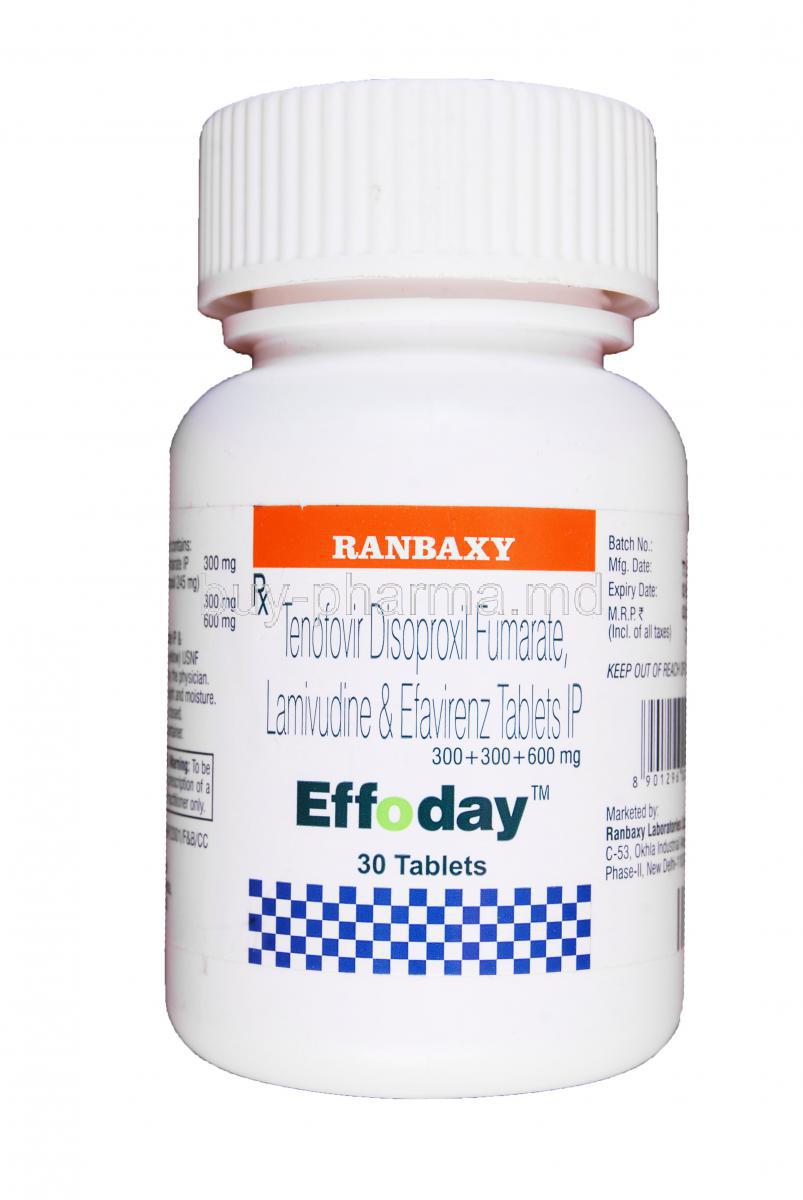
Effoday combines lamivudine, tenofovir disoproxil fumarate, and efavirenz into one oral formulation. This fixed-dose approach ensures consistent pharmacological exposure to all three agents, reducing the risk of selective drug omission and incomplete viral suppression.
Therapeutic Classification and Role in HIV Management
Therapeutically, Effoday is classified as a combination antiretroviral therapy (cART). It incorporates two reverse transcriptase inhibitors from distinct subclasses alongside a non-nucleoside reverse transcriptase inhibitor, forming a robust backbone for HIV-1 treatment.
Position in Global HIV Treatment Guidelines
Effoday and comparable formulations have historically been recommended as first-line or alternative regimens in multiple international HIV guidelines. Its accessibility and clinical efficacy have made it particularly relevant in large-scale treatment initiatives.
Benefits of Single-Tablet Regimens for Long-Term Therapy
Single-tablet regimens provide tangible clinical and behavioral advantages, including:
- Improved medication adherence
- Lower risk of dosing errors
- Enhanced patient satisfaction and quality of life
Brand and Generic Naming Considerations
Effoday may be marketed under various brand or generic names depending on the region. While the nomenclature may vary, the active pharmaceutical ingredients and therapeutic intent remain consistent.
Composition and Active Ingredients
Lamivudine: Nucleoside Reverse Transcriptase Inhibitor (NRTI)
Lamivudine is a cytidine analog that disrupts viral DNA synthesis by incorporating into the growing DNA chain, ultimately causing chain termination during reverse transcription.
Tenofovir Disoproxil Fumarate: Nucleotide Reverse Transcriptase Inhibitor (NtRTI)
Tenofovir disoproxil fumarate is a prodrug that is converted intracellularly to tenofovir diphosphate, a potent inhibitor of HIV reverse transcriptase with additional activity against hepatitis B virus.
Efavirenz: Non-Nucleoside Reverse Transcriptase Inhibitor (NNRTI)
Efavirenz binds directly to reverse transcriptase at a distinct allosteric site, inducing conformational changes that impair enzymatic function without competing with nucleoside substrates.
Fixed-Dose Combination Strengths and Formulation Rationale
The formulation ratios are carefully calibrated to achieve optimal plasma concentrations of each agent, ensuring synergistic antiviral efficacy while minimizing toxicity.
Excipients and Pharmaceutical Formulation Profile
Inactive excipients are included to enhance tablet stability, bioavailability, and manufacturability. These components do not exert pharmacological activity but are essential for consistent dosing.
How Effoday Works (Mechanism of Action)
Inhibition of HIV-1 Reverse Transcriptase Activity
Effoday exerts its antiviral effect primarily by inhibiting HIV-1 reverse transcriptase, an enzyme critical for converting viral RNA into DNA within host cells.
Synergistic Antiviral Effect of NRTI and NNRTI Components
The combination of nucleoside, nucleotide, and non-nucleoside inhibitors produces a synergistic blockade, reducing the probability of viral escape and resistance development.
Prevention of Viral Replication and Reduction of Viral Load
By halting reverse transcription, Effoday prevents productive viral replication, leading to a sustained decline in plasma HIV RNA levels.
Impact on CD4 Cell Count Recovery
Effective viral suppression allows immune reconstitution, often reflected by gradual increases in CD4 lymphocyte counts and improved immunological resilience.
Resistance Suppression Through Combination Therapy
Using multiple agents with distinct mechanisms significantly reduces the likelihood of resistance mutations emerging during therapy.
Uses of Effoday
First-Line Treatment of HIV-1 Infection in Adults
Effoday has been widely utilized as an initial treatment option for adults newly diagnosed with HIV-1 infection.
Use in Treatment-Naïve HIV Patients
For individuals with no prior exposure to antiretroviral therapy, Effoday provides a comprehensive and simplified treatment strategy.
Use in Virologically Suppressed Patients Switching Regimens
Patients who are already virologically suppressed may transition to Effoday to simplify therapy, provided there is no underlying drug resistance.
Role in Long-Term Maintenance Therapy
Effoday supports sustained viral suppression when adherence is maintained, making it suitable for prolonged use.
Public Health Relevance in Resource-Limited Settings
Due to its affordability and once-daily dosing, Effoday plays a crucial role in large-scale HIV treatment programs worldwide.
Off-Label and Extended Uses
Use in Post-Exposure Prophylaxis (PEP)
In certain protocols, Effoday components may be used as part of combination regimens following high-risk HIV exposure.
Use in Pre-Exposure Prophylaxis (PrEP) Protocols
While not standard, selected settings have explored its components within preventive strategies under medical supervision.
Management of HIV-1 Infection with Hepatitis B Co-Infection
Tenofovir and lamivudine provide dual antiviral activity, offering therapeutic benefit in patients with concurrent hepatitis B infection.
Use in Simplified Regimens Under Specialist Supervision
In specific clinical contexts, Effoday may be incorporated into streamlined regimens with careful monitoring.
Investigational or Guideline-Limited Applications
Some uses remain investigational and are guided by emerging evidence or regional clinical practices.
Dosage and Administration
Standard Adult Dosing Schedule
Effoday is typically administered as one tablet taken orally once daily.
Recommended Timing of Administration
Bedtime dosing is often advised to mitigate central nervous system-related effects associated with efavirenz.
Administration With or Without Food
The medication may be taken with or without food, though high-fat meals may influence efavirenz absorption.
Dose Adjustments in Renal Impairment
Renal function should be evaluated prior to initiation, as dose modification or alternative therapy may be required in patients with significant impairment.
Missed Dose Management and Adherence Strategies
- Take the missed dose as soon as remembered
- Avoid doubling doses
- Maintain consistent daily timing
Administration in Special Populations
Administration to Elderly Patients
Elderly individuals may exhibit altered drug clearance. Regular assessment of renal function and neuropsychiatric status is recommended.
Administration to Pregnant Women and Nursing Mothers
Effoday may be used during pregnancy when benefits outweigh potential risks. Considerations include placental transfer, fetal safety data, and breastfeeding-related transmission risk.
Administration to Children and Adolescents
Use in pediatric populations is limited by age and weight thresholds. Alternative formulations and adherence support are often necessary.
Side Effects of Effoday
Overview of Potential Adverse Reactions
Adverse reactions range from mild and transient to more serious, particularly during the initial weeks of therapy.
Central Nervous System-Related Effects
Efavirenz is commonly associated with dizziness, altered dreams, and mood changes.
Gastrointestinal and Metabolic Effects
Nausea, diarrhea, and metabolic alterations may occur, usually resolving with continued use.
Dermatological Reactions
Skin rashes are generally mild but should be monitored for progression.
Long-Term Safety Considerations
Prolonged use may affect renal function and bone mineral density, necessitating periodic evaluation.
Common Side Effects
- Dizziness and headache
- Vivid or unusual dreams
- Nausea and abdominal discomfort
- Fatigue and sleep disturbances
- Mild skin rash
Warnings and Safety Alerts
Risk of Neuropsychiatric Adverse Effects
Efavirenz-associated neuropsychiatric symptoms require vigilance, particularly in patients with pre-existing conditions.
Hepatotoxicity and Liver Function Monitoring
Regular liver enzyme monitoring is advised, especially in patients with underlying hepatic disease.
Renal Toxicity Associated With Tenofovir
Tenofovir may cause proximal renal tubular dysfunction; renal parameters should be routinely assessed.
Bone Mineral Density Reduction Risk
Long-term tenofovir exposure has been associated with decreased bone mineral density.
Immune Reconstitution Inflammatory Syndrome (IRIS)
Restoration of immune function may unmask latent infections, resulting in inflammatory responses.
Contraindications
- Known hypersensitivity to lamivudine, tenofovir, efavirenz, or excipients
- Severe hepatic impairment
- Concomitant use with contraindicated medications
- History of severe psychiatric disorders requiring avoidance
Drug Interactions
Interactions with Other Antiretroviral Agents
Effoday contains efavirenz, lamivudine, and tenofovir disoproxil fumarate, each of which may interact with other antiretroviral medications. Concomitant use with additional NNRTIs, NRTIs, or protease inhibitors can alter plasma drug concentrations, potentially diminishing antiviral efficacy or amplifying toxicity.
- Risk of overlapping resistance profiles
- Potential for additive adverse effects
- Need for regimen simplification under specialist guidance
Effects on the Cytochrome P450 Enzyme System
Efavirenz is a potent modulator of the cytochrome P450 enzyme system, particularly CYP3A4 and CYP2B6. This enzymatic induction and inhibition can lead to clinically significant fluctuations in the metabolism of co-administered drugs, necessitating careful therapeutic oversight.
Contraindicated Sedatives, Anticonvulsants, and Herbal Products
Certain sedative-hypnotics, anticonvulsants, and herbal preparations are contraind_toggle due to their interaction potential. Herbal products such as St. John’s wort may substantially reduce efavirenz plasma levels, increasing the risk of virologic failure.
- Strong enzyme inducers reducing antiviral exposure
- Increased central nervous system toxicity with sedatives
- Loss of viral suppression with unregulated supplements
Interactions with Hepatitis C Antivirals
When used concurrently with direct-acting antivirals for hepatitis C, Effoday may alter drug exposure due to shared metabolic pathways. Dose adjustments or alternative regimens may be required to maintain therapeutic integrity.
Considerations with Hormonal Contraceptives
Efavirenz may reduce the effectiveness of hormonal contraceptives by accelerating their metabolism. Additional or alternative contraceptive methods are advised to ensure reliable pregnancy prevention during therapy.
Careful Administration and Monitoring
Baseline Assessment Before Initiation
Prior to initiating Effoday, comprehensive baseline assessments are essential. These evaluations establish clinical benchmarks and identify risk factors that may influence treatment selection.
- Baseline viral load and CD4 cell count
- Renal and hepatic function tests
- Assessment of psychiatric history
Ongoing Viral Load and CD4 Monitoring
Regular monitoring of plasma HIV RNA levels and CD4 counts is fundamental to assessing treatment efficacy. Sustained viral suppression confirms therapeutic success, while deviations may signal adherence issues or emerging resistance.
Renal and Hepatic Function Surveillance
Tenofovir-associated nephrotoxicity and efavirenz-related hepatotoxicity necessitate periodic laboratory surveillance. Early detection of abnormalities enables timely intervention.
Mental Health Monitoring During Therapy
Neuropsychiatric symptoms such as insomnia, mood alteration, or cognitive disturbances may occur, particularly during early treatment phases. Ongoing mental health assessment is recommended.
Adherence Assessment and Resistance Prevention
Consistent adherence is paramount to prevent viral replication and resistance development. Structured adherence assessments and patient support interventions are integral components of long-term management.
Important Precautions Before and During Treatment
Importance of Strict Adherence to Prevent Resistance
Incomplete adherence permits viral replication under subtherapeutic drug pressure, fostering resistance mutations. Even brief lapses can compromise regimen durability.
Avoidance of Abrupt Discontinuation
Abrupt cessation of Effoday, particularly in patients with hepatitis B co-infection, may precipitate severe hepatic flares. Treatment discontinuation should always be medically supervised.
Monitoring for Lactic Acidosis
Although rare, lactic acidosis is a potentially life-threatening complication associated with nucleoside analogues. Unexplained fatigue, abdominal pain, or respiratory distress warrant immediate evaluation.
Considerations in Hepatitis B Co-Infected Patients
Lamivudine and tenofovir exert activity against hepatitis B virus. Withdrawal of therapy may lead to viral reactivation and hepatic decompensation, requiring vigilant monitoring.
Patient Counseling and Education Priorities
Patient education should emphasize:
- Correct dosing schedules
- Recognition of adverse effects
- The importance of routine follow-up
Overdosage and Toxicity Management
Potential Symptoms of Overdose
Overdose may present with intensified central nervous system symptoms, gastrointestinal distress, or laboratory abnormalities reflecting hepatic or renal strain.
Central Nervous System Toxicity Risks
Efavirenz-related neurotoxicity may manifest as confusion, agitation, or altered consciousness in overdose scenarios, necessitating close observation.
Supportive Care and Monitoring Strategies
Management is primarily supportive and includes:
- Vital sign monitoring
- Laboratory surveillance
- Symptomatic treatment as indicated
Role of Dialysis in Tenofovir Exposure
Hemodialysis may partially remove tenofovir in cases of severe overdose or renal failure, though its overall clinical utility remains limited.
When to Seek Emergency Medical Attention
Immediate medical attention is required if severe neurological symptoms, persistent vomiting, or signs of organ dysfunction develop.
Storage Conditions
Recommended Storage Temperature
Effoday should be stored at controlled room temperature, avoiding excessive heat that may compromise drug stability.
Protection from Moisture and Light
Exposure to moisture and direct sunlight can degrade active components. Original packaging should be retained to preserve integrity.
Shelf Life and Packaging Considerations
Adherence to labeled expiration dates ensures optimal efficacy and safety throughout the product’s shelf life.
Safe Storage to Prevent Accidental Ingestion
Medication should be stored securely, out of reach of children and unintended users.
Handling Precautions
Safe Handling and Dispensing Practices
Healthcare professionals should follow standard dispensing protocols, ensuring accurate labeling and patient comprehension.
Patient Instructions for Daily Use
Patients should be instructed to take Effoday at the same time each day, without crushing or splitting the tablet unless directed.
Disposal of Unused or Expired Medication
Unused or expired tablets should be disposed of according to local pharmaceutical waste guidelines to prevent environmental contamination.
Infection Control Considerations
Routine infection control practices should be maintained when handling medication in clinical or communal settings.
Travel and Transport Guidance for Long-Term Therapy
During travel, medication should be carried in original packaging, with sufficient supply and documentation to support uninterrupted therapy.