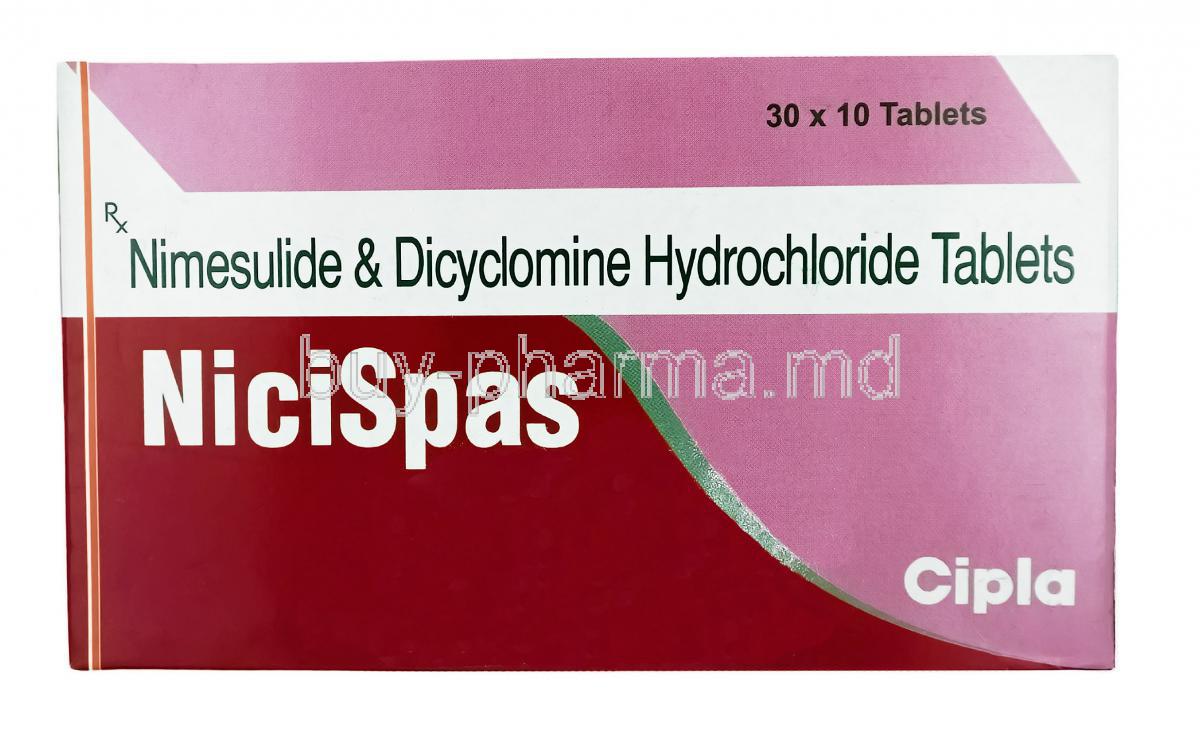

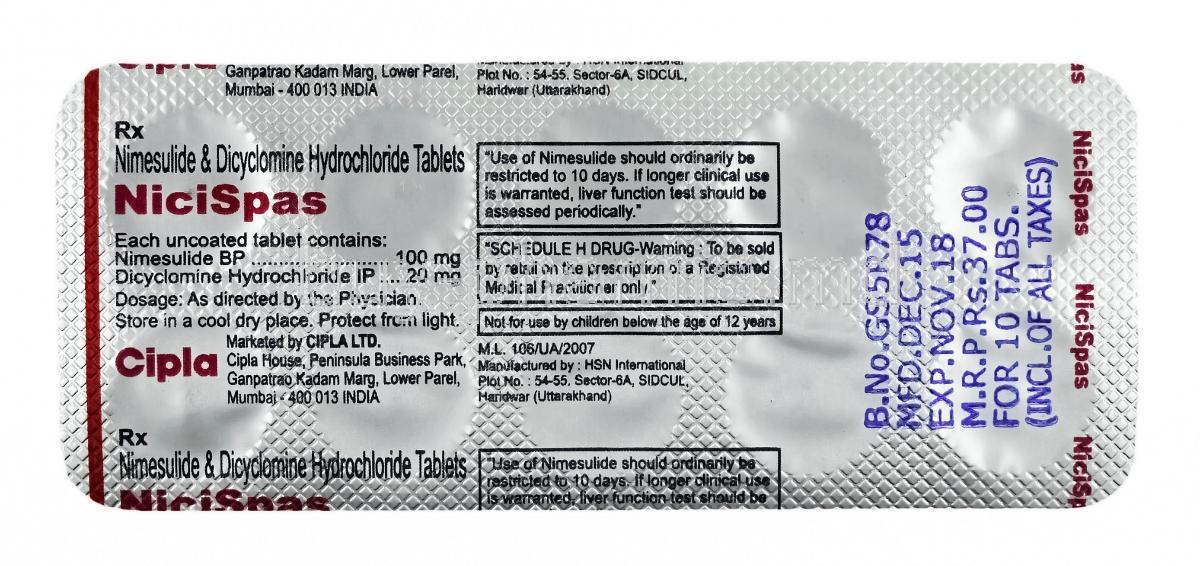
1. Introduction to Nicispas (Dicyclomine/Nimesulide)
1.1 Overview of the Combination Therapy
Nicispas is a pharmacological amalgamation designed to address both visceral pain and smooth muscle spasm. It combines an anticholinergic antispasmodic agent with a nonsteroidal anti-inflammatory drug (NSAID), thereby delivering dual-action therapeutic efficacy. This synergistic formulation is particularly advantageous in conditions where pain is intricately linked with involuntary muscular contractions.
1.2 Therapeutic Classification and Drug Category
The formulation belongs to a hybrid therapeutic class, incorporating:
- Antispasmodics (Dicyclomine hydrochloride)
- NSAIDs (Nimesulide)
This dual categorization enables the drug to function as both a spasmolytic and an analgesic, thereby enhancing clinical versatility.
1.3 Indications for Use in Clinical Practice
Nicispas is frequently prescribed in clinical settings where nociceptive pain coincides with smooth muscle hyperactivity. Its utility extends across gastrointestinal, genitourinary, and gynecological domains, offering prompt symptomatic relief.
1.4 Target Patient Population
The medication is primarily indicated for adult patients experiencing acute or episodic spasmodic pain. It is particularly relevant for individuals with functional gastrointestinal disorders, menstrual discomfort, or colicky pain syndromes.
2. Composition and Formulation Details
2.1 Active Ingredients: Dicyclomine Hydrochloride and Nimesulide
Nicispas contains two pharmacodynamically distinct active constituents:
- Dicyclomine hydrochloride – a potent anticholinergic agent
- Nimesulide – a selective COX-2 preferential NSAID
2.2 Mechanism-Based Role of Each Component
Dicyclomine attenuates smooth muscle contractions by inhibiting muscarinic receptors, whereas Nimesulide mitigates inflammation by suppressing prostaglandin synthesis. Together, they orchestrate a comprehensive therapeutic response.
2.3 Available Dosage Forms (Tablets, Capsules, etc.)
The medication is typically available in oral solid dosage forms such as tablets. These are designed for ease of administration and rapid gastrointestinal absorption.
2.4 Excipients and Inactive Ingredients
Formulations may include stabilizers, binders, and disintegrants that ensure drug stability, bioavailability, and manufacturability. Though pharmacologically inert, these components contribute to overall product performance.
3. Mechanism of Action: How Nicispas Works
3.1 Antispasmodic Action of Dicyclomine on Smooth Muscles
Dicyclomine exerts its effect by antagonizing acetylcholine at muscarinic receptors. This leads to relaxation of gastrointestinal smooth muscle and alleviation of spasmodic contractions. The result is a marked reduction in cramping and discomfort.
3.2 Anti-inflammatory and Analgesic Effects of Nimesulide
Nimesulide selectively inhibits cyclooxygenase enzymes, reducing prostaglandin production. This diminishes inflammation and nociceptive signaling, thereby providing effective analgesia.
3.3 Dual Mechanism for Pain and Spasm Relief
The concomitant action of both agents ensures that the underlying cause (spasm) and the symptom (pain) are addressed simultaneously. This duality enhances therapeutic outcomes.
3.4 Pharmacodynamic Synergy Between Components
The combination exhibits pharmacodynamic synergy, wherein the overall therapeutic effect surpasses the sum of individual actions. This permits lower dosing thresholds while maintaining efficacy.
4. Uses of Nicispas (Expanded Indications)
4.1 Management of Abdominal Pain and Gastrointestinal Spasms
Nicispas is extensively utilized in conditions characterized by intestinal hypermotility and cramping. It offers rapid symptomatic reprieve.
4.2 Treatment of Irritable Bowel Syndrome (IBS) Symptoms
Patients with IBS often experience alternating bowel habits and abdominal discomfort. The medication helps in mitigating spasmodic episodes and associated pain.
4.3 Relief of Menstrual Cramps (Dysmenorrhea)
The drug is effective in alleviating uterine contractions and inflammatory pain associated with menstruation, thereby improving functional capacity during menses.
4.4 Use in Renal Colic and Ureteric Spasm
In renal colic, where ureteric spasm is prominent, Nicispas provides relief by relaxing smooth muscle and reducing inflammatory discomfort.
4.5 Biliary Colic and Gallbladder-Related Pain
The formulation aids in reducing biliary tract spasms and inflammation, offering symptomatic benefit in gallbladder disorders.
4.6 Musculoskeletal Pain with Spasmodic Components
Certain musculoskeletal conditions involve reflex muscle spasm. Nicispas can provide adjunctive relief in such scenarios.
4.7 Postoperative Spasm and Pain Management
Following surgical interventions, especially abdominal procedures, the medication may be used to control spasms and associated discomfort.
5. Off-Label Uses of Nicispas
5.1 Functional Gastrointestinal Disorders Beyond IBS
It may be employed in dyspepsia or non-ulcerative gastrointestinal syndromes where spasmodic activity predominates.
5.2 Spastic Conditions of the Urinary Tract
In certain urinary tract disorders, the drug can help reduce involuntary contractions and discomfort.
5.3 Adjunct Therapy in Chronic Pelvic Pain
Chronic pelvic pain syndromes may benefit from its spasmolytic and analgesic properties when used as part of a multimodal regimen.
5.4 Use in Mild Inflammatory Conditions with Smooth Muscle Involvement
Conditions involving mild inflammation and smooth muscle irritability may respond favorably to this combination therapy.
5.5 Symptomatic Relief in Non-specific Abdominal Pain
The medication is sometimes utilized empirically for idiopathic abdominal discomfort where definitive etiology is unclear.
6. Dosage and Administration Guidelines
6.1 Standard Adult Dosage Recommendations
Typical dosing involves oral administration once or twice daily, depending on clinical severity and physician discretion.
6.2 Dosage Adjustments Based on Severity
Dose titration may be necessary in patients with heightened symptomatology or comorbid conditions.
6.3 Duration of Therapy and Treatment Limits
Short-term use is generally advocated. Prolonged administration should be approached cautiously due to potential adverse effects.
6.4 Instructions for Oral Administration
The medication should be taken with water, preferably after meals to minimize gastrointestinal irritation.
6.5 Missed Dose and Dosing Compliance
Missed doses should be taken promptly unless the next scheduled dose is imminent. Double dosing is discouraged.
7. Side Effects of Nicispas
7.1 Overview of Potential Adverse Effects
Adverse reactions may arise from either component of the formulation. These effects are typically dose-dependent and reversible.
7.2 Common Side Effects
- Dry mouth
- Dizziness
- Nausea
- Drowsiness
7.3 Less Common but Notable Side Effects
Patients may occasionally experience blurred vision, constipation, or mild gastrointestinal discomfort.
7.4 Serious Adverse Reactions Requiring Medical Attention
Severe reactions may include:
- Gastrointestinal bleeding
- Hepatic dysfunction
- Severe allergic reactions
7.5 Long-Term Safety Considerations
Chronic use may increase the risk of hepatic and gastrointestinal complications. Periodic monitoring is advisable.
8. Drug Interactions and Compatibility
8.1 Interaction with Other Anticholinergic Medications
Concurrent use may potentiate anticholinergic side effects such as dry mouth and urinary retention.
8.2 NSAID Interactions and Increased Toxicity Risk
Combining with other NSAIDs may exacerbate gastrointestinal and renal toxicity.
8.3 Interaction with Alcohol and CNS Depressants
Alcohol may intensify sedative effects and increase the risk of adverse CNS manifestations.
8.4 Effects with Antihypertensive Drugs
NSAIDs may attenuate the efficacy of certain antihypertensive agents.
8.5 Interaction with Anticoagulants and Bleeding Risk
Co-administration may elevate bleeding risk due to additive effects on platelet function.
8.6 Herbal Supplements and OTC Medication Considerations
Herbal products with anticoagulant or sedative properties should be used cautiously.
9. Warnings and Safety Considerations
9.1 Risk of Gastrointestinal Bleeding with Nimesulide
NSAID-associated mucosal damage may predispose patients to bleeding and ulceration.
9.2 Hepatotoxicity Concerns and Liver Monitoring
Nimesulide has been associated with hepatotoxic effects. Liver function tests are recommended during therapy.
9.3 CNS Effects and Impaired Alertness
Drowsiness and dizziness may impair cognitive and motor functions, necessitating caution during activities requiring alertness.
9.4 Cardiovascular Risk in Vulnerable Patients
Patients with pre-existing cardiovascular conditions should use the drug cautiously due to potential fluid retention and blood pressure alterations.
9.5 Risk of Urinary Retention with Anticholinergic Use
Anticholinergic effects may precipitate urinary retention, particularly in predisposed individuals.
10. Contraindications of Nicispas
10.1 Hypersensitivity to Dicyclomine, Nimesulide, or NSAIDs
Use is contraindicated in individuals with known hypersensitivity reactions to any component.
10.2 Severe Hepatic Impairment
Patients with significant liver dysfunction should avoid this medication due to increased toxicity risk.
10.3 Active Peptic Ulcer or Gastrointestinal Bleeding
The drug may exacerbate existing gastrointestinal lesions.
10.4 Severe Renal Dysfunction
Renal impairment may lead to drug accumulation and adverse outcomes.
10.5 Glaucoma and Myasthenia Gravis
Anticholinergic effects may worsen these conditions.
10.6 Infants and Specific Pediatric Restrictions
The safety profile in infants and certain pediatric populations is not well established, and use is generally contraindicated.
11. Careful Administration (Use with Caution)
11.1 Patients with Mild to Moderate Liver Dysfunction
In individuals with hepatic compromise, the metabolism of Nimesulide may be attenuated, leading to potential accumulation and hepatotoxicity. Even mild dysfunction warrants prudence. Close clinical surveillance is indispensable.
- Periodic liver function monitoring is recommended
- Lower dosing thresholds may be necessary
- Early discontinuation should be considered upon signs of hepatic distress
11.2 Individuals with Renal Impairment
Renal insufficiency can alter drug excretion kinetics. Accumulation of active metabolites may ensue. This necessitates judicious dosing and vigilant observation.
- Assess baseline renal parameters before initiation
- Adjust dosage based on creatinine clearance
- Avoid use in advanced renal failure
11.3 Patients with Cardiovascular Disorders
NSAID components may influence hemodynamic stability. Fluid retention and blood pressure fluctuations are plausible. Patients with pre-existing cardiovascular pathology require heightened caution.
- Monitor blood pressure regularly
- Evaluate for edema or fluid overload
- Use the lowest effective dose for the shortest duration
11.4 Elderly Patients with Reduced Drug Clearance
Age-related pharmacokinetic alterations often lead to reduced drug clearance. This increases susceptibility to adverse reactions. A conservative dosing strategy is imperative.
- Initiate therapy at lower doses
- Monitor for CNS effects such as confusion or sedation
- Regularly reassess therapeutic necessity
11.5 Patients with Prostatic Hypertrophy or Urinary Retention Risk
Anticholinergic effects of Dicyclomine may exacerbate urinary retention. This is particularly relevant in patients with benign prostatic hyperplasia.
- Monitor urinary output and voiding patterns
- Avoid in patients with severe obstruction
- Discontinue if urinary retention develops
12. Important Precautions for Safe Use
12.1 Avoidance of Alcohol During Treatment
Concurrent alcohol consumption may potentiate CNS depression and exacerbate gastrointestinal irritation. Abstinence is strongly advised during therapy.
12.2 Monitoring Liver Enzymes During Therapy
Given the hepatotoxic potential of Nimesulide, periodic evaluation of hepatic enzymes is prudent. Early detection of abnormalities can avert severe complications.
- Baseline liver function tests prior to therapy
- Routine monitoring during prolonged use
- Immediate discontinuation upon enzyme elevation
12.3 Avoidance of Prolonged or High-Dose Use
Chronic or excessive dosing may precipitate cumulative toxicity. Short-term administration is generally preferred to mitigate risk.
12.4 Awareness of Sedative Effects and Driving Restrictions
Dicyclomine may induce drowsiness or dizziness. Patients should exercise caution when operating machinery or driving vehicles.
12.5 Risk Minimization in Polypharmacy Patients
Patients receiving multiple medications are at increased risk of drug interactions. A comprehensive medication review is essential to prevent adverse outcomes.
13. Administration in Special Populations
13.1 Administration to Elderly Patients
Elderly individuals often exhibit altered pharmacodynamics and pharmacokinetics. Tailored dosing and close monitoring are critical.
- Dose adjustments may be required
- Monitor for exaggerated anticholinergic effects
- Frequent clinical evaluation is recommended
13.2 Administration to Pregnant Women
Use during pregnancy necessitates a careful risk-benefit assessment. Potential fetal risks must be weighed against maternal therapeutic needs.
- Generally avoided unless clearly necessary
- Consultation with a healthcare professional is essential
- Use the lowest effective dose if prescribed
13.3 Administration to Nursing Mothers
Drug components may be excreted into breast milk. This poses potential risks to the nursing infant.
- Evaluate necessity before prescribing
- Monitor infants for adverse reactions
- Consider alternative therapies if appropriate
13.4 Administration to Children
Safety and efficacy in pediatric populations are not fully established. Age-specific restrictions often apply.
- Use only under strict medical supervision
- Avoid in very young children unless indicated
- Adhere to pediatric dosing guidelines if applicable
14. Overdosage and Emergency Management
14.1 Symptoms of Overdose (Anticholinergic and NSAID Toxicity)
Overdosage may manifest as a constellation of symptoms involving multiple organ systems. Prompt recognition is vital.
- Severe dryness of mouth and skin
- Confusion, agitation, or delirium
- Gastrointestinal bleeding or abdominal pain
- Renal or hepatic dysfunction
14.2 Immediate Management and Supportive Care
Management is largely supportive. Stabilization of vital parameters is the primary objective.
- Ensure airway patency and adequate ventilation
- Administer intravenous fluids if required
- Symptomatic treatment for complications
14.3 Role of Gastric Lavage and Activated Charcoal
Early intervention may include decontamination measures. Gastric lavage and activated charcoal can reduce systemic absorption if administered promptly.
14.4 Monitoring and Long-Term Complications
Continuous monitoring is essential to detect delayed complications. Long-term sequelae may involve hepatic or renal impairment.
15. Storage and Stability Guidelines
15.1 Recommended Storage Conditions (Temperature and Humidity)
The medication should be stored at controlled room temperature, away from excessive heat and humidity. Stability is contingent upon appropriate storage conditions.
15.2 Protection from Light and Moisture
Exposure to light and moisture may degrade active ingredients. Proper packaging should be maintained at all times.
15.3 Shelf Life and Expiry Considerations
Adherence to expiry dates is imperative. Expired products may exhibit reduced efficacy or increased risk of adverse effects.
15.4 Safe Disposal of Unused Medication
Unused or expired medication should be disposed of responsibly. Avoid environmental contamination and accidental ingestion.
16. Handling Precautions and Patient Guidance
16.1 Proper Handling and Packaging Integrity
Maintain the integrity of original packaging to ensure drug stability and identification. Avoid transferring medication to unlabelled containers.
16.2 Avoiding Accidental Exposure or Misuse
Accidental ingestion or misuse can lead to serious consequences. Store the medication out of reach of children and vulnerable individuals.
16.3 Patient Counseling Points for Safe Use
Effective patient education enhances therapeutic outcomes. Clear instructions should be provided.
- Follow prescribed dosage strictly
- Report unusual symptoms promptly
- Avoid self-medication or dose escalation
16.4 When to Seek Medical Advice During Treatment
Medical consultation is warranted if adverse effects occur or symptoms persist. Timely intervention can prevent complications.
- Persistent abdominal pain or bleeding
- Signs of allergic reaction
- Unusual fatigue or jaundice
Popular Products


Similar Product