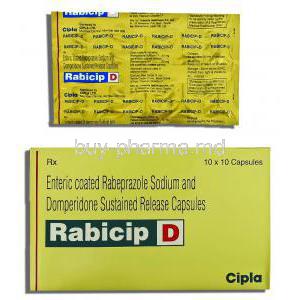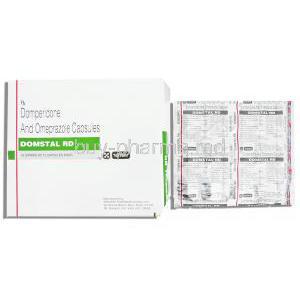

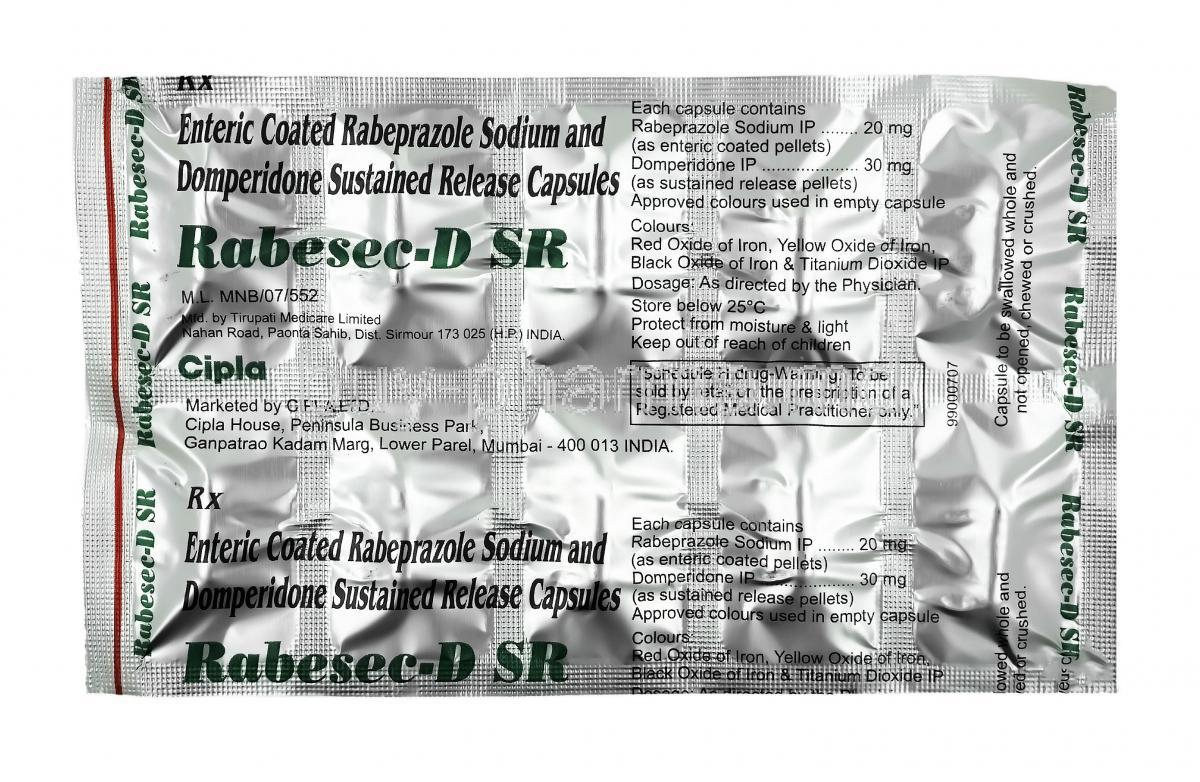
1. Introduction to Rabesec-D (Domperidone/Rabeprazole)
1.1 Overview of Combination Therapy for Gastrointestinal Disorders
Rabesec-D represents a dual-mechanism therapeutic approach designed to address multifactorial gastrointestinal disturbances. It combines acid suppression with enhanced gastric motility. This synergistic paradigm is particularly advantageous in patients presenting with both reflux and dysmotility symptoms.
Rather than targeting a single pathological pathway, the formulation mitigates:
- Excess gastric acid secretion
- Delayed gastric emptying
- Reflux-related mucosal irritation
1.2 Therapeutic Classification: Proton Pump Inhibitor + Prokinetic Agent
This formulation belongs to a composite pharmacological class. Rabeprazole functions as a proton pump inhibitor (PPI), while domperidone operates as a peripheral dopamine antagonist with prokinetic properties. Together, they orchestrate both antisecretory and motility-enhancing effects.
1.3 Brand vs Generic Names and Market Availability
Rabesec-D is marketed under various brand names across global pharmaceutical markets. The active ingredients—domperidone and rabeprazole—are widely available as generics, ensuring accessibility and cost-effectiveness. Availability may vary depending on regional regulatory approvals.
1.4 Indications for Combination Use in Acid-Related Disorders
This combination is typically prescribed when monotherapy proves insufficient. It is particularly beneficial in:
- Refractory gastroesophageal reflux disease (GERD)
- Functional dyspepsia with motility impairment
- Acid-related nausea and bloating
2. Composition and Formulation Details
2.1 Active Ingredients: Domperidone and Rabeprazole Explained
Domperidone enhances gastrointestinal motility by antagonizing dopamine receptors in the gut. Rabeprazole, on the other hand, irreversibly inhibits the H+/K+ ATPase enzyme system, thereby reducing gastric acid production. This duality addresses both causative and symptomatic aspects of digestive disorders.
2.2 Strength Variations and Dosage Forms (Capsules/Tablets)
Rabesec-D is commonly available in capsule or tablet form, often as a fixed-dose combination. Strength variations typically include standard doses optimized for once-daily administration, ensuring therapeutic consistency.
2.3 Mechanism-Based Synergy Between Components
The formulation exhibits pharmacodynamic complementarity. While rabeprazole reduces acid burden, domperidone accelerates gastric emptying. This reduces the likelihood of reflux episodes and enhances patient comfort.
2.4 Inactive Ingredients and Excipients
Excipients may include stabilizers, binders, and coating agents. These components ensure drug stability, controlled release, and improved bioavailability without exerting pharmacological effects.
Pantoprazole domperidone
Pantoprazole + Domperidone is a combination medication used to treat gastroesophageal reflux disease (GERD), acid reflux, heartburn, and peptic ulcers. It reduces stomach acid production (pantoprazole) while increasing stomach motility to ease digestion and reduce nausea/vomiting (domperidone). It is also used for bloating, epigastric fullness, and nausea.
Rabeprazole vs omeprazole
Both rabeprazole and omeprazole are highly effective Proton Pump Inhibitors (PPIs) used for acid-related conditions, providing similar healing rates for ulcers and GERD. However, rabeprazole generally works faster and offers faster symptom relief, particularly in the early stages of treatment, due to its rapid onset of action
Rabeprazole vs pantoprazole
Rabeprazole and pantoprazole are effective PPIs for GERD and ulcers. Rabeprazole (Aciphex) often provides faster symptom relief and better nocturnal acid control due to quicker activation. Pantoprazole (Protonix) is generally more cost-effective, offers intravenous options, and has fewer drug interactions.
Rabeprazole vs dexilant
Dexilant (dexlansoprazole) and rabeprazole (Aciphex) are both effective PPIs for treating GERD. Dexilant offers a "dual-delayed release" mechanism, providing longer-lasting acid control and better convenience (can be taken with or without food), while rabeprazole is often considered faster-acting, though it is usually taken 30-60 minutes before meals.
3. Mechanism of Action (How It Works)
3.1 Rabeprazole Mechanism of Action: Proton Pump Inhibition and Acid Suppression
Rabeprazole selectively inhibits the gastric proton pump, the final step in acid secretion. This results in profound and sustained suppression of gastric acidity, facilitating mucosal healing and symptom relief.
3.2 Domperidone Mechanism of Action: Dopamine Antagonism and Prokinetic Effects
Domperidone blocks peripheral dopamine D2 receptors. This action enhances gastrointestinal motility and increases lower esophageal sphincter tone. The result is reduced reflux and improved gastric transit.
3.3 Dual Action on Gastric Motility and Acid Secretion
The concurrent modulation of acid secretion and motility provides a comprehensive therapeutic effect. Patients often experience rapid symptom alleviation alongside sustained mucosal protection.
3.4 Impact on Esophageal Sphincter and Gastric Emptying
By strengthening the lower esophageal sphincter and promoting gastric emptying, the formulation reduces retrograde acid flow. This minimizes esophageal irritation and associated discomfort.
4. Uses of Rabesec-D
4.1 Treatment of Gastroesophageal Reflux Disease (GERD)
Rabesec-D is widely used in the management of GERD. It alleviates hallmark symptoms such as heartburn, regurgitation, and chest discomfort while promoting esophageal healing.
4.2 Management of Peptic Ulcer Disease (Gastric and Duodenal Ulcers)
The acid-suppressive properties of rabeprazole facilitate ulcer healing. Domperidone further enhances gastric emptying, reducing mucosal exposure to irritants.
4.3 Relief of Dyspepsia and Indigestion Symptoms
Functional dyspepsia often presents with bloating, early satiety, and discomfort. This combination therapy addresses these symptoms effectively through improved motility and reduced acidity.
4.4 Treatment of Gastritis and Acid-Related Disorders
Inflammation of the gastric mucosa can be exacerbated by acid. Rabesec-D mitigates this effect, allowing the mucosa to recover and reducing symptom severity.
4.5 Management of Nausea, Vomiting, and Bloating Associated with Acid Disorders
Domperidone’s antiemetic properties provide relief from nausea and vomiting. Simultaneously, improved gastric motility alleviates bloating and abdominal distension.
5. Off-Label Uses of Domperidone/Rabeprazole Combination
5.1 Functional Dyspepsia and Non-Ulcer Dyspepsia
This combination is frequently utilized in functional gastrointestinal disorders where structural abnormalities are absent but symptoms persist.
5.2 Gastroparesis (Delayed Gastric Emptying)
Patients with delayed gastric emptying may benefit from domperidone’s prokinetic effect, which enhances gastric transit and reduces symptom burden.
5.3 Reflux-Associated Chronic Cough or Laryngopharyngeal Reflux
Extra-esophageal manifestations of reflux, including chronic cough and throat irritation, may respond to acid suppression combined with motility enhancement.
5.4 Prevention of NSAID-Induced Gastric Irritation
In patients requiring long-term NSAID therapy, this combination may be used prophylactically to reduce gastric irritation and ulcer risk.
5.5 Adjunct Therapy in Helicobacter pylori Eradication Regimens
Rabeprazole enhances the efficacy of antibiotic regimens used to eradicate Helicobacter pylori by maintaining a less acidic gastric environment.
5.6 Domperidone for Breastfeeding
Domperidone is frequently used off-label as a galactogogue to increase breast milk supply, typically by stimulating prolactin release. It is generally considered safe for breastfed infants as only tiny amounts pass into breast milk.
6. Dosage and Administration Guidelines
6.1 Standard Adult Dosage Recommendations
The typical adult dosage involves once-daily administration, usually before meals. The exact dose may vary depending on clinical indication and physician guidance.
6.2 Timing of Administration (Before Meals vs After Meals)
Administration prior to meals is preferred. This ensures optimal proton pump inhibition and maximizes the prokinetic effect of domperidone.
6.3 Duration of Therapy Based on Indication
Treatment duration may range from short-term use for acute symptoms to extended therapy for chronic conditions. Regular evaluation is recommended.
6.4 Dose Adjustments in Special Populations
Dose modifications may be necessary in elderly patients or those with hepatic or renal impairment to minimize adverse effects.
6.5 Missed Dose and Compliance Recommendations
If a dose is missed, it should be taken as soon as remembered. Doubling doses should be avoided. Consistent adherence enhances therapeutic outcomes.
7. Side Effects of Rabesec-D
7.1 Overview of Potential Adverse Reactions
While generally well tolerated, Rabesec-D may cause a spectrum of adverse reactions. These are typically mild but warrant monitoring.
7.2 Gastrointestinal Side Effects (Diarrhea, Abdominal Pain)
Alterations in gut motility and flora may lead to gastrointestinal discomfort, including diarrhea or abdominal cramping.
7.3 Neurological Effects (Headache, Dizziness)
Some individuals may experience transient neurological symptoms such as headaches or dizziness.
7.4 Hormonal Effects Related to Domperidone (Hyperprolactinemia)
Domperidone may elevate prolactin levels, potentially leading to:
- Galactorrhea
- Gynecomastia
- Menstrual irregularities
7.5 Rare but Serious Adverse Reactions
Serious effects, though uncommon, may include cardiac arrhythmias or hypersensitivity reactions. Immediate medical attention is required in such cases.
8. Common Side Effects
8.1 Frequently Reported Mild Symptoms
- Dry mouth
- Nausea
- Flatulence
- Constipation or diarrhea
8.2 Transient Nature and Management of Common Effects
These symptoms are usually self-limiting. Adequate hydration and dietary adjustments can mitigate discomfort.
8.3 When to Seek Medical Attention
Persistent or worsening symptoms should prompt medical consultation. Early intervention prevents complications.
9. Drug Interactions
9.1 Interactions with CYP450 Enzyme Inhibitors and Inducers
Rabeprazole metabolism may be प्रभावित by agents affecting hepatic enzymes, altering drug levels.
9.2 Concomitant Use with Antifungals and Antibiotics
Certain antifungals and antibiotics may interact, necessitating dose adjustments or monitoring.
9.3 Interaction with QT-Prolonging Medications (Domperidone Risk)
Domperidone may increase the risk of QT prolongation when combined with specific medications. Caution is essential.
9.4 Effects of Antacids and Other Acid-Suppressing Agents
Concurrent use may alter absorption dynamics. Timing adjustments may be required.
9.5 Food and Alcohol Interactions
Alcohol may exacerbate gastric irritation. Dietary considerations play a role in optimizing treatment outcomes.
10. Warnings and Safety Considerations
10.1 Risk of Cardiac Arrhythmias with Domperidone
Domperidone has been associated with serious cardiac arrhythmias, particularly in high doses or susceptible individuals. Monitoring is crucial.
10.2 Long-Term Use Risks of Proton Pump Inhibitors
Chronic use of PPIs may lead to nutrient deficiencies, including magnesium and vitamin B12, as well as increased fracture risk.
10.3 Risk of Clostridium difficile Infection
Reduced gastric acidity may predispose individuals to gastrointestinal infections such as Clostridium difficile.
10.4 Electrolyte Imbalance and Bone Fracture Risk
Electrolyte disturbances may occur with prolonged therapy. Bone density monitoring may be advisable in long-term use.
10.5 Monitoring Requirements During Prolonged Therapy
Regular clinical assessment is recommended. Monitoring may include:
- Electrolyte levels
- Cardiac function
- Symptom progression
11. Contraindications
11.1 Hypersensitivity to Domperidone or Rabeprazole
Rabesec-D must not be administered in individuals with known hypersensitivity to either domperidone or rabeprazole. Even minimal exposure may precipitate immunological reactions ranging from mild dermatological manifestations to severe anaphylaxis.
- Rash, urticaria, or pruritus
- Angioedema
- Respiratory compromise in severe cases
11.2 Patients with Prolactin-Secreting Pituitary Tumors (Prolactinoma)
Domperidone can elevate prolactin levels due to dopamine receptor antagonism. In patients with prolactinoma, this pharmacological effect may exacerbate tumor-related endocrine disturbances and worsen clinical outcomes.
11.3 Severe Hepatic Impairment
Severe liver dysfunction significantly alters drug metabolism. Accumulation of active compounds may occur, increasing the risk of toxicity. Use in such patients is contraindicated due to unpredictable pharmacokinetics.
11.4 Known QT Prolongation or Cardiac Arrhythmias
Domperidone has been associated with QT interval prolongation. Patients with pre-existing arrhythmias or prolonged QT intervals are at heightened risk of life-threatening ventricular arrhythmias, including torsades de pointes.
11.5 Gastrointestinal Hemorrhage, Obstruction, or Perforation
Prokinetic agents such as domperidone may exacerbate underlying mechanical gastrointestinal conditions. In cases of hemorrhage, obstruction, or perforation, stimulation of motility can lead to serious complications.
12. Careful Administration (Use with Caution)
12.1 Patients with Mild to Moderate Liver Dysfunction
In patients with compromised hepatic function, careful dose titration is essential. Reduced metabolic clearance may necessitate lower dosing and vigilant monitoring for adverse effects.
12.2 Individuals with Renal Impairment
Although renal excretion plays a lesser role, prolonged drug exposure may occur in renal impairment. Dose adjustment and extended dosing intervals may be considered.
12.3 Patients with Cardiovascular Risk Factors
Individuals with underlying cardiovascular conditions require cautious administration. Electrocardiographic monitoring may be warranted in high-risk cases.
- History of arrhythmias
- Electrolyte imbalances
- Concurrent use of QT-prolonging agents
12.4 Long-Term Therapy Considerations
Chronic use necessitates periodic evaluation. Long-term proton pump inhibitor therapy has been associated with metabolic and nutritional perturbations, requiring ongoing clinical assessment.
12.5 Concomitant Use with Multiple Medications
Polypharmacy increases the potential for drug-drug interactions. A comprehensive medication review is imperative to minimize adverse outcomes and therapeutic inefficacy.
13. Important Precautions for Use
13.1 Avoiding Self-Medication and Prolonged Use
Unsupervised use may obscure underlying pathology. Prolonged therapy without medical oversight can lead to complications that remain undetected until advanced stages.
13.2 Monitoring for Hormonal Changes (Galactorrhea, Gynecomastia)
Elevated prolactin levels may result in endocrine disturbances. Patients should be monitored for:
- Unexpected lactation (galactorrhea)
- Breast enlargement in males (gynecomastia)
- Menstrual irregularities
13.3 Risk of Masking Serious Gastrointestinal Conditions
Symptomatic relief may conceal serious conditions such as malignancy or ulcer complications. Persistent or atypical symptoms require thorough diagnostic evaluation.
13.4 Avoiding Alcohol and Irritating Foods
Dietary habits play a pivotal role in therapeutic efficacy. Alcohol and irritant foods may exacerbate gastric mucosal irritation and counteract treatment benefits.
13.5 Adherence to Prescribed Dosage
Strict adherence to prescribed dosing regimens ensures optimal therapeutic outcomes. Deviations may compromise efficacy or increase the risk of adverse reactions.
14. Administration to Special Populations
14.1 Administration to Elderly Patients
Elderly individuals often exhibit increased pharmacodynamic sensitivity. Particular caution is warranted due to:
- Increased susceptibility to cardiac side effects
- Altered drug metabolism and clearance
- Higher likelihood of comorbid conditions
Dose adjustments and routine monitoring are frequently required to mitigate risks while maintaining therapeutic benefit.
14.2 Administration to Pregnant Women and Nursing Mothers
The safety profile in pregnancy and lactation remains incompletely characterized. Use should be guided by a meticulous risk-benefit assessment.
- Limited clinical data available
- Potential transfer into breast milk
- Physician supervision strongly recommended
14.3 Administration to Children
Rabesec-D is not routinely recommended for pediatric populations, particularly young children. Safety and efficacy data are limited, and alternative therapies may be preferred.
15. Overdosage and Emergency Management
15.1 Symptoms of Overdose (Cardiac, Neurological, Gastrointestinal)
Overdose may manifest with a constellation of symptoms affecting multiple systems. These may include:
- Cardiac: arrhythmias, palpitations
- Neurological: confusion, drowsiness, extrapyramidal symptoms
- Gastrointestinal: nausea, abdominal discomfort
15.2 Immediate Steps and Supportive Treatment
Prompt medical intervention is essential. Initial management focuses on stabilization of vital functions and symptomatic relief.
15.3 Role of Activated Charcoal and Monitoring
Activated charcoal may be administered in early stages to reduce systemic absorption. Continuous monitoring of cardiac rhythm and electrolyte balance is critical.
15.4 When to Seek Emergency Medical Care
Emergency care should be sought immediately in cases of severe symptoms, particularly cardiac irregularities or altered consciousness.
16. Storage and Handling Precautions
16.1 Recommended Storage Conditions (Temperature, Moisture Protection)
Rabesec-D should be stored in a controlled environment to preserve its pharmacological integrity. Ideal conditions include:
- Room temperature storage
- Protection from excessive moisture
- Avoidance of direct sunlight
16.2 Shelf Life and Expiry Considerations
Adherence to expiry dates is essential. Degraded compounds may lose efficacy or pose safety risks.
16.3 Safe Handling and Disposal of Unused Medication
Unused or expired medication should be disposed of responsibly. Improper disposal may contribute to environmental contamination.
16.4 Keeping Medication Out of Reach of Children
Medications must be stored securely to prevent accidental ingestion. Child-resistant packaging is strongly recommended.
17. Handling Precautions and Patient Guidance
17.1 Proper Administration Techniques
Correct administration enhances therapeutic efficacy. Patients should:
- Take the medication before meals
- Swallow capsules whole without crushing
- Follow prescribed dosing schedules precisely
17.2 Lifestyle Modifications to Enhance Treatment Outcomes
Adjunctive lifestyle measures can significantly improve outcomes. These include weight management, stress reduction, and avoidance of late-night meals.
17.3 Dietary Recommendations for Acid-Related Disorders
Dietary modulation plays a critical role in symptom control. Recommended practices include:
- Avoiding spicy and fatty foods
- Limiting caffeine and carbonated beverages
- Consuming smaller, more frequent meals
17.4 Importance of Follow-Up and Medical Supervision
Regular follow-up ensures appropriate therapeutic response and early detection of adverse effects. Ongoing medical supervision is indispensable for safe and effective treatment.
Rabesec - D, Domperidone/ Rabeprazole FAQ
Popular Products



Similar Product