

1. Introduction to Amace-BP
1.1 Overview of Amlodipine/Benazepril Combination Therapy
Amace-BP is a fixed-dose antihypertensive medication formulated with Amlodipine, a calcium channel blocker, and Benazepril, an angiotensin-converting enzyme (ACE) inhibitor. This dual-action therapy targets multiple physiological pathways responsible for elevated blood pressure. By integrating two complementary mechanisms, the medication delivers a more comprehensive and sustained blood pressure reduction.
1.2 Therapeutic Class and Pharmacological Category
Amlodipine belongs to the dihydropyridine class of calcium channel antagonists, while Benazepril is categorized within the ACE inhibitor class. Together, they form a potent antihypertensive combination used in cardiovascular and renal protection.
1.3 Why Combination Antihypertensive Therapy Is Used
Combination therapy is used when monotherapy fails to achieve adequate blood pressure control. Many patients require two or more agents to reach target values due to multifactorial causes of hypertension. Combining medications with different actions:
- Enhances therapeutic effectiveness
- Reduces dose-related adverse effects
- Improves overall cardiovascular outcomes
1.4 Benefits of Fixed-Dose Combinations in Hypertension Management
Fixed-dose combinations simplify treatment regimens and foster better compliance, especially for individuals requiring long-term blood pressure control. Advantages include:
- Reduced pill burden
- Improved adherence
- Consistent, stable blood pressure reduction throughout the day
1.5 Who Typically Uses Amace-BP
Amace-BP is commonly prescribed to adults diagnosed with essential hypertension, particularly those who have not achieved adequate control with single-agent therapy. It is also used in patients at high cardiovascular risk or those requiring dual-modality blood pressure regulation.
2. Medical Uses of Amace-BP (Approved and Off-Label)
2.1 Primary Indication: Hypertension Management
The primary therapeutic use of Amace-BP is controlling elevated blood pressure. Effective long-term blood pressure management reduces the burden on the heart and lowers the risk of strokes, myocardial infarction, and renal disease.
2.2 Prevention of Cardiovascular Complications
By regulating blood pressure and promoting vasodilation, the medication helps prevent complications such as left ventricular hypertrophy, heart failure, and ischemic heart disease.
2.3 Use in Patients With Inadequate Response to Monotherapy
Patients who fail to respond to single-agent regimens often benefit from this synergistic combination.
2.4 Off-Label Use: Hypertension With Comorbid Diabetes
In diabetic patients, ACE inhibitors like Benazepril may offer nephroprotective effects, making the combination helpful for managing blood pressure in this population.
2.5 Off-Label Use: Hypertension in Chronic Kidney Disease
Patients with CKD may benefit due to the ACE inhibitor’s role in reducing intraglomerular pressure and slowing the progression of renal impairment.
2.6 Off-Label Use: Protection Against Hypertensive-Related Organ Damage
The combination may offer enhanced protection for vital organs including the heart, brain, and kidneys.
2.7 Off-Label Use: Managing Resistant Hypertension
For individuals with difficulty achieving target blood pressure values, Amace-BP may be used alongside additional agents.
3. How Amace-BP Works (Mechanism of Action)
3.1 Mechanism of Amlodipine (Calcium Channel Blocker)
Amlodipine inhibits calcium influx into vascular smooth muscle, causing arterial dilation and lowering peripheral vascular resistance.
3.2 Mechanism of Benazepril (ACE Inhibitor)
Benazepril blocks the conversion of angiotensin I into angiotensin II, a potent vasoconstrictor. This results in reduced vascular tone and decreased aldosterone secretion.
3.3 Combined Physiological Benefits of Vasodilation
The dual mechanisms deliver amplified vasodilatory effects, enhancing blood pressure reduction across multiple vascular beds.
3.4 Reduction of Blood Pressure Variability
Consistent reductions in daily blood pressure fluctuations help protect cardiovascular structures from long-term damage.
3.5 Effect on Cardiac Workload and Vascular Resistance
Reduced afterload and arterial pressure ease the heart’s workload, improving cardiac efficiency.
3.6 Kidney-Protective Properties of ACE Inhibitors
Benazepril reduces glomerular hyperfiltration and proteinuria, providing long-term renal protection.
4. Composition and Available Strengths
4.1 Active Ingredients
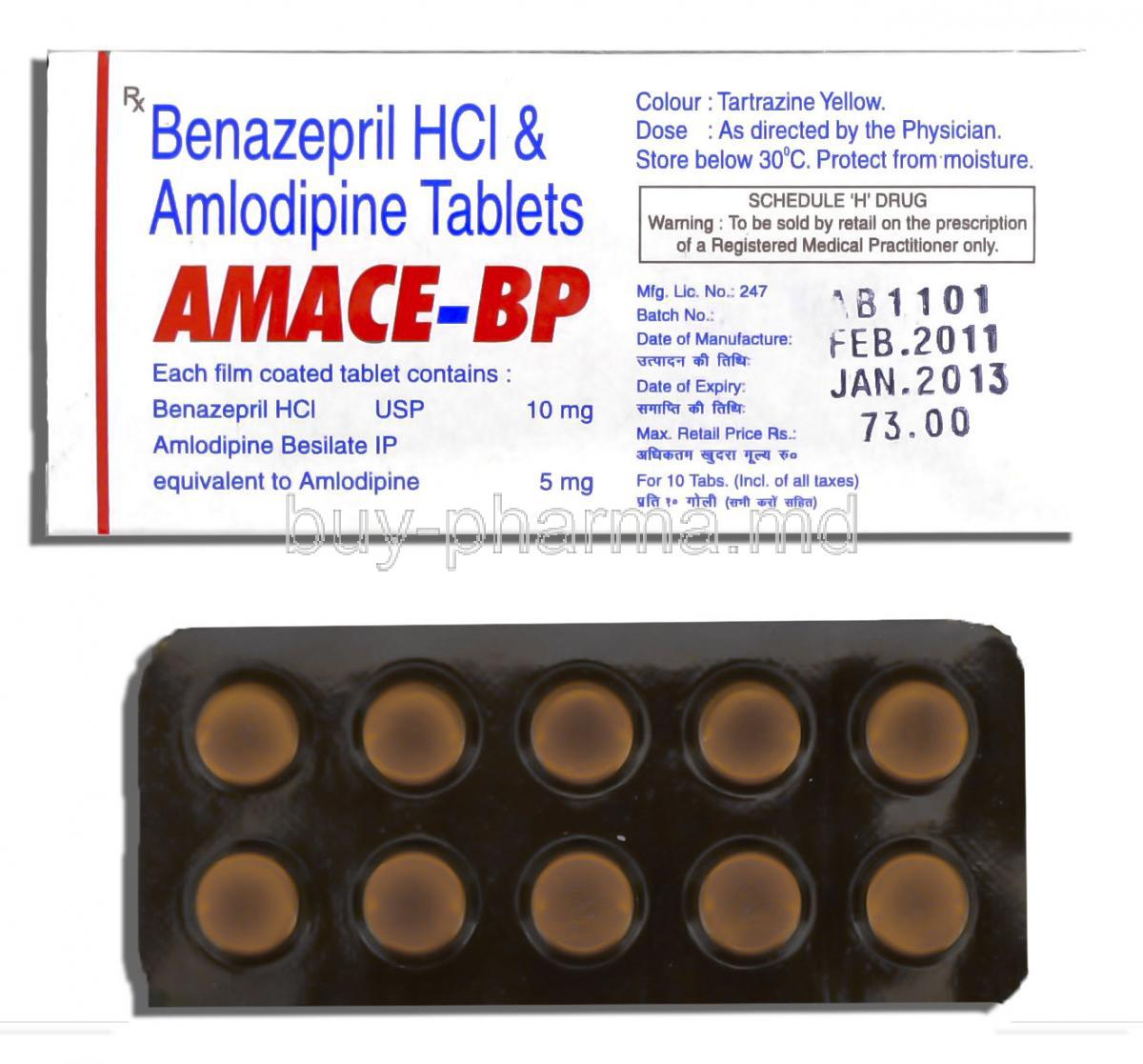
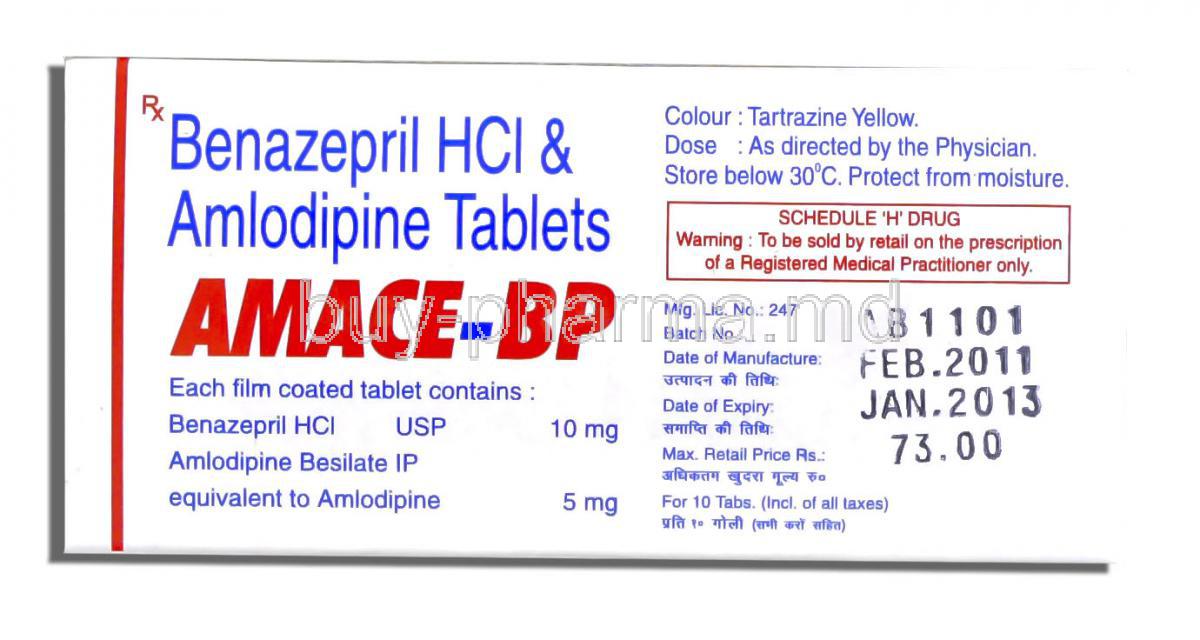
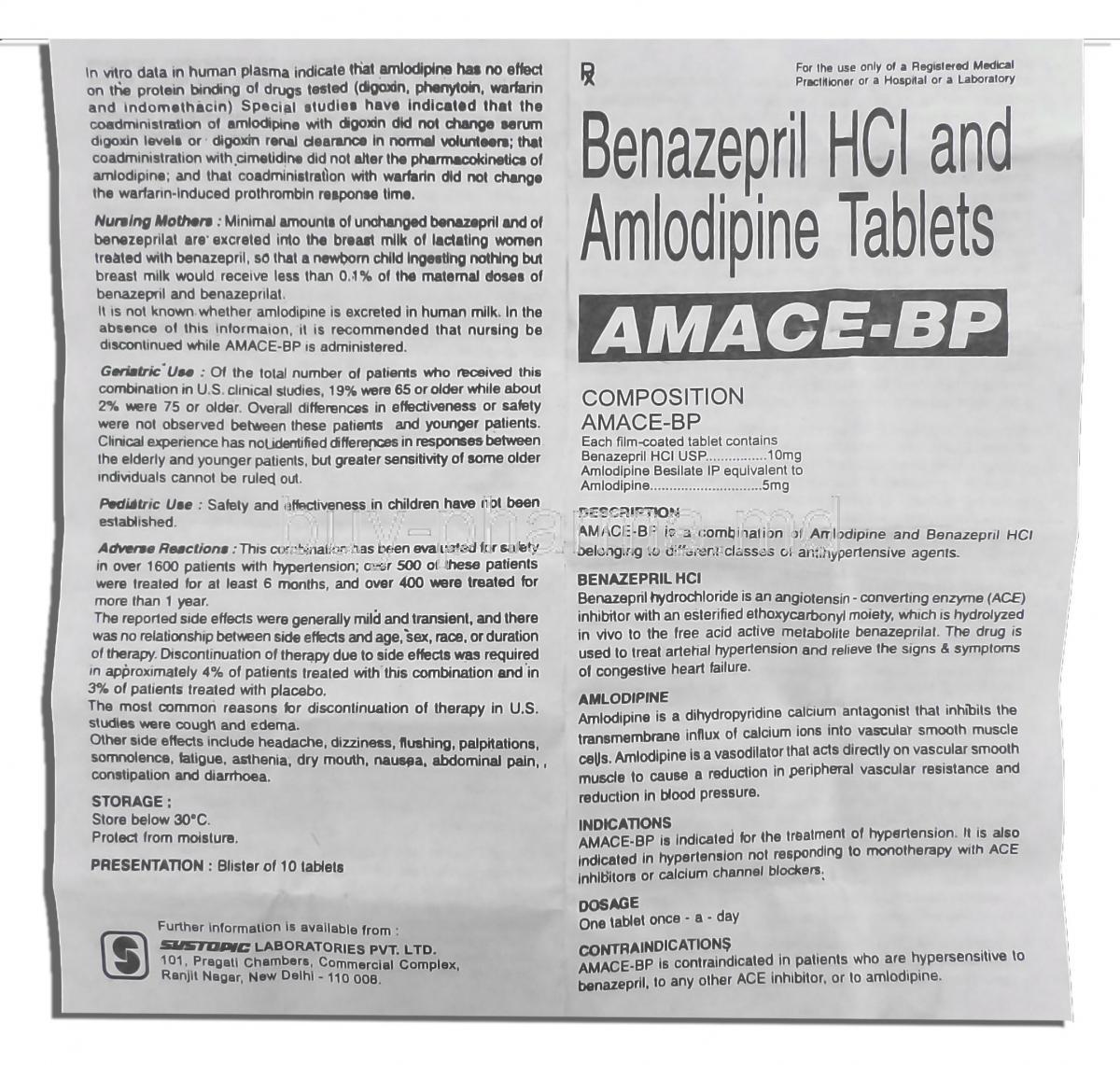
Each capsule contains Amlodipine and Benazepril in varying strengths to meet individual therapeutic needs.
4.2 Inactive Ingredients
Formulation includes stabilizers, fillers, and capsule constituents designed to maintain stability and promote optimal absorption.
4.3 Available Dosage Strengths and Capsule Colors
Strengths may include 2.5/10 mg, 5/10 mg, or 10/20 mg combinations depending on clinical requirements.
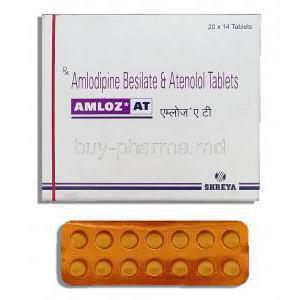
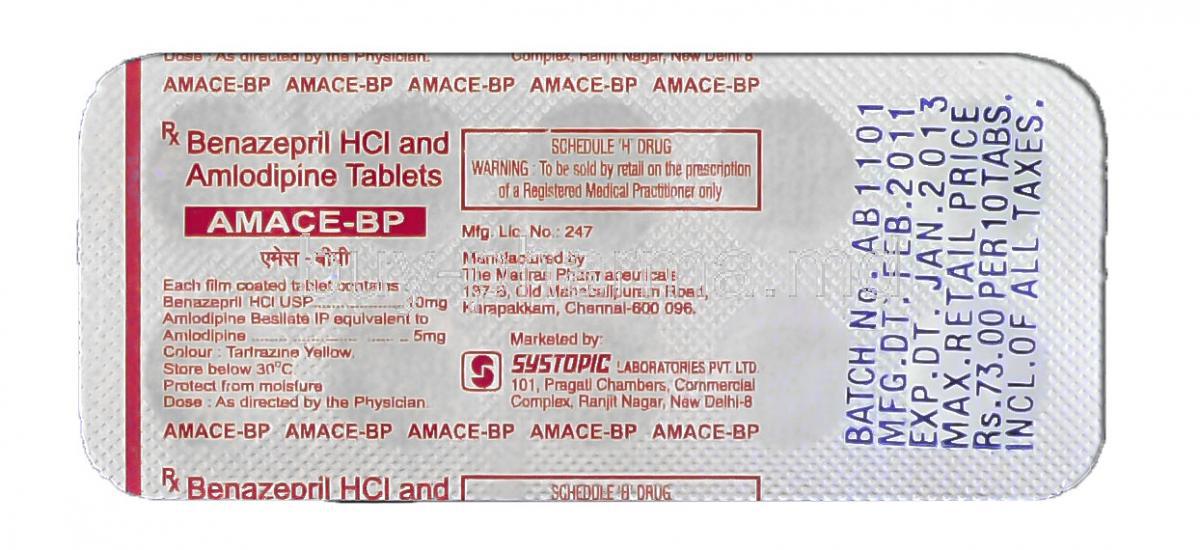
4.4 Packaging Format
Amace-BP is typically supplied in blister strips or sealed bottles to preserve potency.
5. Dosage and Administration Guidelines
5.1 Standard Recommended Starting Dosages
Initial dosage often depends on prior antihypertensive therapy and baseline blood pressure levels.
5.2 Titration Guidelines
Doses may be adjusted at intervals of 1–2 weeks to achieve patient-specific targets.
5.3 How and When to Take Amace-BP
The medication is usually taken once daily, ideally at the same time each day.
5.4 Missed Dose Instructions
If a dose is missed, it should be taken promptly unless it is near the next scheduled dose.
5.5 Dose Adjustments for Renal Impairment
Patients with reduced kidney function may require lower or less frequent dosing.
5.6 Dose Adjustments for Hepatic Impairment
Hepatic disease may increase levels of Amlodipine, necessitating careful dose selection.
5.7 Duration of Treatment
Therapy is typically long-term, as hypertension is a chronic condition requiring continuous control.
5.8 Switching From Monotherapy
Patients may be transitioned gradually to combination therapy when monotherapy is insufficient.
6. Important Precautions Before Using Amace-BP
6.1 Assessing Baseline Kidney Function
Renal evaluation is essential to avoid complications related to ACE inhibitors.
6.2 Monitoring Potassium Levels
Benazepril may increase potassium levels, requiring periodic testing.
6.3 Risks of Symptomatic Hypotension
Severe volume depletion or high-dose diuretics may increase the risk of pronounced hypotension.
6.4 Cough and Hypersensitivity
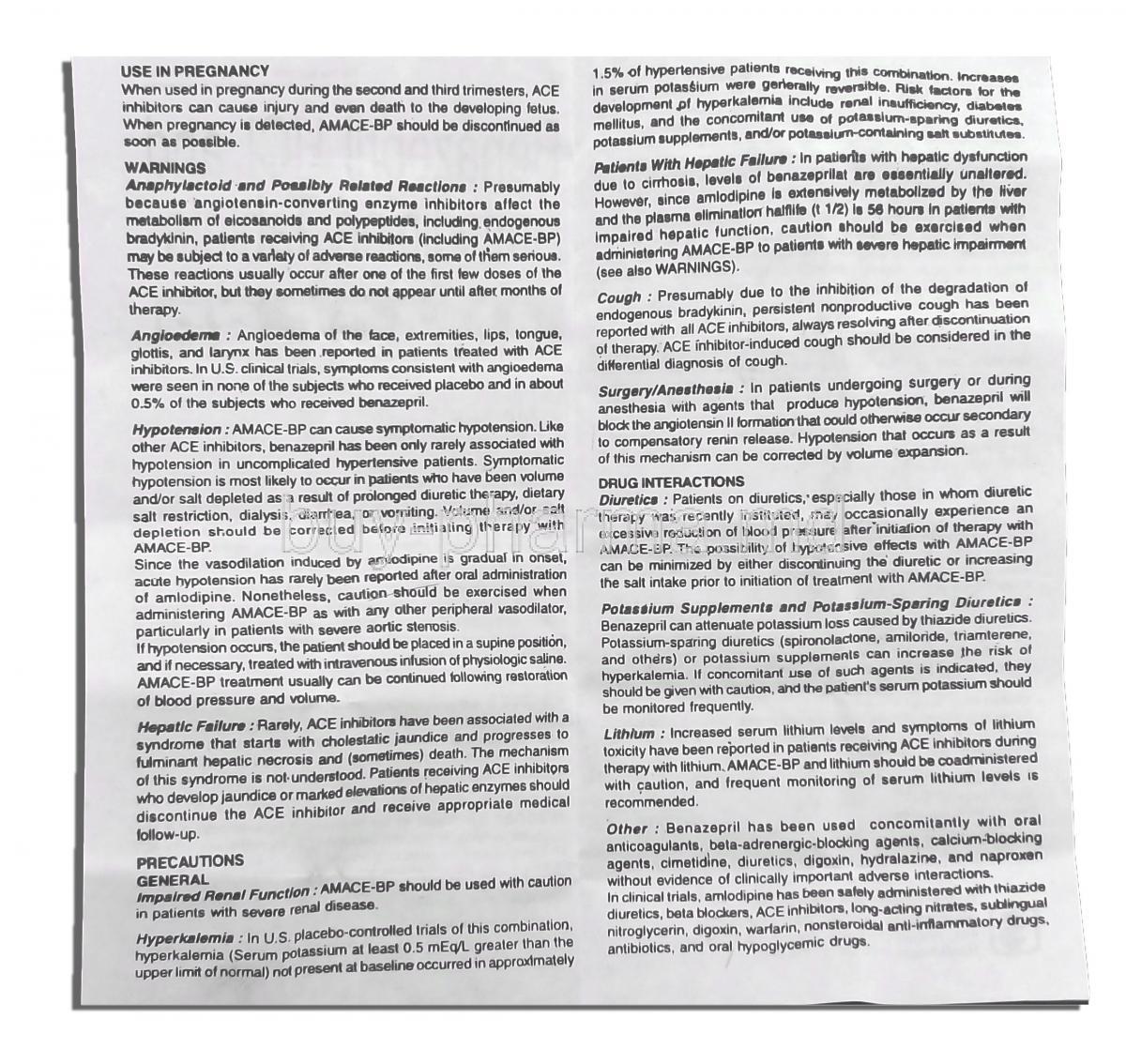
ACE inhibitors may cause persistent dry cough or, rarely, hypersensitivity reactions.
6.5 Avoiding Dehydration
Adequate fluid intake is crucial to prevent renal stress.
6.6 Need for Regular Blood Pressure Monitoring
Routine home monitoring helps track therapeutic effectiveness.
6.7 Drug Use During Hot Weather or Exercise
Excessive sweating or heat exposure may exacerbate hypotension.
7. Contraindications for Amace-BP
7.1 ACE Inhibitor-Induced Angioedema
Patients with a prior history must avoid ACE inhibitor therapies.
7.2 Bilateral Renal Artery Stenosis
Benazepril may worsen kidney function in these patients.
7.3 Severe Hypotension
Use is contraindicated in individuals with critically low blood pressure.
7.4 Pregnancy and Fetal Toxicity Risk
ACE inhibitors may cause fetal harm and are contraindicated during pregnancy.
7.5 Allergy to Amlodipine or Benazepril
Hypersensitivity reactions preclude use.
7.6 Severe Renal Impairment or Anuria
Complete renal shutdown contraindicates ACE inhibitor use.
7.7 Coadministration With Aliskiren
Diabetic patients should not combine ACE inhibitors with aliskiren due to adverse renal outcomes.
8. Careful Administration (Use With Caution)
8.1 Patients With Heart Failure
Monitoring is necessary to avoid worsening symptoms or hypotension.
8.2 Left Ventricular Dysfunction
Careful dosage titration is recommended.
8.3 Hepatic Impairment
Amlodipine levels may rise, requiring surveillance.
8.4 Renal Insufficiency
Benazepril must be administered cautiously to protect kidney function.
8.5 Patients on Diuretics or Potassium Supplements
Risk of hyperkalemia should be considered.
8.6 Autoimmune Disorders
ACE inhibitors may rarely induce immune-associated complications.
8.7 Patients Undergoing Surgery
Blood pressure fluctuations during anesthesia may be more pronounced.
9. Side Effects of Amace-BP
9.1 Overview of Possible Adverse Reactions
Most side effects are mild, but some may warrant dosage changes.
9.2 Cardiovascular-Related Side Effects
- Palpitations
- Peripheral edema
- Flushing
9.3 Renal-Related Side Effects
Changes in kidney function may occur, requiring blood tests.
9.4 Respiratory, Gastrointestinal, and Dermatological Reactions
Dry cough, nausea, stomach discomfort, and occasional skin rash may be observed.
9.5 Rare but Serious Adverse Effects
Angioedema, severe hypotension, or electrolyte disturbances may occur in uncommon cases.
9.6 Recognizing Signs of Angioedema
Swelling of the face, lips, or throat requires immediate discontinuation and emergency care.
9.7 Signs of Excessively Low Blood Pressure
Dizziness, faintness, fatigue, or blurred vision may indicate significant hypotension.
10. Common Side Effects
10.1 Dizziness and Light-Headedness
Dizziness may occur as blood pressure begins to decrease, particularly after the first few doses. Some individuals may experience transient light-headedness when standing up or moving abruptly. This effect typically diminishes as the body adapts to the medication. Adequate hydration and slow positional changes can help reduce this symptom.
10.2 Peripheral Edema (Swelling in Ankles/Legs)
Peripheral edema, often appearing as swelling in the ankles, feet, or lower legs, is a known effect of the calcium channel blocker component. This occurs due to vasodilation of peripheral arteries. While generally mild, persistent swelling may require dosage adjustment or evaluation for alternative therapy.
10.3 Dry Persistent Cough
A distinctive dry, nagging cough may develop due to the ACE inhibitor portion of the medication. This cough is usually harmless but can be bothersome. If the cough becomes intrusive, a reassessment by a healthcare professional may be warranted.
10.4 Flushing or Warmth Sensation
Some patients may feel a sudden warmth or flushing sensation, especially shortly after taking the dose. This effect is related to vasodilation and is typically short-lived. It is usually not harmful unless accompanied by severe dizziness or palpitations.
10.5 Headache or Fatigue
Headaches can occur as the blood vessels relax and blood flow dynamics shift. Fatigue may also emerge due to reduced vascular resistance and lower blood pressure. Most cases are mild and resolve without intervention.
10.6 Mild Gastrointestinal Upset
Nausea, abdominal discomfort, or mild indigestion may occur. These symptoms typically remain manageable and may improve when the medication is taken with food. Hydration and dietary adjustments can help maintain comfort.
10.7 Muscle Weakness or Cramps
Muscle cramps or slight weakness can result from electrolyte fluctuations. Monitoring potassium and hydration levels helps reduce the incidence of these discomforts.
11. Drug Interactions
11.1 Interaction With Potassium-Sparing Diuretics
Using potassium-sparing diuretics may increase the risk of hyperkalemia. This can cause disturbances in heart rhythm and muscle function.
11.2 Interaction With NSAIDs and Impact on Kidney Function
NSAIDs may blunt the antihypertensive effects and increase the risk of kidney damage. Prolonged concurrent use should be avoided unless medically necessary.
11.3 Interaction With Antihypertensive Agents
Combining this medication with other blood pressure–lowering drugs may amplify hypotensive effects. Monitoring is essential to maintain safe blood pressure levels.
11.4 Interaction With Lithium
ACE inhibitors may elevate lithium levels in the blood. Toxicity symptoms such as tremors, confusion, or coordination issues may occur.
11.5 Interaction With Immunosuppressants
Drugs such as cyclosporine may increase renal stress. Regular monitoring of kidney function is advisable.
11.6 Interaction With Diuretics Causing Volume Depletion
Heavy diuretic use can predispose individuals to severe hypotension when starting therapy. Gradual adjustments may be necessary.
11.7 Grapefruit Juice and Amlodipine Metabolism
Grapefruit juice may enhance amlodipine absorption, potentially increasing its effects. Consistent intake should be discussed with a clinician.
11.8 Alcohol Interaction and Enhanced Hypotensive Effects
Alcohol may intensify dizziness and blood pressure–lowering effects. Moderation is advised to prevent excessive hypotension.
12. Administration to Special Populations
12.1 Administration to Elderly Patients
12.1.1 Increased Sensitivity to Antihypertensives
Elderly individuals often respond more strongly to antihypertensive agents, requiring careful dose adjustments.
12.1.2 Monitoring Renal Function Closely
Age-related decline in kidney function makes regular monitoring essential to prevent complications.
12.1.3 Fall Risk Due to Orthostatic Hypotension
Sudden drops in blood pressure can increase fall risk. Slow movements and supervised dose changes are recommended.
12.1.4 Recommended Dosage Adjustments
Lower starting doses may be appropriate to achieve safe and effective outcomes.
12.2 Administration to Pregnant Women and Nursing Mothers
12.2.1 Fetal Toxicity Risk in Second and Third Trimesters
ACE inhibitors can cause severe harm to fetal kidneys, leading to oligohydramnios or developmental complications.
12.2.2 ACE Inhibitors and Pregnancy Risk Category
These drugs are classified as high-risk for pregnancy and should be discontinued immediately if pregnancy is detected.
12.2.3 Contraindication in Pregnancy
This medication must not be used during pregnancy due to the risk of fetal toxicity and mortality.
12.2.4 Safety Considerations During Breastfeeding
Small amounts of the drug may pass into breast milk. Medical advice is required to determine safety.
12.2.5 Alternative Treatments Preferred During Pregnancy
Beta-blockers or certain calcium channel blockers may be preferred alternatives for pregnant patients.
12.3 Administration to Children
12.3.1 Approved Age Ranges for Use
Not all age groups are approved for use. Pediatric application varies by jurisdiction and clinical guidelines.
12.3.2 Safety Data in Pediatric Populations
Long-term data are limited, and careful monitoring is necessary when used off-label.
12.3.3 Dosage Recommendations for Children
Doses are calculated according to weight, age, and clinical response.
12.3.4 Monitoring Growth, Kidney Function, and Blood Pressure
Regular assessments support safe and effective treatment outcomes.
13. Overdosage and Emergency Management
13.1 Symptoms of Overdose (Severe Hypotension, Shock)
Excessive intake may cause dangerously low blood pressure, fainting, or circulatory collapse.
13.2 Immediate Steps in Acute Overdose
Emergency services should be contacted immediately. The patient should be kept lying down with elevated legs.
13.3 Supportive Measures and Fluid Resuscitation
Intravenous fluids may be administered to restore vascular volume and stabilize blood pressure.
13.4 Management of Amlodipine Overdose Toxicity
Calcium infusions and vasopressors may be required for severe vasodilation.
13.5 Dialysis Considerations for Benazepril Overdose
Benazepril is poorly removed by dialysis, so supportive care is prioritized.
13.6 Hospital Monitoring Recommendations
Continuous cardiac and hemodynamic monitoring ensures timely intervention.
14. Storage and Stability Information
14.1 Recommended Storage Temperature Range
The medication should be stored at controlled room temperatures unless otherwise stated.
14.2 Protecting From Moisture, Light, and Heat
Exposure to extreme conditions may degrade potency. Store capsules in a cool, dry area.
14.3 Proper Handling of Blister Packs or Bottles
Blister packs should remain sealed until use. Bottles must be tightly closed after each opening.
14.4 Shelf Life and Expiration Label Guidance
Always check the expiration date, as outdated medication may lose effectiveness.
14.5 Safe Disposal of Unused or Expired Medication
Unused or expired medication should be discarded according to local pharmacy guidelines.
15. Handling Precautions
15.1 Keeping Medication Out of Reach of Children
Children may accidentally ingest capsules, leading to severe adverse effects.
15.2 Safety Measures for Caregivers Handling Capsules
Caregivers should avoid touching broken or leaking capsules directly.
15.3 Avoiding Capsule Tampering or Splitting
Capsules must be swallowed whole to maintain therapeutic integrity.
15.4 Safe Storage During Travel
Travelers should store the medication in its original container and away from heat sources.
15.5 When to Contact a Pharmacist or Clinician
Seek professional advice if side effects worsen, new symptoms appear, or drug interactions are suspected.
Amace-BP, Amlodipine/ Benazepril FAQ
Customers also bought

Similar Product