1. Introduction to Dazit M (Desloratadine / Montelukast)
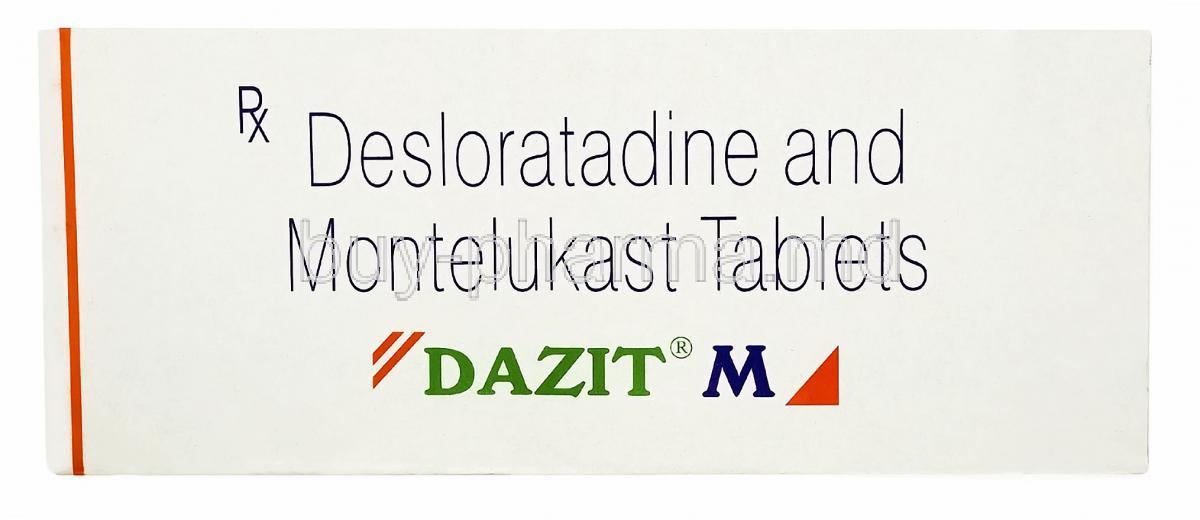
Dazit M is a combination anti-allergic medication designed to address complex allergic conditions through a dual-mechanism therapeutic approach. It integrates an advanced antihistamine with a leukotriene receptor antagonist to provide broader and more sustained symptom control. This pharmacological synergy is particularly valuable in patients with persistent or multifactorial allergic disorders.
Classified under second-generation antihistamines and leukotriene modifiers, Dazit M plays a clinically significant role in the management of inflammatory allergic diseases. Allergic inflammation commonly affects multiple systems, including:
- Upper respiratory tract (rhinitis, sinusitis)
- Lower airways (allergy-related asthma)
- Skin (urticaria, pruritus)
- Ocular tissues (allergic conjunctivitis)
The dual-action profile offers several advantages:
- Reduction of both histamine- and leukotriene-mediated symptoms
- Improved control of nasal congestion compared to antihistamines alone
- Enhanced efficacy in moderate-to-severe or persistent allergic conditions
Combination therapy is often preferred when monotherapy fails to provide adequate relief, when multiple symptom pathways are involved, or when patients experience nocturnal or asthma-associated allergic manifestations.
2. Dazit M tablet Composition
Dazit M contains two pharmacologically complementary active ingredients:
- Desloratadine – a long-acting, non-sedating H1 antihistamine
- Montelukast – a selective leukotriene receptor antagonist
The medication is typically available in fixed-dose tablet formulations designed for once-daily administration. Strength variations may differ by manufacturer, and pediatric-friendly dosage forms may be available in some regions.
Each component contributes uniquely to allergy management:
- Desloratadine targets immediate histamine-mediated symptoms such as itching and sneezing
- Montelukast suppresses leukotriene-driven inflammation, airway edema, and mucus production
Excipients are selected to ensure stability, bioavailability, and patient tolerability. Tablets are usually packaged in moisture-resistant blister packs to preserve potency and maintain product integrity.
Dazit M vs allegra
Dazit M and Allegra are both used to treat allergy symptoms, but Dazit M (desloratadine + montelukast) is a combination medication for stronger, dual-action relief, while standard Allegra (fexofenadine) is a single-ingredient antihistamine. Dazit M addresses both histamine and airway inflammation, whereas Allegra focuses primarily on histamine-related symptoms like sneezing and runny nose.
Desloratadine vs loratadine
Desloratadine (Clarinex) and loratadine (Claritin) are both effective non-drowsy, second-generation antihistamines for treating allergy symptoms. Desloratadine, the active metabolite of loratadine, generally acts faster (1 hour vs 1-3 hours), has a longer half-life (27h vs 6h), and is more effective for congestion. Loratadine is usually over-the-counter (OTC), while desloratadine is often prescription-only
Desloratadine vs cetirizine
Desloratadine (Clarinex) and cetirizine (Zyrtec) are both effective second-generation antihistamines for 24-hour allergy relief, but they differ in speed and side effects. Cetirizine is often faster-acting (within 1 hour) but more likely to cause sedation, while desloratadine is less likely to cause drowsiness but may have a slightly slower onset.
Desloratadine vs claritin
Desloratadine (Clarinex) and Claritin (loratadine) are both second-generation, non-drowsy antihistamines that treat allergies and hives for 24 hours. Desloratadine is the active metabolite of loratadine, acting slightly faster (1 hour vs. 1-3 hours) and is often more effective for severe allergies or chronic hives, while Claritin is more commonly available over-the-counter.
Zafirlukast vs montelukast
Montelukast (Singulair) and zafirlukast (Accolate) are both leukotriene receptor antagonists (LTRAs) used for chronic asthma and allergy management, showing similar efficacy. Montelukast is often preferred due to once-daily dosing and no food restrictions, while zafirlukast requires twice-daily dosing on an empty stomach
3. Mechanism of Action: How Dazit M Works
3.1 Desloratadine Mechanism
Desloratadine exerts its effects through selective peripheral H1-receptor blockade. By inhibiting histamine binding, it prevents the cascade of allergic responses responsible for:
- Sneezing and rhinorrhea
- Pruritus of the nose, eyes, and skin
- Vasodilation and mucosal edema
Its minimal penetration across the blood-brain barrier contributes to a low sedative profile.
3.2 Montelukast Mechanism
Montelukast selectively antagonizes cysteinyl leukotriene type 1 (CysLT1) receptors. Leukotrienes are potent inflammatory mediators involved in:
- Bronchoconstriction
- Mucus hypersecretion
- Airway and nasal mucosal inflammation
- Eosinophil recruitment
Blocking this pathway helps control both upper and lower airway inflammatory responses.
3.3 Synergistic Therapeutic Effects
The combination provides dual-pathway modulation of allergic inflammation. This integrated approach is particularly beneficial for patients with persistent symptoms, mixed allergic phenotypes, or moderate-to-severe disease requiring comprehensive control.
4. Dazit M Tablet Uses
4.1 Allergic Rhinitis
Dazit M is commonly prescribed for both seasonal and perennial allergic rhinitis. It effectively reduces:
- Sneezing
- Nasal itching and congestion
- Watery nasal discharge
- Ocular irritation
4.2 Chronic Urticaria (Chronic Hives)
The antihistamine component provides symptomatic relief from persistent hives, while the anti-inflammatory action may help reduce flare frequency and severity.
4.3 Allergic Respiratory Symptoms
The medication helps control upper airway hypersensitivity manifestations such as:
- Post-nasal irritation
- Allergy-related cough
- Throat discomfort
4.4 Asthma-Related Allergic Symptoms (Adjunct Therapy)
Montelukast contributes to the management of allergy-triggered bronchial inflammation. This is particularly useful for:
- Nocturnal symptoms
- Exercise-induced respiratory discomfort
- Allergic asthma exacerbation prevention
5. Expanded and Off-Label Uses
In clinical practice, Dazit M may be used as adjunctive therapy in selected conditions associated with allergic inflammation, including:
- Allergic conjunctivitis symptom relief
- Pruritus associated with atopic dermatitis
- Chronic cough linked to allergic airway hyperresponsiveness
- Eosinophilic airway inflammation
- Sinusitis related to allergic rhinitis
- Prevention of exercise-induced bronchoconstriction
- Supportive therapy in allergic asthma prevention
- Management of post-nasal drip syndrome
6. Dosage and Administration Guidelines
The typical adult regimen consists of once-daily oral administration, preferably at the same time each day. Pediatric dosing depends on age, body weight, and clinical indication.
General considerations include:
- Evening administration may be preferred for patients with nocturnal symptoms
- Seasonal therapy may be initiated prior to allergen exposure
- Chronic conditions may require extended treatment duration
If a dose is missed, it should be taken as soon as remembered unless the next scheduled dose is imminent. Dose adjustments may be necessary in patients with hepatic impairment or those receiving interacting medications.
7. How to Take Dazit M Safely
Dazit M can be taken with or without food. However, maintaining consistent daily use enhances therapeutic stability and prevents symptom recurrence.
- Symptom improvement may begin within a few hours
- Maximum benefit may require several days of continuous use
- Long-term therapy should be periodically reviewed by a healthcare professional
Irregular use may reduce efficacy and lead to fluctuating symptom control.
8. Common Side Effects of Dazit M
The medication is generally well tolerated. Commonly reported mild adverse effects include:
- Headache
- Dry mouth
- Fatigue or mild drowsiness
- Gastrointestinal discomfort
- Mild throat irritation
These reactions are typically transient and resolve without intervention.
9. Other Possible Side Effects and Adverse Reactions
Although uncommon, more significant adverse events may occur. Particular attention should be given to neuropsychiatric symptoms associated with Montelukast, such as:
- Sleep disturbances or vivid dreams
- Anxiety, irritability, or mood changes
- Behavioral alterations
Other rare but notable reactions include:
- Skin rash or hypersensitivity reactions
- Elevated liver enzymes
- Severe allergic reactions, including anaphylaxis
Any unusual psychological or systemic symptoms should prompt medical evaluation.
10. Drug Interactions and Food Interactions
Dazit M may interact with medications that influence hepatic enzyme activity, particularly those affecting the cytochrome P450 system.
- Enzyme inducers such as rifampicin or phenobarbital may reduce Montelukast levels
- Concurrent use with other antihistamines or leukotriene modifiers should be medically supervised
- Alcohol may potentiate central nervous system effects in sensitive individuals
- Generally compatible with inhaled corticosteroids and standard asthma therapies
Montelukast interactions
Montelukast (Singulair) has few major drug interactions, but it can interact with rifampin, gemfibrozil, and certain seizure medications. Key concerns include reduced effectiveness of warfarin and potential increased neuropsychiatric side effects, such as depression or anxiety. While it is generally safe with most medications, monitor for behavioral changes.
Patients should inform healthcare providers of all prescription, over-the-counter, and herbal products to minimize interaction risks.
11. Warnings and Safety Information
Dazit M requires careful clinical consideration due to the presence of Montelukast, which has been associated with neuropsychiatric adverse events in certain individuals. Although uncommon, these reactions can be clinically significant and warrant vigilant monitoring.
Potential neuropsychiatric manifestations may include:
- Agitation or irritability
- Anxiety or depressive symptoms
- Sleep disturbances or vivid dreams
- Behavioral changes or unusual mood fluctuations
- Rare reports of suicidal ideation
The medication is not intended for the management of acute asthma exacerbations. It does not provide rapid bronchodilation and should not replace rescue inhalers or emergency treatment protocols.
Additional safety considerations include:
- Periodic liver function monitoring in patients with hepatic impairment
- Cautious use in individuals with a prior history of psychiatric or neurological disorders
- Clinical reassessment during prolonged therapy to ensure continued therapeutic necessity
Desloratadine alcohol interaction sedation
Desloratadine is generally considered a non-sedating antihistamine that does not significantly increase the impairment or sedation caused by alcohol. Unlike older antihistamines, studies indicate desloratadine does not enhance alcohol-induced psychomotor impairment. However, excessive alcohol consumption can still cause sedation independently.
A structured risk–benefit evaluation is recommended for long-term use, particularly in patients with mild symptoms where alternative therapies may suffice.
12. Contraindications
Dazit M should not be administered in patients with known hypersensitivity to any of its active components or formulation excipients. Hypersensitivity reactions may range from mild dermatologic manifestations to severe systemic responses.
Absolute contraindications include:
- Allergy to Desloratadine, Montelukast, or any inactive ingredient
- History of severe allergic reactions to similar second-generation antihistamines or leukotriene receptor antagonists
- Previous serious neuropsychiatric adverse reaction attributed to Montelukast
In such cases, alternative therapeutic strategies should be considered to avoid recurrence of adverse outcomes.
13. Careful Administration and Important Precautions
Optimal therapeutic outcomes are achieved when Dazit M is used at the lowest effective dose for the shortest duration necessary. Unwarranted dose escalation or prolonged unsupervised use should be avoided.
Clinical precautions include:
- Monitoring for mood changes, sleep disturbances, or behavioral alterations
- Gradual therapeutic transition when replacing existing antihistamine or anti-allergic regimens
- Enhanced caution in patients with hepatic dysfunction due to altered drug metabolism
- Periodic clinical review for patients receiving long-term therapy
Unnecessary chronic administration without medical supervision may increase the risk of cumulative adverse effects without additional clinical benefit.
14. Administration in Special Populations
14.1 Use in Elderly Patients
Elderly individuals generally tolerate Dazit M well; however, age-related physiological changes and comorbid conditions may influence drug response.
- Increased sensitivity to central nervous system effects may occur
- Polypharmacy raises the potential for drug–drug interactions
- Periodic medication review is advisable to minimize therapeutic redundancy
14.2 Use During Pregnancy
Available safety data are limited, and the medication should be used during pregnancy only when the anticipated clinical benefit outweighs potential fetal risk.
- Avoid routine use in mild or self-limiting conditions
- Medical supervision is essential
- Consider alternative therapies when appropriate
14.3 Use in Nursing Mothers
Both Desloratadine and Montelukast may be excreted in breast milk in small quantities. Although adverse effects in infants are unlikely, caution is advised.
- Assess the necessity of treatment during lactation
- Monitor the infant for unusual irritability or feeding disturbances
- Consider temporary discontinuation if clinically indicated
14.4 Use in Children
Pediatric use requires age-appropriate dosing and careful clinical oversight. When administered correctly, the combination demonstrates favorable safety and efficacy in allergic conditions.
- Use formulations and strengths suitable for the child’s age and weight
- Monitor for behavioral or sleep-related changes
- Regular follow-up is recommended during long-term therapy
15. Overdose and Management
Accidental or intentional overdose may result in exaggerated pharmacological effects. Symptoms can involve both central nervous system and gastrointestinal disturbances.
Possible overdose manifestations include:
- Drowsiness or agitation
- Headache or dizziness
- Nausea, vomiting, or abdominal discomfort
- Restlessness or behavioral changes
Management principles include:
- Immediate medical evaluation
- Symptomatic and supportive care
- Monitoring of vital signs and neurological status
- Gastrointestinal decontamination if clinically appropriate and within a suitable time frame
There is no specific antidote for Desloratadine or Montelukast.
16. Storage and Shelf-Life Information
Proper storage is essential to maintain the pharmacological stability and therapeutic efficacy of Dazit M.
- Store at controlled room temperature, typically below 25°C
- Protect from excessive heat, humidity, and direct sunlight
- Keep tablets in original packaging to prevent moisture exposure
- Store out of reach and sight of children
Patients should always check the expiration date prior to use and avoid administering medication beyond its labeled shelf life.
17. Handling Precautions
Safe handling practices help preserve product integrity and minimize accidental misuse.
- Do not use tablets that are broken, discolored, or damaged
- Avoid handling with wet hands to prevent moisture degradation
- Unused or expired medication should not be disposed of in household drains or open environments
- Follow local pharmaceutical disposal guidelines when available
Patients should receive clear counseling regarding safe storage, especially in households with children or vulnerable individuals.
18. Patient Counseling and Lifestyle Advice
Pharmacotherapy alone may not fully control allergic disease. Comprehensive management includes environmental control and patient education.
Recommended allergen avoidance strategies:
- Minimize exposure to dust mites, pollen, pet dander, and mold
- Use air purifiers or high-efficiency filters when appropriate
- Maintain regular cleaning and humidity control indoors
- Avoid outdoor exposure during peak pollen periods
Additional counseling points include:
- Take the medication consistently to maintain symptom control
- Do not discontinue therapy abruptly without medical advice
- Seek medical attention if symptoms worsen or new neurological or allergic reactions occur
- Combine pharmacologic treatment with lifestyle modifications for optimal long-term outcomes
Adherence and environmental vigilance together provide the most effective strategy for sustained allergy control.
Dazit M, Desloratadine/ Montelukast FAQ
- What is Dazit M used for?
- Is dazit a steroid Tablet?
- How long does it take for Dazit M to work?
- Is Dazit a good antihistamine?
- Does Dazit cause sleepiness?
- What are the side effects of dazit 10mg?
- When to take Dazit M?
- Can I drive after taking Dazit M?
- Is Dazit a strong medicine?
- Can we take Dazit twice a day?
- What is Dazit M for?
- How long does Dazit last?
- Do dazit m tablets cause sleepiness?
- Does Dazit reduce itching?
- How many Dazit tablets per day?
- Is Dazit tablet an antibiotic?
- When to take Dazit M?
- Can Dazit cause weight gain?
- What is montelukast and desloratadine used for?
- Can you take desloratadine with montelukast?
- Do montelukast and desloratadine tablets cause sleepiness?
- What are the side effects of montelukast desloratadine?
- When to take montelukast and desloratadine tablets?
- Are montelukast & desloratadine safe?
What is Dazit M used for?
Dazit M Tablet is a treatment for hay fever, an allergy that occurs when the seasons change. It helps with symptoms like a runny or stuffy nose, sneezing, and itchiness. It works by reducing the amount of histamine in the body, a substance that triggers these allergic reactions. By lowering histamine levels, Dazit M Tablet can relieve the uncomfortable symptoms of hay fever, making it easier to breathe and feel better overall.
Is dazit a steroid Tablet?
No
How long does it take for Dazit M to work?
1 hour
Is Dazit a good antihistamine?
Yes
Does Dazit cause sleepiness?
Less likely
What are the side effects of dazit 10mg?
- Fatigue
- Dry mouth
- Headache
When to take Dazit M?
For persistent or severe allergy symptoms
Can I drive after taking Dazit M?
No
Is Dazit a strong medicine?
Yes
Can we take Dazit twice a day?
Yes
What is Dazit M for?
Dazit M Tablet is a combination of Montelukast and Desloratadine. This medicine is used to relieve allergy symptoms such as a runny nose, sneezing, nasal congestion, watery eyes, itching, and a rash. It stops the action of a natural substance called histamine, produced in your body during an allergic reaction.
How long does Dazit last?
24 hours
Do dazit m tablets cause sleepiness?
Yes
Does Dazit reduce itching?
Yes
How many Dazit tablets per day?
Once
Is Dazit tablet an antibiotic?
No
When to take Dazit M?
- Sneezing
- Stuffy nose
- Hay fever
Can Dazit cause weight gain?
Yes
What is montelukast and desloratadine used for?
It is used to treat sneezing, runny nose and seasonal allergies.
Can you take desloratadine with montelukast?
Yes
Do montelukast and desloratadine tablets cause sleepiness?
Yes
What are the side effects of montelukast desloratadine?
- Tiredness
- Dry mouth
- Abdominal pain
- Headache
When to take montelukast and desloratadine tablets?
Once in the evening
Are montelukast & desloratadine safe?
Yes
Popular Products

Similar Product