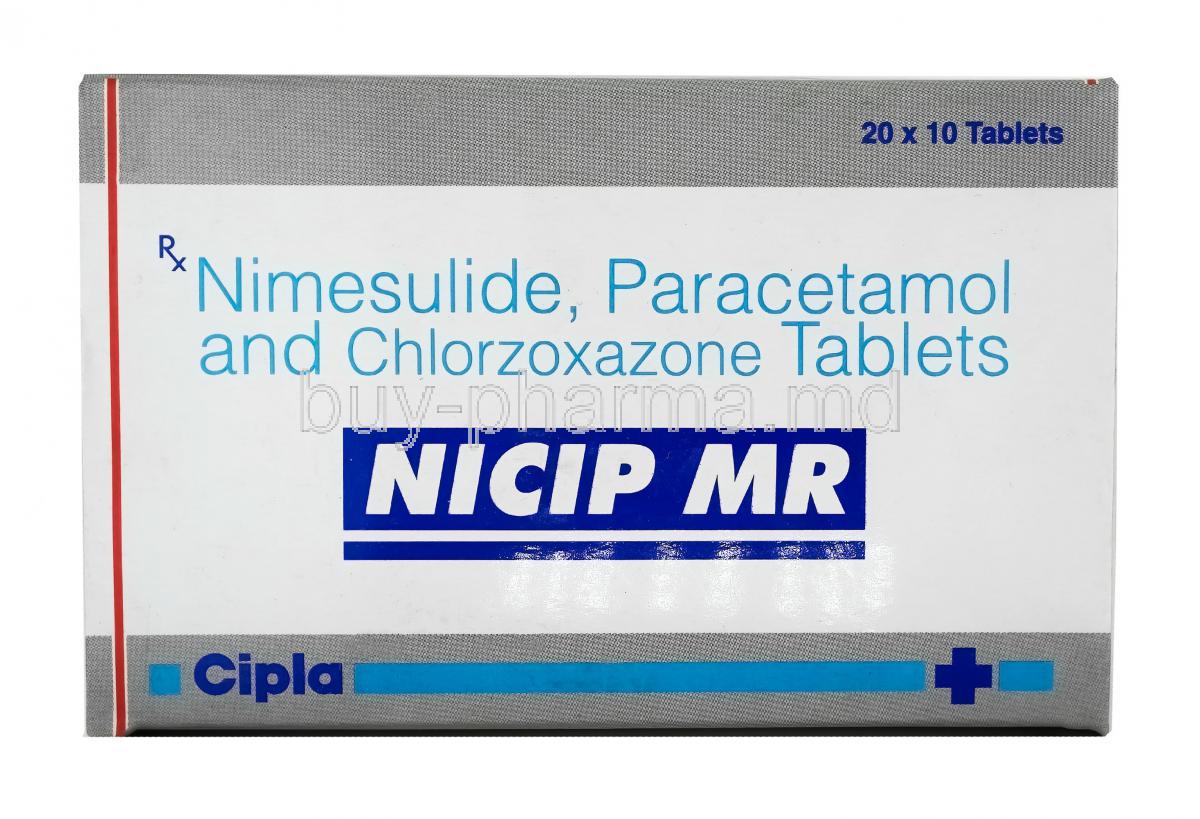
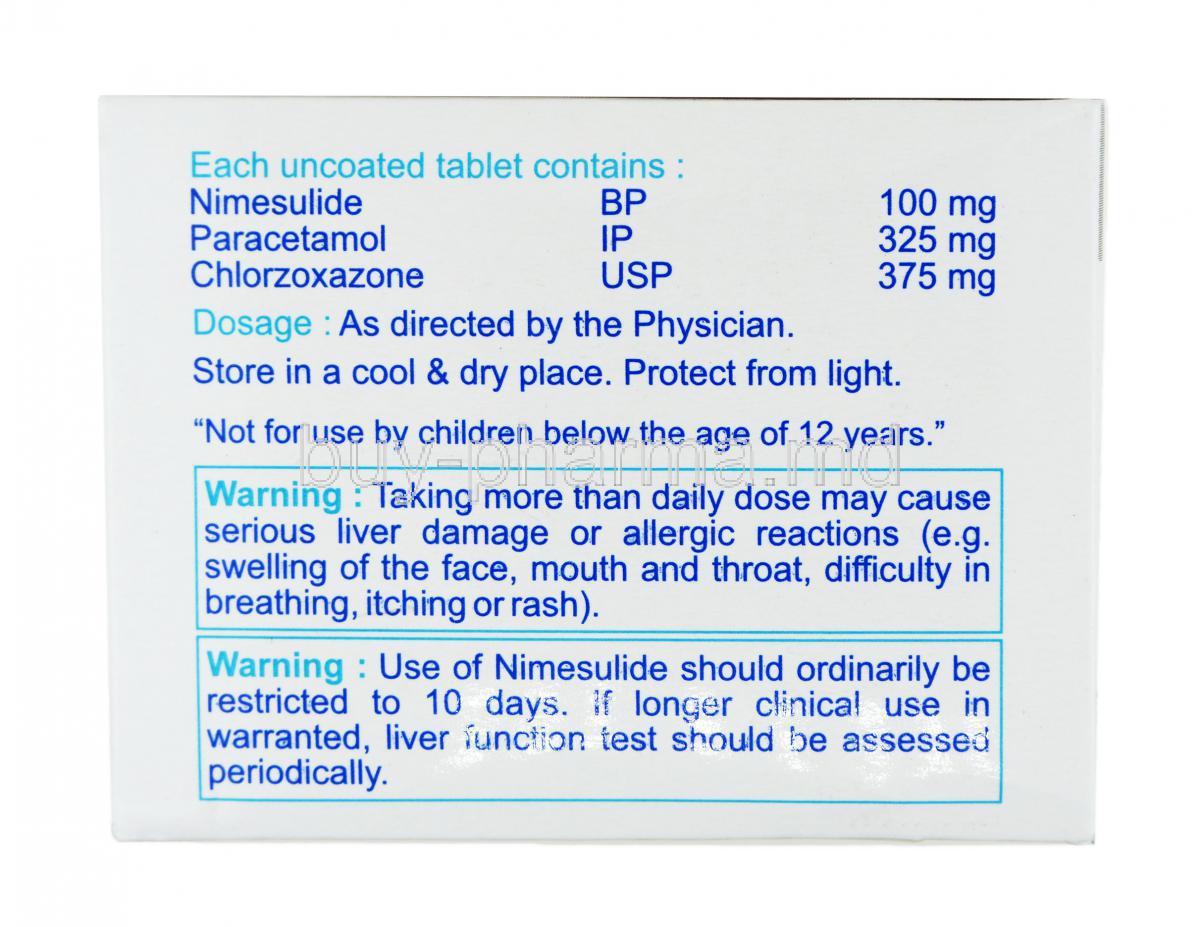

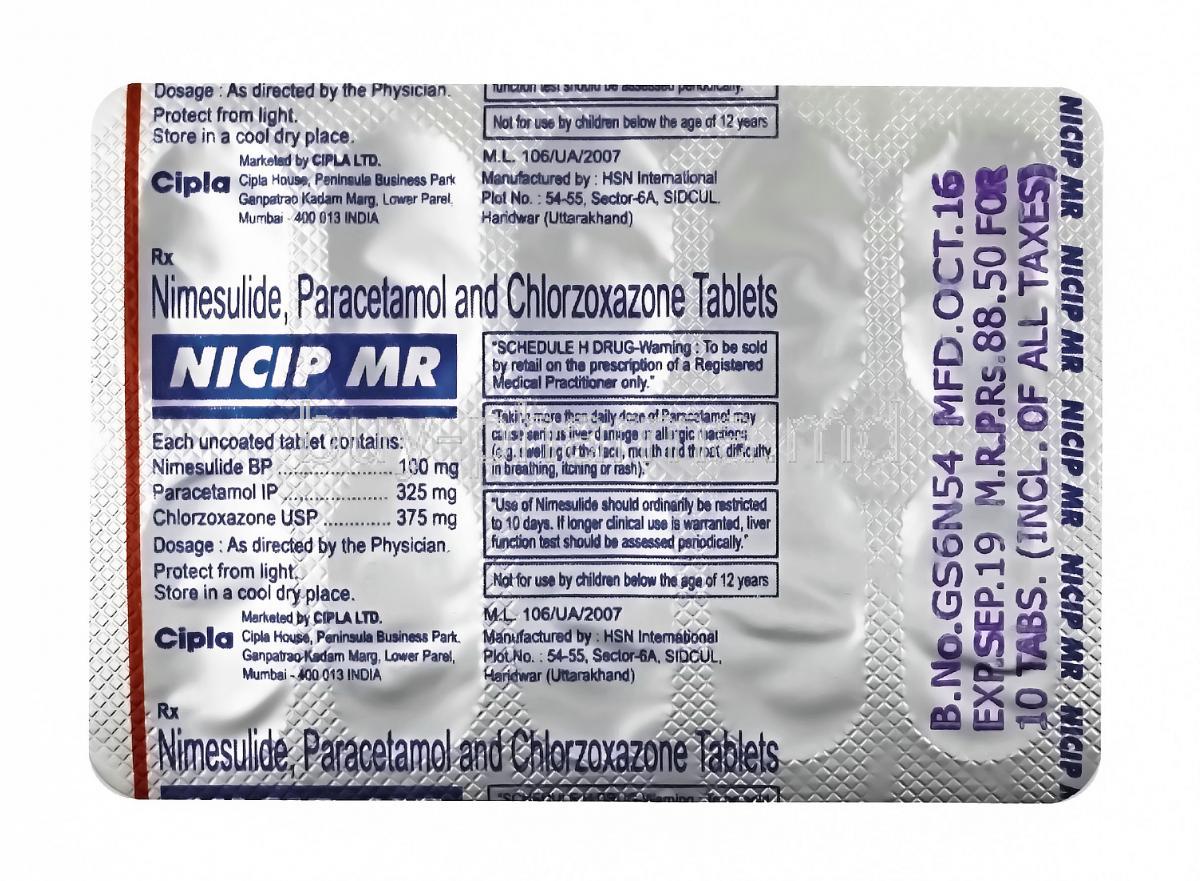
1. Introduction to Nicip MR (Nimesulide / Paracetamol / Chlorzoxazone)
1.1 Overview of Combination Therapy for Pain and Muscle Spasm
Nicip MR represents a strategically engineered pharmacological combination designed to alleviate pain while simultaneously addressing underlying muscle spasm. Acute discomfort often arises from multifactorial origins—namely inflammation, nociceptive signaling, and muscular hypertonicity. This formulation targets all three domains.
- Reduces inflammation at the tissue level
- Suppresses central pain perception
- Relaxes skeletal muscle contractions
The result is a more comprehensive therapeutic response compared to monotherapy.
1.2 Therapeutic Classification (NSAID + Analgesic + Muscle Relaxant)
This medication belongs to a triad classification:
- Nonsteroidal Anti-inflammatory Drug (NSAID)
- Central Analgesic/Antipyretic
- Centrally Acting Muscle Relaxant
Such a classification underscores its polyvalent utility in clinical pain management protocols.
1.3 Clinical Rationale for Multi-Mechanism Formulations
Pain syndromes rarely operate via a single pathway. Monotherapeutic approaches may prove insufficient, particularly in cases involving musculoskeletal injury or chronic tension. Combining agents with complementary mechanisms enhances efficacy while potentially reducing the need for dose escalation.
1.4 Brand Positioning and Prescription Context
Nicip MR is typically prescribed for short-term use in acute conditions requiring rapid symptomatic relief. It is frequently utilized in orthopedic, rheumatologic, and general practice settings where inflammation and muscle spasm coexist.
2. Composition and Active Ingredients
2.1 Nimesulide: Selective COX-2 Inhibitor Properties
Nimesulide exhibits preferential inhibition of cyclooxygenase-2 (COX-2), thereby attenuating prostaglandin synthesis responsible for inflammation and pain. Its selectivity may reduce certain gastrointestinal risks compared to non-selective NSAIDs.
2.2 Paracetamol (Acetaminophen): Central Analgesic and Antipyretic Action
Paracetamol acts centrally within the hypothalamus to reduce fever and modulate pain perception. It lacks significant peripheral anti-inflammatory action but complements NSAIDs effectively.
2.3 Chlorzoxazone: Centrally Acting Muscle Relaxant
Chlorzoxazone exerts its effects within the spinal cord and subcortical brain regions. It reduces skeletal muscle spasm without directly affecting muscle fibers.
2.4 Synergistic Effects of the Triple Combination
The tri-component synergy enhances therapeutic breadth. Each ingredient addresses a distinct yet interconnected pathway, creating a unified analgesic effect.
2.5 Excipients and Formulation Considerations
Inactive constituents ensure tablet stability, bioavailability, and palatability. Though pharmacologically inert, they play a pivotal role in drug delivery efficiency.
3. Mechanism of Action (How It Works)
3.1 Prostaglandin Inhibition via COX Pathway Modulation
Nimesulide suppresses COX-mediated prostaglandin synthesis, mitigating inflammatory cascades and peripheral sensitization.
3.2 Central Pain Signal Modulation by Paracetamol
Paracetamol modulates serotonergic pathways and inhibits central prostaglandin production, attenuating nociceptive transmission.
3.3 Skeletal Muscle Relaxation through Spinal Reflex Suppression
Chlorzoxazone dampens polysynaptic reflex arcs. The effect is subtle yet clinically meaningful—muscle rigidity diminishes, mobility improves.
3.4 Anti-inflammatory, Analgesic, and Antispasmodic Synergy
The formulation orchestrates a tripartite pharmacodynamic response:
- Anti-inflammatory action
- Analgesic relief
- Muscle relaxation
3.5 Pharmacodynamic Interactions Between Components
These agents operate via distinct yet complementary pathways, minimizing pharmacological redundancy while maximizing efficacy.
4. Primary Uses of Nicip MR
4.1 Management of Acute Musculoskeletal Pain
Ideal for acute presentations such as sudden back pain or strain-induced discomfort.
4.2 Treatment of Muscle Spasm Associated with Injury
Frequently prescribed following trauma where involuntary muscle contraction exacerbates pain.
4.3 Relief of Lower Back Pain and Cervical Spondylosis
Provides symptomatic relief in degenerative spinal conditions.
4.4 Post-traumatic Pain and Soft Tissue Injury
Effective in contusions, ligament injuries, and minor trauma.
4.5 Orthopedic Conditions (Sprains, Strains, Sports Injuries)
- Ligament sprains
- Muscle strains
- Sports-induced microtrauma
4.6 Pain Associated with Degenerative Joint Disorders
Used adjunctively in osteoarthritis and related conditions.
4.7 Tension-related Muscular Pain Syndromes
Particularly useful in stress-induced muscular tightness.
5. Expanded and Off-Label Uses
5.1 Myofascial Pain Syndrome Management
Helps alleviate trigger point-associated pain.
5.2 Fibromyalgia Symptom Relief (Adjunctive Use)
May be used alongside other therapies to reduce pain burden.
5.3 Postoperative Muscle Pain and Spasm
Facilitates recovery by reducing muscle rigidity.
5.4 Chronic Neck and Shoulder Pain Syndromes
Common in sedentary or occupational strain conditions.
5.5 Pain in Neuromuscular Disorders (Supportive Therapy)
Provides symptomatic relief without altering disease progression.
5.6 Dysmenorrhea with Associated Muscle Spasm
Reduces uterine cramping and associated discomfort.
5.7 Headache Associated with Muscle Tension
Particularly effective in tension-type headaches.
5.8 Pain in Occupational Overuse Syndromes
Useful in repetitive strain injuries.
6. Dosage and Administration Guidelines
6.1 Standard Adult Dosage Recommendations
Typically administered as directed by a healthcare professional, often once or twice daily depending on severity.
6.2 Duration of Therapy and Short-Term Use Considerations
Short-term usage is recommended due to potential hepatic risks.
6.3 Administration with Food to Minimize GI Irritation
Taking the medication postprandially reduces gastrointestinal discomfort.
6.4 Dose Adjustments Based on Severity of Symptoms
Clinical discretion guides titration.
6.5 Missed Dose and Compliance Recommendations
Missed doses should not be doubled. Resume normal schedule.
6.6 Avoidance of Dose Duplication with Other Analgesics
Particular caution with other paracetamol-containing products.
7. Side Effects of Nicip MR
7.1 Overview of Adverse Drug Reactions
Adverse effects range from mild to severe, necessitating vigilance.
7.2 Gastrointestinal Disturbances (Nausea, Dyspepsia)
Common with NSAID components.
7.3 Central Nervous System Effects (Drowsiness, Dizziness)
Attributed primarily to chlorzoxazone.
7.4 Hepatic Effects and Liver Enzyme Elevation
Potential hepatotoxicity warrants monitoring.
7.5 Allergic Reactions and Hypersensitivity Responses
Includes rash, urticaria, and rare anaphylaxis.
7.6 Rare but Serious Adverse Events
- Severe liver injury
- Gastrointestinal bleeding
- Stevens-Johnson syndrome (rare)
8. Common Side Effects
8.1 Mild Gastrointestinal Discomfort
Often transient and self-limiting.
8.2 Fatigue and Sedation Due to Muscle Relaxant
Patients may experience lethargy.
8.3 Headache or Lightheadedness
Typically mild in intensity.
8.4 Dry Mouth or Mild GI Upset
Manageable with hydration.
8.5 Temporary Changes in Appetite
Rare and reversible.
9. Drug Interactions
9.1 Interaction with Other NSAIDs and Analgesics
Increases risk of toxicity.
9.2 Hepatotoxic Risk with Alcohol and Hepatic Enzyme Inducers
Alcohol consumption significantly elevates liver injury risk.
9.3 Interaction with Anticoagulants and Antiplatelet Agents
May potentiate bleeding risk.
9.4 CNS Depressants and Sedative Drugs
Enhanced sedation may occur.
9.5 Interaction with Antihypertensive Medications
NSAIDs may reduce antihypertensive efficacy.
9.6 Effect on Drugs Metabolized by Hepatic Enzymes
Metabolic interference may alter plasma drug levels.
10. Warnings and Safety Considerations
10.1 Risk of Hepatotoxicity with Nimesulide and Paracetamol
One of the most critical concerns. Liver function monitoring is advisable.
10.2 Gastrointestinal Bleeding Risk
Especially in prolonged use or high-risk individuals.
10.3 Sedation and Impairment of Motor Skills
Driving or operating machinery should be approached cautiously.
10.4 Avoidance in Patients with Liver Dysfunction
Contraindicated in active hepatic disease.
10.5 Monitoring During Prolonged Use
- Liver function tests
- Renal parameters
- Clinical symptom review
10.6 Risk in Patients with Substance Use History
Alcohol or drug misuse may exacerbate adverse outcomes, particularly hepatotoxicity.
11. Contraindications
11.1 Hypersensitivity to Nimesulide, Paracetamol, or Chlorzoxazone
Administration is strictly contraindicated in individuals with known hypersensitivity to any component of the formulation. Even minimal exposure may precipitate immunologic reactions ranging from mild dermatologic eruptions to severe, life-threatening anaphylaxis.
- Cutaneous manifestations: rash, urticaria
- Respiratory compromise: bronchospasm
- Systemic reactions: angioedema, anaphylaxis
11.2 Severe Hepatic Impairment or Active Liver Disease
Patients with compromised hepatic function are at significantly heightened risk of drug-induced hepatotoxicity. The combined hepatic burden of nimesulide and paracetamol renders this population particularly vulnerable.
11.3 History of NSAID-Induced Ulcer or GI Bleeding
A prior history of gastrointestinal ulceration or hemorrhage associated with NSAID therapy constitutes a major contraindication. Re-exposure may provoke recurrence, often with amplified severity.
11.4 Severe Renal Dysfunction
Impaired renal clearance can result in drug accumulation and systemic toxicity. In advanced renal insufficiency, pharmacokinetic unpredictability further complicates safe administration.
11.5 Concurrent Use with Hepatotoxic Medications
Co-administration with other hepatotoxic agents increases cumulative hepatic stress. This may culminate in acute liver injury or fulminant hepatic failure.
11.6 Pediatric Use Restrictions (Where Applicable)
Use in pediatric populations may be restricted due to insufficient safety data or increased susceptibility to adverse effects, particularly hepatotoxicity.
12. Careful Administration (Use with Caution)
12.1 Patients with Mild to Moderate Liver Dysfunction
Even mild hepatic impairment necessitates judicious use. Dose modulation and vigilant monitoring are essential to mitigate risk.
12.2 Individuals with Renal Impairment
Renal dysfunction may alter drug elimination kinetics. Careful titration and periodic renal function assessment are advisable.
12.3 Elderly Patients with Comorbid Conditions
The geriatric population often presents with polypharmacy and physiological decline. Increased sensitivity to adverse reactions is common.
12.4 Patients with Cardiovascular Risk Factors
NSAIDs may influence fluid retention and vascular dynamics. Caution is warranted in patients with hypertension, ischemic heart disease, or heart failure.
12.5 Individuals with History of GI Disorders
Patients with gastritis, peptic ulcer disease, or dyspepsia require careful monitoring, as NSAID exposure may exacerbate mucosal injury.
12.6 Patients Using Multiple CNS Depressants
Concurrent use with sedatives or anxiolytics may potentiate central nervous system depression, leading to excessive sedation or impaired cognition.
13. Important Precautions
13.1 Limiting Duration to Prevent Hepatic Injury
Prolonged use should be avoided. Short-duration therapy minimizes cumulative hepatic insult and reduces the likelihood of adverse outcomes.
13.2 Avoiding Alcohol Consumption During Therapy
Alcohol exerts synergistic hepatotoxic effects when combined with paracetamol. Abstinence is strongly recommended throughout the treatment period.
13.3 Monitoring Liver Function Tests (LFTs)
Periodic evaluation of hepatic enzymes provides an early indication of potential toxicity. Abnormal findings necessitate immediate reassessment of therapy.
13.4 Avoiding Concomitant Paracetamol-containing Products
Unintentional duplication of paracetamol is a common cause of overdose. Patients should be advised to scrutinize all concurrent medications.
13.5 Caution While Driving or Operating Machinery
Sedative effects may impair psychomotor performance. Activities requiring alertness should be approached with prudence.
13.6 Ensuring Adequate Hydration
Maintaining proper hydration supports renal function and aids in drug elimination, particularly during prolonged or high-dose use.
14. Administration in Special Populations
14.1 Administration to Elderly Patients
14.1.1 Dose Adjustment and Monitoring Requirements
Reduced physiological reserves necessitate lower initial dosing and close clinical observation. Dose escalation, if required, should be gradual.
14.1.2 Increased Risk of Sedation and Falls
Muscle relaxants may induce sedation, increasing fall risk in elderly individuals. Preventive measures should be emphasized.
14.2 Administration to Pregnant Women
14.2.1 Risk-Benefit Assessment During Pregnancy
Use during pregnancy should be reserved for cases where therapeutic benefits outweigh potential risks. Clinical discretion is paramount.
14.2.2 Potential Effects on Fetal Development
Exposure to NSAIDs or muscle relaxants may affect fetal development, particularly during later stages of pregnancy.
14.3 Administration to Nursing Mothers
14.3.1 Drug Excretion into Breast Milk
Certain components may be excreted into breast milk in trace amounts. Infant exposure, although limited, warrants consideration.
14.3.2 Safety Considerations for Infants
Monitoring for sedation, feeding difficulties, or unusual behavior in infants is advised during maternal therapy.
14.4 Administration to Children
14.4.1 Age Restrictions and Safety Concerns
Limited clinical data restricts routine pediatric use. Safety profiles may differ significantly from adults.
14.4.2 Pediatric Dosing Limitations
Weight-based dosing, if applicable, must be carefully calculated to avoid toxicity.
15. Overdosage and Toxicity Management
15.1 Symptoms of Overdose (Hepatotoxicity, CNS Depression)
Overdose may manifest with both hepatic and neurological symptoms:
- Nausea, vomiting, abdominal pain
- Confusion, lethargy, or coma
- Elevated liver enzymes progressing to hepatic failure
15.2 Emergency Management and Antidote Use
Immediate medical intervention is critical. In paracetamol toxicity, N-acetylcysteine serves as a specific antidote when administered promptly.
15.3 Role of Activated Charcoal and Supportive Care
Activated charcoal may reduce further absorption if administered early. Supportive measures stabilize vital functions.
15.4 Monitoring Liver Function After Overdose
Serial liver function tests are essential for assessing progression and guiding treatment decisions.
15.5 When to Seek Immediate Medical Attention
Urgent evaluation is required in cases of suspected overdose, particularly when symptoms such as persistent vomiting or altered consciousness occur.
16. Storage and Stability
16.1 Recommended Storage Conditions (Temperature, Humidity)
Store at controlled room temperature, away from excessive humidity and heat to preserve pharmacological integrity.
16.2 Protection from Light and Moisture
Exposure to light or moisture may degrade active components. Original packaging should be retained.
16.3 Shelf Life and Expiry Considerations
Use within the indicated expiry date. Degraded medications may exhibit reduced efficacy or increased risk.
16.4 Safe Storage Away from Children
Secure storage prevents accidental ingestion, which can have serious consequences in pediatric populations.
17. Handling and Disposal Precautions
17.1 Safe Handling of Tablets
Handle tablets with clean, dry hands to maintain product integrity and prevent contamination.
17.2 Avoiding Contamination or Damage to Packaging
Blister packs and containers should remain intact. Damaged packaging may compromise stability.
17.3 Proper Disposal of Unused or Expired Medication
Unused medication should not be discarded via household waste indiscriminately. Follow local pharmaceutical disposal guidelines.
17.4 Environmental Considerations for Pharmaceutical Waste
Improper disposal may contribute to environmental contamination. Responsible practices help mitigate ecological impact.
Popular Products

Similar Product