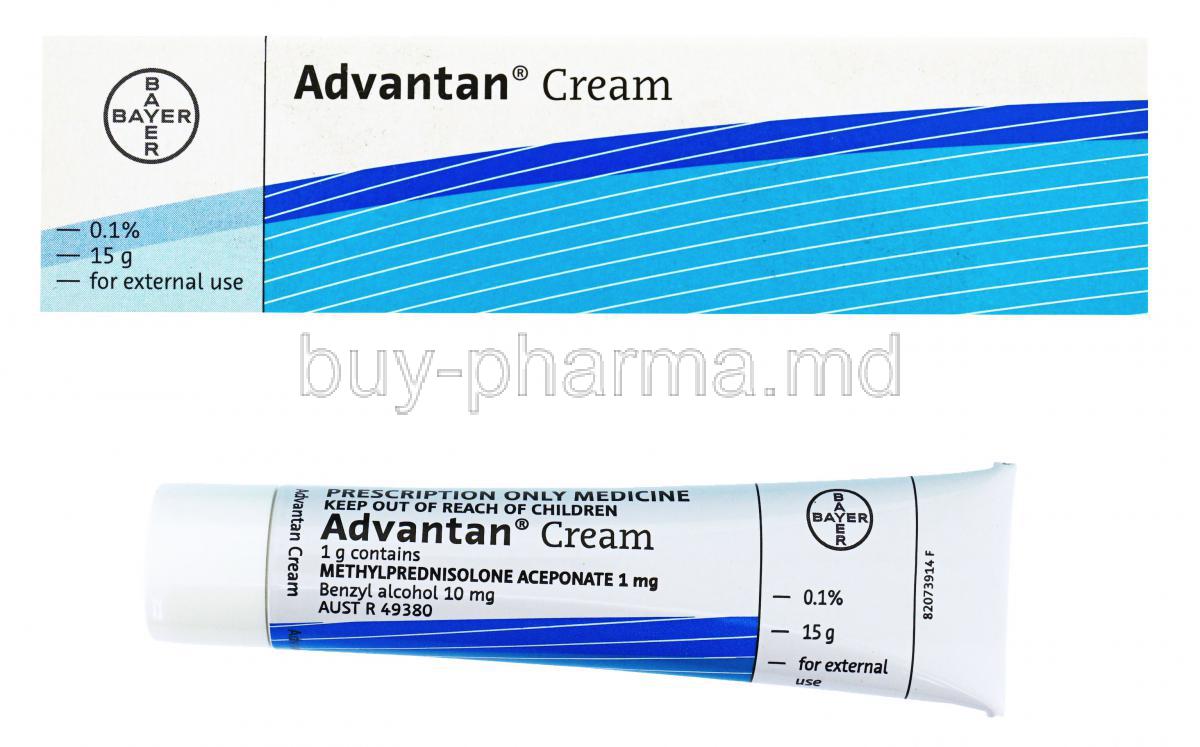
Introduction to Advantan Ointment and Advantan Cream
Advantan Ointment and Advantan Cream are prescription topical therapies widely utilized in dermatology for the management of inflammatory and allergic skin disorders. Classified as topical corticosteroids, these formulations are designed to deliver targeted anti-inflammatory activity directly to affected skin areas while minimizing systemic exposure.
Both formulations contain the same active substance but differ in texture, lipid content, and suitability for specific skin conditions. This allows clinicians to tailor treatment based on lesion type, anatomical location, and disease chronicity.
- Medium-potency topical corticosteroid
- Designed for once-daily application
- Used in both acute flares and controlled short-term therapy
Composition and Active Ingredients
Active Ingredient: Methylprednisolone Aceponate
The therapeutic effect of Advantan is derived from methylprednisolone aceponate, a non-halogenated corticosteroid with strong local anti-inflammatory properties and a favorable safety profile when used appropriately.
Inactive Excipients in Advantan Ointment
Advantan Ointment contains a lipid-rich base composed of selected waxes, oils, and emulsifiers. This occlusive structure supports hydration, making it particularly suitable for dry, lichenified, or chronically inflamed skin.
Inactive Excipients in Advantan Cream
The cream formulation incorporates a higher water content, resulting in a lighter, non-greasy consistency. This composition enhances cosmetic acceptability and is often preferred for moist, weeping, or acute inflammatory lesions.
Role of Formulation Base in Skin Penetration and Tolerability
The vehicle plays a critical role in drug delivery. Lipophilic bases enhance penetration into thickened skin, while aqueous bases promote rapid absorption with less occlusion, influencing both efficacy and tolerability.
How Advantan Works (Mechanism of Action)
Corticosteroid Activity at the Cellular Level
Methylprednisolone aceponate penetrates the epidermis and binds to intracellular glucocorticoid receptors. This complex translocates to the nucleus, modulating gene transcription involved in inflammatory responses.
Anti-Inflammatory Effects on Cytokines and Mediators
The medication suppresses the synthesis of pro-inflammatory cytokines, prostaglandins, and leukotrienes. This biochemical downregulation results in a marked reduction of inflammatory signaling.
Immunosuppressive and Anti-Allergic Actions
Advantan dampens excessive immune activation in the skin, reducing hypersensitivity reactions and limiting allergen-induced inflammation without completely abolishing local immune defense.
Impact on Erythema, Edema, Pruritus, and Skin Thickening
- Decreases redness and swelling
- Alleviates itching and burning sensations
- Reduces epidermal hyperproliferation
Uses of Advantan (Approved Therapeutic Indications)
Inflammatory and Allergic Skin Disorders
Advantan is indicated for a variety of steroid-responsive dermatoses characterized by inflammation, pruritus, and erythema.
- Atopic dermatitis (eczema)
- Contact dermatitis, both irritant and allergic
- Seborrheic dermatitis
- Neurodermatitis
- Nummular eczema
Acute vs Chronic Dermatological Conditions
In acute flares, Advantan rapidly suppresses inflammation. In chronic conditions, it is used cautiously and intermittently to control symptoms while minimizing adverse effects.
Off-Label Uses of Advantan
In clinical practice, Advantan may be employed beyond labeled indications when benefits outweigh risks.
- Localized reactions from insect bites
- Inflammatory intertrigo
- Mild plaque psoriasis outside sensitive areas
- Post-procedural skin inflammation
- Adjunctive therapy in steroid-responsive dermatoses
Dosage and Administration Guidelines
Advantan is generally applied once daily in a thin layer to the affected area. This regimen optimizes efficacy while limiting cumulative corticosteroid exposure.
- Use the fingertip unit method to guide quantity
- Typical treatment duration ranges from several days to a few weeks
- Ointment is preferred for dry lesions; cream for moist or acute lesions
Careful Administration and Application Techniques
Correct application technique is essential for therapeutic success and safety.
- Apply only to intact skin unless directed otherwise
- Exercise caution on the face, groin, and flexural areas
- Avoid routine use under occlusive dressings
- Gradually taper use to reduce rebound inflammation
Administration in Special Populations
Administration to Elderly Patients
Age-related skin atrophy increases susceptibility to corticosteroid adverse effects. Short treatment durations and close monitoring are recommended.
Administration to Pregnant Women and Nursing Mothers
Use during pregnancy requires careful risk–benefit evaluation. During breastfeeding, application to the breast area should be avoided to prevent infant exposure.
Administration to Children and Infants
Children have a higher surface-area-to-body-weight ratio, increasing systemic absorption risk. Treatment duration, application area, and potency should be strictly limited under medical supervision.
Side Effects of Advantan
Common Side Effects
- Mild burning or stinging at the application site
- Transient itching or irritation
- Dryness or temporary redness
Less Common and Rare Side Effects
- Skin atrophy with prolonged use
- Telangiectasia and striae
- Folliculitis and acneiform eruptions
- Perioral dermatitis
- Localized hypopigmentation
Warnings and Safety Information
Risk of Systemic Corticosteroid Absorption
Although designed for topical application, corticosteroids may undergo percutaneous absorption, particularly when applied over large surface areas, under occlusion, or for prolonged durations. Increased absorption elevates the likelihood of systemic exposure, especially in vulnerable populations.
Suppression of the Hypothalamic–Pituitary–Adrenal (HPA) Axis
Excessive or inappropriate use can lead to reversible suppression of the HPA axis. This endocrinological perturbation may manifest as reduced endogenous cortisol production, particularly in pediatric patients or when high cumulative doses are applied.
Avoidance of Long-Term or Excessive Use
- Limit duration to the shortest effective period
- Avoid continuous, uninterrupted therapy
- Reassess regularly to minimize cumulative exposure
Caution with Facial and Pediatric Use
The facial region and pediatric skin exhibit increased permeability. Application in these contexts necessitates heightened vigilance due to a greater propensity for adverse effects such as skin atrophy or systemic absorption.
Contraindications
Known Hypersensitivity to Methylprednisolone Aceponate
Use is contraindicated in individuals with a documented hypersensitivity to the active substance or any component of the formulation, as allergic reactions may exacerbate cutaneous symptoms.
Viral Skin Infections
Conditions such as herpes simplex and varicella are contraindications unless appropriate antiviral therapy is instituted concurrently. Corticosteroids may potentiate viral replication if used indiscriminately.
Bacterial or Fungal Infections Without Appropriate Therapy
Topical corticosteroids should not be applied to untreated bacterial or fungal infections, as immunosuppressive effects may obscure symptoms and delay resolution.
Tuberculous or Syphilitic Skin Conditions
Dermatoses of tuberculous or syphilitic origin require disease-specific treatment. Corticosteroid use alone may mask clinical progression and complicate diagnosis.
Rosacea and Perioral Dermatitis
These conditions may worsen with corticosteroid exposure, leading to rebound inflammation or steroid-induced dermatitis.
Drug and Product Interactions
Concomitant Use with Other Topical Corticosteroids
Simultaneous application of multiple corticosteroid preparations increases the risk of cumulative adverse effects and systemic exposure.
Interaction with Occlusive Skincare Products
Occlusive agents, including heavy ointments or dressings, can significantly enhance corticosteroid penetration, amplifying both therapeutic and adverse effects.
Use Alongside Antifungal or Antibacterial Agents
When secondary infection is present, combination therapy may be warranted. Appropriate antimicrobial treatment should precede or accompany corticosteroid use.
Impact of Emollients and Moisturizers on Absorption
Emollients can modify absorption dynamics. Staggered application is advisable to prevent unintended potentiation of corticosteroid effects.
Important Precautions Before and During Use
Avoidance of Eye Contact and Mucous Membranes
Accidental exposure to the eyes or mucous membranes may result in irritation or more serious complications. Immediate rinsing with water is recommended if contact occurs.
Monitoring for Secondary Infections
Corticosteroid therapy may predispose to secondary infections. Clinical vigilance is essential, particularly if new erythema, exudate, or pain develops.
Importance of Correct Diagnosis Before Use
Accurate dermatological diagnosis ensures appropriate therapy. Misapplication in non-inflammatory or infectious conditions may worsen outcomes.
Reassessment if No Improvement Is Observed
Lack of clinical response within an expected timeframe warrants reassessment to exclude misdiagnosis, infection, or resistance.
Overdosage and Misuse
Signs of Excessive Topical Corticosteroid Exposure
- Skin thinning and fragility
- Striae or telangiectasia
- Adrenal suppression in severe cases
Local and Systemic Effects of Overuse
Overuse may lead to localized cutaneous damage as well as systemic manifestations, particularly with prolonged application over extensive areas.
Management of Suspected Overdosage
Treatment involves discontinuation or gradual reduction of therapy. Supportive care may be required in cases of systemic involvement.
Gradual Discontinuation Recommendations
Abrupt cessation after prolonged use may precipitate rebound dermatitis. A tapered withdrawal approach is recommended to restore cutaneous homeostasis.
Handling and Storage Precautions
Recommended Storage Temperature
Store at controlled room temperature, avoiding extremes that may compromise product stability.
Protection from Excessive Heat and Light
Exposure to heat or direct sunlight may degrade active components. Storage in a cool, shaded environment is advised.
Shelf Life After Opening
Observe manufacturer-recommended usage periods after opening to ensure efficacy and safety.
Safe Storage Away from Children
Keep out of reach of children to prevent accidental ingestion or inappropriate application.
Proper Disposal of Unused Product
Unused medication should be disposed of in accordance with local pharmaceutical waste guidelines.
Summary and Clinical Considerations
Selection between ointment and cream formulations should be guided by skin type, lesion morphology, and disease acuity. Optimal outcomes require a judicious balance between therapeutic efficacy and safety.
- Match formulation to clinical presentation
- Limit duration and surface area of application
- Ensure medical supervision for extended or recurrent use
 Verified Purchase
Very satisfied!
Fast shipment - per schedule. Got the ointment just when I needed it. Very decently priced too. Thank you!
Popular Products
Similar Product