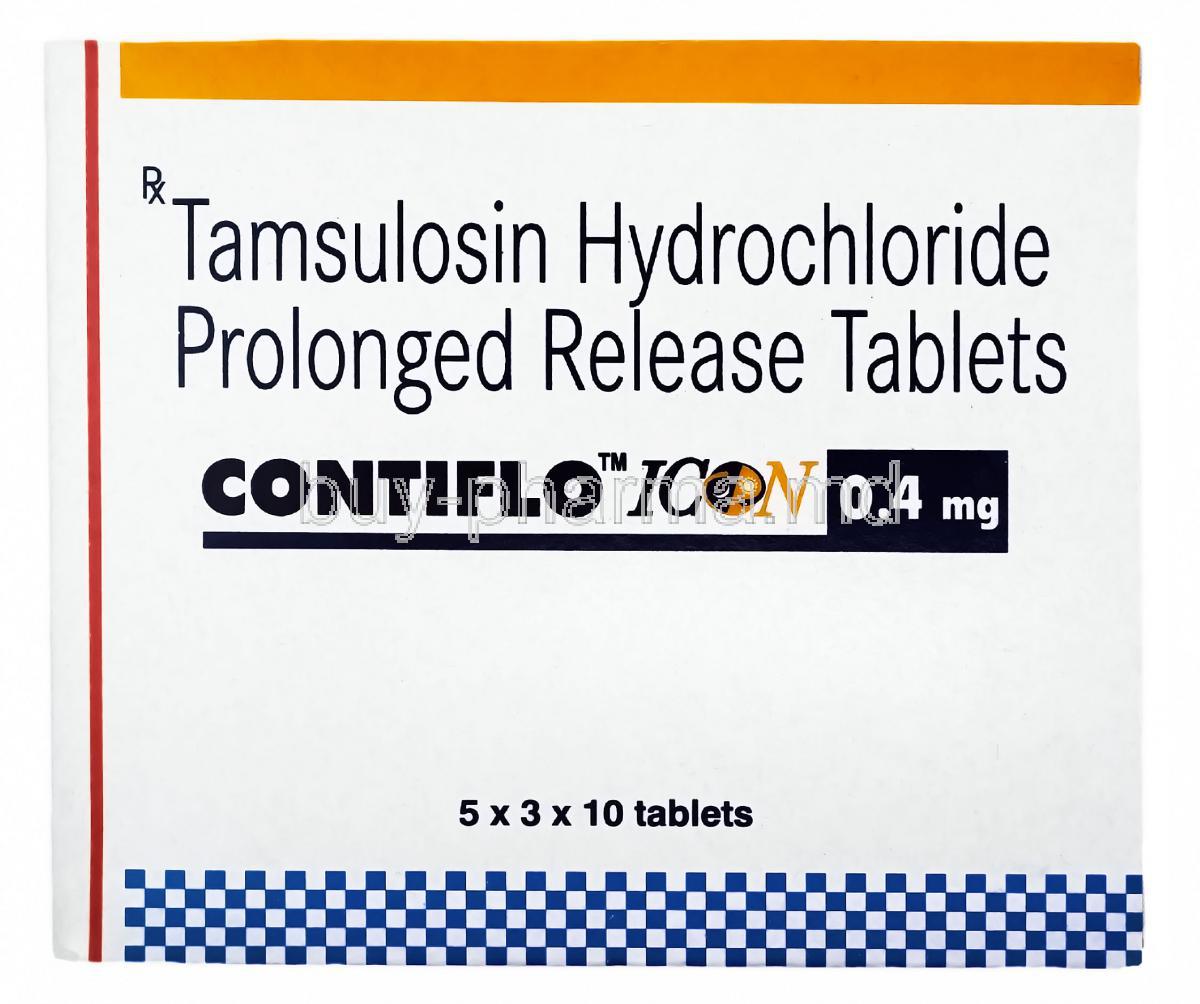
1. Introduction to Contiflo Icon (Tamsulosin)
Contiflo Icon is a urological medication belonging to the class of selective alpha-1 adrenergic receptor antagonists. It is primarily prescribed to alleviate urinary symptoms associated with prostate enlargement. The therapy focuses on improving urinary flow dynamics and reducing functional obstruction within the lower urinary tract.
The active pharmaceutical ingredient is Tamsulosin Hydrochloride, a widely recognized agent available in various branded and generic formulations. Most presentations are modified-release capsules designed for once-daily administration, ensuring sustained therapeutic plasma levels.
Tamsulosin acts selectively on alpha-1A receptors located predominantly in the prostate and bladder neck. This receptor specificity allows targeted symptom relief with comparatively minimal systemic vascular effects.
Contiflo Icon is commonly prescribed for:
- Benign prostatic hyperplasia (BPH)
- Lower urinary tract symptoms (LUTS)
- Functional urinary obstruction
This medication is available by prescription only and plays a pivotal role in modern urological management. It helps reduce symptom burden, improves quality of life, and may prevent complications associated with progressive bladder outlet obstruction.
2. Composition and Formulation Details
Each Contiflo Icon capsule contains Tamsulosin Hydrochloride as the active component. The medication is typically available in strengths equivalent to 0.4 mg of Tamsulosin, formulated to provide controlled release throughout the day.
Dosage forms include:
- Modified-release capsules
- Sustained-release oral formulations
Inactive ingredients may include stabilizers, polymers for controlled drug release, coloring agents, and encapsulation materials. These excipients ensure pharmaceutical stability and consistent drug delivery.
The modified-release technology offers several clinical advantages:
- Reduced peak-related adverse effects
- Stable plasma concentration
- Convenient once-daily dosing
Products are supplied in blister packs or bottles with clear labeling, including strength, batch number, and expiry date to ensure traceability and safe use.
3. Mechanism of Action: How Contiflo Icon Works
Tamsulosin selectively blocks alpha-1A adrenergic receptors located in the smooth muscle of the prostate, bladder neck, and urethra. This targeted antagonism leads to relaxation of these structures, thereby reducing resistance to urinary flow.
Clinical effects include:
- Improved urinary stream
- Reduced hesitancy and straining
- Decreased sensation of incomplete emptying
By alleviating functional obstruction, the medication reduces lower urinary tract symptoms without significantly affecting systemic blood pressure in most patients.
Symptom improvement may begin within a few days, although optimal benefit is typically observed after several weeks of continuous therapy. The sustained-release formulation ensures prolonged receptor blockade over a 24-hour period.
4. Approved Uses of Contiflo Icon (Tamsulosin)
4.1 Benign Prostatic Hyperplasia (BPH)
The primary indication for Contiflo Icon is the management of urinary symptoms associated with benign enlargement of the prostate. These symptoms arise from mechanical and functional obstruction at the bladder outlet.
Therapeutic benefits include:
- Relief of weak urinary stream and hesitancy
- Reduction in urinary frequency and urgency
- Improvement of nocturia
- Enhanced bladder emptying efficiency
It is particularly effective in patients with moderate to severe lower urinary tract symptoms and is frequently used as first-line pharmacotherapy.
4.2 Prevention of Acute Urinary Retention
Contiflo Icon may be used in individuals at increased risk of urinary retention. By reducing bladder outlet resistance, it helps maintain adequate urine flow and may decrease the likelihood of catheterization.
In some cases, Tamsulosin is combined with 5-alpha reductase inhibitors to achieve both symptomatic relief and long-term prostate size reduction.
5. Off-Label Uses of Tamsulosin
Although primarily indicated for BPH, Tamsulosin is utilized in several off-label clinical scenarios based on its smooth muscle–relaxing properties.
- Medical expulsive therapy for ureteral stones to facilitate stone passage
- Management of bladder outlet obstruction in women
- Functional bladder neck obstruction
- Neurogenic bladder and voiding dysfunction
- Prevention of postoperative urinary retention
- Chronic prostatitis and chronic pelvic pain syndrome
- Urinary dysfunction associated with spinal cord injury
These applications should be guided by specialist evaluation and individualized clinical judgment.
6. Dosage and Administration Guidelines
The typical adult dose is 0.4 mg once daily. The capsule should be taken after the same meal each day to ensure consistent absorption and reduce variability in drug exposure.
Administration instructions:
- Swallow the capsule whole
- Do not crush, chew, or open
- Take with water
Dose adjustments may be considered based on therapeutic response and tolerability. If a dose is missed, it should be taken the next day at the regular time without doubling.
Long-term therapy is often required for sustained symptom control. Periodic medical review is recommended to assess ongoing clinical benefit.
7. Administration in Special Populations
7.1 Administration to Elderly Patients
Tamsulosin is commonly prescribed in older adults and is generally well tolerated. However, age-related physiological changes necessitate careful monitoring.
- Observe for dizziness or orthostatic hypotension
- Assess fall risk, especially during treatment initiation
- Monitor overall cardiovascular stability
7.2 Administration to Pregnant Women and Nursing Mothers
The medication is not typically indicated for women. If use is considered necessary, it should only occur under strict medical supervision after evaluating potential risks and benefits.
Data regarding excretion into breast milk are limited; caution is advised during lactation.
7.3 Administration to Children
Safety and efficacy in pediatric populations have not been established. Use in children should be restricted to specialist settings and only when clinically justified.
8. Side Effects of Contiflo Icon
8.1 Common Side Effects
Most adverse effects are mild and transient. Frequently reported reactions include:
- Dizziness or lightheadedness
- Headache
- Abnormal ejaculation, including retrograde ejaculation
- Nasal congestion or rhinitis
- Fatigue or generalized weakness
8.2 Less Common and Serious Side Effects
Although uncommon, certain adverse reactions require medical attention:
- Orthostatic hypotension and fainting
- Palpitations or rapid heart rate
- Allergic reactions such as rash or swelling
- Priapism (prolonged painful erection)
- Intraoperative floppy iris syndrome during cataract surgery
9. Drug Interactions and Food Interactions
9.1 Drug–Drug Interactions
Tamsulosin is metabolized via hepatic enzyme pathways and may interact with medications that affect CYP3A4 or CYP2D6 activity.
- Strong inhibitors such as ketoconazole or erythromycin
- Other alpha-blockers or antihypertensive agents
- Phosphodiesterase-5 inhibitors (e.g., sildenafil, tadalafil)
- Anticoagulants and certain nonsteroidal anti-inflammatory drugs
9.2 Drug–Food and Lifestyle Interactions
Consistent administration after the same meal each day is recommended to maintain predictable drug absorption. Alcohol consumption may exacerbate dizziness and increase the risk of hypotension.
10. Warnings and Safety Information
Contiflo Icon should be used with caution in patients susceptible to blood pressure fluctuations. The most significant safety concern is orthostatic hypotension, which may lead to dizziness or syncope.
Important precautions include:
- Monitor blood pressure, especially at treatment initiation
- Exercise caution in severe hepatic or renal impairment
- Inform ophthalmologists prior to cataract or glaucoma surgery due to the risk of intraoperative floppy iris syndrome
- Avoid sudden changes in posture, particularly when rising from sitting or lying positions
Careful patient education and routine clinical monitoring enhance treatment safety and optimize therapeutic outcomes.
11. Contraindications
Contiflo Icon (Tamsulosin) should not be used in individuals with known hypersensitivity to the active ingredient or any component of the formulation. Allergic reactions, although uncommon, may present as skin rash, swelling, or respiratory discomfort and require immediate discontinuation.
The medication is contraindicated in patients with a history of severe orthostatic hypotension. Because Tamsulosin can reduce vascular tone in susceptible individuals, it may precipitate marked dizziness, syncope, or falls when moving from a sitting or lying position to standing.
Special caution is warranted in the following situations:
- Severe hepatic impairment, where drug metabolism may be altered
- Patients receiving strong CYP3A4 inhibitors, particularly those who are poor metabolizers
- Individuals with unstable blood pressure regulation
Clinical judgment is essential to balance therapeutic benefit against potential risk in vulnerable populations.
12. Careful Administration and Important Precautions
Therapy should be initiated cautiously, especially in patients predisposed to hypotensive episodes. Gradual physiological adaptation is desirable. Sudden hemodynamic changes should be avoided whenever possible.
Patients with cardiovascular disease require careful monitoring, as alterations in vascular tone may influence overall circulatory stability. Periodic assessment of blood pressure and symptom status is recommended.
During the early phase of treatment, patients should be advised to:
- Avoid driving or operating heavy machinery
- Rise slowly from sitting or lying positions
- Report episodes of dizziness, palpitations, or fainting
Regular evaluation of therapeutic response is important. Improvement in urinary symptoms should be documented, and treatment should be reassessed if clinical benefit is inadequate.
Adherence to the prescribed dosing schedule is critical. Irregular intake may reduce efficacy and increase the likelihood of adverse effects.
13. Overdose Management
Overdosage of Tamsulosin may lead to pronounced pharmacodynamic effects, primarily related to excessive alpha-adrenergic blockade. The most significant clinical manifestation is severe hypotension.
Symptoms of overdose may include:
- Marked dizziness or vertigo
- Fainting or syncope
- Weakness and lethargy
- Rapid or irregular heartbeat
Immediate medical attention is required. Management is primarily supportive and focuses on stabilization of cardiovascular function.
Key management strategies include:
- Placing the patient in a supine position to improve cerebral perfusion
- Monitoring vital signs and blood pressure closely
- Administering intravenous fluids if necessary
- Using vasopressor therapy in severe cases under medical supervision
There is no specific antidote for Tamsulosin overdose. Continuous observation and professional medical care remain essential until the patient stabilizes.
14. Storage and Shelf-Life Information
Proper storage preserves the stability and therapeutic integrity of Contiflo Icon. The medication should be kept at controlled room temperature, typically below 25°C, unless otherwise specified on the product label.
Important storage considerations include:
- Protect from excessive heat and humidity
- Avoid exposure to direct sunlight
- Store in a dry environment
Keeping the capsules in their original packaging is recommended. Blister packs and labeled containers protect the medication from environmental degradation and ensure accurate identification.
Patients should always check the expiry date before use. Expired medication may exhibit reduced potency or compromised safety.
Unused or expired products should be disposed of responsibly, preferably through pharmacy take-back programs or according to local pharmaceutical disposal guidelines.
15. Handling Precautions and Patient Safety
Modified-release capsules must be handled appropriately to maintain their controlled-release properties. The capsules should not be crushed, opened, or chewed, as this may result in rapid drug release and increased risk of adverse effects.
General safety recommendations include:
- Keep the medication out of reach of children and pets
- Store securely to prevent accidental ingestion
- Avoid sharing the medication with others
Patients should inform healthcare providers about ongoing Tamsulosin therapy prior to any surgical procedure. This is particularly important for cataract or glaucoma surgery due to the risk of intraoperative floppy iris syndrome.
Regular follow-up visits are essential to monitor symptom progression, treatment tolerance, and overall therapeutic effectiveness.
16. Patient Counseling and Monitoring Recommendations
Patients should be informed that symptom improvement may not be immediate. While some individuals notice relief within several days, optimal benefit often develops gradually over a few weeks of consistent therapy.
Medical attention should be sought if any of the following occur:
- Severe dizziness or fainting
- Persistent or worsening urinary symptoms
- Signs of allergic reaction
- Eye surgery planned or scheduled
Lifestyle measures can enhance treatment outcomes and support urinary health:
- Limit evening fluid intake to reduce nocturia
- Avoid excessive caffeine and alcohol
- Maintain a healthy weight and regular physical activity
- Practice timed voiding when appropriate
Long-term therapy may be required for sustained symptom control. Periodic clinical evaluation allows healthcare providers to assess efficacy, adjust treatment if necessary, and monitor for potential complications.
Consistent use, medical supervision, and patient awareness form the foundation of safe and effective Contiflo Icon therapy.
Customers also bought

Popular Products




Similar Product