


1. Introduction to Dompan Forte (Domperidone + Pantoprazole)
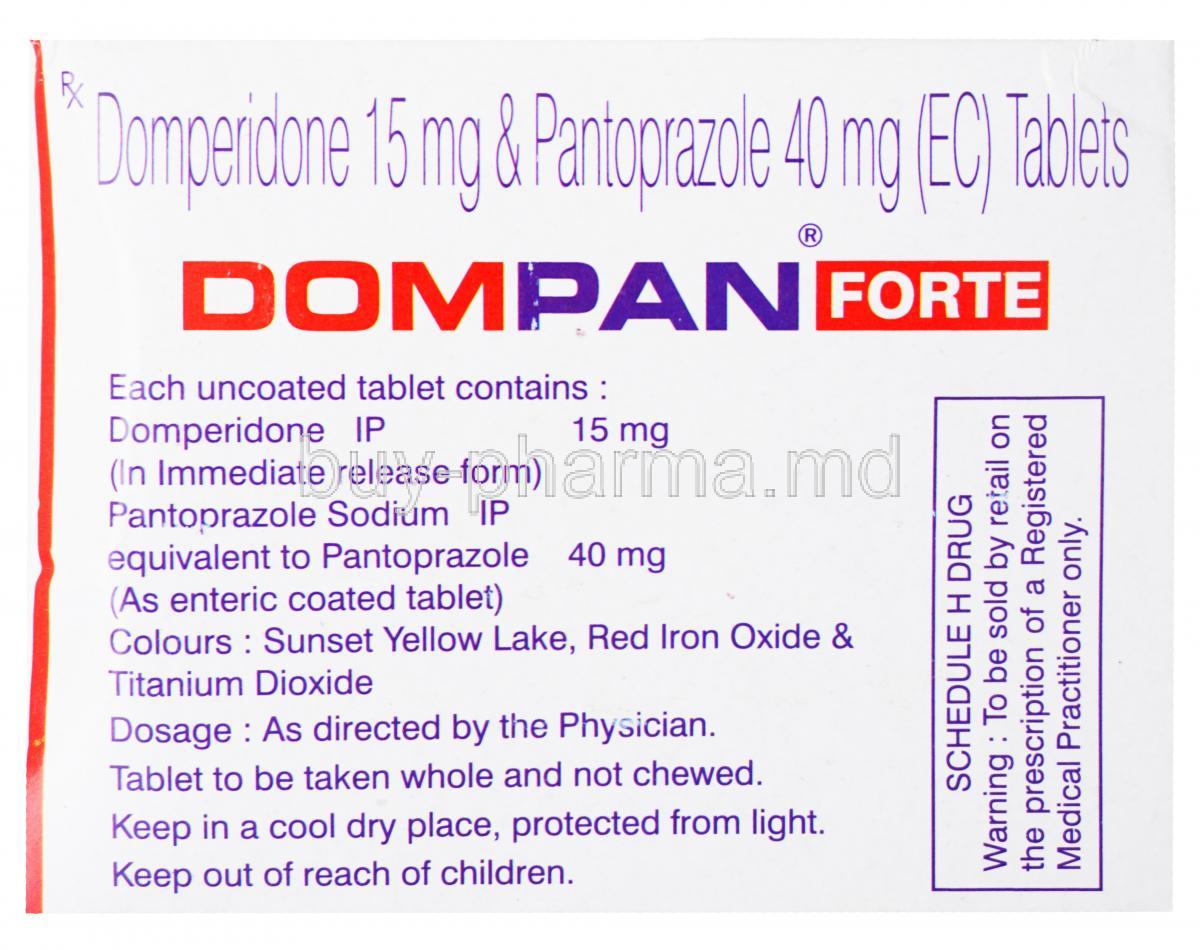
Dompan Forte is a fixed-dose combination therapy designed to address complex gastrointestinal conditions where acid overproduction and impaired gastric motility coexist. By integrating two pharmacologically distinct agents into a single formulation, it offers comprehensive symptom control for patients experiencing persistent upper gastrointestinal discomfort.
This combination belongs to a dual therapeutic class:
- A prokinetic and antiemetic agent
- A proton pump inhibitor (PPI)
Dompan Forte plays a pivotal role in the management of reflux-related symptoms, dyspepsia, and nausea by simultaneously reducing gastric acidity and enhancing coordinated gastrointestinal movement. The rationale behind this combination lies in targeting both the chemical and mechanical contributors to gastrointestinal symptomatology, particularly in acid-related and motility disorders.
2. Composition and Active Ingredients
2.1 Domperidone
Domperidone is a peripheral dopamine D₂ receptor antagonist classified as a prokinetic and antiemetic agent. It exhibits limited penetration across the blood–brain barrier, a property that minimizes central nervous system effects while preserving gastrointestinal activity.
Its primary pharmacological attributes include:
- Enhancement of gastric and duodenal motility
- Facilitation of gastric emptying
- Suppression of nausea and vomiting via peripheral mechanisms
2.2 Pantoprazole
Pantoprazole is a benzimidazole-derived proton pump inhibitor. It exerts potent and sustained suppression of gastric acid secretion, making it a cornerstone therapy for acid-mediated gastrointestinal disorders.
Key characteristics include:
- Selective inhibition of gastric acid secretion
- Activity against both basal and stimulated acid output
- Prolonged duration of action with once-daily dosing
2.3 Strength Variants and Formulations
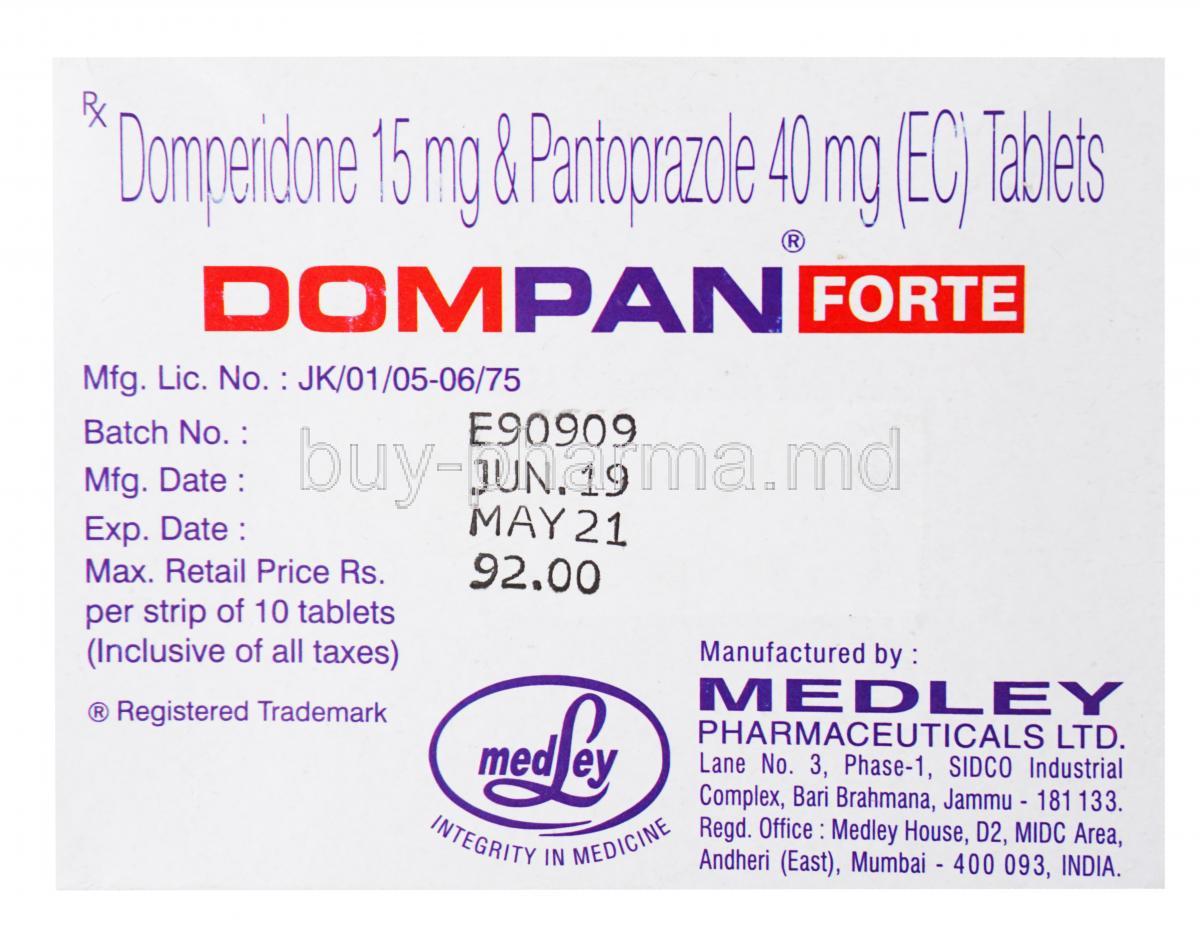
Dompan Forte is commonly available in standardized dosage strengths combining domperidone and pantoprazole in fixed ratios. It is typically formulated as:
- Oral capsules
- Film-coated tablets
Some formulations may incorporate modified-release characteristics to optimize drug absorption, improve tolerability, and align pharmacokinetic profiles of both agents.
3. How Dompan Forte Works (Mechanism of Action)
3.1 Mechanism of Action of Domperidone
Domperidone functions by selectively antagonizing dopamine D₂ receptors located in the gastrointestinal tract. Dopamine normally inhibits gastrointestinal motility; by blocking this effect, domperidone promotes coordinated smooth muscle contractions.
Its clinical effects include:
- Acceleration of gastric emptying
- Improved esophageal clearance
- Reduction of nausea and vomiting through peripheral pathways
3.2 Mechanism of Action of Pantoprazole
Pantoprazole irreversibly inhibits the gastric H⁺/K⁺-ATPase enzyme system located in the parietal cells of the stomach. This enzyme represents the final step in acid secretion.
As a result:
- Basal acid production is significantly reduced
- Meal-stimulated acid secretion is suppressed
- The gastric environment becomes less corrosive to mucosal tissue
3.3 Synergistic Effect of the Combination
The combination of domperidone and pantoprazole provides a synergistic therapeutic effect. Acid suppression alleviates mucosal irritation, while enhanced motility reduces reflux episodes and gastric stasis.
This dual mechanism delivers effective symptom relief in patients with multifactorial gastrointestinal disorders, particularly those unresponsive to monotherapy.
4. Uses of Dompan Forte (Approved Therapeutic Uses)
4.1 Gastroesophageal Reflux Disease (GERD)
Dompan Forte is commonly used in the management of GERD. It helps control classic reflux symptoms such as heartburn and regurgitation while minimizing reflux-associated nausea.
4.2 Functional Dyspepsia
In functional dyspepsia, Dompan Forte alleviates upper abdominal discomfort, early satiety, and postprandial fullness.
- Reduces epigastric pain
- Improves post-meal tolerance
4.3 Acid-Related Disorders
The combination is effective in conditions driven by excessive gastric acidity, including:
- Gastritis
- Acid-induced mucosal irritation
- Chronic hyperacidity and heartburn
4.4 Nausea and Vomiting Associated with GI Disorders
Dompan Forte is beneficial for nausea linked to reflux and delayed gastric emptying, improving patient comfort and oral intake.
5. Off-Label Uses of Dompan Forte
5.1 Gastroparesis (Non-diabetic and Diabetic)
Dompan Forte may be used as supportive therapy in gastroparesis to enhance gastric emptying and reduce associated nausea.
5.2 Medication-Induced Dyspepsia
The combination is sometimes employed to mitigate gastrointestinal adverse effects caused by other medications.
- NSAID-associated gastric discomfort
- Drug-induced nausea and reflux
5.3 Functional Gastrointestinal Disorders
In selected patients, Dompan Forte is used symptomatically for functional gastrointestinal complaints where acid suppression and motility enhancement are both desired.
5.4 Adjunct Use in Peptic Ulcer Management
As an adjunct, Dompan Forte supports acid suppression during ulcer healing, particularly alongside eradication regimens when indicated.
6. Dosage and Administration
6.1 General Dosing Guidelines
The dosage of Dompan Forte is determined based on clinical indication and patient response. A typical adult regimen involves once-daily administration.
6.2 Timing of Administration
For optimal efficacy, Dompan Forte is usually taken before meals.
- Enhances acid suppression
- Improves prokinetic effectiveness
Strict adherence to the dosing schedule is essential for consistent symptom control.
6.3 Duration of Treatment
Treatment duration may vary. Short-term use is common for acute symptoms, while longer courses require periodic clinical reassessment to evaluate ongoing necessity.
7. Side Effects of Dompan Forte
7.1 Common Side Effects
Most side effects are mild and transient.
- Headache
- Dry mouth
- Abdominal discomfort
- Diarrhea or constipation
7.2 Gastrointestinal Side Effects
Some patients may experience:
- Flatulence
- Abdominal pain
7.3 Neurological and Systemic Effects
Occasionally reported effects include dizziness and generalized fatigue, particularly during treatment initiation.
8. Serious and Less Common Adverse Effects
8.1 Cardiac-Related Risks (Domperidone)
Domperidone has been associated with QT interval prolongation in susceptible individuals. The risk increases in the presence of predisposing factors.
8.2 Endocrine-Related Effects
By increasing prolactin levels, domperidone may rarely cause:
- Breast tenderness
- Galactorrhea
8.3 Long-Term Acid Suppression Risks (Pantoprazole)
Prolonged pantoprazole use has been associated with:
- Vitamin B12 deficiency
- Hypomagnesemia
- Reduced bone mineral density
9. Drug Interactions
9.1 Domperidone-Related Interactions
Domperidone is metabolized via CYP3A4 and may interact with strong inhibitors of this enzyme or medications that prolong the QT interval.
9.2 Pantoprazole-Related Interactions
Pantoprazole may reduce the absorption of drugs requiring an acidic gastric environment and may interact with certain anticoagulants and antiretroviral agents.
9.3 Combined Therapy Considerations
When used together, cumulative risks should be assessed. Ongoing monitoring and individualized therapy adjustments are recommended.
10. Warnings and Safety Information
Dompan Forte should be used with caution in patients with underlying cardiac conditions or hepatic impairment. Long-term use without medical supervision is not recommended due to potential systemic risks. Regular clinical evaluation ensures both safety and sustained therapeutic benefit.
11. Contraindications
Dompan Forte is contraindicated in specific clinical scenarios where its pharmacological actions may pose significant risk. A thorough evaluation of patient history is essential before initiation.
- Known hypersensitivity to domperidone, pantoprazole, or any excipients, which may precipitate allergic or anaphylactoid reactions.
- Prolactin-secreting pituitary tumors (prolactinomas), as domperidone may elevate prolactin levels and exacerbate tumor-related manifestations.
- Severe hepatic impairment, where altered metabolism may lead to excessive systemic exposure.
- Conditions in which increased gastrointestinal motility is harmful, such as gastrointestinal obstruction, perforation, or active hemorrhage.
- Known QT interval prolongation or significant cardiac disease, including a history of ventricular arrhythmias, due to the potential proarrhythmic risk associated with domperidone.
12. Careful Administration and Important Precautions
Dompan Forte requires judicious use, particularly in patients with underlying comorbidities. Preventive vigilance mitigates avoidable adverse outcomes.
- Baseline cardiac assessment is advisable in patients with risk factors for arrhythmia or those receiving concomitant QT-prolonging agents.
- Electrolyte monitoring, especially serum potassium and magnesium, is recommended, as imbalances may amplify cardiac risks.
- Liver function monitoring should be considered during prolonged therapy to detect early signs of hepatic stress.
- Avoidance of unnecessary long-term use is critical, particularly with proton pump inhibitor–based regimens, to reduce systemic complications associated with chronic acid suppression.
13. Administration in Special Populations
13.1 Administration to Elderly Patients
Elderly patients often exhibit altered pharmacodynamics and pharmacokinetics, necessitating heightened caution.
In this population:
- There is increased sensitivity to cardiac and central nervous system effects, including dizziness and arrhythmogenic potential.
- Lower initial dosing and gradual titration may be appropriate.
- Ongoing clinical and electrocardiographic monitoring is advised, particularly during extended treatment courses.
13.2 Administration to Pregnant Women and Nursing Mothers
The use of Dompan Forte during pregnancy requires careful deliberation. Available data on combination therapy remain limited.
- Pregnancy safety considerations necessitate individualized evaluation of maternal benefit versus potential fetal risk.
- A structured risk–benefit assessment should guide therapeutic decisions.
- Domperidone may be excreted into breast milk; therefore, caution is advised when administered to nursing mothers, with monitoring for adverse effects in the infant.
13.3 Administration to Children
Pediatric use of Dompan Forte is constrained by limited clinical evidence.
- Safety and efficacy data remain insufficient for routine use in children.
- Regulatory restrictions may apply depending on regional guidelines.
- Any pediatric administration should adhere strictly to specialist guidance and established clinical protocols.
14. Overdosage Information
Overdose of Dompan Forte may result in exaggerated pharmacological effects involving both gastrointestinal and systemic pathways.
Expected symptoms may include:
- Marked dizziness or somnolence
- Cardiac rhythm disturbances
- Neurological manifestations such as confusion or agitation
Management is primarily supportive and symptomatic.
- Immediate medical attention is essential
- Cardiac monitoring may be required in suspected domperidone overdose
- Correction of electrolyte abnormalities should be undertaken promptly
15. Storage and Stability
Proper storage preserves the chemical integrity and therapeutic efficacy of Dompan Forte.
- Store at recommended room temperature
- Protect from excessive heat, moisture, and direct light
- Ensure packaging remains intact to maintain stability throughout the shelf life
Adherence to labeled shelf-life guidelines is essential to avoid diminished potency.
16. Handling Precautions
Safe handling practices reduce the risk of medication errors and unintended exposure.
- Dispense only in original, clearly labeled packaging
- Provide comprehensive patient counseling on correct administration and dosing
- Advise appropriate disposal of unused or expired medication in accordance with local pharmaceutical waste regulations
Responsible handling reinforces therapeutic safety and optimizes treatment outcomes.


Popular Products



Similar Product