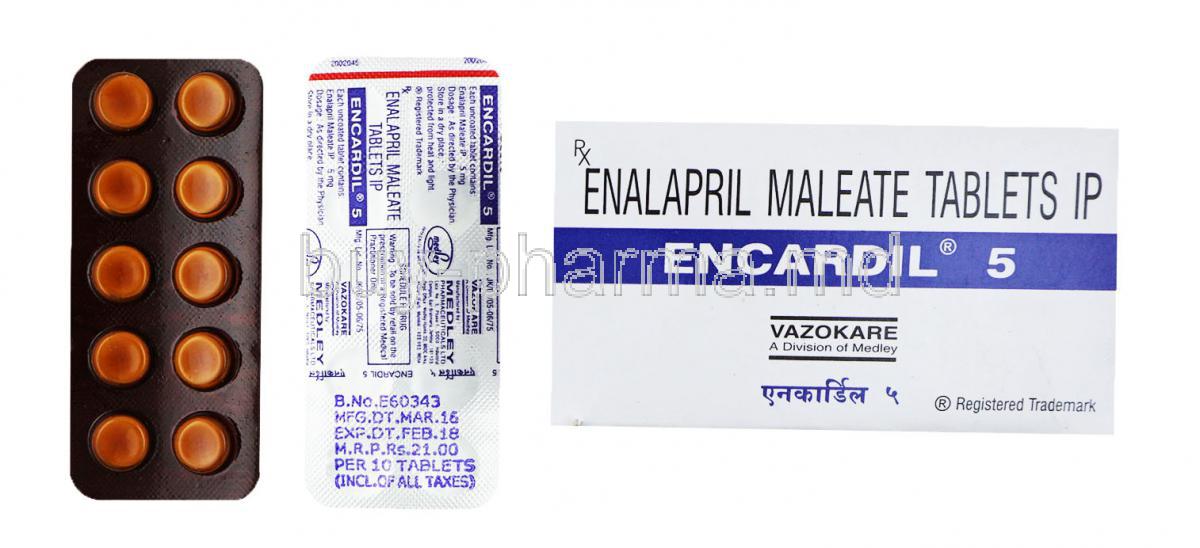
1. Introduction to Encardil (Enalapril)
Encardil, containing the active ingredient enalapril, is a widely prescribed angiotensin-converting enzyme (ACE) inhibitor used in cardiovascular medicine. It occupies a central role in the long-term management of hypertension and heart failure, conditions that require sustained pharmacological modulation rather than short-term symptom control.
Therapeutically, enalapril belongs to the ACE inhibitor class, a group of agents recognized for their ability to reduce morbidity and mortality associated with cardiovascular and renal disease. Since its introduction in the late 20th century, enalapril has achieved global adoption, appearing on essential medicine lists and forming the backbone of treatment guidelines across multiple regions.
2. Composition and Pharmaceutical Profile
The primary active component of Encardil is enalapril maleate, a synthetic derivative designed for oral administration. This compound is complemented by carefully selected excipients that ensure tablet stability, bioavailability, and consistent dissolution.
- Active ingredient: Enalapril maleate
- Inactive components: binders, disintegrants, and stabilizing agents
- Dosage forms: oral tablets
- Available strengths: multiple fixed-dose options to support titration
Pharmacologically, enalapril is a prodrug. After absorption, it undergoes hepatic hydrolysis to form enalaprilat, the biologically active metabolite responsible for ACE inhibition.
3. How Encardil (Enalapril) Works
Encardil exerts its effects by inhibiting angiotensin-converting enzyme, a critical catalyst in the renin–angiotensin–aldosterone system (RAAS). This inhibition reduces the conversion of angiotensin I to angiotensin II, a potent vasoconstrictor.
The downstream consequences are multifaceted:
- Reduction in systemic vascular resistance
- Decreased aldosterone secretion and sodium retention
- Lowered blood pressure and cardiac afterload
At the renal level, enalapril improves intraglomerular hemodynamics, promoting natriuresis while preserving long-term kidney function in susceptible populations.
4. Approved Medical Uses of Encardil
Encardil is approved for a range of cardiovascular indications supported by extensive clinical evidence.
- Treatment of essential hypertension
- Management of renovascular hypertension
- Heart failure with reduced ejection fraction (HFrEF)
- Post-myocardial infarction left ventricular dysfunction
- Blood pressure control in chronic kidney disease
In these contexts, enalapril is valued not only for blood pressure reduction but also for its prognostic benefits.
5. Off-Label Uses of Encardil (Enalapril)
Beyond labeled indications, Encardil is utilized off-label in several clinically justified scenarios where RAAS modulation offers therapeutic advantage.
- Diabetic nephropathy and reduction of proteinuria
- Non-diabetic chronic kidney disease
- Prevention of cardiovascular events in high-risk patients
- Migraine prophylaxis (limited and selective use)
- Systemic sclerosis–related renal involvement
- Pediatric hypertension under specialist supervision
6. Dosage and Administration Guidelines
Dosing of Encardil is individualized, reflecting patient characteristics and therapeutic objectives. Initiation typically begins with a low dose, followed by gradual titration.
- Hypertension: once-daily or divided dosing
- Heart failure: lower starting doses with careful escalation
- Renal impairment: dose adjustment based on creatinine clearance
Encardil may be taken with or without food. When transitioning from other antihypertensive agents, staggered initiation is recommended to minimize hypotension.
7. Administration in Special Populations
7.1 Administration to Elderly Patients
Elderly individuals often exhibit heightened sensitivity to ACE inhibitors. Reduced renal reserve and altered pharmacodynamics necessitate conservative initiation.
- Lower starting doses
- Frequent blood pressure monitoring
- Periodic assessment of renal function
7.2 Administration to Pregnant Women and Nursing Mothers
Encardil is contraindicated during pregnancy due to well-documented fetal toxicity, particularly during the second and third trimesters.
- Risk of fetal renal impairment and oligohydramnios
- Immediate discontinuation upon pregnancy detection
- Alternative antihypertensive therapies recommended
Use during breastfeeding is generally discouraged unless benefits clearly outweigh risks.
7.3 Administration to Children
Pediatric use requires specialist oversight. While enalapril is employed in certain cases, safety data remain more limited compared to adult populations.
- Weight-based dosing strategies
- Monitoring of growth and renal parameters
- Careful blood pressure tracking
8. Side Effects of Encardil (Enalapril)
The adverse effect profile of Encardil reflects both dose-dependent pharmacology and unpredictable idiosyncratic reactions.
8.1 Common Side Effects
- Dry, persistent cough
- Dizziness or orthostatic hypotension
- Fatigue and headache
- Mild gastrointestinal discomfort
8.2 Serious and Less Common Side Effects
- Angioedema involving the face, lips, or airway
- Hyperkalemia
- Acute kidney injury
- Severe hypotension
- Rare hepatic dysfunction
9. Drug, Food, and Disease Interactions
Encardil interacts with several commonly used medications and clinical conditions.
- Enhanced hypotensive effect with diuretics
- Increased potassium levels with supplements or potassium-sparing diuretics
- Reduced renal function risk when combined with NSAIDs
- Potential lithium toxicity
Alcohol may potentiate blood pressure–lowering effects and should be consumed cautiously.
10. Warnings and Safety Information
Several safety considerations accompany Encardil therapy. Angioedema represents a medical emergency requiring immediate intervention.
Additional warnings include:
- Symptomatic hypotension in volume-depleted patients
- Progressive renal impairment in susceptible individuals
- Hyperkalemia requiring routine laboratory monitoring
- Persistent cough leading to treatment discontinuation
Appropriate patient selection, monitoring, and education remain essential to safe and effective use.
11. Contraindications
Encardil (enalapril) is contraindicated in specific clinical scenarios where the risk of adverse outcomes outweighs therapeutic benefit. Careful patient selection is essential before initiation.
- Hypersensitivity to enalapril or other ACE inhibitors: Any prior allergic reaction, including rash or respiratory symptoms, precludes use.
- History of ACE inhibitor–induced angioedema: Re-exposure significantly increases the risk of recurrent, potentially life-threatening edema.
- Hereditary or idiopathic angioedema: These conditions are associated with unpredictable swelling episodes that may be exacerbated by ACE inhibition.
- Pregnancy, particularly the second and third trimesters: Enalapril may cause fetal renal impairment, oligohydramnios, and neonatal morbidity.
- Concomitant use with aliskiren in patients with diabetes: This combination increases the risk of renal dysfunction, hyperkalemia, and hypotension.
12. Careful Administration and Important Precautions
Prudent administration of Encardil requires structured monitoring and awareness of patient-specific vulnerabilities. Early vigilance often prevents downstream complications.
- Baseline and ongoing renal monitoring: Serum creatinine and estimated glomerular filtration rate should be assessed before therapy and periodically thereafter.
- Blood pressure monitoring during initiation: First-dose hypotension may occur, particularly in volume-depleted patients.
- Electrolyte balance assessment: Potassium levels should be monitored due to the risk of hyperkalemia.
- Caution in patients with aortic stenosis: Reduced afterload may precipitate syncope or compromised coronary perfusion.
- Use in patients with autoimmune disease: Rare hematologic effects have been reported; periodic blood counts may be warranted.
Gradual dose escalation and individualized titration remain cornerstone principles of safe therapy.
13. Overdosage Information
Overdosage with Encardil is uncommon but can result in profound hemodynamic instability. Prompt recognition and intervention are critical.
- Expected symptoms of overdose: Marked hypotension, dizziness, lethargy, and altered mental status.
- Severe hypotension and shock risk: Excessive vasodilation may lead to circulatory collapse if untreated.
- Electrolyte disturbances: Hyperkalemia and hyponatremia may develop, particularly in patients with renal impairment.
- Supportive and symptomatic management: Includes fluid resuscitation, blood pressure support, and close monitoring.
- Role of hemodialysis: Enalaprilat may be partially removed by dialysis in severe cases.
14. Storage and Stability
Proper storage preserves the pharmacological integrity of Encardil and ensures consistent therapeutic performance.
- Store at controlled room temperature
- Protect from excessive moisture, heat, and direct light
- Keep tablets in original packaging until use
Shelf life should be observed strictly. Expired medication may exhibit reduced potency or compromised stability.
15. Handling Precautions
Safe handling practices extend beyond storage and include patient education and responsible disposal.
- Safe dispensing practices: Verify dosage strength and patient instructions at every refill.
- Patient counseling points: Emphasize adherence, monitoring requirements, and early reporting of adverse symptoms.
- Avoidance of accidental pediatric exposure: Store out of reach of children and use child-resistant containers.
- Proper disposal recommendations: Unused or expired tablets should be disposed of according to local pharmaceutical waste guidelines.
Meticulous handling supports both patient safety and therapeutic efficacy throughout the course of treatment.
Encardil, Enalapril FAQ
- What is the drug enalapril used for?
- What is the most common side effect of enalapril?
- What foods should I avoid while taking enalapril?
- What does enalapril do for the kidneys?
- What is the best time of day to take enalapril?
- How long can you safely take enalapril?
- What are the positive effects of enalapril?
- How do you know if enalapril is working?
- What happens if I stop enalapril?
- Can I take amlodipine and enalapril together?
- What to avoid when taking enalapril?
- Is coughing a side effect of enalapril?
- What are the side effects of enalapril life threatening?
- Can losartan be taken with enalapril?
- How long until enalapril works?
- Can enalapril cause ankle swelling?
What is the drug enalapril used for?
Enalapril is used to treat high blood pressure (hypertension), heart failure, and asymptomatic left ventricular dysfunction, helping to relax blood vessels, lower blood pressure, and reduce the heart's workload, thereby preventing strokes, heart attacks, and further heart/kidney damage.
What is the most common side effect of enalapril?
- Dry cough
- Dizziness
- Headache
- Diarrhea
- Rashes
What foods should I avoid while taking enalapril?
High potassium intake
What does enalapril do for the kidneys?
It reduces blood pressure in the kidneys
What is the best time of day to take enalapril?
Night
How long can you safely take enalapril?
Long term
What are the positive effects of enalapril?
This lowers blood pressure and increases the supply of blood and oxygen to the heart.
How do you know if enalapril is working?
Blood pressure drops.
What happens if I stop enalapril?
BP can go up
Can I take amlodipine and enalapril together?
Yes
What to avoid when taking enalapril?
High potassium intake
Is coughing a side effect of enalapril?
Yes
What are the side effects of enalapril life threatening?
- Edema
- Voice hoarseness
- Difficulty breathing
- Swallowing
- Yellowing of skin
Can losartan be taken with enalapril?
Yes
How long until enalapril works?
2-4 weeks
Can enalapril cause ankle swelling?
Yes
Popular Products

Similar Product