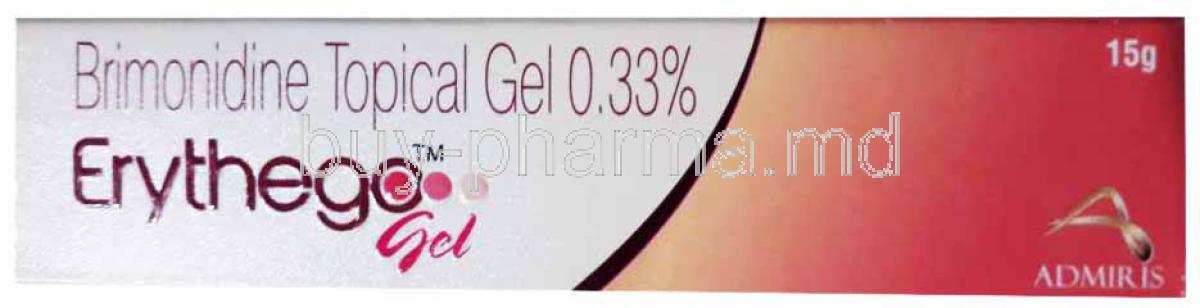
Introduction to Erythego (Brimonidine Gel)
Erythego is a topical dermatological medication formulated to address persistent facial redness. It is specifically designed for cutaneous application, targeting superficial vascular abnormalities that contribute to visible erythema. The formulation is lightweight, rapidly absorbed, and intended for daily use as part of a structured skincare or therapeutic regimen.
From a therapeutic standpoint, Erythego is classified as a topical vasomodulating agent. Its clinical relevance lies in its ability to provide targeted, localized action without significant systemic exposure. The development of topical brimonidine marked a pivotal shift away from systemic vascular agents toward precision dermatology.
Originally developed from ophthalmic brimonidine formulations, topical adaptation emerged following observations of its potent vasoconstrictive properties on superficial blood vessels. The primary target population includes adults with persistent facial erythema, particularly those diagnosed with rosacea, who seek sustained redness control without systemic therapy.
Composition and Pharmaceutical Characteristics
The active pharmaceutical ingredient in Erythego is brimonidine tartrate, a selective alpha-2 adrenergic receptor agonist. It is present in a carefully calibrated concentration optimized for dermal efficacy while minimizing irritation.
- Brimonidine tartrate as the sole active component
- Dermatologically compatible excipients
- Non-greasy, fast-drying gel matrix
Excipients play a critical role in enhancing dermal penetration and improving tolerability. The gel-based delivery system allows uniform distribution across affected areas, ensuring consistent pharmacologic activity. Compared with creams or ointments, the gel formulation offers superior cosmetic acceptability and reduced occlusivity.
Approved Uses of Erythego
Erythego is approved for the treatment of persistent facial erythema associated with rosacea. It provides symptomatic relief by visibly reducing redness, thereby improving both functional comfort and psychosocial well-being.
Clinical use extends to:
- Daily management of chronic facial redness
- Reduction of erythema intensity during flare-free periods
- Short-term cosmetic improvement in inflammatory dermatoses
The medication does not cure the underlying condition but serves as an effective symptomatic control agent when used consistently.
Expanded Uses and Off-Label Applications
Beyond its primary indication, Erythego has been utilized off-label in select dermatologic scenarios. These applications are based on its pharmacologic profile rather than formal regulatory approval.
- Non-rosacea facial flushing triggered by stress or temperature
- Erythema following dermatologic procedures such as laser therapy
- Adjunctive use in acne-associated post-inflammatory redness
Investigational and anecdotal reports have explored its role in other erythematous conditions. Such uses require careful clinical judgment and individualized risk assessment.
Mechanism of Action: How Erythego Works
Brimonidine functions as a highly selective alpha-2 adrenergic receptor agonist. Upon topical application, it binds to receptors located on smooth muscle cells within superficial cutaneous blood vessels.
This interaction induces vasoconstriction, leading to a marked reduction in blood flow to the affected dermal areas. As vascular dilation is a principal contributor to facial erythema, modulation of vascular tone results in visible redness reduction.
The onset of action is typically rapid, often within 30 minutes, with effects lasting several hours. The duration is sufficient for daily symptom control without cumulative vasoconstrictive burden.
Dosage and Administration Guidelines
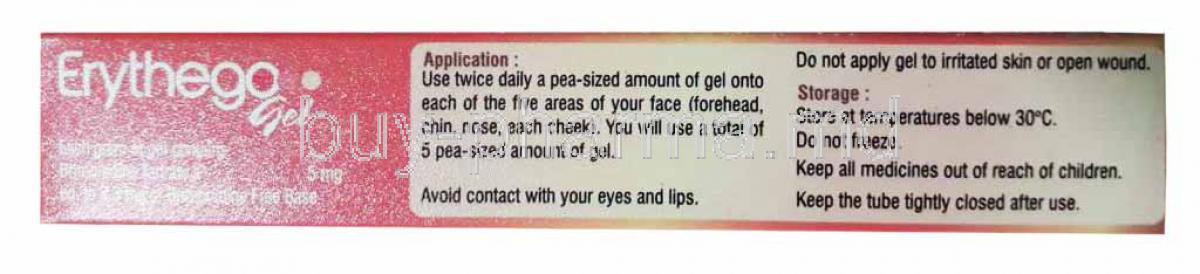
Erythego is generally applied once daily in a thin, even layer. Only a small quantity is required to cover the affected facial areas.
- Apply to clean, dry skin
- Use fingertips for gentle, uniform distribution
- Avoid excessive rubbing
Application should be limited to designated facial regions. Contact with eyes, lips, nostrils, and mucous membranes must be avoided. Duration of therapy may be long-term, with periodic reassessment recommended to evaluate efficacy and tolerability.
Administration in Special Populations
Administration to Elderly Patients
Elderly patients may exhibit increased skin fragility and heightened sensitivity. Careful monitoring is advised, particularly during initiation, to detect exaggerated vasoconstrictive responses or irritation.
Administration to Pregnant Women and Nursing Mothers
Available pregnancy safety data are limited. Although systemic absorption is minimal, use during pregnancy should be guided by a thorough risk–benefit assessment. During breastfeeding, caution is advised to prevent inadvertent infant exposure through skin contact.
Administration to Children
Safety and efficacy in pediatric populations have not been established. Regulatory guidance generally restricts use to adults, and application in children is not recommended.
Side Effects Profile
Topical brimonidine is generally well tolerated, though adverse reactions may occur. These effects are primarily localized, reflecting its dermal route of administration.
Common Side Effects
- Mild skin irritation or burning sensation
- Transient erythema or rebound redness
- Dryness, scaling, or contact dermatitis
Less Common and Serious Adverse Effects
In rare cases, paradoxical worsening of rosacea symptoms has been reported. Hypersensitivity reactions, though uncommon, may present with swelling or intense irritation. Systemic cardiovascular effects are rare but theoretically possible due to alpha-agonist activity.
Drug Interactions and Concurrent Therapy Considerations
Caution is advised when Erythego is used alongside antihypertensive medications, as additive vascular effects may occur. Concurrent use with other vasoconstrictive agents may amplify localized responses.
When combined with other topical dermatologic treatments, staggered application is recommended to reduce irritation and preserve barrier function.
Warnings and Safety Information
Improper or excessive use may result in rebound erythema, characterized by intensified redness following drug offset. Cardiovascular considerations warrant caution in individuals with underlying vascular instability.
Patients with compromised circulation or sensitivity to adrenergic agents should use Erythego under medical supervision, adhering strictly to recommended application guidelines.
Contraindications
Erythego is contraindicated in individuals with known hypersensitivity to brimonidine or any component of the formulation. Allergic reactions may manifest as pronounced erythema, edema, pruritus, or contact dermatitis and warrant immediate discontinuation.
Use is also contraindicated in patients with severe cardiovascular or cerebrovascular conditions. Due to its alpha-adrenergic agonist activity, brimonidine may influence vascular tone, posing potential risks in susceptible individuals.
- History of significant ischemic heart disease
- Severe cerebrovascular insufficiency
- Unstable vascular disorders
Conditions in which vasoconstriction is contraindicated, such as certain peripheral vascular diseases, require strict avoidance to prevent exacerbation of underlying pathology.
Careful Administration and Important Precautions
Careful administration is essential to optimize therapeutic benefit while minimizing adverse effects. Gradual initiation is recommended, particularly in patients with sensitive skin or a history of reactive dermatoses.
Clinical response should be monitored during the early phase of treatment. Adjustments may be necessary if exaggerated vasoconstriction or rebound erythema occurs.
- Avoid excessive or repeated application within a short time frame
- Apply only the minimum amount required for coverage
- Do not layer with occlusive products unless advised
Patients with a compromised skin barrier, including those with eczema, recent procedures, or active inflammation, should use Erythego with caution, as enhanced penetration may increase local irritation or systemic exposure.
Overdosage Information
Topical overdose is uncommon but may occur with excessive application or inappropriate frequency of use. Expected symptoms are primarily localized and may include intense blanching, burning, or paradoxical erythema.
With substantial overuse, the risk of systemic absorption increases. Although rare, systemic effects may theoretically involve:
- Dizziness or hypotension
- Fatigue or somnolence
- Bradycardia in extreme cases
Management consists of immediate cessation of the product and supportive care. Medical evaluation is recommended if systemic symptoms are suspected or if severe local reactions persist.
Storage and Stability
Erythego should be stored under controlled conditions to maintain stability and therapeutic efficacy. Recommended storage is at room temperature, away from excessive humidity.
- Protect from direct heat and sunlight
- Do not freeze
- Keep container tightly closed when not in use
Shelf-life after opening should be observed according to labeling guidance. Use beyond the recommended period may compromise product integrity and safety.
Handling Precautions
Safe handling and dispensing practices are essential to prevent accidental exposure or misuse. Hands should be washed before and after application to avoid unintended transfer.
Care must be taken to prevent contact with:
- Eyes and periocular areas
- Mucous membranes
- Broken or abraded skin
Patient education plays a central role in safe use. Clear instruction on correct application technique, dosing limits, and hygiene practices helps ensure optimal outcomes and minimizes the risk of adverse reactions.
Erythego, Brimonidine Gel FAQ
Customers also bought
Popular Products
Similar Product