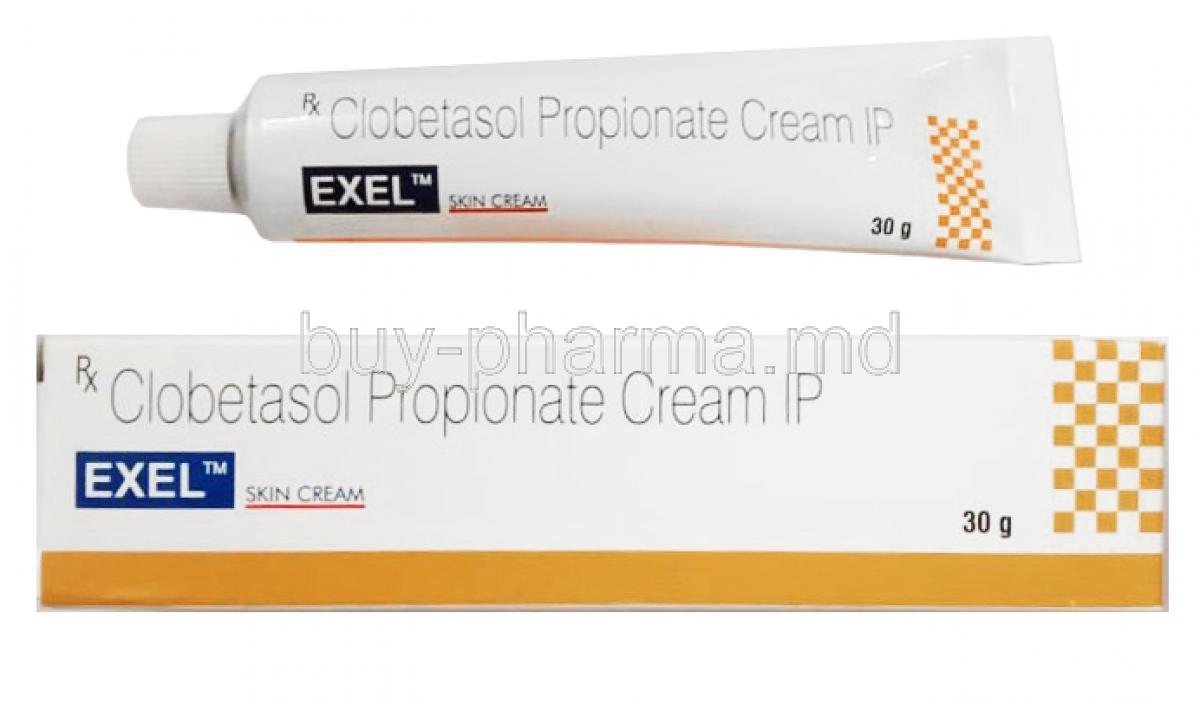
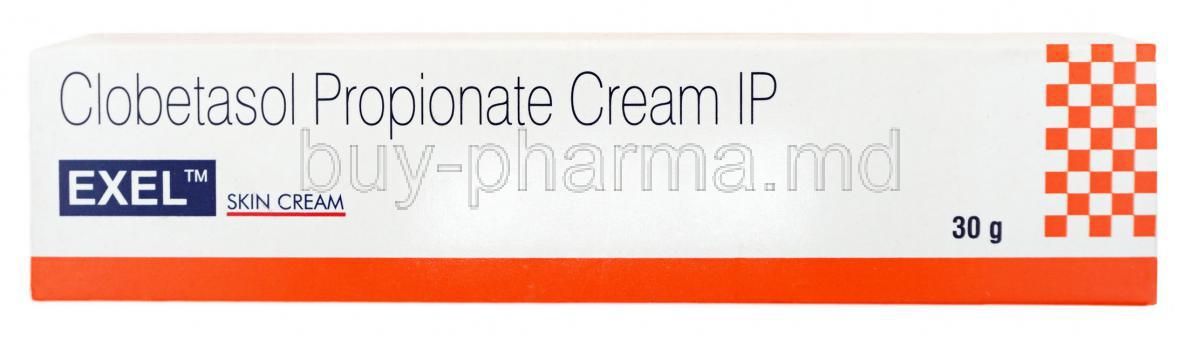
1. Introduction to Exel Cream (Clobetasol Propionate)
Exel Cream contains clobetasol propionate, a super-potent topical corticosteroid designed for the short-term management of severe inflammatory skin disorders. It is formulated to deliver rapid symptomatic relief in conditions characterized by intense inflammation, erythema, scaling, and pruritus. The product belongs to the highest potency category of topical steroids and is reserved for cases that do not respond adequately to mild or moderate corticosteroid therapy.
Clinically, Exel Cream plays a critical role in dermatologic practice. It is frequently prescribed for recalcitrant dermatoses where excessive immune activity leads to persistent inflammation and epidermal dysfunction. Conditions requiring strong anti-inflammatory intervention often include:
- Severe psoriasis or chronic eczema
- Autoimmune-related skin disorders
- Hyperkeratotic or thickened lesions
- Chronic pruritic dermatoses
Due to its high potency and potential for systemic absorption, Exel Cream is generally available only with medical supervision. Careful patient selection, duration control, and monitoring are essential to maximize therapeutic benefits while minimizing adverse outcomes.
2. Composition and Formulation Details
The primary active ingredient in Exel Cream is clobetasol propionate, typically present at a concentration of 0.05%. This molecule is classified as a Class I (super-potent) topical corticosteroid, reflecting its strong anti-inflammatory and immunosuppressive capacity.
The cream base is designed to facilitate dermal penetration while maintaining cosmetic acceptability. Common excipients may include:
- Emollient agents to enhance skin hydration
- Stabilizers and preservatives to maintain formulation integrity
- Emulsifying agents for uniform drug distribution
- pH-adjusting components for skin compatibility
Exel Cream is typically supplied in aluminum or laminated tubes of varying sizes, ensuring protection from environmental degradation. The formulation is optimized for topical dermal application and is not intended for mucosal or systemic use.
3. Mechanism of Action: How Exel Cream Works
Clobetasol propionate exerts its therapeutic effects through multiple pharmacodynamic pathways. At the molecular level, it suppresses the synthesis and release of inflammatory mediators such as prostaglandins, leukotrienes, and cytokines. This results in rapid attenuation of local inflammatory responses.
Additional pharmacologic actions include:
- Vasoconstriction, reducing erythema and edema
- Anti-pruritic activity through modulation of neural inflammatory pathways
- Inhibition of immune cell infiltration at the site of inflammation
- Suppression of epidermal hyperproliferation
By normalizing keratinocyte turnover and restoring epidermal barrier function, Exel Cream reduces scaling, thickening, and discomfort associated with chronic inflammatory dermatoses.
4. Approved Medical Uses of Exel Cream
4.1 Inflammatory Skin Disorders
Exel Cream is widely used in the management of severe inflammatory skin conditions, particularly when lower-potency corticosteroids fail to achieve adequate control. Common indications include:
- Plaque psoriasis and localized scalp psoriasis
- Severe atopic dermatitis (eczema)
- Allergic and irritant contact dermatitis
- Advanced seborrheic dermatitis requiring short-term high-potency therapy
4.2 Autoimmune and Chronic Dermatoses
Autoimmune-mediated skin disorders often require potent immunosuppressive topical therapy. Exel Cream may be prescribed for:
- Lichen planus
- Discoid lupus erythematosus
- Lichen simplex chronicus
- Chronic pruritic dermatoses resistant to conventional treatment
4.3 Hyperproliferative Skin Conditions
In disorders characterized by excessive epidermal thickening or hyperkeratosis, clobetasol helps normalize cellular turnover. Indications include:
- Thickened or hyperkeratotic plaques
- Chronic fissured dermatitis of hands and feet
- Resistant dermatoses unresponsive to moderate-potency steroids
5. Off-Label Uses of Clobetasol Cream
5.1 Dermatological Off-Label Applications
Under specialist supervision, clobetasol may be used as an adjunct in several off-label dermatologic conditions. These include:
- Vitiligo, to promote repigmentation in combination with phototherapy
- Alopecia areata, applied to localized areas of autoimmune hair loss
- Short-term treatment of hypertrophic scars or keloids
- Chronic palmoplantar dermatitis resistant to standard therapy
5.2 Specialty and Adjunct Uses
Certain specialized applications may be considered in refractory cases:
- Lichen sclerosus affecting genital skin
- Topical management of oral lichen planus under medical supervision
- Periungual treatment for nail psoriasis
- Combination therapy with phototherapy for severe psoriasis
6. Dosage and Administration Guidelines
6.1 Standard Application Instructions
Exel Cream should be applied as a thin film to the affected area, typically once or twice daily unless otherwise directed. Excessive application does not enhance efficacy and may increase the risk of adverse effects.
- Use the fingertip unit (FTU) method for dosing accuracy
- Apply only to affected areas
- Avoid prolonged continuous use
6.2 Duration of Therapy
Because of its potency, treatment duration is generally limited to short courses, often 1–2 weeks. For chronic conditions, intermittent therapy may be recommended. Gradual tapering helps prevent rebound inflammation or steroid withdrawal phenomena.
6.3 Special Application Considerations
- Occlusive dressings may enhance absorption but should be used cautiously
- Thickened skin may require short-term intensified therapy
- Avoid routine application to the face, groin, or axillary areas unless prescribed
7. Common Side Effects of Exel Cream
Most adverse effects are localized and related to the pharmacologic potency of the corticosteroid. Frequently reported reactions include:
- Skin atrophy or thinning
- Transient burning or stinging at the application site
- Dryness, irritation, or mild erythema
- Localized itching
- Development of stretch marks (striae) with prolonged use
8. Less Common and Serious Side Effects
Although uncommon, more significant dermatologic or systemic effects may occur, particularly with excessive or prolonged use.
- Telangiectasia and visible superficial blood vessels
- Steroid-induced acne or folliculitis
- Hypopigmentation or altered skin coloration
- Secondary bacterial or fungal infections
- Systemic absorption leading to hypothalamic-pituitary-adrenal (HPA) axis suppression
9. Drug and Product Interactions
9.1 Interaction with Other Topical Medications
Concurrent topical therapies may influence the absorption and efficacy of clobetasol.
- Combination with topical antifungals or antibiotics may be clinically indicated
- Keratolytic agents such as salicylic acid may enhance penetration
9.2 Systemic Interaction Considerations
Although primarily topical, cumulative corticosteroid exposure should be considered when patients are using other steroid-containing products.
- Risk of additive systemic effects
- Increased absorption when used under occlusion or over large surface areas
9.3 Cosmetic and Skincare Product Interactions
Skincare products can influence drug delivery and skin tolerance.
- Occlusive cosmetics may increase systemic absorption
- Heavy emollients should be used at separate times if advised
- Barrier-repair moisturizers may complement therapy and reduce irritation
10. Warnings and Safety Information
Exel Cream contains a super-potent corticosteroid and must be used with vigilance. Although highly effective, excessive or prolonged exposure may result in systemic absorption and endocrine disruption.
One of the primary concerns is suppression of the hypothalamic-pituitary-adrenal (HPA) axis. When significant amounts of clobetasol enter systemic circulation, endogenous cortisol production may decrease. This effect is more likely under the following conditions:
- Application over large surface areas
- Prolonged continuous therapy
- Use under occlusive dressings
- Application to thin or damaged skin
Long-term uninterrupted use should be avoided. Therapy is generally limited to short courses, and intermittent treatment may be required for chronic dermatoses. Abrupt discontinuation after extended use may precipitate rebound dermatitis, characterized by erythema, burning, and rapid recurrence of symptoms.
Enhanced absorption can occur through inflamed, eroded, or compromised skin barriers. Extra caution is necessary when treating extensive body regions, as cumulative exposure increases the risk of systemic corticosteroid effects.
11. Contraindications
Exel Cream should not be used in certain dermatologic conditions where corticosteroid therapy may worsen the underlying pathology or delay appropriate treatment.
- Known hypersensitivity to clobetasol propionate or any component of the formulation
- Untreated bacterial, viral, or fungal skin infections
- Rosacea or perioral dermatitis
- Acne vulgaris
- Application to broken, ulcerated, or extensively damaged skin without medical supervision
Infectious dermatoses require appropriate antimicrobial therapy before corticosteroid use is considered. Failure to address the primary infection may result in disease progression or dissemination.
12. Careful Administration and Important Precautions
Because of its pharmacologic potency, Exel Cream should be administered within clearly defined limits. Excess dosing increases the likelihood of both local and systemic adverse effects.
- Total weekly dosage should remain within recommended limits
- Application under tight occlusion should be avoided unless specifically prescribed
- Regular clinical evaluation is advised for patients requiring repeated courses
Clinicians and patients should remain alert for signs of systemic corticosteroid exposure, including:
- Unusual fatigue or weakness
- Weight gain or facial fullness
- Hyperglycemia or blood pressure changes
Special caution is warranted in chronic dermatoses requiring long-term management. Periodic treatment breaks and step-down strategies help preserve therapeutic efficacy while minimizing cumulative toxicity.
13. Administration in Special Populations
13.1 Use in Elderly Patients
Age-related changes in skin structure increase susceptibility to adverse effects. Thinning of the dermis and reduced barrier function enhance drug penetration.
- Higher risk of skin atrophy and fragility
- Greater potential for systemic absorption
- Recommendation for reduced frequency and shorter treatment duration
Close monitoring is advisable to prevent complications such as purpura, delayed wound healing, or steroid-induced dermal changes.
13.2 Use in Pregnant Women and Nursing Mothers
Topical corticosteroids should be used during pregnancy only when the anticipated benefits outweigh potential risks. Although systemic exposure is generally low, caution remains essential.
- Avoid prolonged use or application over large body areas
- Use the minimum effective amount for the shortest duration
- Do not apply to the breast area immediately prior to breastfeeding
Medical evaluation should guide therapy decisions in both pregnancy and lactation to ensure maternal and infant safety.
13.3 Pediatric Use
Children are particularly vulnerable to systemic effects due to a higher skin surface area-to-body weight ratio. Even small quantities may produce significant absorption.
- Risk of HPA axis suppression
- Potential growth retardation with prolonged exposure
- Possible intracranial hypertension in rare cases
Use in pediatric patients should be limited, closely supervised, and restricted to short-term treatment when clearly indicated.
14. Overdosage and Systemic Toxicity
Excessive or prolonged application of high-potency topical corticosteroids may lead to systemic toxicity. Clinical manifestations resemble those associated with chronic corticosteroid exposure.
Signs of overuse may include:
- Skin thinning and striae
- Persistent erythema or telangiectasia
- Features of adrenal suppression
- Cushingoid appearance, including weight gain and facial rounding
Management involves gradual withdrawal rather than abrupt discontinuation, along with medical evaluation to assess adrenal function and overall systemic impact.
15. Storage Conditions and Shelf Life
Proper storage preserves the pharmacologic stability and therapeutic efficacy of Exel Cream.
- Store at controlled room temperature, typically below 25°C (77°F)
- Protect from excessive heat, humidity, and direct sunlight
- Keep the container tightly closed when not in use
- Store out of reach of children
Exposure to extreme environmental conditions may compromise formulation integrity and reduce effectiveness.
16. Handling and Application Precautions
Appropriate handling minimizes contamination and unintended exposure.
- Wash hands before and after each application
- Avoid contact with eyes, mouth, and other mucous membranes
- Do not use for ophthalmic or intravaginal purposes
Expired or unused medication should be discarded according to local pharmaceutical disposal guidelines. Accidental ingestion or misuse should be prevented, particularly in households with children.
17. Patient Counseling and Safety Tips
Effective treatment depends on adherence to prescribed instructions. Patients should understand both the benefits and limitations of high-potency topical therapy.
- Use only for the duration recommended by a healthcare provider
- Avoid self-treatment for undiagnosed skin conditions
- Apply sparingly and only to affected areas
Patients should be advised to monitor for early warning signs such as increased irritation, skin thinning, discoloration, or lack of improvement. Medical attention should be sought if symptoms worsen, spread, or fail to respond to treatment.
18. Key Clinical Considerations for Long-Term Management
Chronic dermatologic conditions often require strategic maintenance rather than continuous high-potency therapy. Rational long-term management focuses on disease control with minimal corticosteroid exposure.
- Transition to lower-potency corticosteroids once acute inflammation resolves
- Incorporate non-steroidal topical agents such as calcineurin inhibitors when appropriate
- Emphasize regular use of emollients to restore skin barrier function
Ongoing clinical monitoring helps identify early recurrence and enables timely intervention. Preventive strategies, trigger avoidance, and patient education remain central to sustained disease remission and improved quality of life.
Customers also bought

Popular Products
Similar Product