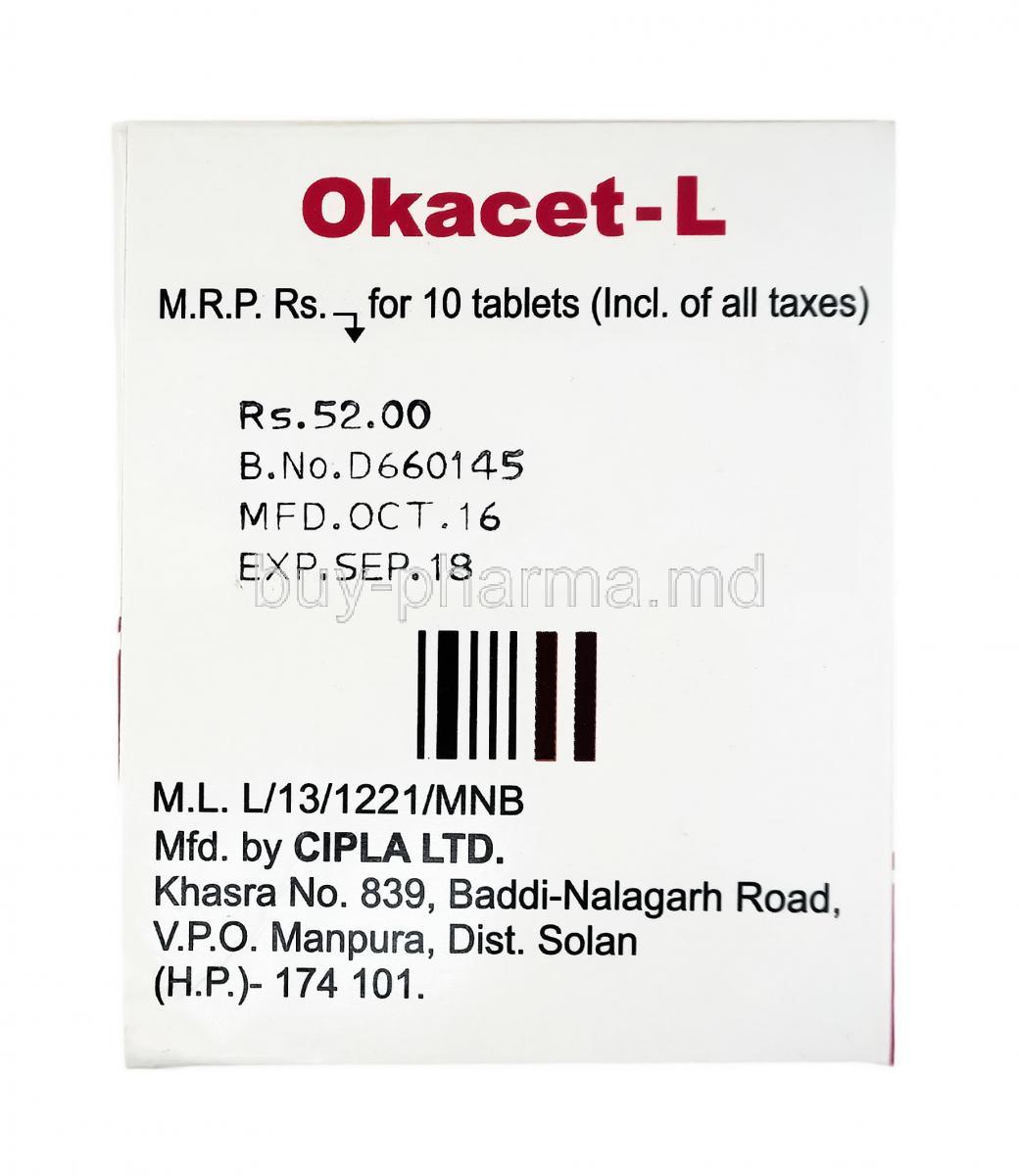
1. Introduction to Okacet L (Levocetirizine)
1.1 Overview of Okacet L and Its Therapeutic Class
Okacet L is a widely utilized antihistamine formulation indicated for the management of allergic conditions. It belongs to the class of second-generation antihistamines, designed to provide potent anti-allergic effects while minimizing central nervous system sedation.
- Non-sedating or minimally sedating profile
- Long-lasting symptomatic relief
- Suitable for chronic and acute allergic disorders
1.2 What is Levocetirizine? (Second-Generation Antihistamine)
Levocetirizine is the active enantiomer of cetirizine, exhibiting enhanced receptor selectivity and pharmacodynamic efficiency. It exerts its therapeutic effect by attenuating histamine-mediated responses, which are central to allergic manifestations.
1.3 Brand vs Generic: Okacet L Explained
Okacet L represents a branded version of levocetirizine, while generic variants contain the same active moiety with equivalent efficacy. Differences may arise in excipients, formulation technologies, and manufacturing standards, but therapeutic outcomes remain consistent.
1.4 Key Indications and Clinical Relevance
The medication is clinically relevant for a spectrum of hypersensitivity disorders. It is frequently prescribed for both seasonal and perennial allergic conditions, offering rapid relief and sustained control.
2. Composition and Formulation Details
2.1 Active Ingredient: Levocetirizine Dihydrochloride
The principal component, levocetirizine dihydrochloride, is responsible for the pharmacological activity. Its high affinity for peripheral H1 receptors underpins its therapeutic efficacy.
2.2 Strength Variations and Available Dosage Forms
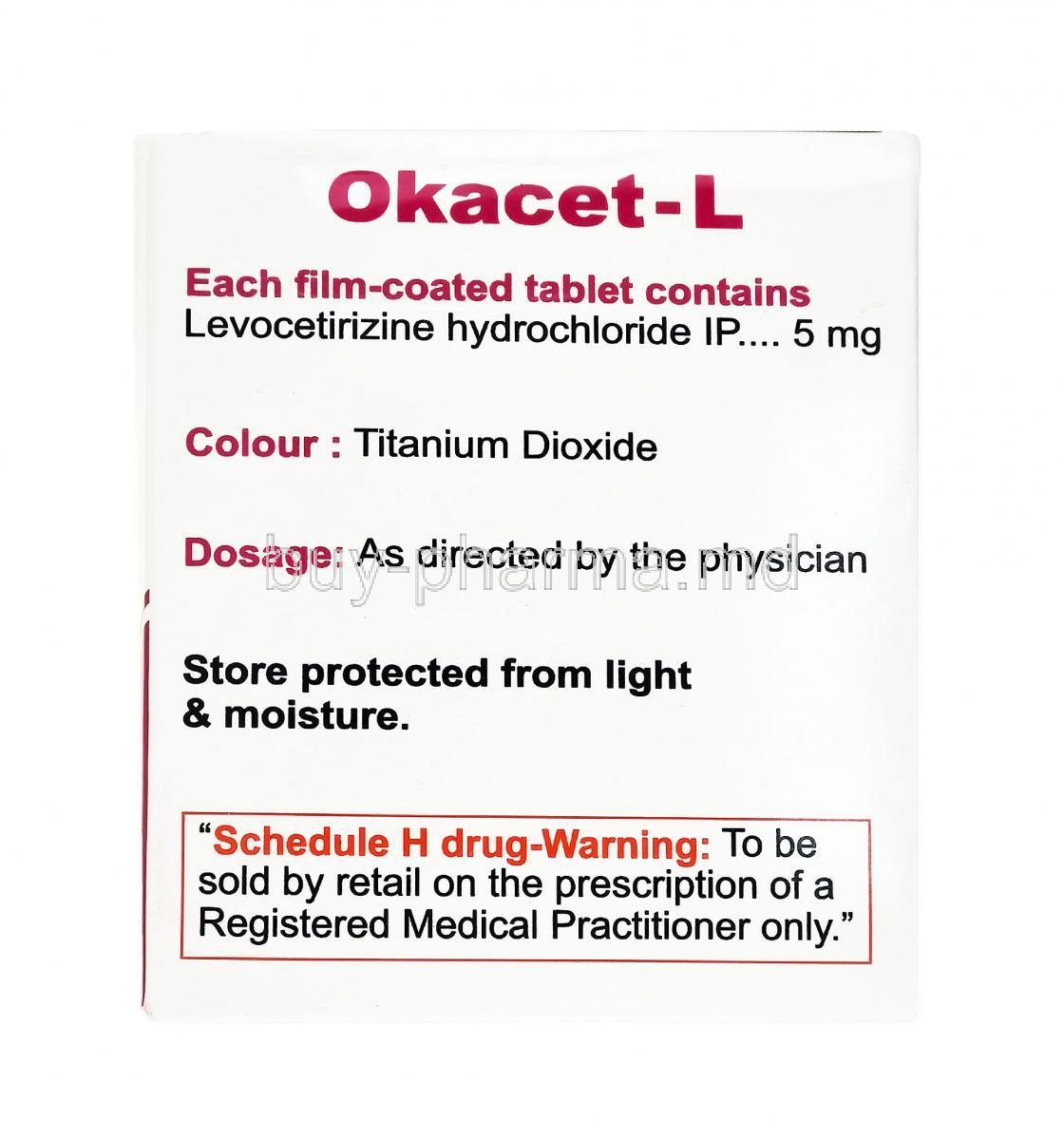
Okacet L is typically available in tablet and oral solution forms, accommodating diverse patient needs. Common strengths are optimized for once-daily administration.
- Tablets (e.g., 5 mg)
- Oral syrups for pediatric use
2.3 Excipients and Inactive Ingredients
Excipients serve as stabilizers and facilitate drug delivery. Though pharmacologically inert, they may influence tolerability in sensitive individuals.
2.4 Pharmacological Classification (H1 Receptor Antagonist)
Levocetirizine is classified as a selective H1 receptor antagonist. It inhibits histamine-induced vasodilation, capillary permeability, and sensory nerve stimulation.
3. Mechanism of Action: How Levocetirizine Works
3.1 Histamine Pathway and Allergic Response
Allergic reactions are mediated by histamine release from mast cells. This leads to:
- Vasodilation
- Increased vascular permeability
- Pruritus and mucosal irritation
3.2 Selective H1 Receptor Blockade
Levocetirizine selectively binds to peripheral H1 receptors, effectively blocking histamine activity. This targeted mechanism reduces allergic symptoms without significant central sedation.
3.3 Anti-Inflammatory and Anti-Allergic Effects
Beyond receptor blockade, levocetirizine exhibits ancillary anti-inflammatory properties. It modulates cytokine release and reduces eosinophil migration.
3.4 Onset and Duration of Action
The onset of action is typically rapid, often within one hour. Its prolonged half-life supports once-daily dosing, ensuring sustained symptom control.
4. Medical Uses of Okacet L (Levocetirizine)
4.1 Treatment of Allergic Rhinitis (Seasonal and Perennial)
Okacet L effectively alleviates symptoms associated with allergic rhinitis, including nasal congestion and rhinorrhea.
4.2 Management of Chronic Idiopathic Urticaria (Hives)
It reduces wheal formation and itching, improving patient comfort and quality of life in chronic urticaria cases.
4.3 Relief of Common Allergy Symptoms (Sneezing, Runny Nose, Itchy Eyes)
Patients experience rapid symptomatic relief, making it a cornerstone therapy in allergy management.
4.4 Treatment of Allergic Conjunctivitis
Levocetirizine mitigates ocular itching, redness, and tearing associated with allergic conjunctivitis.
4.5 Use in Dermatological Allergic Conditions (Itching, Rashes)
It is frequently used in pruritic skin conditions to suppress histamine-induced irritation.
5. Off-Label Uses of Levocetirizine
5.1 Adjunct Therapy in Atopic Dermatitis
Used alongside topical agents, levocetirizine may reduce itching and inflammation in atopic dermatitis.
5.2 Symptomatic Relief in Asthma-Related Allergies
Though not a primary asthma treatment, it can alleviate concurrent allergic symptoms.
5.3 Use in Cold-Induced Urticaria
It may help control histamine release triggered by cold exposure.
5.4 Management of Insect Bite Reactions
Levocetirizine reduces localized swelling and itching following insect bites.
5.5 Role in Chronic Pruritus (Non-Allergic Itching)
It can provide symptomatic relief in certain non-allergic itching conditions.
5.6 Use in Sinusitis-Related Allergic Symptoms
Adjunctive use may help reduce allergic inflammation contributing to sinus discomfort.
6. Dosage and Administration Guidelines
6.1 Standard Adult Dosage Recommendations
The typical adult dose is 5 mg once daily. It may be adjusted based on clinical response.
6.2 Pediatric Dosage and Age-Based Adjustments
Dosing in children is carefully calibrated according to age and body weight, often utilizing liquid formulations.
6.3 Dosage in Renal Impairment
Dose reduction is essential in patients with compromised renal function due to reduced drug clearance.
6.4 Timing of Administration (Day vs Night Use)
Administration in the evening is often preferred to minimize daytime drowsiness.
6.5 Oral Administration Instructions and Compliance Tips
- Take with or without food
- Swallow tablets whole
- Maintain consistent dosing schedule
7. Side Effects of Okacet L
7.1 Overview of Potential Adverse Effects
While generally well-tolerated, Okacet L may produce mild to moderate adverse effects in some individuals.
7.2 Frequency-Based Classification of Side Effects
Adverse effects are categorized based on occurrence frequency:
- Common
- Uncommon
- Rare
7.3 Mild vs Moderate vs Severe Reactions
Most reactions are mild and transient, though rare severe hypersensitivity reactions may occur.
7.4 When to Seek Medical Attention
Immediate medical attention is required if symptoms such as severe dizziness, swelling, or difficulty breathing occur.
8. Common Side Effects of Levocetirizine
8.1 Drowsiness and Fatigue
Mild sedation may occur, particularly in sensitive individuals.
8.2 Dry Mouth and Throat Irritation
Anticholinergic-like effects can result in dryness of mucosal surfaces.
8.3 Headache and Dizziness
These symptoms are generally transient and resolve without intervention.
8.4 Gastrointestinal Disturbances (Nausea, Constipation)
Some patients may experience mild gastrointestinal discomfort.
8.5 Nasopharyngitis and Upper Respiratory Symptoms
Occasional upper respiratory symptoms have been reported.
9. Drug Interactions and Compatibility
9.1 Interaction with Alcohol and CNS Depressants
Concurrent use may potentiate sedative effects and impair cognitive function.
9.2 Interaction with Sedatives and Antihistamines
Additive sedation may occur when combined with other antihistamines or sedatives.
9.3 Effects When Combined with Theophylline or Ritonavir
Pharmacokinetic interactions may alter drug metabolism, necessitating caution.
9.4 Food Interactions and Absorption Considerations
Food does not significantly impact the extent of absorption, though it may delay onset slightly.
9.5 Impact on Driving and Cognitive Function
Patients should exercise caution when operating machinery until individual response is known.
10. Warnings and Safety Considerations
10.1 Risk of Sedation and Impaired Alertness
Although less sedating than first-generation antihistamines, vigilance is advised.
10.2 Use in Patients with Renal Dysfunction
Dose adjustments are critical to avoid drug accumulation.
10.3 Hypersensitivity Reactions and Allergic Risk
Rare but serious allergic reactions may occur, necessitating discontinuation.
10.4 Caution in Patients with Urinary Retention or Prostate Issues
Patients with predisposed conditions should use the medication cautiously.
10.5 Long-Term Use Safety Profile
Long-term use is generally safe when monitored appropriately, with minimal risk of tolerance or dependence.
11. Contraindications of Okacet L
11.1 Known Allergy to Levocetirizine or Cetirizine
Okacet L is contraindicated in individuals with a documented hypersensitivity to levocetirizine, cetirizine, or related piperazine derivatives. Even minimal exposure may precipitate adverse immunologic reactions.
- Skin eruptions or urticaria
- Angioedema
- Anaphylactic responses in rare cases
11.2 Severe Renal Impairment (End-Stage Kidney Disease)
Patients with end-stage renal disease exhibit significantly reduced drug clearance. Accumulation of the active compound can lead to heightened toxicity and prolonged pharmacological effects.
11.3 Patients Under Specific Age Restrictions (Infants)
Use in infants below the approved age threshold is contraindicated due to insufficient clinical safety data and immature metabolic pathways.
11.4 Rare Genetic Conditions (Galactose Intolerance, Lactase Deficiency)
Certain formulations may contain lactose. Patients with hereditary galactose intolerance, Lapp lactase deficiency, or glucose-galactose malabsorption should avoid such preparations.
12. Careful Administration (Use with Caution)
12.1 Patients with Mild to Moderate Renal Impairment
Dose adjustments are imperative in patients with compromised renal function. Reduced clearance may necessitate extended dosing intervals.
12.2 Individuals with Hepatic Dysfunction
Although levocetirizine is minimally metabolized hepatically, caution is warranted in patients with hepatic impairment, especially when coexisting with renal dysfunction.
12.3 Elderly Patients with Comorbidities
Geriatric patients often present with multifactorial comorbidities. Careful titration and vigilant monitoring are essential to mitigate adverse outcomes.
12.4 Patients with History of Seizures
Although rare, antihistamines may lower the seizure threshold. Patients with a history of epilepsy should be closely observed.
12.5 Concurrent Use with CNS Depressants
Co-administration with central nervous system depressants can potentiate sedation and cognitive impairment.
- Alcohol
- Benzodiazepines
- Opioids
13. Important Precautions for Use
13.1 Avoiding Alcohol During Treatment
Alcohol consumption may exacerbate sedative effects, leading to diminished alertness and impaired psychomotor performance.
13.2 Monitoring for Excessive Drowsiness
Although categorized as a low-sedating antihistamine, individual susceptibility varies. Patients should assess their response before engaging in activities requiring vigilance.
13.3 Ensuring Proper Hydration
Adequate hydration supports optimal physiological function and may help alleviate minor side effects such as dry mouth.
13.4 Avoiding Self-Medication and Overuse
Unsupervised or prolonged use may obscure underlying conditions or increase the risk of adverse effects.
13.5 Adherence to Prescribed Dosage
Strict adherence to dosing recommendations is essential to maintain therapeutic efficacy and minimize risk.
14. Administration to Special Populations
14.1 Administration to Elderly Patients
14.1.1 Dose Adjustment and Monitoring Requirements
Elderly patients often require individualized dosing regimens. Renal function should be periodically assessed to guide therapy.
14.1.2 Increased Sensitivity to Sedative Effects
Heightened sensitivity to sedative effects may occur, increasing the risk of falls or cognitive impairment.
14.2 Administration to Pregnant Women and Nursing Mothers
14.2.1 Safety Profile in Pregnancy
Use during pregnancy should be considered only when clearly necessary. Available data suggest low teratogenic risk, yet caution remains prudent.
14.2.2 Excretion in Breast Milk
Levocetirizine may be excreted in breast milk in small quantities. Monitoring for infant sedation or irritability is advisable.
14.2.3 Risk-Benefit Assessment
A comprehensive evaluation of maternal benefit versus potential fetal or neonatal risk is essential prior to initiation.
14.3 Administration to Children
14.3.1 Age-Appropriate Dosage Forms
Liquid formulations facilitate accurate dosing in pediatric populations, enhancing compliance and safety.
14.3.2 Safety and Efficacy in Pediatric Use
Clinical studies support the efficacy of levocetirizine in children, with a favorable safety profile when used appropriately.
14.3.3 Monitoring for Behavioral Side Effects
Occasional behavioral changes, including irritability or restlessness, may occur and warrant observation.
15. Overdosage and Emergency Management
15.1 Symptoms of Levocetirizine Overdose
Overdose manifestations may include:
- Marked drowsiness or sedation
- Agitation, particularly in children
- Dry mouth and tachycardia
15.2 Immediate Steps and First Aid Measures
Prompt medical evaluation is essential. Induction of emesis is generally not recommended unless advised by a healthcare professional.
15.3 Medical Treatment and Supportive Care
Management is primarily supportive. Vital signs should be monitored, and symptomatic treatment administered as needed.
15.4 Poison Control and Emergency Consultation
Contacting a poison control center or emergency medical service is crucial in suspected overdose scenarios.
16. Storage and Handling Precautions
16.1 Recommended Storage Conditions (Temperature, Humidity)
Store at controlled room temperature, typically between 20°C and 25°C, in a dry environment.
16.2 Protecting from Light and Moisture
Exposure to excessive light or moisture may compromise drug stability and potency.
16.3 Safe Storage Away from Children and Pets
Medication should be securely stored to prevent accidental ingestion by children or animals.
16.4 Shelf Life and Expiry Considerations
Adherence to expiry dates is essential. Degraded products may exhibit reduced efficacy or altered safety profiles.
17. Handling Precautions and Patient Guidance
17.1 Proper Handling of Tablets and Liquid Forms
Tablets should be handled with dry hands, while liquid formulations should be measured using calibrated devices.
17.2 Disposal of Unused or Expired Medication
Unused medications should be disposed of in accordance with local pharmaceutical waste regulations.
17.3 Avoiding Contamination or Misuse
Proper hygiene and storage practices reduce the risk of contamination and ensure product integrity.
17.4 Patient Counseling and Education Points
Comprehensive patient education enhances adherence and safety. Key points include:
- Understanding dosing schedules
- Recognizing potential side effects
- Knowing when to seek medical advice
Popular Products
Similar Product