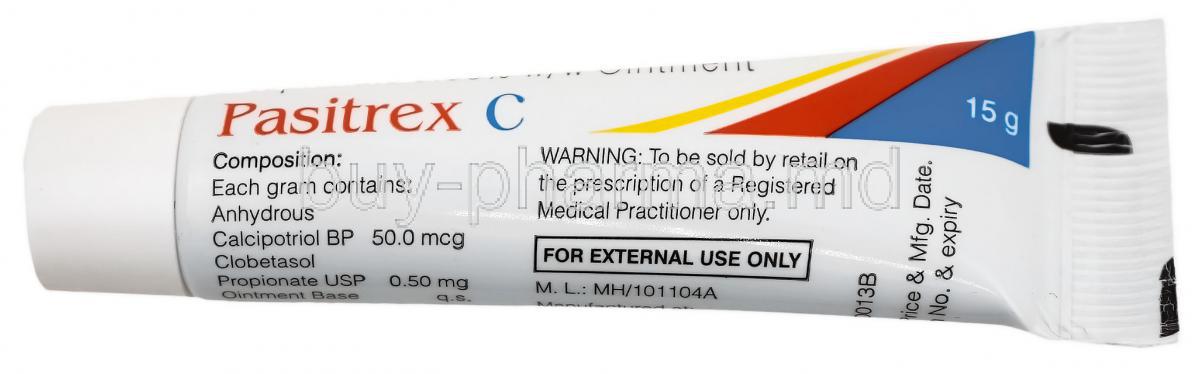
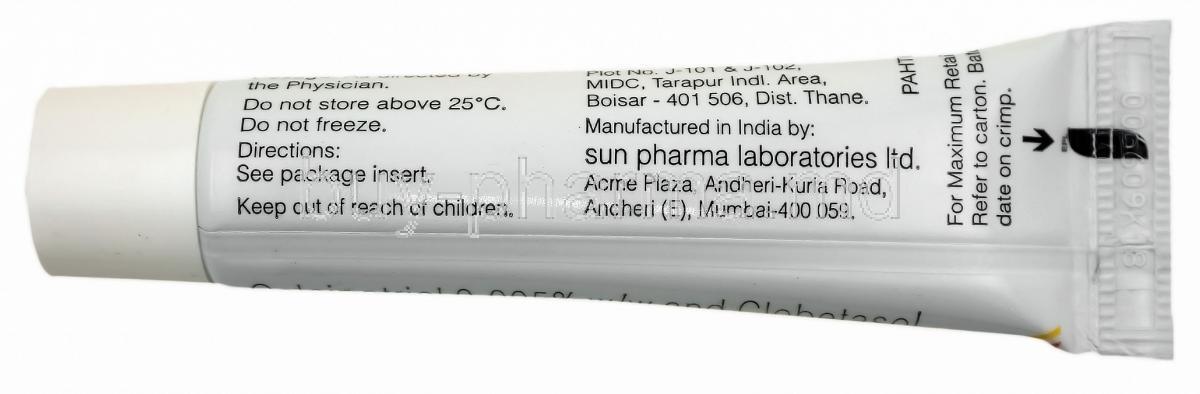
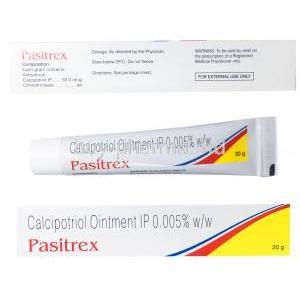
1. Introduction to Pasitrex C Ointment (Calcipotriol/Clobetasol)
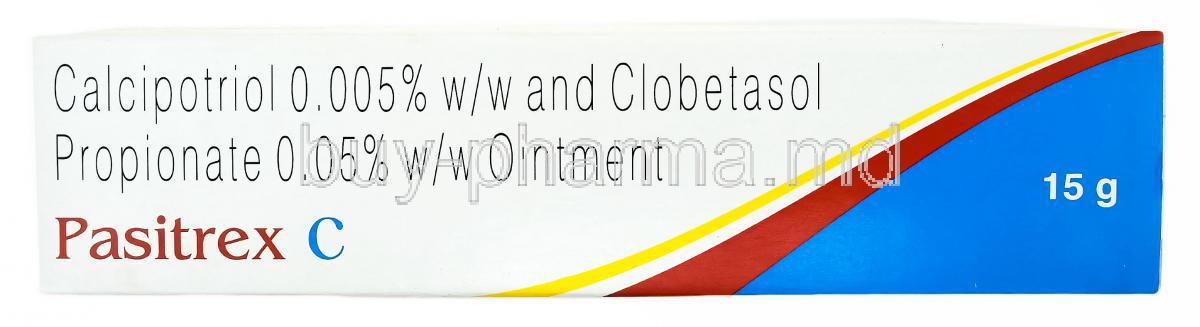
Pasitrex C Ointment is a combination topical therapy designed for the management of inflammatory and hyperproliferative skin disorders, particularly psoriasis. It integrates two pharmacologically distinct agents to deliver both anti-inflammatory and anti-proliferative effects. The formulation is intended for external dermatological use under medical guidance.
This medication belongs to a dual therapeutic class:
- Vitamin D analogue (Calcipotriol)
- Potent topical corticosteroid (Clobetasol propionate)
In dermatological practice, Pasitrex C is commonly prescribed for chronic plaque psoriasis and other steroid-responsive dermatoses. The combination approach offers several clinical advantages over monotherapy:
- Enhanced therapeutic efficacy
- Rapid reduction of inflammation and scaling
- Improved patient adherence due to faster symptom control
- Reduced duration or quantity of high-potency steroid exposure
Because it contains a super-potent corticosteroid, Pasitrex C is generally available by prescription. Medical supervision is essential to ensure appropriate duration, dosing, and monitoring for potential adverse effects.
2. Composition and Formulation Details
Pasitrex C Ointment contains two active pharmaceutical ingredients formulated in a dermatologically optimized base.
Active Ingredients and Strengths
- Calcipotriol: typically 0.005%
- Clobetasol propionate: typically 0.05%
Role of Each Component
- Calcipotriol regulates abnormal skin cell growth and differentiation.
- Clobetasol propionate suppresses inflammation, erythema, and pruritus.
The ointment base contains emollient excipients that enhance skin hydration and facilitate transdermal absorption. Its occlusive nature improves drug penetration into thickened psoriatic plaques.
Characteristics of the formulation include:
- Semi-occlusive texture
- Enhanced dermal retention
- Suitable for chronic, dry, and scaly lesions
The product is typically available in laminated tubes of varying sizes, designed to maintain stability and prevent contamination.
3. Mechanism of Action: How Pasitrex C Ointment Works
3.1 Calcipotriol Mechanism
Calcipotriol is a synthetic vitamin D analogue that targets the fundamental pathology of psoriasis. It modulates keratinocyte activity, restoring normal epidermal turnover.
- Inhibits excessive keratinocyte proliferation
- Promotes cellular differentiation
- Exerts immunomodulatory effects on T-cell mediated inflammation
These actions collectively reduce scaling, plaque thickness, and epidermal hyperplasia.
3.2 Clobetasol Propionate Mechanism
Clobetasol propionate is a class I (super-potent) corticosteroid with profound anti-inflammatory properties. It works through multiple pathways:
- Inhibition of inflammatory cytokines and mediators
- Vasoconstriction, reducing erythema and edema
- Suppression of immune cell infiltration
- Antipruritic effects that alleviate itching
3.3 Synergistic Benefits of Combination Therapy
The dual-action formulation provides a complementary therapeutic effect:
- Faster clearance of psoriatic lesions
- Improved clinical response compared with either agent alone
- Lower cumulative steroid exposure due to enhanced efficacy
- Better long-term disease control in selected patients
4. Approved Uses of Pasitrex C Ointment
Pasitrex C is primarily indicated for inflammatory skin disorders characterized by hyperproliferation and immune dysregulation.
- Treatment of plaque psoriasis (psoriasis vulgaris)
- Management of chronic stable psoriasis
- Treatment of localized body psoriasis
- Reduction of erythema, scaling, induration, and pruritus
- Short-term maintenance therapy to prevent relapse under medical supervision
By controlling inflammation and normalizing epidermal turnover, the ointment improves both clinical symptoms and cosmetic appearance.
5. Off-Label Uses in Dermatology
In specialized clinical settings, Pasitrex C may be used off-label for selected inflammatory dermatoses where combined anti-proliferative and anti-inflammatory action is beneficial.
- Palmoplantar psoriasis
- Nail psoriasis (as adjunct therapy)
- Lichen simplex chronicus
- Chronic or recalcitrant eczema
- Sebopsoriasis
- Localized vitiligo (adjunct in selected cases)
- Discoid lupus erythematosus
- Other chronic inflammatory dermatoses requiring short-term high-potency therapy
Such use should always be guided by a dermatologist due to the potency of the corticosteroid component.
6. Dosage and Administration Guidelines
6.1 General Application Instructions
- Apply once or twice daily as directed by a physician
- Use a thin layer over affected areas
- Typical treatment duration ranges from 2 to 4 weeks
- Avoid exceeding recommended weekly quantities to minimize systemic absorption
6.2 Application Technique
- Clean and dry the affected skin before application
- Gently massage until absorbed
- Avoid occlusive dressings unless specifically prescribed
- Wash hands after application
- Avoid contact with eyes, face, and mucous membranes
6.3 Duration and Treatment Monitoring
Short-term therapy is preferred. Prolonged use should be avoided unless medically indicated. Patients may require periodic reassessment to evaluate response and detect adverse effects. Gradual tapering may be necessary after extended use to prevent rebound inflammation.
7. Storage and Stability Requirements
- Store at room temperature, typically below 25–30°C
- Protect from excessive heat, moisture, and direct sunlight
- Keep the tube tightly closed when not in use
- Do not use beyond the expiration date
- Store out of reach of children and pets
Proper storage helps maintain drug potency and prevents contamination.
8. Drug and Topical Interactions
Concurrent use of certain medications or topical agents may alter the safety or effectiveness of Pasitrex C.
- Additional topical corticosteroids may increase systemic steroid exposure
- Other vitamin D analogues may elevate the risk of hypercalcemia
- Systemic corticosteroids may enhance cumulative steroid effects
- Phototherapy should be used cautiously due to increased photosensitivity
- Avoid simultaneous use with irritants, keratolytics, or exfoliants unless prescribed
9. Side Effects of Pasitrex C Ointment
9.1 Common Side Effects
- Mild skin irritation
- Burning or stinging sensation
- Dryness or peeling
- Localized redness or itching
9.2 Less Common but Notable Side Effects
- Skin atrophy
- Striae (stretch marks)
- Telangiectasia
- Folliculitis
- Acneiform eruptions
9.3 Rare or Serious Adverse Effects
- Disturbances in calcium metabolism
- Hypothalamic–pituitary–adrenal (HPA) axis suppression
- Allergic contact dermatitis
- Secondary bacterial or fungal infections
10. Warnings and Important Precautions
Because Pasitrex C contains a high-potency corticosteroid, careful use is essential.
- Avoid application over large body surface areas
- Prolonged use increases the risk of systemic absorption
- Do not apply to the face, groin, or intertriginous areas unless directed
- Monitor for signs of steroid overuse, such as skin thinning or easy bruising
- Adhere to recommended weekly dose limits to reduce systemic effects
Regular medical evaluation is recommended during extended treatment. Responsible use ensures optimal therapeutic benefit while minimizing potential risks.
11. Contraindications
Pasitrex C Ointment should not be used in certain clinical situations where the risks outweigh the potential therapeutic benefit. Careful patient selection is essential to prevent complications associated with its potent corticosteroid and vitamin D analogue components.
- Hypersensitivity to calcipotriol, clobetasol propionate, or any excipient in the formulation
- Disorders of calcium metabolism, including hypercalcemia or conditions predisposing to calcium imbalance
- Untreated skin infections such as viral (e.g., herpes simplex, varicella), fungal, or bacterial infections
- Rosacea, acne vulgaris, or perioral dermatitis, where potent corticosteroids may exacerbate disease
- Severely atrophic skin, ulcerated lesions, or fragile dermal surfaces, which increase the risk of further tissue damage
Use in these conditions may lead to disease aggravation, delayed healing, or systemic complications. Alternative therapies should be considered when contraindications are present.
12. Careful Administration (Use with Caution)
In certain patient populations and clinical scenarios, Pasitrex C should be administered cautiously, with close medical oversight. The objective is to balance therapeutic efficacy with safety.
- Patients with extensive psoriasis requiring application over large body surface areas, which may increase systemic absorption
- Those undergoing long-term or repeated treatment cycles, where cumulative corticosteroid exposure becomes clinically significant
- Individuals with hepatic or renal impairment, as disturbances in calcium regulation may occur with excessive calcipotriol absorption
- Patients with a known history of steroid sensitivity or previous steroid-related adverse effects
- Use under occlusive dressings only when medically indicated, as occlusion markedly enhances drug penetration
Judicious dosing. Limited duration. Regular clinical review. These principles are fundamental to safe therapy.
13. Important Monitoring During Treatment
Ongoing assessment during treatment helps detect early signs of local or systemic toxicity. Monitoring is particularly important when higher doses or prolonged therapy are required.
- Periodic serum calcium evaluation in patients using large quantities or long-duration therapy
- Inspection for skin atrophy, telangiectasia, or striae at treated sites
- Evaluation of therapeutic response, including reduction in plaque thickness, scaling, and inflammation
- Detection of relapse following discontinuation or dose reduction
- Screening for systemic corticosteroid effects, including signs of hypothalamic–pituitary–adrenal (HPA) axis suppression during prolonged use
Early recognition of adverse changes allows timely dose adjustment or treatment discontinuation.
14. Administration in Special Populations
14.1 Administration to Elderly Patients
Elderly individuals often exhibit reduced dermal thickness and increased skin fragility. Consequently, the risk of local and systemic corticosteroid effects is heightened.
- Use the lowest effective dose for the shortest duration
- Avoid prolonged continuous therapy
- Monitor closely for skin thinning, purpura, and delayed healing
- Observe for signs of increased systemic absorption
Conservative dosing strategies are strongly recommended in geriatric dermatology.
14.2 Administration to Pregnant Women and Nursing Mothers
The safety of topical calcipotriol and potent corticosteroids during pregnancy has not been fully established. Use should be based on a careful benefit–risk assessment.
- Apply only when the potential benefit justifies possible fetal risk
- Avoid application over large areas or for prolonged periods during pregnancy
- During breastfeeding, avoid application to the breast or nipple area to prevent infant exposure
Minimal exposure strategies are preferred whenever treatment is necessary.
14.3 Administration to Children and Adolescents
Pediatric patients are more susceptible to systemic absorption due to a higher skin surface area-to-body weight ratio.
- Safety data in children are limited
- Use only under strict medical supervision
- Avoid large-area application and prolonged use
- Monitor for growth suppression, adrenal effects, or systemic corticosteroid toxicity
Short treatment courses are strongly advised in this population.
15. Overdosage and Excessive Use
Excessive or prolonged application of Pasitrex C may result in local and systemic adverse effects. Overuse should be promptly identified and managed.
Potential signs include:
- Features of topical corticosteroid overexposure, such as marked skin thinning, striae, or easy bruising
- Adrenal suppression, fatigue, or features of Cushingoid changes with chronic misuse
- Symptoms of hypercalcemia, including weakness, nausea, constipation, or increased thirst
Management principles:
- Gradual discontinuation rather than abrupt cessation after prolonged use
- Symptomatic and supportive treatment if systemic effects occur
- Laboratory evaluation when calcium imbalance or adrenal suppression is suspected
Immediate medical attention should be sought if systemic symptoms develop or large quantities have been used inappropriately.
16. Handling and Safety Precautions
Proper handling minimizes accidental exposure and ensures safe use.
- For external use only
- Avoid accidental ingestion, especially in children
- Do not apply to open wounds, broken skin, or untreated infections unless directed by a physician
- Avoid sharing the medication to prevent cross-contamination or inappropriate use
- Dispose of unused or expired ointment according to local pharmaceutical waste guidelines
Maintaining hygienic application practices helps reduce secondary infection risk.
17. Patient Counseling and Practical Use Tips
Effective therapy depends not only on the medication itself but also on correct patient behavior and adherence.
- Follow the prescribed duration and dosage; more is not better
- Avoid abrupt discontinuation after prolonged use to prevent rebound inflammation
- Use a regular moisturizer to support skin barrier repair and reduce dryness
- Apply emollients at different times from the medicated ointment for optimal absorption
Lifestyle measures that may improve disease control include:
- Stress reduction and adequate sleep
- Avoidance of known psoriasis triggers such as skin trauma, smoking, and excessive alcohol
- Maintaining healthy body weight
- Following a consistent skin care routine
Patients should consult a healthcare provider if:
- No improvement is seen within the expected treatment period
- Skin irritation or unusual symptoms occur
- Signs of infection develop at the application site
- Frequent relapses or worsening disease is observed
Appropriate education promotes safe use, optimizes therapeutic outcomes, and minimizes preventable complications.
Customers also bought


Popular Products


Similar Product