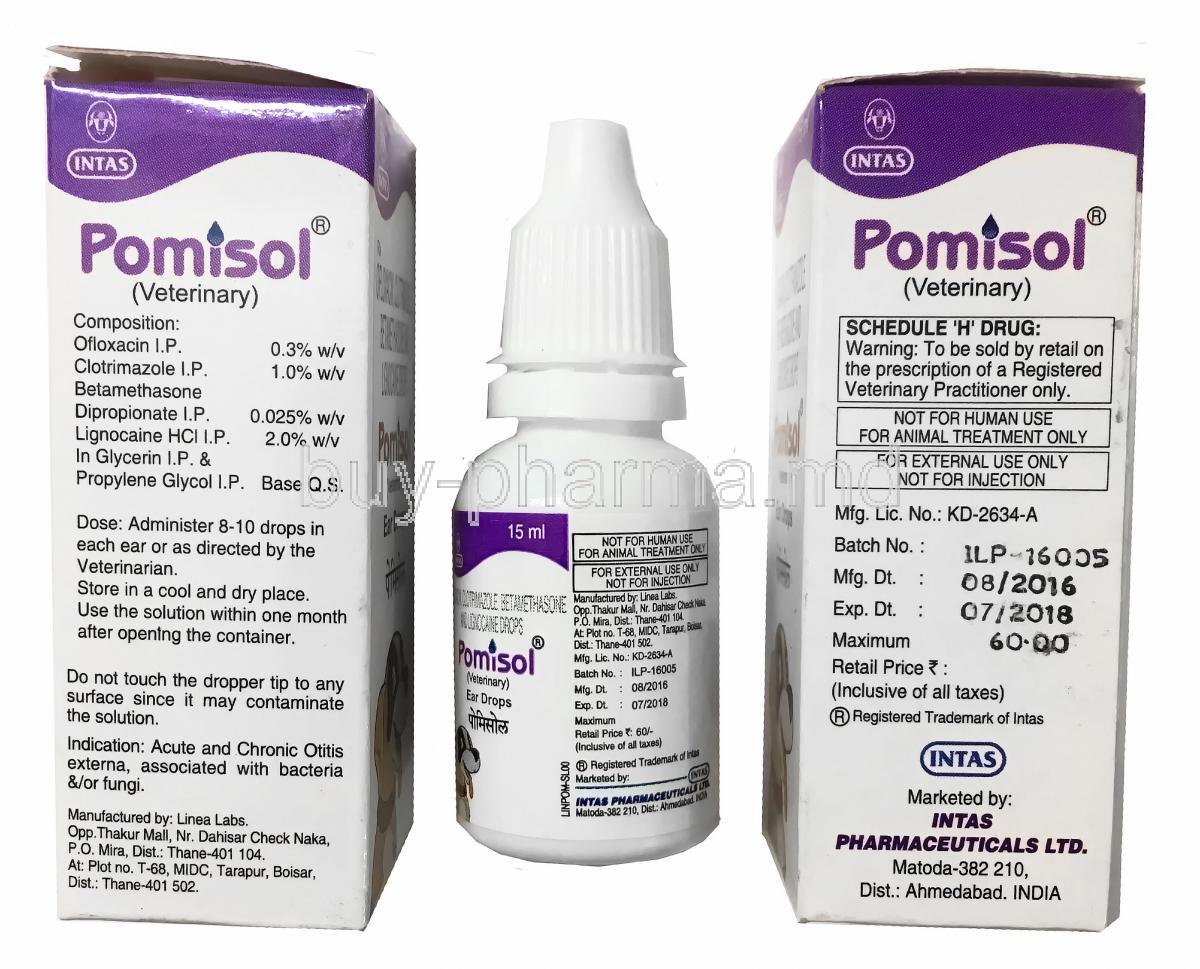
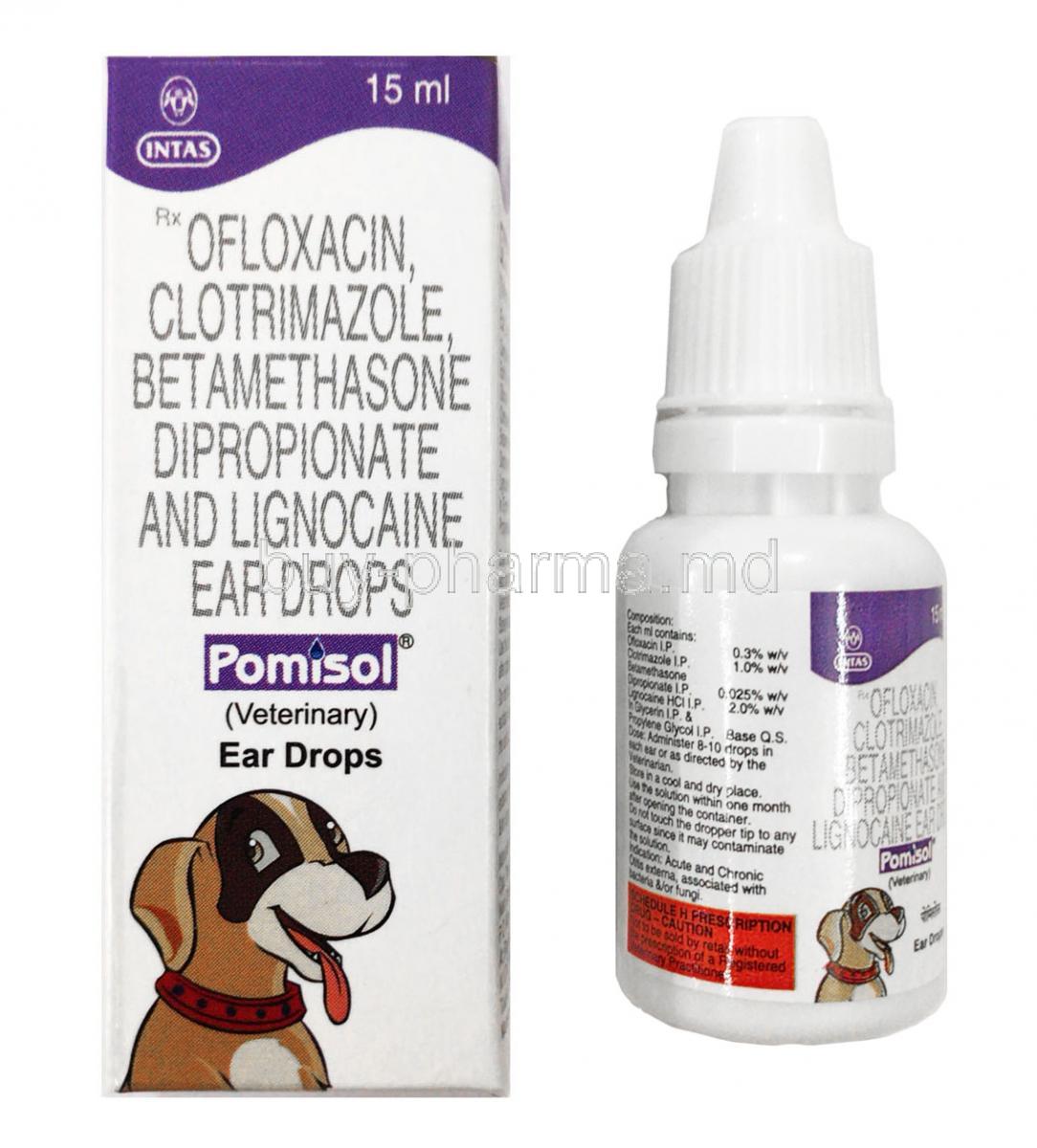
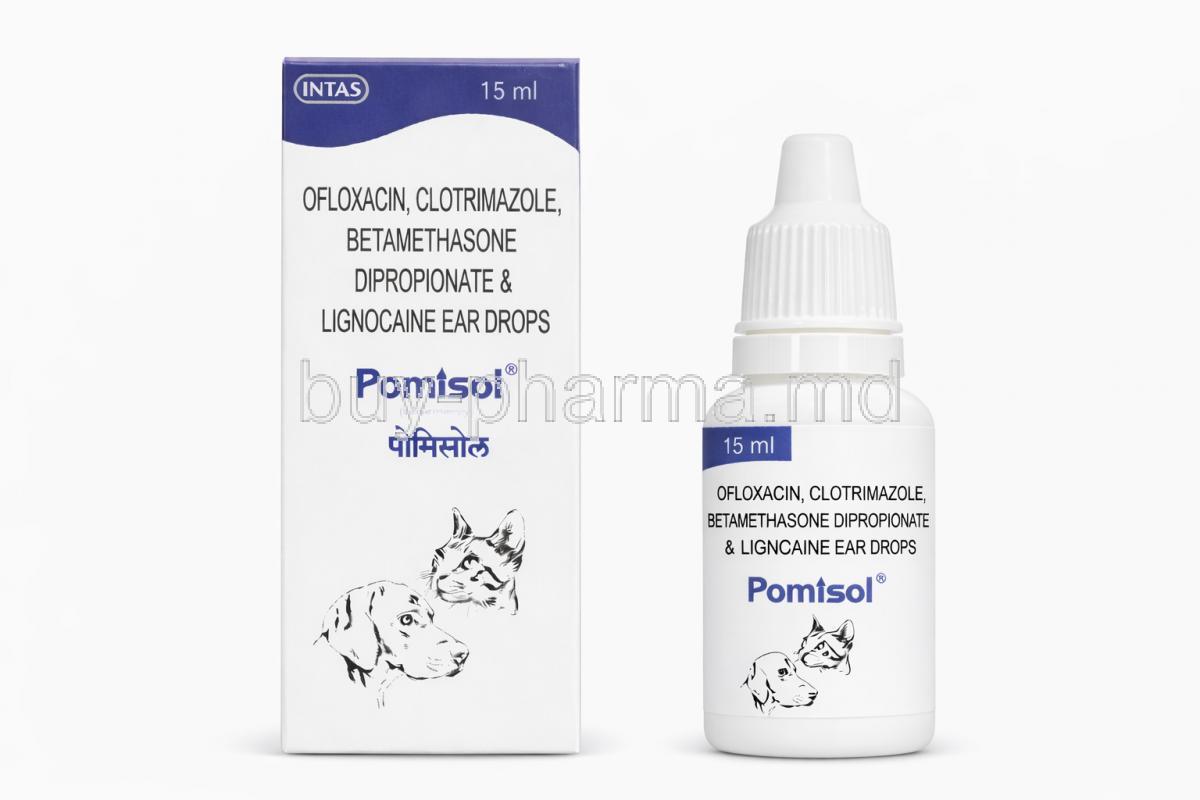

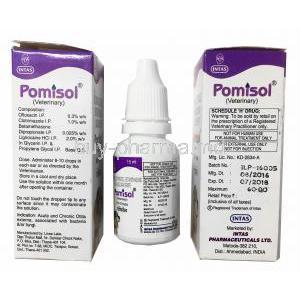
Introduction to Pomisol Ear Drops (Ofloxacin / Clotrimazole / Beclomethasone Dipropionate / Lignocaine)
Pomisol Ear Drops represent a multifaceted otic formulation designed to address the complex pathophysiology of ear canal disorders. Many external ear conditions are not driven by a single cause. Instead, infection, inflammation, and pain frequently coexist, creating a therapeutic challenge that requires more than monotherapy.
This formulation integrates antibacterial, antifungal, anti-inflammatory, and anesthetic agents into a single preparation, enabling comprehensive local management. Such combination therapy is particularly valuable in otic conditions where microbial overgrowth and tissue inflammation amplify discomfort and delay healing.
Overview of Combination Otic Formulations
Combination ear drops are engineered to deliver multiple pharmacological actions directly to the affected site. This localized approach minimizes systemic exposure while achieving high drug concentrations within the ear canal.
- Targeted antimicrobial coverage
- Rapid suppression of inflammatory responses
- Immediate alleviation of pain and irritation
Rationale for Multi-Ingredient Therapy in Ear Disorders
Otitis externa and related conditions often involve overlapping etiologies. Bacteria, fungi, inflammatory mediators, and neural hypersensitivity can coexist within a confined anatomical space. Addressing only one component may result in incomplete resolution or recurrence.
Multi-ingredient therapy allows simultaneous control of infection, edema, erythema, and nociceptive signaling, thereby accelerating symptomatic relief and tissue recovery.
Therapeutic Positioning in Infectious and Inflammatory Ear Conditions
Pomisol Ear Drops are positioned as a comprehensive local therapy for inflammatory ear canal disorders complicated by microbial involvement. They are particularly suitable for mixed infections or situations where rapid symptom control is clinically desirable.
Composition and Active Ingredients
The formulation comprises four pharmacologically distinct agents, each contributing a specific therapeutic function, supported by excipients that ensure stability and effective otic delivery.
Ofloxacin: Fluoroquinolone Antibacterial Component
Ofloxacin is a broad-spectrum fluoroquinolone antibiotic with potent activity against common otic pathogens. It exerts bactericidal effects by inhibiting bacterial DNA gyrase and topoisomerase IV, enzymes essential for DNA replication and repair.
This mechanism ensures effective eradication of susceptible Gram-positive and Gram-negative organisms commonly implicated in external ear infections.
Clotrimazole: Broad-Spectrum Antifungal Agent
Clotrimazole disrupts fungal cell membrane integrity by inhibiting ergosterol synthesis. This action compromises membrane permeability, leading to fungal cell death.
- Effective against Candida species
- Active against dermatophytes associated with otomycosis
Beclomethasone Dipropionate: Topical Corticosteroid for Inflammation Control
Beclomethasone dipropionate is a synthetic corticosteroid that suppresses inflammatory cascades within the ear canal. It reduces capillary permeability, inhibits cytokine release, and attenuates local immune responses.
The result is diminished swelling, redness, and pruritus, improving patient comfort and enhancing penetration of antimicrobial agents.
Lignocaine (Lidocaine): Local Anesthetic for Pain Relief
Lignocaine provides rapid analgesia by blocking voltage-gated sodium channels in peripheral nerve endings. This interruption of nerve impulse transmission leads to prompt relief from pain, burning, and hypersensitivity.
Its inclusion is particularly beneficial in acute, painful otic conditions.
Role of Excipients and Formulation Base in Otic Delivery
The excipient matrix ensures uniform drug dispersion, optimal viscosity, and adequate contact time with the ear canal epithelium. Proper formulation enhances drug stability while facilitating smooth instillation and retention.
Mechanism of Action (How Pomisol Ear Drops Work)
Pomisol Ear Drops exert their therapeutic effects through complementary mechanisms that act in parallel at the site of infection and inflammation.
Antibacterial Action Against Gram-Positive and Gram-Negative Organisms
Ofloxacin penetrates bacterial cells and disrupts DNA synthesis, leading to rapid bacterial death. This reduces microbial load and prevents further tissue damage.
Antifungal Activity Against Candida and Dermatophyte Species
Clotrimazole targets fungal pathogens by destabilizing their cell membranes, effectively controlling fungal proliferation within the moist environment of the ear canal.
Anti-Inflammatory Effects on Edematous and Erythematous Ear Tissues
Beclomethasone dipropionate mitigates inflammation by downregulating inflammatory mediators. Swelling subsides, erythema fades, and tissue irritation diminishes.
Local Anesthetic Effect on Sensory Nerve Endings
Lignocaine rapidly desensitizes irritated nerve endings, offering immediate symptomatic relief. This effect improves tolerance to treatment and reduces reflexive scratching or manipulation.
Synergistic Benefits of Combination Therapy
The concurrent antimicrobial, anti-inflammatory, and anesthetic actions create a synergistic therapeutic profile. Infection is controlled, inflammation is suppressed, and pain is relieved in a coordinated manner.
Indications and Approved Uses
Pomisol Ear Drops are indicated for a range of external ear conditions characterized by infection, inflammation, and pain.
Acute Otitis Externa (Bacterial and Mixed Infections)
The formulation is effective in acute bacterial otitis externa, including cases where mixed microbial flora are suspected.
Fungal Otitis Externa (Otomycosis)
Clotrimazole provides targeted antifungal therapy in otomycosis, while adjunctive agents reduce inflammation and discomfort.
Inflammatory Ear Canal Conditions with Secondary Infection
Inflammatory dermatoses of the ear canal complicated by bacterial or fungal colonization respond favorably to combination therapy.
Painful Ear Infections Requiring Symptomatic Relief
The presence of lignocaine makes this formulation suitable for painful ear conditions where immediate analgesia is desired.
Post-Procedural Ear Inflammation with Infection Risk
Pomisol Ear Drops may be used to manage inflammation and prevent secondary infection following minor otic procedures, when clinically appropriate.
Expanded Uses and Off-Label Applications
Under medical supervision, Pomisol Ear Drops may be employed in select off-label scenarios where monotherapy has proven inadequate.
Mixed Bacterial–Fungal Ear Infections Unresponsive to Monotherapy
Combination therapy is advantageous in refractory cases involving both bacterial and fungal pathogens.
Eczematous Otitis with Superimposed Microbial Colonization
The corticosteroid component alleviates eczematous inflammation, while antimicrobial agents control secondary infection.
Otic Inflammation Associated with Excessive Ear Discharge
Reduction of microbial load and inflammation can help normalize discharge and restore epithelial integrity.
Adjunctive Therapy in Chronic Otitis Externa (Under Medical Supervision)
Short, supervised courses may be considered to manage acute exacerbations of chronic disease.
Short-Term Symptomatic Management of Painful Ear Canal Conditions
Lignocaine provides rapid symptom relief, improving patient comfort during acute inflammatory episodes.
Dosage and Administration Guidelines
Appropriate dosing and technique are essential for optimal therapeutic outcomes.
Standard Dosing Frequency and Duration of Therapy
Pomisol Ear Drops are typically administered in divided daily doses for a defined treatment period, as prescribed by a healthcare professional.
Recommended Technique for Instillation of Ear Drops
- Clean and dry the external ear gently
- Instill the prescribed number of drops
- Maintain head position briefly to allow penetration
Importance of Completing the Full Treatment Course
Premature discontinuation may lead to incomplete eradication of pathogens and recurrence of symptoms.
Adjustments Based on Severity of Infection
Severe or persistent infections may require longer treatment durations under medical guidance.
Avoidance of Contamination During Administration
Direct contact between the dropper tip and the ear should be avoided to maintain sterility.
Use in Special Populations
Administration to Elderly Patients
Age-related thinning of the ear canal epithelium necessitates cautious use. Monitoring for local corticosteroid-related effects is advisable.
Administration to Pregnant Women and Nursing Mothers
Use during pregnancy requires careful risk–benefit evaluation. Systemic absorption is minimal with topical otic use, but therapy should be limited to clearly indicated cases.
During breastfeeding, cautious use is generally considered acceptable when clinically necessary.
Administration to Children
Pediatric use should always occur under medical supervision.
- Age-appropriate dosing is essential
- Safety monitoring is recommended in infants and young children
Proper diagnosis and follow-up are critical to ensure both efficacy and safety in pediatric patients.
Side Effects and Safety Profile
Pomisol Ear Drops are generally well tolerated when used as directed. As with any multi-component otic formulation, adverse reactions may occur, primarily at the site of application. The safety profile reflects the localized nature of therapy, with systemic effects being uncommon under appropriate use.
Overview of Potential Adverse Reactions
Most adverse reactions are mild, transient, and self-limiting. They typically arise from local tissue sensitivity or short-lived pharmacologic effects on the ear canal epithelium and sensory nerves.
- Predominantly localized reactions
- Low incidence of systemic involvement
- Higher risk with prolonged or improper use
Local Versus Systemic Side Effects
Local side effects are far more common due to direct contact with the ear canal. Systemic side effects are rare, as absorption through intact skin is minimal. However, misuse or application to compromised tissue may increase systemic exposure.
Common Side Effects
Common side effects are usually mild and occur shortly after instillation. They often resolve spontaneously without intervention.
Transient Burning or Stinging Sensation
A brief burning or stinging sensation may be experienced immediately after application. This is typically short-lived and reflects temporary irritation of inflamed tissue.
Mild Itching or Irritation of the Ear Canal
Some individuals may notice mild pruritus or a sensation of irritation. These effects are usually temporary and diminish as inflammation subsides.
Temporary Numbness Due to Lignocaine
Lignocaine may cause transient numbness or altered sensation within the ear canal. This effect is expected and correlates with its local anesthetic action.
Less Common or Rare Side Effects
Less common reactions are typically associated with hypersensitivity, prolonged use, or inappropriate administration.
Allergic Reactions or Contact Dermatitis
Hypersensitivity to one or more components may manifest as redness, swelling, rash, or persistent itching. In such cases, discontinuation and medical evaluation are recommended.
Prolonged Corticosteroid-Related Skin Thinning
Extended or unsupervised use of topical corticosteroids may lead to skin atrophy within the ear canal. The epithelium may become fragile, increasing susceptibility to irritation or injury.
Secondary Infections with Prolonged Misuse
Excessive or prolonged use may alter the local microbial balance, potentially predisposing to secondary infections, including opportunistic fungal or bacterial overgrowth.
Warnings and Contraindications
Certain clinical situations require caution or complete avoidance of Pomisol Ear Drops.
Known Hypersensitivity to Any Component
Use is contraindicated in individuals with known allergy to ofloxacin, clotrimazole, beclomethasone dipropionate, lignocaine, or any excipient in the formulation.
Use in Patients with Suspected Tympanic Membrane Perforation
Application in the presence of a suspected or confirmed tympanic membrane perforation should be avoided unless specifically advised by a healthcare professional.
Avoidance in Viral Ear Infections
Viral infections of the ear may be exacerbated by corticosteroid use. Pomisol Ear Drops should not be used when a viral etiology is suspected.
Risks Associated with Prolonged or Unsupervised Use
Long-term, unsupervised use increases the risk of local adverse effects and microbial resistance. Therapy should be limited to the prescribed duration.
Drug Interactions and Compatibility
Drug interactions are uncommon due to the topical route of administration, but certain considerations remain relevant.
Potential Interactions with Other Topical Otic Preparations
Concurrent use of multiple ear drops may dilute active ingredients or increase local irritation. Sequential or combined use should be guided by a healthcare professional.
Risks of Concurrent Corticosteroid or Antifungal Use
Using additional corticosteroid- or antifungal-containing products may increase the risk of cumulative local effects, including skin thinning or altered flora.
Considerations When Using with Systemic Antibiotics or Antifungals
Topical therapy may be used alongside systemic treatment when clinically indicated, but coordination of care is important to ensure optimal outcomes.
Careful Administration and Important Precautions
Appropriate administration techniques and adherence to precautions significantly reduce the risk of adverse events.
Limiting Duration to Prevent Steroid-Related Complications
Treatment duration should be strictly limited to what is prescribed to minimize corticosteroid-associated local effects.
Avoiding Occlusion of the Ear Canal Unless Advised
Occluding the ear canal may increase drug absorption and moisture retention. Occlusion should only be used if specifically recommended.
Monitoring for Worsening Symptoms or Lack of Improvement
Persistence or worsening of symptoms may indicate treatment failure, resistance, or an alternative diagnosis and warrants reassessment.
Importance of Follow-Up in Chronic or Recurrent Cases
Chronic or recurrent ear conditions require periodic evaluation to prevent complications and ensure appropriate therapy adjustments.
Overdosage and Misuse
Overdosage is uncommon with topical otic use, but misuse can lead to avoidable complications.
Low Risk of Systemic Overdose with Topical Use
Systemic overdose is unlikely when used correctly, due to minimal systemic absorption through intact skin.
Potential Consequences of Excessive or Prolonged Application
Excessive use may result in local irritation, skin changes, or secondary infection.
Recommended Actions in Case of Accidental Overuse
If excessive application occurs, discontinuation and medical advice are recommended, especially if new symptoms develop.
Storage Conditions
Proper storage preserves the stability and effectiveness of Pomisol Ear Drops.
Recommended Storage Temperature and Environment
Store at controlled room temperature, away from excessive heat.
Protection from Light and Moisture
Exposure to light and moisture should be minimized to maintain product integrity.
Shelf-Life Considerations After Opening
Once opened, the product should be used within the recommended timeframe and discarded thereafter.
Handling and Hygiene Precautions
Maintaining hygiene during use reduces the risk of contamination.
Proper Handling to Maintain Sterility
The container should be handled with clean hands and kept tightly closed when not in use.
Avoiding Contact Between Dropper Tip and Ear or Skin
Contact between the dropper tip and the ear canal or surrounding skin should be avoided to prevent contamination.
Safe Disposal of Expired or Unused Medication
Expired or unused medication should be disposed of according to local pharmaceutical disposal guidelines.
Patient Counseling and Adherence Tips
Effective counseling enhances adherence and therapeutic success.
Educating Patients on Correct Usage Technique
Clear instruction on instillation technique helps ensure adequate drug delivery and reduces contamination risk.
Importance of Adherence to Prescribed Duration
Completing the full prescribed course is essential to prevent recurrence and resistance.
When to Seek Medical Advice During Treatment
Medical advice should be sought if symptoms persist, worsen, or if signs of hypersensitivity or secondary infection appear.

 Verified Purchase
Wonderful product
Worked very well. Very satisfied.
Verified Purchase
eye cream
Great products super fast delivery
Pomisol Ear Drops, Ofloxacin/ Clotrimazole/ Betamethasone Dipropionate/ Lignocaine FAQ
Customers also bought
Popular Products

Similar Product