
1. Introduction to Rabesec (Rabeprazole)
1.1 Overview of Rabeprazole as a Proton Pump Inhibitor (PPI)
Rabesec contains rabeprazole, a potent proton pump inhibitor engineered to attenuate gastric acid secretion at its source. It acts decisively. By targeting the terminal stage of acid production, it delivers profound and sustained acid suppression.
- Belongs to the class of benzimidazole derivatives
- Designed for once-daily administration in most cases
- Provides rapid symptomatic relief in acid-related disorders
1.2 Brand Names and Generic Availability
Rabeprazole is marketed globally under various brand names, with Rabesec being a recognized formulation. Generic variants are widely available, offering cost-effective therapeutic equivalence while maintaining stringent pharmaceutical standards.
1.3 Therapeutic Classification and Drug Class
This medication is classified under proton pump inhibitors. It is neither an antacid nor a simple acid neutralizer; rather, it suppresses acid production at the enzymatic level, offering superior clinical efficacy.
1.4 Indications in Acid-Related Disorders
Rabesec is indicated for a spectrum of acid-mediated conditions. Its application spans both acute and chronic gastrointestinal pathologies.
- Gastroesophageal reflux disease
- Peptic ulcer disease
- Hypersecretory states
1.5 Clinical Relevance in Gastroenterology
Within gastroenterology, rabeprazole occupies a pivotal role. It is frequently employed as a first-line therapy due to its predictable pharmacological profile and high tolerability.
2. Composition and Formulation
2.1 Active Ingredient: Rabeprazole Sodium
The primary active component is rabeprazole sodium. This compound exhibits acid-labile properties, necessitating specialized formulation strategies to preserve its integrity.
2.2 Available Strengths and Dosage Forms (Tablets, Delayed-Release)
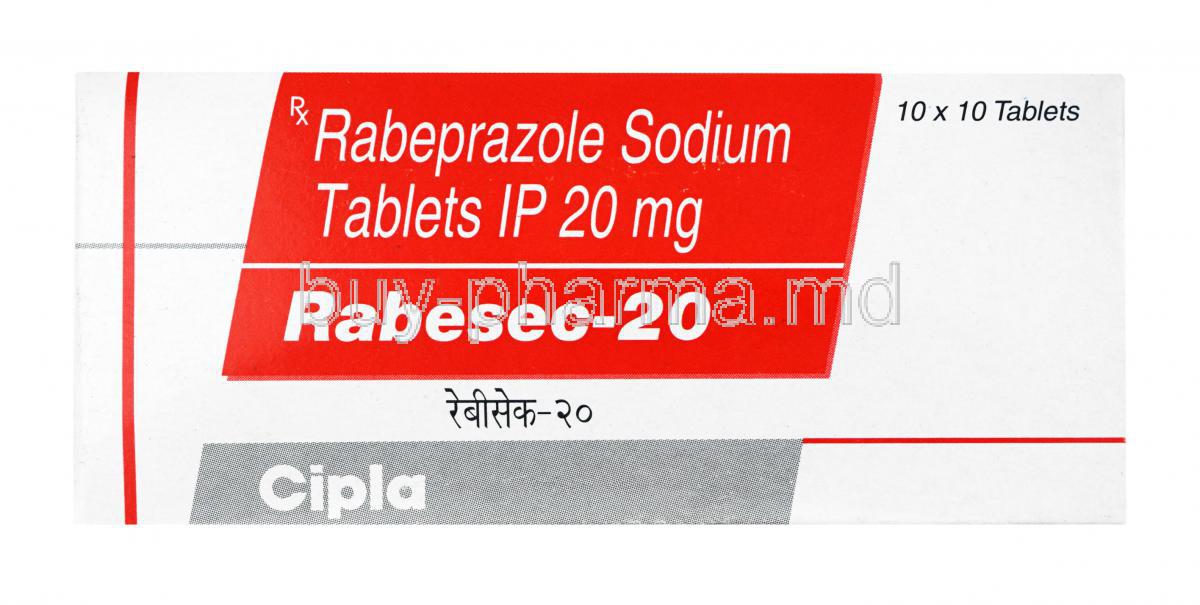
Rabesec is typically available in delayed-release tablet formulations. Common strengths include:
- 10 mg tablets
- 20 mg tablets
2.3 Pharmaceutical Characteristics and Enteric Coating Technology
To circumvent degradation in the acidic gastric milieu, rabeprazole tablets are enteric-coated. This ensures:
- Protection from gastric acid
- Targeted release in the small intestine
- Enhanced bioavailability
2.4 Inactive Ingredients and Excipients
Excipients play a critical role in stability and delivery. These may include buffering agents, stabilizers, and coating materials that facilitate controlled drug release.
2.5 Packaging and Presentation
Rabesec is commonly packaged in blister strips or bottles, ensuring protection from moisture and environmental degradation.
3. Mechanism of Action: How Rabeprazole Works
3.1 Inhibition of Gastric H⁺/K⁺-ATPase (Proton Pump)
Rabeprazole irreversibly inhibits the H⁺/K⁺-ATPase enzyme system in gastric parietal cells. This enzyme is the final arbiter of acid secretion.
3.2 Reduction of Gastric Acid Secretion
By silencing proton pumps, rabeprazole markedly reduces basal and stimulated acid output. The effect is profound and sustained.
3.3 Onset and Duration of Acid Suppression
Onset is relatively rapid. However, maximal acid suppression is typically achieved after repeated dosing due to cumulative enzyme inhibition.
3.4 Pharmacodynamics and Pharmacokinetics
Rabeprazole demonstrates favorable pharmacokinetics:
- Rapid absorption post intestinal release
- Extensive hepatic metabolism
- Elimination via renal and biliary pathways
3.5 Comparison with Other Proton Pump Inhibitors
Compared to other PPIs, rabeprazole exhibits a faster onset and less dependence on CYP-mediated metabolism, making it a preferred option in certain patient populations.
4. Uses of Rabesec (Rabeprazole)
4.1 Treatment of Gastroesophageal Reflux Disease (GERD)
Rabesec effectively alleviates reflux symptoms, including heartburn and regurgitation, by suppressing gastric acid production.
4.2 Healing and Maintenance of Erosive Esophagitis
It promotes mucosal healing and prevents recurrence in patients with erosive esophageal damage.
4.3 Management of Peptic Ulcer Disease (Gastric and Duodenal Ulcers)
Rabeprazole facilitates ulcer healing by maintaining a less acidic gastric environment conducive to tissue repair.
4.4 Helicobacter pylori Eradication (Combination Therapy)
Used in combination regimens, it enhances antibiotic efficacy against H. pylori by elevating gastric pH.
4.5 Zollinger-Ellison Syndrome and Hypersecretory Conditions
In rare hypersecretory disorders, Rabesec controls excessive acid production with remarkable efficacy.
4.6 Prevention of NSAID-Induced Ulcers
It is frequently prescribed prophylactically in patients requiring long-term NSAID therapy.
4.7 Symptomatic Relief of Dyspepsia and Acid Indigestion
Short-term use provides relief from nonspecific dyspeptic symptoms and acid-related discomfort.
5. Off-Label Uses of Rabeprazole
5.1 Functional Dyspepsia and Non-Ulcer Dyspepsia
Rabeprazole is sometimes utilized in functional gastrointestinal disorders where acid suppression may provide symptomatic benefit.
5.2 Laryngopharyngeal Reflux (LPR)
It may alleviate extra-esophageal manifestations such as chronic throat irritation and hoarseness.
5.3 Barrett’s Esophagus (Adjunctive Therapy)
Long-term acid suppression may reduce progression risks in Barrett’s esophagus when used alongside surveillance strategies.
5.4 Stress Ulcer Prophylaxis in Critically Ill Patients
In intensive care settings, rabeprazole may be employed to prevent stress-related mucosal damage.
5.5 Chronic Cough Associated with Acid Reflux
Persistent cough linked to reflux may respond to acid suppression therapy.
5.6 Eosinophilic Esophagitis (Adjunct Role)
Rabeprazole may serve as part of a broader therapeutic regimen in select inflammatory esophageal conditions.
5.7 Prevention of Upper Gastrointestinal Bleeding
In high-risk individuals, it may reduce the likelihood of upper GI bleeding events.
6. Dosage and Administration Guidelines
6.1 Standard Adult Dosage by Indication
Dosage varies depending on the condition being treated. Standard regimens typically involve once-daily dosing.
6.2 Dosage in H. pylori Combination Therapy
Administered twice daily in combination with antibiotics for eradication protocols.
6.3 Duration of Therapy for Different Conditions
Therapy duration ranges from short-term (2–4 weeks) to long-term maintenance depending on disease severity.
6.4 Administration Timing (Before Meals vs After Meals)
Optimal efficacy is achieved when taken before meals, allowing maximal inhibition of active proton pumps.
6.5 Instructions for Swallowing Delayed-Release Tablets
- Do not crush or chew tablets
- Swallow whole with water
6.6 Missed Dose and Compliance Strategies
If a dose is missed, it should be taken as soon as remembered unless it is near the next scheduled dose.
7. Side Effects of Rabesec (Rabeprazole)
7.1 Overview of Potential Adverse Reactions
Rabesec is generally well tolerated. However, adverse reactions may occur, particularly with prolonged use.
7.2 Frequency and Severity Classification
Adverse effects range from mild to severe, with most being transient and self-limiting.
7.3 Gastrointestinal Side Effects
- Diarrhea
- Constipation
- Abdominal discomfort
7.4 Neurological and Systemic Effects
Headache and dizziness are among the most commonly reported systemic effects.
7.5 Dermatological Reactions
Rare skin reactions may include rash or pruritus.
7.6 Rare and Serious Adverse Events
Serious events, though uncommon, may include hypersensitivity reactions and electrolyte disturbances.
8. Common Side Effects
8.1 Headache and Dizziness
Often mild and transient. Usually resolves without intervention.
8.2 Nausea and Vomiting
Gastrointestinal intolerance may occur, particularly during initial therapy.
8.3 Diarrhea or Constipation
Alterations in bowel habits are frequently reported but generally manageable.
8.4 Abdominal Pain and Flatulence
These symptoms are typically mild and self-limited.
8.5 Fatigue and General Weakness
Some individuals may experience nonspecific fatigue during treatment.
9. Drug Interactions
9.1 Interaction with Antiplatelet Agents (e.g., Clopidogrel)
Rabeprazole may influence the metabolism of certain antiplatelet drugs, though the clinical impact varies.
9.2 Interaction with Antifungals and Antivirals
Reduced gastric acidity may impair absorption of certain antifungal and antiviral medications.
9.3 Effects on Drugs Requiring Acidic pH for Absorption
Medications dependent on gastric acidity may exhibit reduced bioavailability.
9.4 Interaction with Methotrexate and Other High-Risk Drugs
High-dose methotrexate therapy may be affected, necessitating caution.
9.5 Food and Alcohol Interactions
Food has minimal impact on efficacy, while excessive alcohol may exacerbate gastrointestinal irritation.
9.6 Herbal Supplements and OTC Interactions
Concurrent use with herbal products should be approached cautiously due to potential pharmacodynamic interactions.
10. Warnings and Safety Considerations
10.1 Risk of Long-Term Acid Suppression
Prolonged use may lead to unintended physiological consequences, including rebound acid hypersecretion.
10.2 Vitamin B12 Deficiency and Nutrient Malabsorption
Chronic suppression of gastric acid may impair absorption of essential nutrients.
10.3 Risk of Bone Fractures and Osteoporosis
Long-term therapy has been associated with increased fracture risk, particularly in elderly populations.
10.4 Clostridioides difficile-Associated Diarrhea
Altered gastric pH may predispose to certain infections.
10.5 Hypomagnesemia and Electrolyte Imbalance
Electrolyte disturbances may occur with prolonged therapy and require monitoring.
10.6 Masking of Gastric Malignancy Symptoms
Symptomatic relief may obscure underlying serious conditions, necessitating thorough diagnostic evaluation.
11. Contraindications
11.1 Hypersensitivity to Rabeprazole or Other PPIs
Rabesec must not be administered in individuals with a known hypersensitivity to rabeprazole or other proton pump inhibitors. Even minimal exposure may provoke adverse immunological reactions. These reactions can be immediate or delayed, and in rare instances, life-threatening.
- Manifestations may include rash, urticaria, or angioedema
- Severe cases may involve anaphylaxis
- Cross-reactivity among PPIs should be carefully considered
11.2 Severe Hepatic Impairment (Relative Contraindication)
In patients with significant hepatic dysfunction, the metabolism of rabeprazole may be impaired. This can lead to elevated plasma concentrations. Caution is warranted, and use should be evaluated on a case-by-case basis.
11.3 Concurrent Use with Certain Medications (e.g., Rilpivirine)
Rabesec is contraindicated with medications that require an acidic gastric environment for optimal absorption. Rilpivirine is a prime example. Co-administration may result in reduced therapeutic efficacy of such agents.
11.4 Known History of Drug-Induced Hypersensitivity Reactions
Patients with a documented history of drug-induced hypersensitivity should avoid rabeprazole unless deemed absolutely necessary. Vigilant monitoring is essential if use cannot be avoided.
12. Careful Administration (Use with Caution)
12.1 Patients with Liver Dysfunction
Individuals with hepatic impairment may exhibit altered pharmacokinetics. Dose adjustments are not always mandatory, yet prudence is advised. Monitoring liver function periodically is recommended.
12.2 Individuals with Renal Impairment
Although rabeprazole is primarily metabolized hepatically, renal impairment may still influence drug handling. Patients with compromised renal function should be observed for unexpected adverse reactions.
12.3 Long-Term Therapy in Elderly Patients
Extended use in elderly populations necessitates caution. Age-related physiological changes can amplify susceptibility to adverse outcomes.
- Increased risk of fractures
- Potential for nutrient deficiencies
- Greater sensitivity to systemic effects
12.4 Patients at Risk of Osteoporosis
Chronic acid suppression has been associated with decreased calcium absorption. This may contribute to bone demineralization over time. Patients with pre-existing osteoporosis require careful evaluation.
12.5 Individuals on Polypharmacy Regimens
Patients taking multiple medications are at heightened risk of drug interactions. Rabeprazole may alter the absorption or metabolism of concomitant therapies, necessitating thorough medication review.
13. Important Precautions for Safe Use
13.1 Avoiding Unnecessary Long-Term Use
While effective, prolonged use without clear indication should be avoided. Indiscriminate therapy may lead to unintended complications.
13.2 Monitoring for Adverse Effects During Prolonged Therapy
Regular monitoring is essential during extended treatment courses. This includes clinical evaluation and, where appropriate, laboratory testing.
- Serum magnesium levels
- Vitamin B12 status
- Bone density assessments
13.3 Gradual Discontinuation to Prevent Rebound Acid Hypersecretion
Sudden cessation may result in rebound acid hypersecretion. Tapering the dose gradually can mitigate this phenomenon and improve patient comfort.
13.4 Patient Counseling and Education Points
Educating patients enhances adherence and safety. Clear instructions should be provided regarding dosing, duration, and potential side effects.
13.5 Regular Medical Follow-Up Recommendations
Scheduled follow-ups ensure therapeutic efficacy and early detection of complications. This is particularly critical in long-term users.
14. Administration in Special Populations
14.1 Administration to Elderly Patients
14.1.1 Dose Adjustments and Monitoring Needs
Routine dose adjustment is not always necessary. However, individualized assessment is prudent, especially in frail or comorbid patients.
14.1.2 Increased Sensitivity to Adverse Effects
Elderly patients may exhibit heightened sensitivity to drug effects. Vigilance for subtle adverse reactions is essential.
14.2 Administration to Pregnant Women and Nursing Mothers
14.2.1 Safety Profile in Pregnancy
Data on rabeprazole use during pregnancy remain limited. Use should be considered only when the potential benefits justify potential risks.
14.2.2 Use During Breastfeeding
It is not definitively established whether rabeprazole is excreted in human milk. Caution is advised when administered to nursing mothers.
14.2.3 Risk-Benefit Assessment
A thorough risk-benefit analysis should guide clinical decisions in pregnant or lactating individuals.
14.3 Administration to Children
14.3.1 Approved Pediatric Indications
Rabeprazole may be used in pediatric populations for specific indications such as GERD, depending on regulatory approvals.
14.3.2 Age-Appropriate Dosage Guidelines
Dosing in children should be weight-based and tailored to clinical need. Strict adherence to guidelines is imperative.
14.3.3 Safety and Efficacy Considerations
Long-term safety data in pediatric populations are limited. Careful monitoring is essential during therapy.
15. Overdosage and Emergency Management
15.1 Symptoms of Rabeprazole Overdose
Overdose is uncommon but may present with nonspecific symptoms. These may include lethargy, confusion, or gastrointestinal disturbances.
15.2 Immediate Management and Supportive Care
There is no specific antidote. Management is primarily supportive and symptomatic.
- Ensure airway protection
- Maintain hydration
- Monitor vital signs
15.3 Role of Gastric Decontamination
Gastric decontamination may be considered in recent ingestion cases. However, its utility is limited and should be evaluated clinically.
15.4 Monitoring and Follow-Up Care
Patients should be observed until symptoms resolve. Follow-up ensures no delayed complications arise.
16. Storage and Stability
16.1 Recommended Storage Conditions
Rabesec should be stored at controlled room temperature. Stability is preserved when kept within recommended conditions.
16.2 Protection from Moisture and Heat
Exposure to moisture and excessive heat may compromise the integrity of the formulation. Tablets should remain in their original packaging until use.
16.3 Shelf Life and Expiry Considerations
Use beyond the expiration date is not advised. Potency and safety cannot be guaranteed after this period.
16.4 Safe Storage Practices in Households
Medication should be stored out of reach of children and pets. Secure storage minimizes the risk of accidental ingestion.
17. Handling Precautions
17.1 Proper Handling of Enteric-Coated Tablets
Enteric-coated tablets are designed for targeted release. Improper handling can compromise their function.
17.2 Avoiding Crushing or Splitting Tablets
Tablets should not be crushed, chewed, or split. Doing so may result in premature drug release and reduced efficacy.
17.3 Disposal of Unused or Expired Medication
Unused medication should be disposed of in accordance with local regulations. Avoid flushing unless specifically instructed.
17.4 Safety Measures to Prevent Accidental Ingestion
Preventative measures are essential in households with children. Simple steps can avert serious incidents:
- Use child-resistant containers
- Store in elevated or locked locations
- Educate household members on medication safety
Rabesec, Rabeprazole FAQ
- What is Rabesec medicine used for?
- Is Rabesec DSR used for gas?
- Are Rabesec and rabeprazole the same?
- When is the best time to take Rabesec 20?
- What conditions does rabesec treat?
- What is the main use of rabeprazole?
- Is rabeprazole the same as omeprazole?
- How long can you safely take rabeprazole?
- What to avoid when taking rabeprazole?
- What is the best time to take rabeprazole?
- Is rabeprazole safe for kidneys?
- Is it safe to take rabeprazole?
- Can I replace rabeprazole with omeprazole?
- What are the worst side effects of rabeprazole?
- What is the best alternative to rabeprazole?
- Can I stop taking rabeprazole suddenly?
- Why do doctors prescribe rabeprazole?
- Can rabeprazole affect your heart?
- Can I eat rabeprazole on an empty stomach?
- Can rabeprazole affect sleep?
- How many hours does rabeprazole last?
- How safe is rabeprazole?
- What is the most common side effect of rabeprazole?
What is Rabesec medicine used for?
Rabesec Tablet is a medicine that helps treat stomach and intestinal problems, such as ulcers. It's used for gastric and duodenal ulcers, reflux esophagitis, and a condition called gastroesophageal reflux disease, or GERD for short. This medicine can help make these problems better and reduce symptoms.
Is Rabesec DSR used for gas?
Yes
Are Rabesec and rabeprazole the same?
Yes
When is the best time to take Rabesec 20?
In the morning on an empty stomach
What conditions does rabesec treat?
- Acid reflux
- Peptic ulcer
- Increased acid production
What is the main use of rabeprazole?
- GERD
- Ulcers
- Zollinger-Ellison syndrome
Is rabeprazole the same as omeprazole?
Rabeprazole works faster than omeprazole to reduce acid in the stomach. It starts to take effect more quickly, which can be a big help for people who need relief from stomach acid right away.
How long can you safely take rabeprazole?
1-2 months
What to avoid when taking rabeprazole?
- Cigarettes
- Alcohol
- Coffee
- Tea
- Spicy food
- Fried food
What is the best time to take rabeprazole?
Morning
Is rabeprazole safe for kidneys?
Using a medicine like Rabeprazole for a short time is usually okay, but taking it for a long time or in high doses can be bad for your kidneys.
Is it safe to take rabeprazole?
People who take proton pump inhibitors such as rabeprazole may be more likely to fracture their wrists, hips, or spine than people who do not take one of these medications.
Can I replace rabeprazole with omeprazole?
Rabeprazole works just as well as omeprazole in treating reflux oesophagitis, but acts faster in relieving symptoms, especially in the beginning stages of treatment.
What are the worst side effects of rabeprazole?
Allergic Reaction
What is the best alternative to rabeprazole?
Can I stop taking rabeprazole suddenly?
Some patients may only require one step down before they can stop their PPI, others may require several steps down and the use of other treatments to manage rebound symptoms
Why do doctors prescribe rabeprazole?
GERD and ulcers
Can rabeprazole affect your heart?
Yes
Can I eat rabeprazole on an empty stomach?
Yes
Can rabeprazole affect sleep?
Yes
How many hours does rabeprazole last?
11-24 hours
How safe is rabeprazole?
Important warnings for rabeprazole oral tablet include risk of severe diarrhea, bone fractures with long-term use, and low magnesium levels that can lead to serious symptoms.
What is the most common side effect of rabeprazole?
Headache and diarrhea
Popular Products


Similar Product