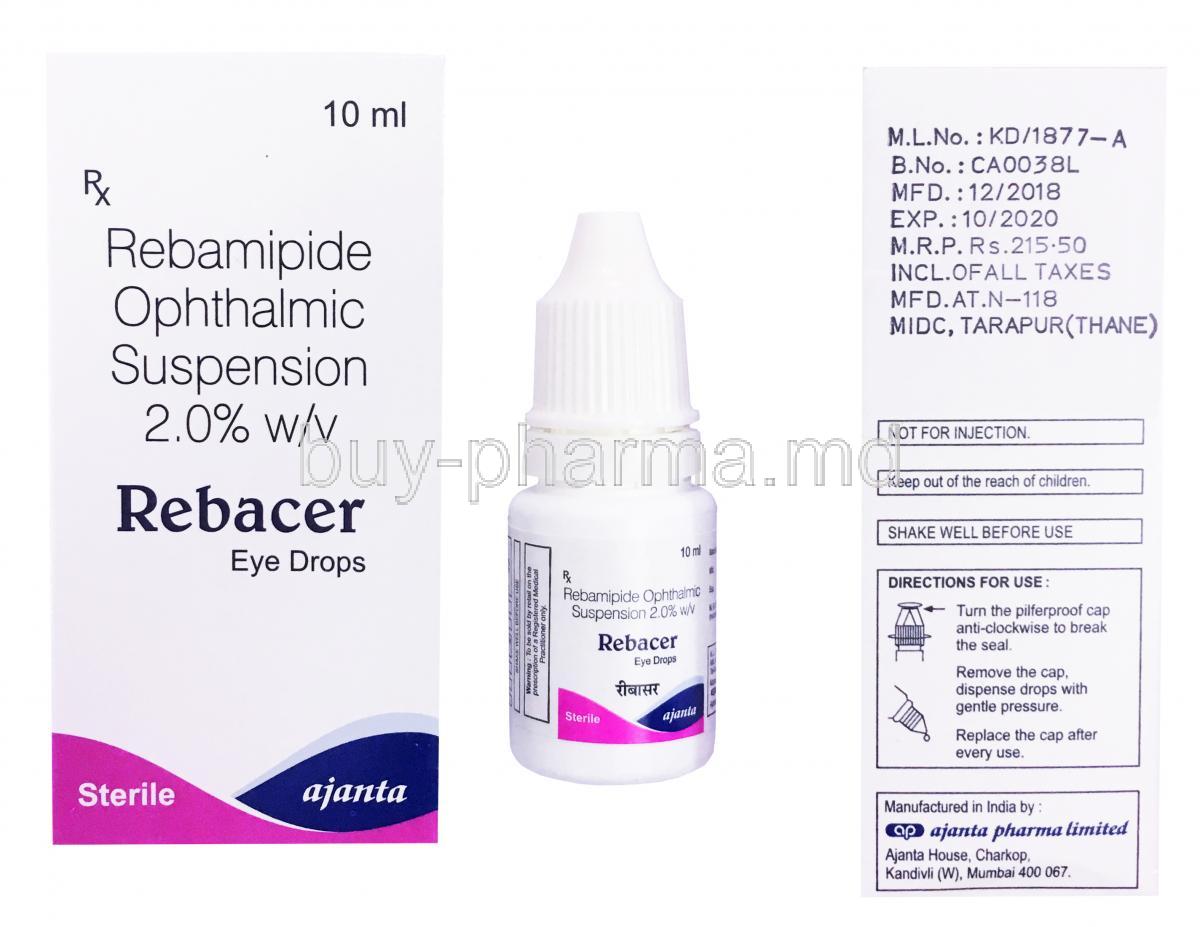
1. Introduction to Rebamipide Eye Drops
Rebamipide Eye Drops are a specialized ophthalmic formulation developed to address disorders of the ocular surface, particularly conditions characterized by tear film instability and epithelial damage. Unlike conventional lubricating eye drops, rebamipide is a pharmacologically active agent that exerts restorative effects at the cellular level.
Originally synthesized for gastrointestinal mucosal protection, rebamipide was later adapted for ophthalmic use following the recognition of its mucin-promoting and cytoprotective properties. Subsequent clinical development focused on translating these benefits to the corneal and conjunctival epithelium.
Within ophthalmology, Rebamipide Eye Drops occupy a distinct therapeutic niche. They are positioned not merely as symptomatic relief agents, but as disease-modifying therapy for ocular surface disorders.
- Oral rebamipide targets gastric mucosa
- Ophthalmic rebamipide acts locally on the tear film and ocular epithelium
- Systemic exposure is minimal with topical ocular use
2. Composition and Pharmaceutical Characteristics
The primary active component of this formulation is rebamipide, a quinolinone derivative with proven mucosal protective activity. In ophthalmic preparations, it is formulated to ensure stability, ocular tolerability, and optimal surface retention.
Rebamipide Eye Drops are typically available in low-percentage concentrations designed for repeated daily use without inducing toxicity or cumulative irritation.
- Active ingredient: Rebamipide
- Ophthalmic-grade excipients to enhance dispersion
- Preservative systems selected to minimize epithelial stress
Physicochemically, the formulation exhibits controlled viscosity and favorable surface adhesion, allowing uniform distribution across the cornea and conjunctiva while maintaining patient comfort.
3. How Rebamipide Eye Drops Work (Mechanism of Action)
Rebamipide Eye Drops exert their effects through multiple synergistic mechanisms. Central to their action is the stimulation of mucin secretion from conjunctival goblet cells, a critical component of tear film integrity.
In addition, rebamipide enhances epithelial barrier function by promoting cellular repair processes and reducing oxidative stress at the ocular surface.
- Upregulation of membrane-associated and secretory mucins
- Protection of corneal epithelial tight junctions
- Suppression of inflammatory mediators
Through these combined actions, the tear film becomes more stable, reducing evaporation and mechanical irritation associated with blinking.
4. Approved Uses of Rebamipide Eye Drops
The primary approved indication for Rebamipide Eye Drops is the treatment of dry eye disease, particularly cases associated with mucin deficiency or epithelial compromise.
They are also indicated for the management of tear film instability, where conventional artificial tears provide insufficient or short-lived relief.
- Improvement of corneal epithelial damage
- Reduction of ocular surface staining
- Relief from dryness, irritation, and foreign body sensation
Clinical use often results in gradual but sustained symptom improvement with continued therapy.
5. Expanded and Off-Label Uses
Beyond approved indications, Rebamipide Eye Drops are frequently employed as adjunctive therapy in various ocular surface conditions. Their epithelial regenerative properties make them valuable in postoperative care.
- Support after cataract or refractive surgery
- Management of contact lens–associated dry eye
- Chronic ocular surface disorders requiring epithelial support
Off-label applications may include conjunctival epithelial disorders where mucosal integrity is compromised. Ongoing research continues to explore additional therapeutic roles.
6. Dosage and Administration
Standard dosing typically involves instillation multiple times daily into the affected eye or eyes, depending on symptom severity and clinical guidance.
Consistency is essential. Therapeutic effects are cumulative rather than immediate.
- Instill as prescribed, usually several times per day
- Avoid contact between dropper tip and ocular surfaces
- Allow adequate intervals between different eye medications
If a dose is missed, administration should resume at the next scheduled time without doubling.
7. Administration in Special Populations
7.1 Administration to Elderly Patients
Aging is associated with reduced tear production and epithelial resilience. Rebamipide Eye Drops are generally well tolerated in elderly patients, with no routine dose adjustment required.
Periodic monitoring of symptom response and ocular surface condition is advisable.
7.2 Administration to Pregnant Women and Nursing Mothers
Data on use during pregnancy and lactation are limited. Systemic absorption following ocular administration is minimal, but therapy should be considered only when the anticipated benefit outweighs potential risk.
Caution and professional consultation are recommended during breastfeeding.
7.3 Administration to Children
Pediatric safety data remain limited. Use in children should be guided by clinical judgment and applicable regulatory guidance, with careful observation for local tolerance.
8. Side Effects and Safety Profile
8.1 Common Side Effects
Most adverse effects are mild, transient, and localized to the site of application.
- Temporary eye irritation
- Brief blurred vision after instillation
- Mild ocular discomfort
8.2 Less Common or Rare Side Effects
Infrequent reactions may include hypersensitivity manifestations or persistent redness. Discontinuation should be considered if symptoms worsen or fail to resolve.
9. Drug and Product Interactions
When used alongside other ophthalmic agents, Rebamipide Eye Drops should be administered with appropriate spacing to avoid dilution or washout effects.
- Allow several minutes between different eye drops
- Remove contact lenses before instillation
- Reinsert lenses only after adequate absorption time
Systemic drug interactions are unlikely due to minimal systemic exposure.
10. Warnings and Important Precautions
Strict hygienic handling is essential to prevent microbial contamination. The dropper tip must remain sterile at all times.
Temporary visual disturbances may occur immediately after use; activities requiring clear vision should be postponed until vision normalizes.
- Discontinue use if severe irritation develops
- Seek medical advice for persistent pain or visual changes
Careful adherence to administration guidance ensures optimal safety and therapeutic benefit.
11. Contraindications
Rebamipide Eye Drops are contraindicated in individuals with a known hypersensitivity to rebamipide or any component of the formulation. Allergic reactions, although uncommon, may manifest as ocular redness, itching, swelling, or persistent discomfort following instillation.
Use is also not recommended in situations where ocular symptoms cannot be clearly attributed to dry eye disease or related surface disorders. In such cases, improper use may obscure underlying pathology and delay appropriate diagnosis.
- Confirmed allergy to rebamipide
- Hypersensitivity to formulation excipients
- Unexplained ocular pain or acute visual disturbance
12. Careful Administration and Clinical Monitoring
Patients with pre-existing ocular conditions require particular vigilance when initiating therapy. Conditions such as active ocular infection, severe blepharitis, or recent trauma may necessitate individualized assessment prior to use.
Long-term administration is generally well tolerated; however, extended use should be accompanied by periodic evaluation of therapeutic benefit and local tolerability.
- Baseline assessment of ocular surface integrity
- Regular review of symptom progression
- Monitoring for cumulative irritation or intolerance
Clinical monitoring focuses on improvement in dryness, comfort, and epithelial healing, while ensuring that adverse effects remain absent or minimal.
13. Overdosage Information
Overdose with topical ophthalmic agents is considered highly unlikely due to the limited volume administered per dose and minimal systemic absorption. Accidental instillation of excess drops typically does not result in serious adverse outcomes.
Potential symptoms of excessive local exposure may include transient ocular irritation, watering, or blurred vision.
- Localized discomfort
- Temporary visual disturbance
- Increased lacrimation
Management is supportive. Excess solution may be gently rinsed from the eye with clean water or saline. Medical advice should be sought if symptoms persist or intensify.
14. Storage and Stability
Rebamipide Eye Drops should be stored at the temperature specified on the product labeling, typically under controlled room conditions. Exposure to excessive heat or freezing temperatures should be avoided.
Protection from light and environmental contamination is essential to preserve product stability and sterility.
- Store in original packaging
- Keep the bottle tightly closed when not in use
- Observe the recommended shelf life after opening
Unused or expired product should be disposed of according to local pharmaceutical waste guidelines and should not be reused.
15. Handling Precautions
Proper handling is critical to maintain sterility and ensure safe daily use. The dropper tip must never come into contact with the eye, eyelids, fingers, or any surface.
Patients should be instructed on correct instillation technique to minimize contamination risk and ensure consistent dosing.
- Wash hands thoroughly before each use
- Avoid touching the dropper tip
- Do not share eye drops with others
Clear patient education enhances adherence, reduces preventable complications, and supports optimal therapeutic outcomes during ongoing treatment.
 Verified Purchase
Trying this great delivery
Using this hope it is effective
Rebamipide Eye Drops FAQ
- What is rebamipide eye drops used for?
- Is rebamipide used for dry eye?
- Who should not take rebamipide?
- Is rebamipide effective?
- Is rebamipide safe for kidneys?
- Are omeprazole and rebamipide the same?
- What is the alternative to rebamipide?
- Is rebamipide approved by the FDA?
- What is rebamipide used for in ENT?
- What is the age limit for rebamipide?
- Is rebamipide used for dry eye?
- What is the side effect of rebamipide?
- What are the rare side effects of rebamipide?
- Does rebamipide cause sleepiness?
What is rebamipide eye drops used for?
Repamide eye drops enhances the production of mucin, a component of tears, to stabilize the tear film and thereby improve corneal epithelium damage. It is usually used to treat dry eye.
Is rebamipide used for dry eye?
Yes
Who should not take rebamipide?
Known hypersensitivity or allergy to Rebamipide
Is rebamipide effective?
Yes
Is rebamipide safe for kidneys?
No
Are omeprazole and rebamipide the same?
No
What is the alternative to rebamipide?
- Misoprostol
- Fexuprazan
Is rebamipide approved by the FDA?
No
What is rebamipide used for in ENT?
Yes
What is the age limit for rebamipide?
Adult use only
Is rebamipide used for dry eye?
Yes
What is the side effect of rebamipide?
- Nausea
- Bloating
- Constipation
- Dry mouth
- Dizziness
What are the rare side effects of rebamipide?
Changes in liver function tests
Does rebamipide cause sleepiness?
Yes
Popular Products
Similar Product