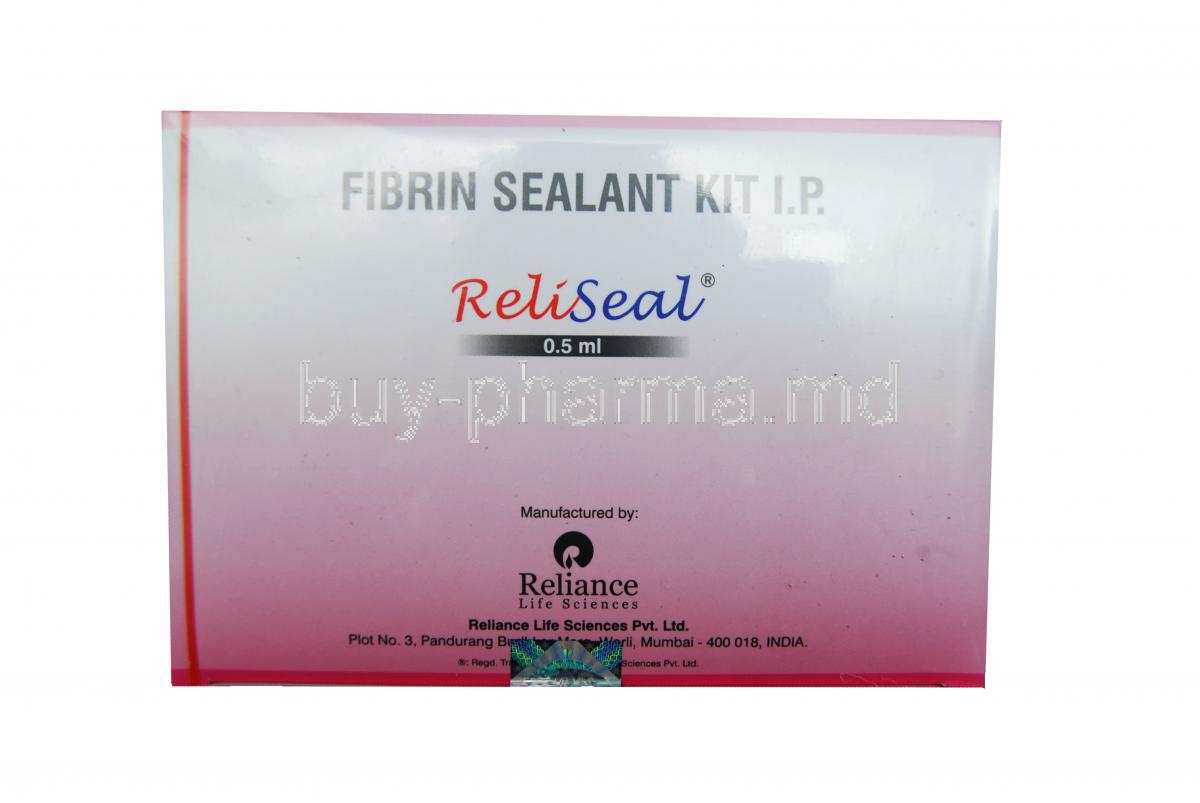
1. Introduction to Reliseal Fibrin Sealant Kit
Reliseal Fibrin Sealant Kit represents a refined biological approach to intraoperative bleeding control and tissue approximation. Fibrin sealants have become indispensable in modern surgical practice, particularly in scenarios where mechanical suturing or cauterization alone proves inadequate. These agents emulate the terminal phase of the physiological coagulation cascade, providing surgeons with a precise, localized solution.
Topical hemostatic and tissue-sealing agents play a critical role in:
- Minimizing intraoperative blood loss
- Reducing operative time
- Enhancing surgical field visibility
Within this category, Reliseal is positioned as a biologically derived surgical adjunct, designed to integrate seamlessly with standard operative techniques while preserving tissue integrity and promoting optimal wound healing.
2. Composition and Formulation Details
Reliseal is formulated using essential plasma-derived proteins that are central to physiological clot formation. The core active components include human fibrinogen and human thrombin, which interact at the site of application to form a cohesive fibrin clot.
- Human fibrinogen: serves as the structural substrate for clot formation
- Human thrombin: catalyzes the conversion of fibrinogen into fibrin
Depending on the formulation, auxiliary constituents such as calcium chloride may be included to optimize clot polymerization. Aprotinin, when present, functions as a protease inhibitor, prolonging clot stability by reducing fibrinolysis.
The components are derived from screened human plasma and undergo validated viral inactivation and removal processes. The kit typically contains dual-chamber syringes or applicators that ensure synchronized delivery, enabling precise mixing at the point of application.
3. Mechanism of Action: How Reliseal Works
Reliseal replicates the final steps of the natural coagulation pathway. Under physiological conditions, fibrin plays a pivotal role in stabilizing blood clots and supporting tissue regeneration.
Upon application:
- Thrombin converts fibrinogen into fibrin monomers
- These monomers polymerize to form a dense fibrin network
- The resulting matrix adheres to tissue surfaces, creating a stable seal
This fibrin matrix not only arrests bleeding but also serves as a temporary scaffold for cellular infiltration and tissue repair. Importantly, the action of Reliseal remains localized, without inducing systemic coagulation or altering circulating clotting factors.
4. Approved Therapeutic Uses
4.1 Hemostasis in Surgical Procedures
Reliseal is widely used to control diffuse or capillary bleeding that cannot be effectively managed with sutures, clips, or electrocautery alone. It is particularly valuable in anatomically complex or friable tissues.
- Adjunctive control of oozing hemorrhage
- Support in minimally invasive and open surgeries
4.2 Tissue Sealing and Adhesion
The sealant is employed to reinforce suture lines and anastomoses, forming a protective barrier against fluid leakage. This function is critical in procedures involving hollow organs or vascular structures.
By creating a cohesive seal, Reliseal contributes to improved postoperative outcomes and reduced complication rates.
4.3 Wound Closure Support
Beyond hemostasis, Reliseal enhances wound stability. The fibrin matrix promotes orderly tissue approximation and supports early phases of wound healing.
- Reduced risk of wound dehiscence
- Lower incidence of postoperative bleeding
5. Off-Label and Extended Clinical Uses
In clinical practice, Reliseal has been utilized beyond its primary indications, based on surgical discretion and emerging evidence. Extended applications include:
- Cardiovascular and vascular surgery for graft and suture line reinforcement
- Neurosurgical dural sealing to prevent cerebrospinal fluid leakage
- Gastrointestinal surgery for anastomotic reinforcement
- Orthopedic and trauma surgery for bone and soft tissue bleeding
- Plastic and reconstructive surgery to support flap adherence
- Dental and oral surgical procedures requiring precise hemostasis
6. Dosage and Administration Guidelines
There is no fixed dosing regimen for Reliseal. The quantity applied is determined by the size, location, and nature of the surgical surface.
Key administration considerations include:
- Proper reconstitution according to manufacturer instructions
- Application via spray, drip, or layered technique
- Avoidance of excessive thickness to prevent mechanical compression
Reliseal is intended for single-use and should be applied intraoperatively immediately after preparation to ensure optimal efficacy.
7. Administration in Special Populations
7.1 Administration to Elderly Patients
Elderly patients often present with fragile tissues and altered coagulation dynamics. Reliseal can be used without routine dose adjustment in this population.
However, careful monitoring is advised in individuals with pre-existing thromboembolic risk factors.
7.2 Administration to Pregnant Women and Nursing Mothers
Clinical data regarding use during pregnancy are limited. Reliseal should be employed only when the anticipated surgical benefit outweighs potential risks.
During lactation, systemic exposure is unlikely due to localized application, but cautious clinical judgment remains essential.
7.3 Administration to Children
Reliseal has been used in pediatric surgical settings, including neonates and infants. Application principles are based on body size and surface area rather than fixed volumes.
Meticulous technique is required to minimize tissue compression and ensure safe outcomes.
8. Side Effects and Adverse Reactions
8.1 Common Side Effects
Most adverse reactions are localized and transient. Commonly observed effects include:
- Mild swelling at the application site
- Localized irritation or erythema
8.2 Less Common Side Effects
Occasionally, patients may experience:
- Hypersensitivity reactions
- Low-grade fever
- Localized infection
8.3 Serious and Rare Adverse Effects
Although uncommon, serious reactions have been reported. These include:
- Anaphylactic or severe allergic responses
- Thromboembolic complications due to improper application
- Theoretical risk of pathogen transmission inherent to plasma-derived products
9. Drug and Product Interactions
Reliseal may interact with certain substances applied to the surgical field. Oxidizing agents and alcohol-based solutions can impair fibrin polymerization and reduce efficacy.
Additional considerations include:
- Incompatibility with topical antiseptics applied directly before use
- Potential influence of systemic anticoagulant or antiplatelet therapy on overall hemostasis
Thorough irrigation of the surgical site prior to application is recommended to minimize interaction-related complications.
10. Warnings and Safety Information
Reliseal Fibrin Sealant Kit must be used with heightened vigilance, as improper application can lead to serious complications. One of the most critical risks is inadvertent intravascular administration, which may result in embolic events. Under no circumstances should the sealant be injected into blood vessels.
To maintain procedural safety:
- Avoid excessive application volume that may obstruct anatomical structures
- Apply only to clearly identified bleeding or tissue surfaces
- Ensure the operative field is free of pooled blood before application
Because Reliseal contains human plasma–derived proteins, immunological reactions may occur. These can range from mild hypersensitivity to severe systemic responses in susceptible individuals. Continuous awareness of patient allergy history is essential.
11. Contraindications
Reliseal is contraindicated in patients with known or suspected hypersensitivity to any of its components, including fibrinogen, thrombin, or auxiliary formulation constituents. A thorough review of patient history is required prior to use.
- Documented allergy to fibrin sealants or plasma-derived products
- History of severe allergic or anaphylactic reactions to blood products
- Planned or accidental intravascular administration
Intravascular use is an absolute contraindication due to the high risk of thrombosis and embolism. Deviation from topical use protocols must be strictly avoided.
12. Careful Administration and Monitoring
Meticulous assessment of the bleeding source is mandatory before applying Reliseal. The sealant should be used only when the bleeding surface is clearly visible and accessible.
Controlled delivery is essential to prevent excessive tissue compression. Over-accumulation of fibrin material may impair microcirculation or disrupt anatomical planes.
- Apply thin, uniform layers
- Avoid forceful delivery
- Allow adequate time for clot formation
Intraoperative monitoring should continue throughout application. Surgeons and anesthetic teams must remain alert for signs of hypersensitivity, hemodynamic instability, or unexpected tissue response.
13. Important Precautions Before and During Use
Strict adherence to aseptic technique is imperative. As a biologically derived product, Reliseal must be handled under sterile conditions to minimize infection risk.
When using spray application systems, particular caution is required to prevent air or gas embolism. This includes:
- Maintaining appropriate spray distance
- Using recommended pressure settings only
- Avoiding enclosed or highly vascularized spaces
Reliseal is intended for single-patient use. Re-use or sharing of components may compromise sterility and safety, and is strictly prohibited.
14. Overdosage and Emergency Management
Although systemic overdose is unlikely due to topical application, excessive local use can lead to clinically relevant complications. Accumulation of fibrin material may exert mechanical pressure on adjacent tissues.
Potential consequences include:
- Tissue ischemia due to compression
- Impaired organ function
- Delayed wound healing
Management is primarily supportive. If excessive fibrin accumulation compromises tissue integrity or function, surgical removal or revision may be required. Prompt clinical judgment is essential in such scenarios.
15. Handling and Preparation Precautions
Reliseal must be reconstituted strictly according to manufacturer instructions. Improper preparation can alter clotting efficacy and compromise safety.
Key handling considerations include:
- Observing specified temperature ranges during preparation
- Using the product within recommended timeframes after reconstitution
- Ensuring complete dissolution of components
Vigorous shaking or agitation should be avoided, as it may denature proteins and reduce functional integrity. Gentle mixing techniques are recommended.
16. Storage and Stability
Reliseal should be stored under controlled conditions as specified in product documentation. Temperature deviations may adversely affect protein stability and clot-forming capacity.
- Store at recommended refrigeration or ambient conditions
- Do not freeze unless explicitly instructed
- Protect from excessive heat and light
Shelf-life must be respected. Once reconstituted, the sealant should be used promptly, as prolonged storage may compromise sterility and efficacy.
17. Clinical Advantages and Limitations
Reliseal offers several advantages over synthetic sealants by closely mimicking physiological coagulation. Its biological composition supports natural tissue integration and healing.
- Effective localized hemostasis
- Enhanced tissue adhesion
- Reduced reliance on mechanical suturing
However, limitations exist. These include higher cost, finite availability, and the inherent considerations associated with plasma-derived products. In certain clinical scenarios, alternative hemostatic agents may be preferred based on cost, accessibility, or procedural requirements.
18. Summary and Clinical Considerations
Reliseal Fibrin Sealant Kit plays a valuable role in contemporary surgical bleeding control and tissue sealing. When applied correctly, it enhances operative efficiency and supports favorable healing outcomes.
Appropriate patient selection, precise application technique, and strict adherence to safety protocols are paramount.
Safe handling, vigilant monitoring, and evidence-based utilization ensure that the benefits of Reliseal are maximized while minimizing potential risks.
Reliseal, Fibrin Sealant Kit FAQ
Popular Products



Similar Product