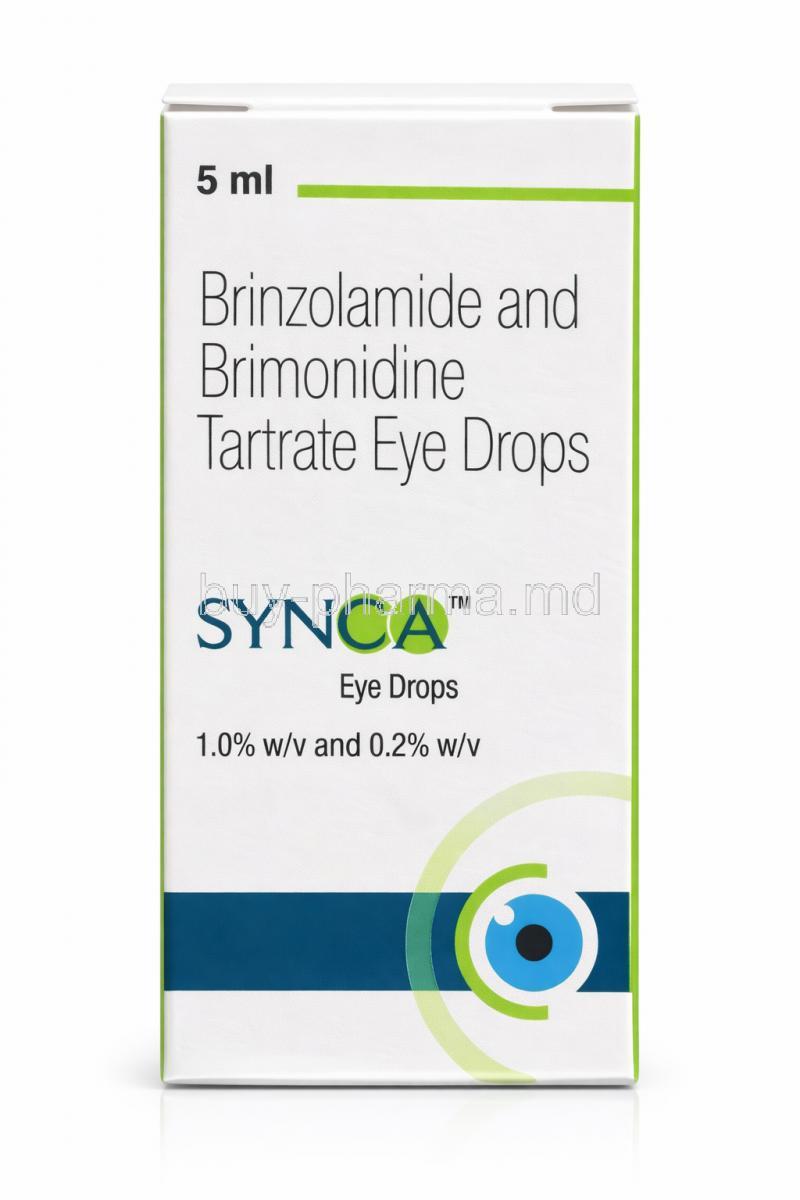
Introduction to SyncA Eye Drops (Brinzolamide/Brimonidine)
SyncA Eye Drops represent a modern, dual-action ophthalmic formulation designed to manage elevated intraocular pressure with precision and efficiency. This combination therapy integrates two pharmacologically distinct agents to deliver a synergistic reduction in pressure within the eye. Elevated intraocular pressure is a principal modifiable risk factor in progressive optic neuropathies, particularly glaucoma. Early and sustained intervention is therefore essential.
The formulation is typically prescribed for patients requiring more than monotherapy. It offers convenience, therapeutic consolidation, and enhanced compliance. These attributes make it a preferred option in complex clinical scenarios.
Overview of Combination Therapy for Ocular Hypertension and Glaucoma
Combination ophthalmic therapies have gained prominence due to their ability to target multiple physiological pathways simultaneously. SyncA Eye Drops exemplify this approach by combining:
- Reduction of aqueous humor production
- Enhancement of alternative fluid outflow pathways
- Stabilization of intraocular dynamics
Such multidimensional action improves intraocular pressure control and reduces the need for multiple separate medications, thereby minimizing regimen complexity.
Therapeutic Classification: Carbonic Anhydrase Inhibitor + Alpha-2 Adrenergic Agonist
SyncA belongs to a hybrid pharmacotherapeutic class that merges:
- Carbonic Anhydrase Inhibitors (CAIs) – decrease aqueous humor formation
- Alpha-2 Adrenergic Agonists – suppress fluid production and enhance uveoscleral outflow
This dual classification underpins its efficacy in refractory or inadequately controlled ocular hypertension.
Brand Names, Availability, and Formulation Variants
SyncA Eye Drops are marketed under various regional brand names and are typically available as sterile ophthalmic suspensions. Packaging formats often include multi-dose bottles with precision dropper systems to ensure dosing accuracy. Availability may vary depending on regulatory approvals and regional pharmaceutical supply chains.
Composition and Formulation Details
Active Ingredients: Brinzolamide and Brimonidine Tartrate
The therapeutic efficacy of SyncA is attributed to its two active constituents:
- Brinzolamide – a sulfonamide-derived carbonic anhydrase inhibitor
- Brimonidine Tartrate – a selective alpha-2 adrenergic receptor agonist
Each component contributes uniquely to intraocular pressure reduction, resulting in a cumulative pharmacodynamic effect.
Mechanism-Based Synergy Between Components
The formulation leverages complementary mechanisms to enhance therapeutic outcomes. While brinzolamide attenuates aqueous humor secretion at the ciliary epithelium, brimonidine simultaneously reduces production and facilitates outflow. This synergy:
- Enhances pressure-lowering efficacy
- Reduces therapeutic redundancy
- Minimizes dosing frequency
Excipients and Preservatives (e.g., Benzalkonium Chloride)
In addition to active ingredients, SyncA contains stabilizing excipients and preservatives. Benzalkonium chloride is commonly used to maintain sterility, though it may contribute to ocular surface sensitivity in susceptible individuals. Other excipients ensure:
- Optimal viscosity for ocular retention
- pH balance for comfort
- Stability of active compounds
Available Strengths and Packaging
SyncA Eye Drops are typically supplied in standardized concentrations suitable for adult use. Packaging is designed to:
- Prevent microbial contamination
- Allow controlled drop delivery
- Maintain product integrity throughout usage
Mechanism of Action: How SyncA Eye Drops Work
Brinzolamide: Inhibition of Carbonic Anhydrase in the Ciliary Body
Brinzolamide inhibits carbonic anhydrase II, an enzyme integral to bicarbonate ion formation. This inhibition reduces sodium and fluid transport into the posterior chamber, ultimately decreasing aqueous humor production. The effect is gradual but sustained.
Brimonidine: Reduction of Aqueous Humor Production and Increased Uveoscleral Outflow
Brimonidine exerts dual action by:
- Decreasing aqueous humor secretion via alpha-2 receptor activation
- Enhancing uveoscleral outflow pathways
This duality amplifies intraocular pressure reduction while maintaining hemodynamic stability.
Combined Pharmacological Effect on Intraocular Pressure (IOP)
When administered together, the agents provide a compounded reduction in intraocular pressure. The integrated effect surpasses that of either component used independently, offering:
- Improved diurnal pressure control
- Reduced peak IOP fluctuations
- Enhanced protection of optic nerve integrity
Onset of Action and Duration of Therapeutic Effect
The onset of action typically occurs within hours of administration. Peak efficacy is observed with consistent dosing, and the duration extends sufficiently to support twice-daily regimens in most patients. Steady-state effects develop with continued use.
Approved Uses of SyncA Eye Drops
Management of Open-Angle Glaucoma
SyncA is widely indicated for primary open-angle glaucoma, a chronic condition characterized by progressive optic nerve damage. By reducing intraocular pressure, it mitigates disease progression and preserves visual function.
Treatment of Ocular Hypertension
Patients with elevated intraocular pressure without overt glaucomatous damage benefit from early intervention. SyncA helps normalize pressure levels and reduce long-term risk.
Role in Patients Inadequately Controlled on Monotherapy
In cases where single-agent therapy fails to achieve target IOP, SyncA serves as an effective escalation strategy. It consolidates treatment while enhancing efficacy.
Adjunctive Therapy in Multi-Drug Glaucoma Regimens
SyncA can be integrated into broader therapeutic regimens, particularly in advanced or refractory glaucoma. Its dual mechanism complements other drug classes such as prostaglandin analogues.
Expanded and Off-Label Uses
Use in Secondary Glaucoma (e.g., Pseudoexfoliation, Pigmentary Glaucoma)
Secondary glaucomas, often associated with structural or pigmentary abnormalities, may respond favorably to combination therapy. SyncA offers enhanced pressure control in such cases.
Post-Surgical IOP Control Following Ocular Procedures
After ophthalmic surgery, transient increases in intraocular pressure may occur. SyncA may be utilized to stabilize postoperative IOP and prevent complications.
Neuroprotective Potential in Optic Nerve Disorders (Investigational)
Emerging evidence suggests that brimonidine may possess neuroprotective properties. While still under investigation, this potential expands the therapeutic horizon beyond pressure reduction alone.
Use in Steroid-Induced Ocular Hypertension
Corticosteroid therapy can elevate intraocular pressure in susceptible individuals. SyncA provides an effective countermeasure in such scenarios.
Pediatric Glaucoma (Selective and Off-Label Use)
Use in pediatric populations is selective and typically reserved for specialist supervision. Careful monitoring is essential due to systemic absorption risks.
Dosage and Administration Guidelines
Standard Dosing Frequency and Administration Schedule
The typical dosing regimen involves instillation into the affected eye(s) twice daily. Adherence to prescribed intervals ensures optimal therapeutic effect.
Proper Eye Drop Instillation Technique
Correct administration enhances efficacy and reduces contamination risk. Recommended steps include:
- Washing hands thoroughly before use
- Tilting the head backward and creating a conjunctival pocket
- Avoiding contact between the dropper tip and ocular surfaces
Avoiding Contamination During Application
Maintaining sterility is critical. The dropper tip should never touch the eye, skin, or any surface. Bottles must be tightly closed after use.
Missed Dose and Compliance Strategies
If a dose is missed, it should be administered as soon as remembered unless the next dose is imminent. Strategies to improve adherence include:
- Setting reminders
- Incorporating dosing into daily routines
- Using combination products to simplify therapy
Duration of Therapy and Long-Term Use Considerations
Glaucoma management is typically lifelong. Long-term use of SyncA requires periodic evaluation to assess efficacy, tolerability, and ocular surface health. Regular ophthalmic follow-up is indispensable for optimal outcomes.
Common Side Effects of SyncA Eye Drops
SyncA Eye Drops are generally well tolerated; however, localized ocular reactions may occur, particularly during the initial phase of therapy. These effects are often transient and diminish with continued use. Vigilant observation remains essential, especially in sensitive individuals.
Ocular Irritation, Burning, or Stinging Sensation
A brief sensation of burning or stinging upon instillation is among the most frequently reported reactions. This phenomenon is typically mild and short-lived. Contributing factors include:
- pH differences between the formulation and tear film
- Presence of preservatives such as benzalkonium chloride
- Heightened corneal sensitivity
Blurred Vision and Transient Visual Disturbance
Temporary blurring of vision may occur immediately after application. This is usually attributable to the suspension nature of the formulation. Patients are advised to:
- Avoid driving or operating machinery until vision clears
- Allow adequate time between administration and visually demanding tasks
Dry Eyes or Foreign Body Sensation
Some individuals experience ocular dryness or a sensation resembling the presence of a foreign particle. This can manifest as:
- Grittiness or ocular fatigue
- Intermittent discomfort during blinking
Adjunctive lubricating drops may be considered when appropriate.
Allergic Conjunctivitis and Redness
Hypersensitivity reactions may present as conjunctival hyperemia, itching, or swelling. While uncommon, persistent symptoms warrant discontinuation and clinical evaluation.
Less Common and Serious Side Effects
Although infrequent, systemic and severe adverse reactions may occur due to partial systemic absorption. These effects require prompt recognition and intervention.
Systemic Effects: Fatigue, Dry Mouth, Headache
Systemic manifestations may include:
- Generalized fatigue or lethargy
- Xerostomia (dry mouth)
- Headache or mild dizziness
These symptoms are usually dose-dependent and reversible upon discontinuation.
Cardiovascular Effects: Hypotension, Bradycardia (Rare)
Brimonidine may influence cardiovascular parameters, potentially leading to:
- Reduced blood pressure
- Slowed heart rate
Such effects are rare but clinically significant in predisposed patients.
Respiratory Effects in Susceptible Individuals
In patients with underlying respiratory compromise, caution is warranted. Rare events may include:
- Shortness of breath
- Respiratory depression in severe cases
Severe Hypersensitivity Reactions and Ocular Inflammation
Serious allergic reactions may manifest with:
- Marked swelling of ocular tissues
- Severe redness and pain
- Photophobia or excessive tearing
Immediate discontinuation and medical consultation are imperative.
Drug Interactions and Potential Influences
Interaction with Systemic Antihypertensives and Beta-Blockers
Concurrent use with antihypertensive agents may potentiate hypotensive effects. Careful monitoring is recommended in patients receiving:
- Beta-blockers
- Calcium channel blockers
- ACE inhibitors
Effects When Combined with Other Ocular Hypotensive Agents
Combination with other intraocular pressure-lowering medications may enhance efficacy but also increase the risk of cumulative adverse effects. Staggered administration is often advised.
Interaction with CNS Depressants and Sedatives
Brimonidine may augment the sedative effects of central nervous system depressants. Patients should exercise caution when using:
- Alcohol
- Benzodiazepines
- Opioid analgesics
Influence on Patients Using Monoamine Oxidase Inhibitors (MAOIs)
Use with MAO inhibitors is contraindicated due to potential amplification of systemic adrenergic effects. This interaction may lead to unpredictable hemodynamic responses.
Considerations with Carbonic Anhydrase Inhibitors (Oral/Topical)
Concurrent use with other carbonic anhydrase inhibitors may increase the risk of systemic side effects such as metabolic acidosis. Clinical discretion is essential.
Warnings and Safety Considerations
Risk of Systemic Absorption and Related Effects
Despite topical administration, systemic absorption can occur via the nasolacrimal duct. Measures to reduce absorption include:
- Nasolacrimal occlusion after instillation
- Wiping excess solution from periocular skin
Use in Patients with Cardiovascular or Pulmonary Disorders
Patients with pre-existing conditions such as hypotension, arrhythmias, or respiratory disease require cautious use and regular monitoring.
Potential for CNS Depression and Sedation
Central nervous system effects may include drowsiness and reduced alertness. Activities requiring mental acuity should be approached carefully.
Masking of Hypoglycemia Symptoms in Diabetic Patients
Adrenergic suppression may obscure typical signs of hypoglycemia. Diabetic patients should monitor glucose levels diligently.
Risk of Ocular Surface Toxicity with Prolonged Use
Chronic exposure to preservatives may lead to:
- Ocular surface irritation
- Corneal epithelial changes
Contraindications of SyncA Eye Drops
Hypersensitivity to Brinzolamide, Brimonidine, or Sulfonamides
Patients with known hypersensitivity should avoid use due to risk of severe allergic reactions.
Concomitant Use with MAO Inhibitors
Concurrent therapy with MAO inhibitors is contraindicated due to potential systemic interactions.
Severe Renal Impairment (for Brinzolamide Component)
Brinzolamide is contraindicated in patients with significant renal dysfunction due to impaired elimination.
Infants and Very Young Children (Specific Age Restrictions)
Use in infants is contraindicated due to increased susceptibility to systemic adverse effects, including CNS depression.
Careful Administration (Use with Caution)
Patients with Hepatic or Renal Dysfunction
Dose adjustments or alternative therapies may be necessary in patients with compromised organ function.
History of Depression or Psychiatric Disorders
Brimonidine may exacerbate depressive symptoms in susceptible individuals. Monitoring is advised.
Cardiovascular Instability or Orthostatic Hypotension
Patients prone to blood pressure fluctuations should use the medication cautiously.
Patients with Dry Eye Syndrome or Corneal Disease
Existing ocular surface disorders may be aggravated by treatment. Supportive care may be required.
Important Precautions for Safe Use
Avoiding Contact Lens Use Immediately After Instillation
Contact lenses should be removed prior to administration and reinserted only after an appropriate interval to prevent absorption of preservatives.
Monitoring Intraocular Pressure Regularly
Routine ophthalmic assessments are essential to evaluate treatment efficacy and adjust therapy as needed.
Gradual Withdrawal to Prevent Rebound IOP Increase
Abrupt discontinuation may lead to rebound elevation in intraocular pressure. Gradual tapering is recommended where appropriate.
Maintaining Strict Hygiene to Prevent Infection
Proper hygiene reduces the risk of contamination and ocular infection. The dropper tip must remain sterile.
Awareness of Visual Impairment After Application
Temporary visual disturbances may occur. Patients should allow sufficient time for vision to stabilize.
Administration in Special Populations
Elderly Patients: Dosage Adjustments and Monitoring Needs
Elderly individuals may exhibit increased sensitivity to systemic effects. Regular monitoring is advisable.
Pregnant Women: Risk-Benefit Assessment and Safety Data
Use during pregnancy should be considered only if the potential benefit justifies the potential risk to the fetus.
Nursing Mothers: Potential Excretion in Breast Milk
Brimonidine may be excreted in breast milk. Caution is advised when administering to nursing mothers.
Pediatric Use: Safety, Efficacy, and Age Limitations
Use in pediatric populations is limited and requires specialist supervision due to systemic absorption risks.
Overdosage and Emergency Management
Symptoms of Ocular and Systemic Overdose
Overdose may present with:
- Excessive drowsiness
- Hypotension or bradycardia
- Respiratory depression
Immediate Management and Supportive Care
Management is primarily supportive, focusing on stabilization of vital functions and symptomatic relief.
Monitoring Cardiovascular and Neurological Status
Continuous monitoring is essential in suspected overdose cases to detect complications early.
When to Seek Emergency Medical Attention
Immediate medical attention is required if severe systemic symptoms or altered consciousness occur.
Storage and Stability Information
Recommended Storage Temperature and Conditions
Store at controlled room temperature, away from excessive heat or moisture.
Protection from Light and Contamination
Keep the bottle tightly closed and protected from direct light exposure.
Shelf Life and Expiry Considerations
Do not use beyond the expiration date. Stability may be compromised after opening.
Handling After Opening the Bottle
Use within the recommended timeframe after opening to ensure sterility and efficacy.
Handling Precautions and Patient Guidance
Safe Handling and Avoiding Cross-Contamination
Avoid sharing eye drops. Maintain strict personal use to prevent cross-infection.
Proper Disposal of Used or Expired Eye Drops
Dispose of unused medication according to local pharmaceutical waste guidelines.
Patient Education for Adherence and Safety
Education enhances compliance and therapeutic success. Patients should understand:
- Correct administration technique
- Importance of adherence
- Recognition of adverse effects
Travel and Portability Considerations
SyncA Eye Drops can be transported conveniently. Ensure proper sealing and avoid exposure to extreme temperatures during travel.
Popular Products
Similar Product