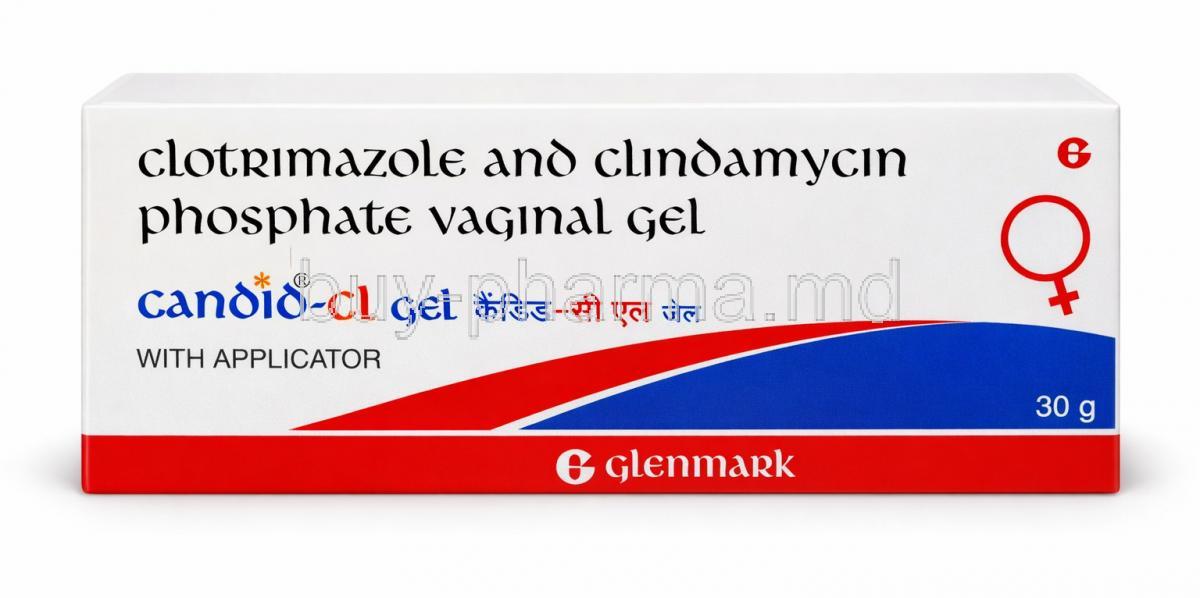
Introduction to Candid-CL Vaginal Gel (Clindamycin/Clotrimazole)
Candid-CL Vaginal Gel represents a sophisticated dual-action therapeutic designed for intravaginal administration. It integrates antibacterial and antifungal pharmacodynamics into a single formulation, offering targeted relief in polymicrobial gynecological conditions. This approach is particularly advantageous in clinical scenarios where both bacterial and fungal pathogens coexist, often complicating diagnosis and treatment.
Overview of Combination Antimicrobial and Antifungal Therapy
Combination therapy addresses heterogeneous infections with precision. Instead of monotherapy, which may leave residual pathogens, this formulation:
- Targets anaerobic bacteria through antibiotic activity
- Eradicates fungal organisms, especially Candida species
- Reduces recurrence by addressing multifactorial etiologies
The result is a more comprehensive and efficient therapeutic response.
Indications for Dual-Action Vaginal Treatments
Dual-action preparations are indicated when clinical features overlap. Patients often present with:
- Abnormal vaginal discharge of uncertain origin
- Concurrent itching and malodor
- Recurrent infections unresponsive to single-agent therapy
Such presentations necessitate broader antimicrobial coverage.
Therapeutic Positioning in Gynecological Infections
This formulation occupies an intermediary role between empirical therapy and targeted treatment. It is frequently utilized when laboratory confirmation is pending or when mixed infections are strongly suspected.
Key Benefits of Combined Clindamycin and Clotrimazole Formulation
- Broad-spectrum antimicrobial coverage
- Convenience of single-product therapy
- Enhanced patient adherence due to simplified regimen
- Rapid symptomatic relief in many cases
Composition and Formulation Details
Active Ingredients: Clindamycin Phosphate and Clotrimazole
The formulation contains:
- Clindamycin phosphate – a lincosamide antibiotic effective against anaerobic bacteria
- Clotrimazole – an imidazole antifungal agent targeting fungal cell membranes
Pharmacological Classification (Lincosamide Antibiotic + Imidazole Antifungal)
This combination merges two distinct pharmacological classes. The antibiotic disrupts bacterial protein synthesis, while the antifungal alters ergosterol synthesis in fungal cells. Together, they form a complementary therapeutic system.
Excipients and Gel Base Composition
The gel base is formulated for optimal mucosal adherence. It ensures prolonged contact with vaginal tissues, facilitating sustained drug release and improved bioavailability.
pH Compatibility and Vaginal Environment Considerations
The formulation is designed to maintain compatibility with the physiological vaginal pH. This minimizes irritation while supporting restoration of normal flora.
Mechanism of Action (How It Works)
Antibacterial Action of Clindamycin Against Anaerobic Bacteria
Clindamycin inhibits bacterial protein synthesis by binding to the 50S ribosomal subunit. This action suppresses growth of anaerobic organisms commonly implicated in bacterial vaginosis.
Antifungal Activity of Clotrimazole on Candida Species
Clotrimazole interferes with ergosterol synthesis, a vital component of fungal cell membranes. This leads to increased membrane permeability and eventual fungal cell death.
Synergistic Effect in Mixed Vaginal Infections
The dual mechanism provides a synergistic effect. While one agent targets bacterial pathogens, the other eliminates fungal organisms, thereby addressing co-infections effectively.
Impact on Vaginal Flora and Microbial Balance
Although antimicrobial, the formulation aims to restore ecological balance rather than indiscriminately eliminate flora. This nuanced action helps prevent recurrence.
Uses of Candid-CL Vaginal Gel
Treatment of Bacterial Vaginosis (BV)
The gel is commonly prescribed for bacterial vaginosis, particularly when anaerobic bacteria predominate.
Management of Vulvovaginal Candidiasis (Yeast Infection)
It effectively treats candidal infections characterized by itching, thick discharge, and irritation.
Treatment of Mixed Vaginal Infections (Bacterial + Fungal)
Mixed infections benefit most from this dual-action therapy, eliminating the need for multiple medications.
Relief of Vaginal Symptoms (Discharge, Odor, Itching, Irritation)
- Reduces malodor
- Alleviates pruritus
- Controls abnormal discharge
Use in Recurrent Vaginal Infections
Patients with recurrent episodes may experience improved outcomes due to comprehensive pathogen coverage.
Expanded and Off-Label Uses
Empirical Treatment in Undiagnosed Vaginal Discharge
In cases where diagnostic ambiguity exists, this formulation may be used empirically.
Adjunct Therapy in Pelvic Inflammatory Disease (Localized Use)
While not primary therapy, it may complement systemic treatment in localized infections.
Use in Post-Antibiotic Vaginal Flora Imbalance
Restores balance disrupted by systemic antibiotics.
Management of Vaginal Dysbiosis
Helps correct microbial imbalance associated with dysbiosis.
Prophylactic Use in High-Risk Individuals (Off-label)
In select cases, preventive use may be considered under medical supervision.
Use in Patients with Recurrent Candida or BV Episodes
Provides broader coverage to reduce relapse frequency.
Dosage and Administration Guidelines
Recommended Dosage Regimen and Duration of Therapy
Typically administered once daily for a prescribed duration, often ranging from 3 to 7 days depending on severity.
Step-by-Step Application Instructions (Intravaginal Use)
- Wash hands thoroughly before application
- Fill applicator with prescribed amount
- Insert gently into the vagina
- Depress plunger to release gel
Timing of Administration (Day vs Night Use)
Nighttime application is generally preferred to minimize leakage and enhance absorption.
Use with Applicators and Hygiene Measures
Disposable or reusable applicators should be handled hygienically to avoid contamination.
Missed Dose and Compliance Considerations
If a dose is missed, it should be applied as soon as remembered unless close to the next scheduled dose.
Storage and Stability Information
Recommended Storage Conditions (Temperature, Humidity)
Store at controlled room temperature, away from excessive heat and moisture.
Shelf Life and Expiry Considerations
Use before the expiration date indicated on packaging.
Handling After Opening
Ensure the cap is tightly closed after each use to maintain stability.
Storage Safety Away from Children and Pets
Keep out of reach to prevent accidental exposure.
Drug Interactions and Compatibility
Interaction with Other Vaginal Products (Douches, Spermicides)
Concurrent use may reduce efficacy or cause irritation.
Interaction with Systemic Antibiotics and Antifungals
Generally minimal systemic interaction, though caution is advised.
Impact on Latex Products (Condoms and Diaphragms)
The formulation may weaken latex, reducing contraceptive effectiveness.
Influence of Hormonal Contraceptives
No significant interaction is typically observed.
Warnings and Safety Considerations
Risk of Antibiotic Resistance with Improper Use
Incomplete courses may contribute to resistance.
Potential for Alteration of Normal Vaginal Flora
Overuse may disrupt beneficial microorganisms.
Avoidance During Menstruation (If Applicable)
Use may be less effective during heavy menstrual flow.
Risk of Superinfection or Secondary Infection
Secondary infections may occur with prolonged use.
Hypersensitivity Reactions and Allergic Risks
Discontinue use if allergic symptoms develop.
Contraindications
Known Allergy to Clindamycin, Clotrimazole, or Formulation Components
Use is contraindicated in hypersensitive individuals.
History of Antibiotic-Associated Colitis
Clindamycin may exacerbate this condition.
Severe Vaginal Ulceration or Tissue Damage
Application may worsen tissue irritation.
Use in Untreated Sexually Transmitted Infections (STIs)
Not a substitute for STI-specific therapy.
Careful Administration (Use with Caution)
Use in Patients with Gastrointestinal Disorders (e.g., Colitis)
Monitor for systemic absorption-related effects.
Application in Patients with Compromised Immunity
May require closer clinical supervision.
Use in Individuals with Recurrent Vaginal Infections
Evaluate underlying causes of recurrence.
Considerations for Patients Using Multiple Vaginal Therapies
Avoid overlapping treatments unless directed by a clinician.
Important Precautions for Safe Use
Importance of Completing Full Treatment Course
Ensures eradication of pathogens and reduces relapse risk.
Avoidance of Sexual Intercourse During Treatment
Prevents reinfection and enhances treatment efficacy.
Personal Hygiene and Preventive Measures
- Maintain genital hygiene
- Use breathable undergarments
- Avoid irritants
Avoid Sharing Applicators or Personal Items
Reduces risk of cross-contamination.
Monitoring for Symptom Persistence or Worsening
Seek medical advice if symptoms do not improve.
Administration in Special Populations
Use in Elderly Patients
Age-related mucosal changes may influence drug response.
Age-Related Vaginal Changes and Drug Sensitivity
Increased sensitivity may necessitate careful monitoring.
Monitoring for Adverse Effects
Regular assessment is recommended.
Use in Pregnant Women
Use only if clearly needed and prescribed by a healthcare professional.
Safety Profile in Pregnancy (Trimester Considerations)
Risk-benefit evaluation is essential, especially in early pregnancy.
Risk-Benefit Assessment and Physician Guidance
Clinical judgment should guide therapy.
Use in Nursing Mothers
Minimal systemic absorption suggests low risk, though caution is advised.
Systemic Absorption and Breastfeeding Considerations
Consult healthcare providers before use.
Use in Pediatric and Adolescent Patients
Use is typically limited to post-pubertal individuals.
Age Restrictions and Clinical Justification
Clinical necessity should guide use in younger populations.
Safety and Efficacy Data in Younger Populations
Data may be limited; professional guidance is recommended.
Side Effects of Candid-CL Vaginal Gel
Candid-CL Vaginal Gel, while generally well tolerated, may be associated with a spectrum of adverse reactions. These effects range from mild and transient discomfort to rare but clinically significant complications. Understanding these potential outcomes allows for informed use and early identification of complications.
Overview of Adverse Reactions
Adverse reactions may arise from either the antibiotic component, the antifungal agent, or the excipients within the formulation. Most reactions are localized due to the topical route of administration; however, systemic effects, though uncommon, may occur due to minimal absorption through mucosal tissues.
- Predominantly mild and self-limiting
- Often resolve upon completion of therapy
- Rarely necessitate discontinuation
Local vs Systemic Side Effects
Side effects can be categorized based on their site of manifestation. Local reactions occur at the site of application, whereas systemic reactions involve broader physiological responses.
- Local effects: irritation, burning, erythema
- Systemic effects: gastrointestinal disturbances, hypersensitivity reactions
Systemic involvement remains infrequent but should not be disregarded, particularly in susceptible individuals.
Frequency and Severity Classification
Adverse effects are typically stratified by frequency and severity:
- Common: mild irritation and discharge changes
- Uncommon: moderate discomfort or localized swelling
- Rare: severe allergic reactions or systemic complications
This classification assists in clinical monitoring and patient reassurance.
Common Side Effects
Vaginal Irritation, Burning, or Itching
Localized irritation is among the most frequently reported effects. Patients may experience:
- Transient burning sensation after application
- Pruritus or mild discomfort
These symptoms are usually ephemeral and diminish as the mucosa adapts to the formulation.
Increased Vaginal Discharge
An apparent increase in vaginal discharge may occur. This is often due to:
- Gel residue mixing with natural secretions
- Expulsion of infected material during treatment
Such discharge is generally benign unless accompanied by worsening symptoms.
Mild Abdominal Discomfort
Some individuals report lower abdominal unease. This may present as:
- Dull cramping sensation
- Transient pelvic pressure
Symptoms are typically mild and self-resolving.
Localized Redness or Swelling
Erythema and slight edema of the vulvovaginal tissues may occur due to local sensitivity. These manifestations are usually reversible upon cessation of therapy.
Temporary Alteration in Vaginal pH
The formulation may transiently influence vaginal pH levels. This alteration is generally short-lived and often contributes to restoration of a balanced microbial environment.
Serious and Rare Side Effects
Severe Allergic Reactions (Rash, Swelling, Anaphylaxis)
Hypersensitivity reactions, although rare, require immediate attention. Clinical signs may include:
- Diffuse rash or urticaria
- Facial or throat swelling
- Difficulty breathing
These reactions necessitate prompt discontinuation and emergency care.
Clostridium difficile-Associated Diarrhea (Rare Systemic Effect)
Clindamycin has been associated with antibiotic-related colitis in systemic use. Although unlikely with topical application, vigilance is advised if symptoms such as persistent diarrhea occur.
Persistent Vaginal Pain or Ulceration
Unusual or prolonged pain may indicate mucosal irritation or underlying pathology. Ulcerative lesions should be evaluated promptly to exclude secondary complications.
Signs of Secondary Infection
Disruption of normal flora may occasionally predispose to secondary infections. Indicators include:
- Worsening discharge with atypical characteristics
- New onset of odor or irritation
- Lack of clinical improvement
Overdosage and Management
Likelihood of Overdose in Topical Vaginal Use
Overdose is improbable due to localized administration and limited systemic absorption. However, excessive application may increase the likelihood of irritation.
Symptoms of Excessive Use or Accidental Ingestion
Potential manifestations include:
- Enhanced local irritation or burning
- Gastrointestinal discomfort if ingested
- Nausea or mild systemic symptoms
Recommended Management and Supportive Care
Management is primarily supportive. Recommended measures include:
- Discontinuation or reduction of usage
- Symptomatic relief with soothing agents if appropriate
- Hydration and monitoring in cases of ingestion
When to Seek Immediate Medical Attention
Urgent medical evaluation is warranted if the following occur:
- Severe allergic symptoms
- Persistent or worsening pain
- Signs of systemic toxicity
Handling Precautions and Patient Guidance
Proper Disposal of Used Applicators
Used applicators should be disposed of hygienically. Single-use devices must not be reused, while reusable applicators should be thoroughly cleaned according to instructions.
Avoiding Contamination During Application
To prevent contamination:
- Wash hands before and after use
- Avoid contact of the applicator tip with non-sterile surfaces
Safe Handling and Storage Practices
Maintain the integrity of the formulation by storing it under recommended conditions. Avoid exposure to excessive heat or humidity.
Patient Counseling Points for Optimal Outcomes
Effective therapy depends on adherence and proper usage. Patients should be advised to:
- Complete the full course of treatment
- Avoid concurrent irritants or incompatible products
- Report unusual or severe symptoms promptly
Clear guidance enhances therapeutic success and minimizes adverse outcomes.
Popular Products


Similar Product