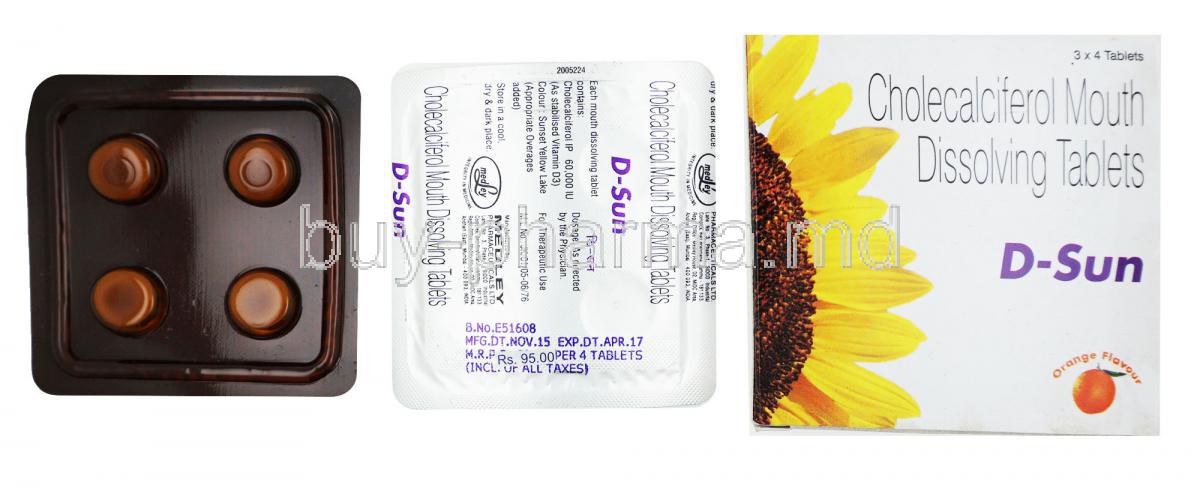
Introduction to D-Sun (Cholecalciferol Mouth Dissolving Tablets)
D-Sun is an oral formulation of cholecalciferol, also known as vitamin D3, designed in a mouth dissolving tablet form to enhance ease of administration and patient compliance. Vitamin D3 plays an indispensable role in maintaining skeletal integrity, mineral balance, and multiple physiological systems that extend far beyond bone health.
In modern clinical practice, vitamin D deficiency has emerged as a widespread concern, affecting individuals across age groups and lifestyles. Sedentary habits, limited sun exposure, and dietary insufficiency contribute significantly to suboptimal vitamin D levels.
The mouth dissolving dosage form offers several practical advantages:
- No need for water during administration
- Improved compliance in elderly and pediatric patients
- Rapid disintegration and convenient intake
D-Sun is therefore therapeutically relevant for both correction of deficiency and preventive supplementation in susceptible populations.
Composition and Pharmaceutical Characteristics
Active Ingredient
The active component of D-Sun is cholecalciferol (vitamin D3), a fat-soluble secosteroid derived from lanolin or synthesized through controlled processes. Vitamin D3 is the biologically preferred form, closely mirroring endogenous vitamin D produced in human skin upon ultraviolet exposure.
Excipients and Formulation Design
The formulation utilizes advanced mouth dissolving tablet technology. Carefully selected excipients facilitate rapid disintegration upon contact with saliva, allowing the tablet to disperse without chewing or swallowing difficulty.
These excipients serve multiple purposes:
- Enhancing tablet stability
- Promoting uniform dispersion
- Supporting optimal bioavailability
Dosage Strengths and Available Presentations
D-Sun is commonly available in standardized international unit (IU) strengths, tailored to both preventive and therapeutic needs. Unit-dose packaging ensures dosing accuracy, while protective blister packs safeguard tablet integrity against moisture and environmental exposure.
Uses of D-Sun (Approved and Therapeutic Uses)
Treatment of Vitamin D Deficiency
D-Sun is widely used for the management of vitamin D deficiency arising from inadequate dietary intake or insufficient sunlight exposure. Deficiency states may manifest subtly, yet carry long-term consequences if left uncorrected.
Management of Bone Health Disorders
Cholecalciferol supplementation plays a central role in bone-related conditions, including:
- Osteomalacia, characterized by defective bone mineralization
- Osteoporosis, where it is used as adjunctive therapy alongside calcium and other agents
- Rickets in pediatric populations, supporting normal skeletal development
Supportive Therapy in Calcium Metabolism Disorders
D-Sun assists in correcting hypocalcemia linked to vitamin D deficiency and is often incorporated into the management of secondary hyperparathyroidism, where impaired calcium regulation disrupts endocrine balance.
Preventive Use
Preventive supplementation is particularly relevant for individuals at risk, including those with limited sun exposure, darker skin pigmentation, or increased physiological demands. Seasonal supplementation is also commonly practiced to offset reduced ultraviolet exposure.
Off-Label Uses of Cholecalciferol
Immune System Support
Vitamin D has been increasingly recognized for its immunomodulatory properties. Off-label use includes supportive supplementation aimed at optimizing immune responsiveness and potentially reducing susceptibility to infections.
Musculoskeletal Health
Correction of vitamin D deficiency may improve muscle strength and reduce myopathic symptoms. In elderly patients, adequate vitamin D levels have been associated with improved balance and reduced risk of falls.
Adjunctive Use in Chronic Conditions
Cholecalciferol is sometimes used as supportive therapy in autoimmune conditions and explored for its role in metabolic and cardiovascular health, although these applications remain non-approved and adjunctive.
Mental Health and Mood Disorders
Observational studies have noted an association between vitamin D status and mood regulation, leading to supportive use in individuals with low vitamin D levels and mood-related symptoms.
How D-Sun (Cholecalciferol) Works
Mechanism of Action
Once administered, cholecalciferol undergoes hepatic and renal conversion to active vitamin D metabolites, including calcitriol. These metabolites exert hormonal effects essential for mineral homeostasis.
Effects on Bone and Mineral Metabolism
Calcitriol enhances intestinal absorption of calcium and phosphate, ensuring adequate mineral availability for bone mineralization and structural integrity.
Extra-Skeletal Biological Effects
Beyond bone health, vitamin D influences immune cell differentiation, cellular proliferation, and regulatory pathways that contribute to systemic physiological balance.
Dosage and Administration
General Dosage Guidelines
Dosing varies based on clinical indication. Preventive dosing typically involves lower, maintenance-level supplementation, whereas therapeutic dosing may require higher amounts for deficiency correction.
Method of Administration
D-Sun mouth dissolving tablets are placed on the tongue and allowed to dissolve completely. They may be taken with or without food, offering flexibility in daily routines.
Duration of Therapy
Short-term regimens are often used to correct deficiency, followed by long-term maintenance supplementation when clinically indicated.
Missed Dose Instructions
If a dose is missed, it should be taken when remembered unless it is close to the next scheduled dose. Doubling doses is not recommended.
Administration in Special Populations
Administration to Elderly Patients
Elderly individuals are at increased risk of vitamin D deficiency due to reduced skin synthesis and dietary intake. Careful dosing and periodic monitoring are advised.
Administration to Pregnant Women and Nursing Mothers
Vitamin D requirements increase during pregnancy and lactation. Supplementation should be tailored to individual needs, balancing maternal sufficiency with fetal and neonatal safety.
Administration to Children and Adolescents
Pediatric dosing is adjusted according to age and clinical indication. D-Sun supports the prevention and treatment of rickets and promotes healthy skeletal development.
Side Effects of D-Sun (Cholecalciferol)
Common Side Effects
Most individuals tolerate D-Sun well. Mild gastrointestinal symptoms such as nausea or constipation may occasionally occur.
Less Common Side Effects
Some users may experience headache, dry mouth, or a transient metallic taste.
Rare but Serious Adverse Effects
Excessive intake over prolonged periods can lead to hypercalcemia, presenting with symptoms such as weakness, confusion, or renal complications.
Drug Interactions
Interactions with Calcium Supplements
Concurrent use with high-dose calcium supplements may increase the risk of hypercalcemia and requires monitoring.
Interactions with Diuretics
Thiazide diuretics may reduce urinary calcium excretion, amplifying the effects of vitamin D.
Interactions with Antiepileptic Drugs
Certain antiepileptic medications may accelerate vitamin D metabolism, reducing its efficacy.
Interactions with Corticosteroids
Corticosteroids can impair vitamin D metabolism, potentially necessitating dosage adjustments.
Warnings and Safety Information
Excessive vitamin D intake should be avoided. Long-term use may require periodic laboratory monitoring of serum calcium and vitamin D levels. Dose escalation without medical guidance is not recommended.
Contraindications
D-Sun (cholecalciferol mouth dissolving tablets) should not be used in individuals with specific medical conditions where vitamin D supplementation may pose a clinical risk. Careful assessment is essential prior to initiation.
- Known hypersensitivity to cholecalciferol or any excipients present in the formulation, which may result in allergic or idiosyncratic reactions.
- Hypercalcemia or hypervitaminosis D, where additional vitamin D may exacerbate elevated calcium levels and lead to systemic toxicity.
- Severe renal impairment or nephrolithiasis, as altered calcium and phosphate handling may increase the risk of renal complications.
Careful Administration and Important Precautions
Although generally well tolerated, cholecalciferol requires judicious use in certain populations. Individualized dosing and monitoring enhance safety and therapeutic precision.
Use in Patients with Renal Disease
Patients with compromised renal function may exhibit altered vitamin D metabolism and mineral balance. In such cases:
- Regular monitoring of serum calcium and phosphate levels is recommended
- Dose adjustments may be necessary to prevent accumulation and toxicity
Use in Patients with Sarcoidosis or Granulomatous Disorders
Granulomatous conditions may increase extrarenal conversion of vitamin D to its active form, heightening sensitivity. This can result in disproportionate elevations in calcium levels even at standard doses.
Clinical vigilance is advised, particularly during prolonged supplementation.
Long-Term Therapy Considerations
Extended use of D-Sun warrants periodic laboratory evaluation. Routine assessment of serum vitamin D and calcium concentrations helps ensure ongoing efficacy while minimizing adverse outcomes.
Overdosage Information
Symptoms of Vitamin D Overdose
Excessive intake of cholecalciferol may lead to hypercalcemia, a condition with diverse systemic manifestations. Symptoms may include:
- Nausea, vomiting, and abdominal discomfort
- Polyuria, excessive thirst, and dehydration
- Fatigue, confusion, or neuromuscular weakness
Management of Overdose
Management focuses on prompt recognition and supportive care. Recommended measures include:
- Immediate discontinuation of vitamin D supplementation
- Hydration and correction of electrolyte imbalances
- Close medical supervision, particularly in severe cases
Storage and Stability
D-Sun mouth dissolving tablets should be stored under recommended conditions to preserve potency and stability.
- Store at controlled room temperature
- Protect from excessive heat, moisture, and direct light
- Observe the stated shelf life and avoid use beyond the expiration date
Handling Precautions
Due to their rapidly disintegrating nature, mouth dissolving tablets require careful handling.
- Remove tablets from packaging only immediately before use
- Avoid contact with moisture or wet hands
- Ensure tablets are stored securely away from humidity
Patient Counseling and Practical Guidance
Effective use of D-Sun depends on consistent adherence and informed patient behavior.
- Take the medication as directed, without unapproved dose escalation
- Maintain a balanced diet containing adequate calcium
- Incorporate sensible sunlight exposure when appropriate
Medical advice should be sought if symptoms of intolerance, persistent adverse effects, or signs of overdose occur, or if underlying medical conditions change during therapy.
D-Sun, Cholecalciferol Mouth Dissolving FAQ
Popular Products
Similar Product