1. Introduction to Lanthonate (Lanthanum Carbonate)
1.1 Overview of Lanthonate as a Phosphate Binder
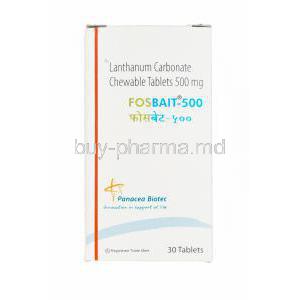
Lanthonate, formulated with lanthanum carbonate, is a potent non-calcium phosphate binder designed to regulate elevated serum phosphorus levels. It acts locally within the gastrointestinal tract, forming stable complexes that minimize phosphate absorption. This targeted activity makes it a valuable therapeutic option in chronic kidney disease.
1.2 Role in Chronic Kidney Disease–Related Hyperphosphatemia
Hyperphosphatemia frequently accompanies advanced chronic kidney disease (CKD). Elevated phosphate levels can trigger:
- Vascular calcification
- Secondary hyperparathyroidism
- Progressive bone-mineral derangements
Lanthonate provides a reliable method to counteract phosphorus overload when renal excretion declines, allowing patients to maintain safer biochemical parameters.
1.3 Comparison With Other Phosphate Binders (Calcium-Based, Sevelamer, Ferric Citrate)
Calcium-based binders are effective but may raise the risk of hypercalcemia and calcification. Sevelamer, while calcium-free, may produce gastrointestinal intolerance in some individuals. Ferric citrate contributes iron, which may not be suitable for patients with iron overload. Lanthonate offers a distinctive advantage—minimal systemic absorption and no calcium or iron contribution—making it suitable for long-term CKD management.
1.4 Benefits of Non-Calcium, Non-Aluminum Phosphate Binding Therapy
Lanthonate avoids the pitfalls of aluminum-related toxicity and calcium imbalance. Benefits include:
- Reduced risk of hypercalcemia
- Suitability for patients at risk of vascular calcification
- Minimal systemic metal accumulation
1.5 Pharmacological Classification and Regulatory Status
Lanthanum carbonate belongs to the pharmacologic class of gastrointestinal phosphate binders. It is approved globally for the treatment of hyperphosphatemia in CKD patients, including those undergoing dialysis.
2. Uses of Lanthonate (Lanthanum Carbonate)
2.1 Approved Therapeutic Use: Management of Hyperphosphatemia in CKD
Lanthonate is indicated for controlling high phosphate levels in CKD patients. Maintaining optimal phosphorus balance helps mitigate complications affecting bone, cardiovascular, and endocrine systems.
2.2 Use in Patients on Hemodialysis and Peritoneal Dialysis
It is widely utilized in dialysis-dependent patients who experience significant phosphate retention. The drug’s mechanism is unaffected by dialysis, allowing consistent phosphate control.
2.3 Use in Non-Dialysis CKD With Elevated Serum Phosphate
Patients in earlier CKD stages may also benefit when dietary restriction alone is insufficient to manage phosphate levels.
2.4 Off-Label Use
2.4.1 Adjunctive Therapy in Secondary Hyperparathyroidism
By decreasing serum phosphate, Lanthonate indirectly helps reduce parathyroid hormone (PTH) stimulation.
2.4.2 Management of Mineral and Bone Disorders (CKD-MBD)
Phosphate reduction plays a key role in improving bone mineralization and metabolic stability.
2.4.3 Phosphate Control in Patients Intolerant to Other Binders
Lanthonate is often selected when calcium-based or polymer-based binders cause adverse effects.
3. How Lanthanum Carbonate Works (Mechanism of Action)
3.1 Binding With Dietary Phosphate in the Gastrointestinal Tract
The compound binds dietary phosphate directly in the stomach and intestines, forming highly stable complexes.
3.2 Formation of Insoluble Lanthanum–Phosphate Complexes
These complexes are insoluble and are eliminated through the feces without significant absorption into the bloodstream.
3.3 Reduction of Phosphate Absorption and Serum Phosphate Levels
With less phosphorus absorbed, serum phosphate levels decline gradually but consistently.
3.4 Impact on PTH Levels and Bone Metabolism
Lower phosphate levels decrease PTH stimulation, contributing to healthier bone turnover.
3.5 Pharmacokinetics: Onset, Duration, and Minimal Systemic Absorption
Lanthanum carbonate exerts its effects rapidly after ingestion. Systemic absorption is extremely low, supporting its long-term use profile.
4. Composition and Formulation
4.1 Active Ingredient: Lanthanum Carbonate Hydrate
Each dose contains lanthanum carbonate hydrate, which performs the phosphate-binding activity.
4.2 Available Strengths and Dosage Forms (Chewable Tablets, Powder Form)
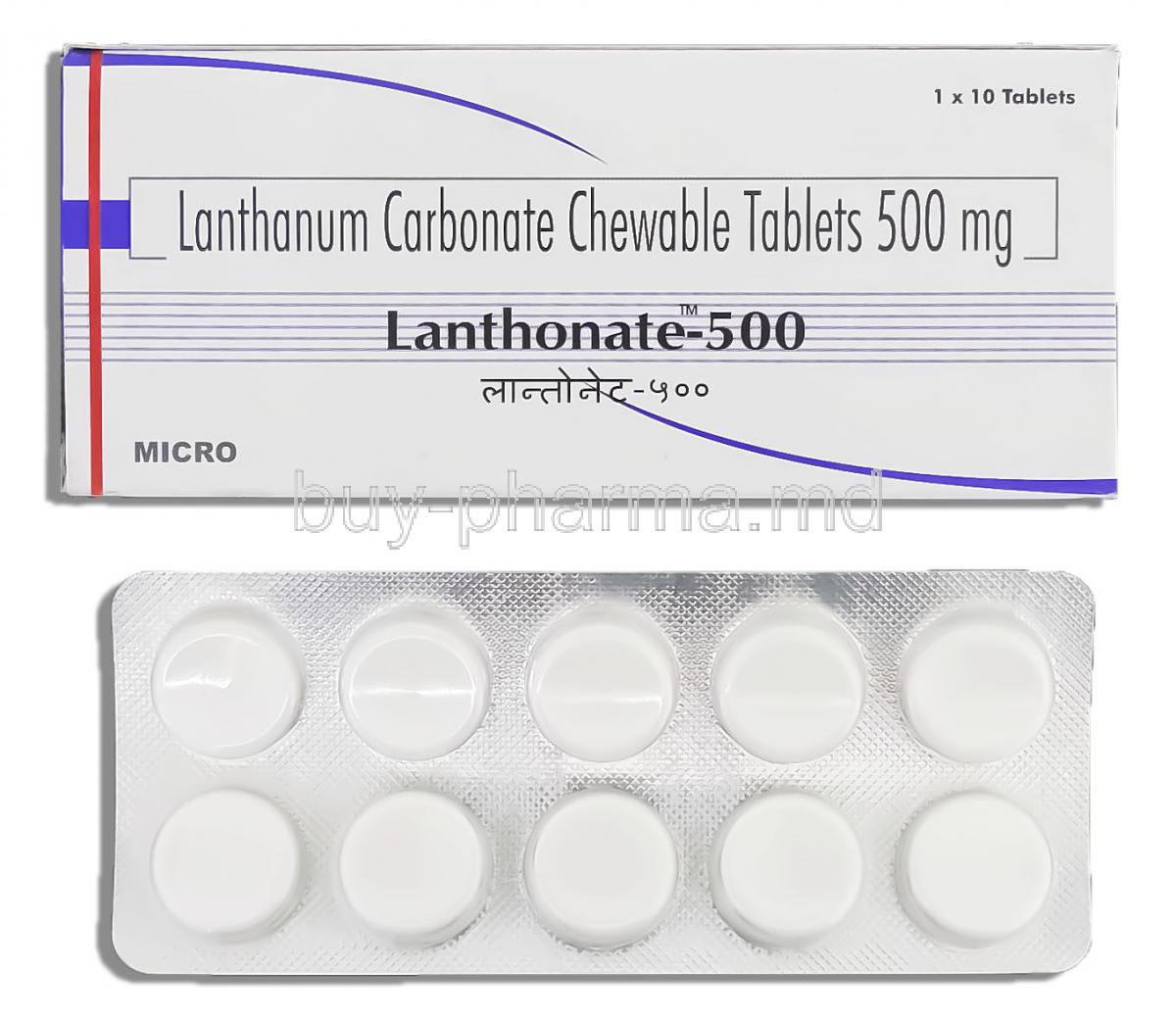
It is offered in various strengths to match individual treatment goals. Chewable tablets are the most common form, while powders may be used for flexible dosing.
4.3 Inactive Ingredients and Excipient Profile
Formulations may include mild flavoring agents, binding materials, and stabilizers to enhance usability.
4.4 Taste, Texture, and Chewability Considerations
Tablets are engineered to be chewed thoroughly to maximize binding efficacy. Some patients may notice a chalk-like texture.
4.5 Packaging Information and Stability
Products are packed in moisture-protective containers to ensure long-term stability and potency.
5. Dosage and Administration
5.1 Standard Adult Dosage for Hyperphosphatemia
The initial dose typically begins at moderate strength, with incremental adjustments. Dosage depends on serum phosphate levels and dietary intake.
5.2 Titration Strategy Based on Serum Phosphate Targets
Frequent monitoring is essential. Dose escalation may be required to achieve therapeutic targets.
5.3 Maximum Daily Dosage and Safety Thresholds
The maximum recommended daily dose should not be exceeded to avoid gastrointestinal complications.
5.4 Administration Instructions With Meals
Lanthonate must be taken with meals so it can bind phosphate from ingested food.
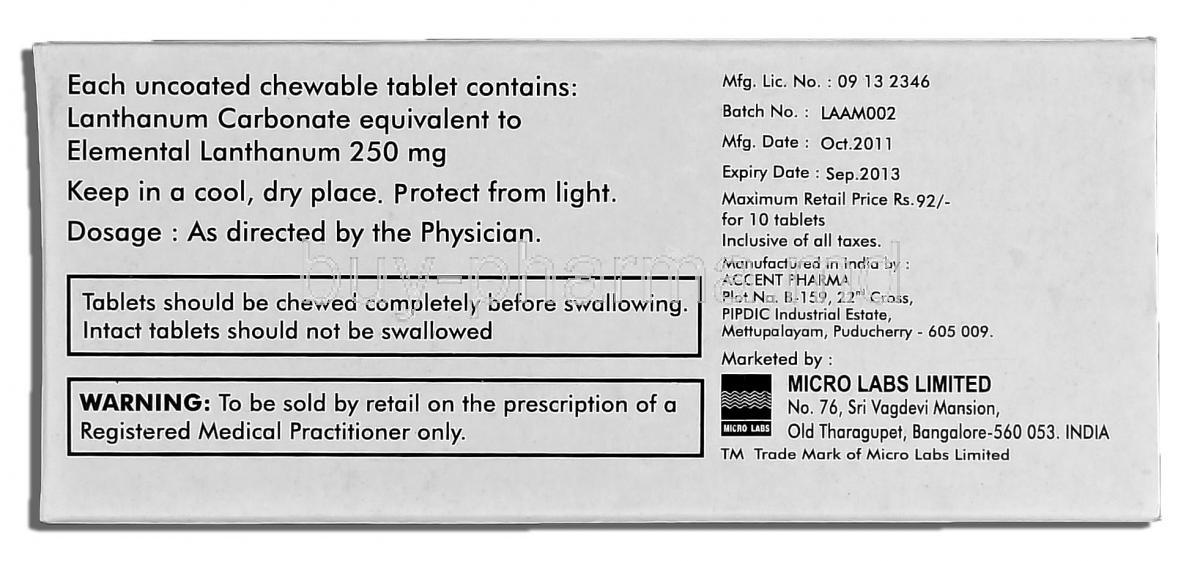
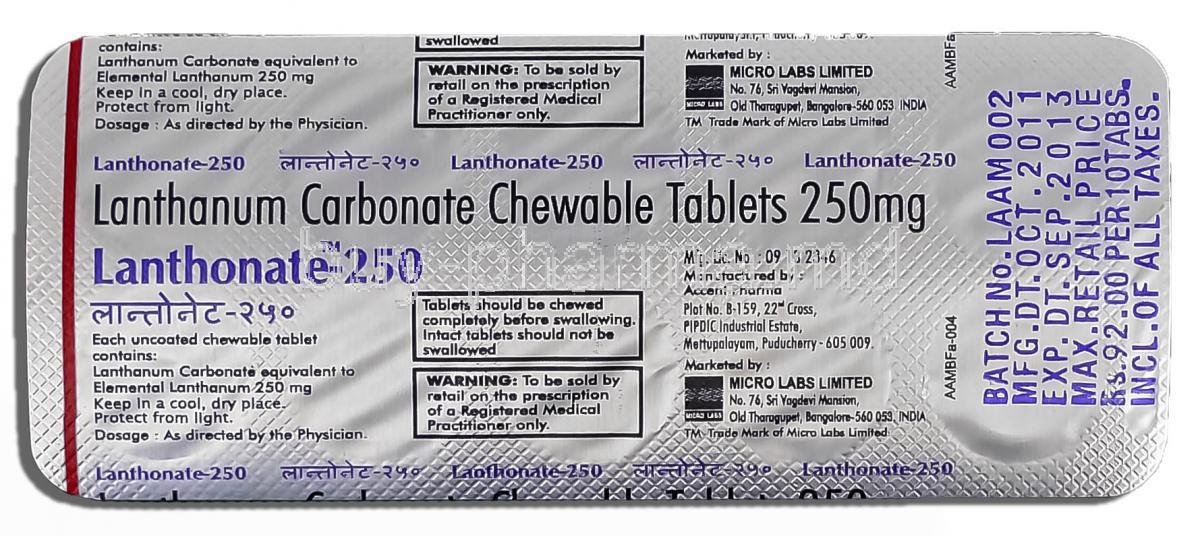
5.5 Chewing Requirements and Avoiding Swallowing Whole
Tablets must be thoroughly chewed to prevent gastrointestinal blockage and to maximize binding capacity.
5.6 Dose Adjustments in Dialysis Patients
Dialysis does not affect the drug’s activity, but patients may require tailored dosing due to fluctuating dietary phosphate loads.
5.7 Missed Dose Instructions for Optimal Phosphate Control
If a dose is missed, it should be taken with the next meal. Doubling doses is not recommended.
6. Side Effects of Lanthonate (Lanthanum Carbonate)
6.1 Overview of Gastrointestinal-Related Adverse Events
Most side effects involve digestive discomfort, as the medication acts directly in the GI tract.
6.2 Effects on Calcium, PTH, and Other Laboratory Parameters
The medication does not raise calcium levels but may require periodic monitoring of PTH and phosphate.
6.3 Long-Term Accumulation Concerns and Safety Data
Data show minimal systemic accumulation, although trace deposits have been reported in rare cases.
6.4 Rare But Serious Adverse Reactions
- Severe constipation
- Intestinal blockage
- Allergic reactions
7. Common Side Effects
7.1 Nausea and Vomiting
These symptoms are usually mild and improve with continued therapy.
7.2 Diarrhea or Constipation
Alterations in bowel habits are among the most frequently reported effects.
7.3 Abdominal Pain, Bloating, and Indigestion
Localized abdominal discomfort may occur, especially during early treatment.
7.4 Headache and Dizziness
These symptoms are uncommon but may accompany gastrointestinal reactions.
7.5 Metallic Taste or Changes in Taste Perception
Some individuals notice transient taste disturbances.
8. Drug Interactions
8.1 Interaction With Tetracyclines and Quinolone Antibiotics
These antibiotics may bind to lanthanum, reducing their absorption. Spacing doses is essential.
8.2 Reduced Absorption of Levothyroxine
Lanthonate may decrease thyroid hormone absorption; timing separation is recommended.
8.3 Interaction With Oral Iron Supplements
Lanthanum may hinder iron uptake; monitoring is advised.
8.4 Timing Considerations for Other Oral Medications
Medications dependent on strict absorption windows should be taken apart from Lanthonate.
8.5 Impact on Gastrointestinal pH–Dependent Medications
Because Lanthonate does not alter pH significantly, these interactions are limited but still require vigilance.
9. Warnings and Important Precautions
9.1 Risk of Gastrointestinal Obstruction or Ileus
Improper chewing may increase the risk of intestinal blockage.
9.2 Precaution in Patients With Active GI Disorders
Patients with inflammatory, obstructive, or motility disorders require careful assessment.
9.3 Monitoring of Serum Phosphate and Calcium Levels
Laboratory monitoring ensures therapeutic success and helps avoid long-term complications.
9.4 Long-Term Safety and Tissue Accumulation Concerns
Although systemic accumulation is minimal, physicians may periodically review accumulation risk.
9.5 Avoid Use in Patients Unable to Chew Tablets Properly
Swallowing tablets whole increases obstruction risk.
9.6 Precaution in Patients With Recent Abdominal Surgery
Surgery may alter gastrointestinal integrity, requiring dose modification or alternative therapy.
10. Contraindications
10.1 Known Hypersensitivity to Lanthanum Compounds
Patients with a history of allergic reactions to lanthanum should not use this medication.
10.2 Contraindications in GI Obstruction, Impaction, or Severe Ileus
Lanthonate may worsen these conditions due to its local action in the GI tract.
10.3 Avoid Use in Inflammatory Bowel Disease or Peptic Ulcer Disease
Active mucosal inflammation may heighten adverse effects.
10.4 Contraindications Related to Severe Liver Failure
Patients with severe hepatic impairment may require alternative phosphate management options.
11. Careful Administration
11.1 Patients With GI Motility Disorders
Lanthanum carbonate requires cautious use in individuals with gastrointestinal motility disturbances. Slowed transit can heighten the risk of intestinal obstruction, especially when tablets are not properly chewed. Patients with conditions such as gastroparesis or severe constipation should be monitored closely for abdominal distension, severe bloating, or altered bowel habits.
11.2 Patients With Dysphagia or Difficulty Chewing
The medication must be thoroughly chewed before swallowing to reduce the likelihood of gastrointestinal complications. Individuals with dysphagia, weakened jaw strength, or dental limitations may struggle with the chewable formulation. Alternative phosphate binders or powdered formulations may need consideration to ensure treatment safety.
11.3 Patients With Chronic Constipation
Because lanthanum carbonate can exacerbate constipation, patients with pre-existing bowel irregularities should begin therapy with vigilance. Regular hydration, dietary fiber intake, and monitoring are advisable. Severe, persistent constipation may require discontinuation or dose reduction.
11.4 Patients Taking Multiple Oral Medications
Lanthanum carbonate may interfere with the intestinal absorption of various orally administered drugs. Key concerns include:
- Binding interactions with antibiotics such as tetracyclines
- Reduced uptake of levothyroxine
- Competition with iron supplements
Spacing doses by several hours may help mitigate these effects and preserve therapeutic efficacy.
11.5 Patients With Heart Failure or Fluid Restrictions
The medication itself does not contain sodium or fluid content; however, heart failure patients may be more sensitive to fluctuations in electrolyte balance. Close biochemical monitoring is essential as phosphate reduction may indirectly influence calcium and parathyroid hormone dynamics.
11.6 Patients With Pre-Existing Bone Disorders
Since phosphate regulation is closely tied to skeletal health, patients with osteoporosis, renal osteodystrophy, or abnormal bone turnover require coordinated care. Effective phosphate control can be beneficial, but changes in PTH levels should be evaluated to avoid further bone weakening.
12. Administration to Elderly Patients
12.1 Age-Related Gastrointestinal Sensitivities
Older adults often experience reduced gastrointestinal motility and increased susceptibility to digestive discomfort. Lanthanum carbonate may intensify these sensitivities, making gradual dose escalation preferable.
12.2 Polypharmacy Considerations and Drug Interaction Risks
Elderly patients frequently take multiple medications, raising the likelihood of interactions. Important considerations include:
- Possible interference with critical chronic therapies
- Malabsorption of narrow-therapeutic-index drugs
- Need for careful scheduling of medication administration
12.3 Dose Adjustments and Titration in Older Adults
Treatment should begin at the lower end of the dosing range. Dose increments should be guided by laboratory values and the patient’s overall tolerance. Medical teams should reassess dosing frequently to avoid unnecessary gastrointestinal strain.
13. Administration to Pregnant Women and Nursing Mothers
13.1 Available Safety Data in Pregnancy
Data regarding lanthanum carbonate use during pregnancy remain limited. Animal studies show minimal systemic absorption, but human data are insufficient to confirm fetal safety.
13.2 Potential Effects on Fetal Mineralization
Because phosphate and calcium regulation are crucial to fetal skeletal development, theoretical risks exist. Excessive phosphorus binding in the mother could alter mineral availability to the fetus.
13.3 Use During Breastfeeding and Excretion Concerns
Systemic absorption of lanthanum is negligible, making significant transfer into breast milk unlikely. Nonetheless, precaution is advisable, particularly for infants with renal impairments.
13.4 Recommendations for Use Only When Clearly Needed
Lanthanum carbonate should be used during pregnancy or lactation only if the benefits outweigh potential risks. Alternative treatments should be evaluated before initiating therapy.
14. Administration to Children
14.1 Safety and Efficacy in Pediatric CKD Patients
Pediatric data are more limited than adult data. The medication may be considered for children with advanced CKD, but safety outcomes require vigilant monitoring.
14.2 Recommended Ages for Use
Younger children may have difficulty chewing the tablets adequately. Powdered formulations may be preferred in certain age groups to improve compliance and safety.
14.3 Monitoring Requirements in Pediatric Patients
Regular evaluation of phosphate, calcium, growth parameters, and bone development is crucial. Children are more vulnerable to mineral imbalances that could affect long-term development.
14.4 GI Tolerance Issues in Children
Digestive discomfort such as bloating or constipation may occur more frequently in younger patients. Dose adjustments or alternative therapies may be necessary if tolerance issues persist.
15. Overdosage
15.1 Symptoms of Excessive Lanthanum Exposure
Although systemic absorption is minimal, excessive intake can lead to pronounced gastrointestinal reactions such as severe constipation, abdominal cramps, or bowel obstruction.
15.2 Management of GI Symptoms Associated With Overdose
Initial treatment focuses on alleviating gastrointestinal discomfort. Hydration, laxatives, or gastric evacuation may be recommended depending on symptom severity.
15.3 Supportive Treatment Strategies
Supportive care includes careful observation, symptomatic relief, and ensuring normal bowel movement patterns. Hospital evaluation may be required for severe presentations.
15.4 Monitoring Electrolytes and Phosphate Levels After Overdose
Post-overdose assessment should include laboratory evaluation of phosphate, calcium, and kidney function. This helps guide further management and prevent rebound hyperphosphatemia.
16. Storage and Handling Precautions
16.1 Recommended Storage Temperature
Store lanthanum carbonate at controlled room temperature to maintain its chemical integrity and potency.
16.2 Protection From Moisture and Direct Sunlight
The medication should remain in its original container, protected from humidity and intense light exposure. Moisture can compromise tablet texture and efficacy.
16.3 Shelf Life and Stability Considerations
Check the product packaging for expiration dates. Stability is maintained when stored under appropriate environmental conditions.
16.4 Safe Handling, Disposal, and Child-Safety Measures
Unused or expired medication should be disposed of following local pharmaceutical guidelines. Always keep the product out of the reach of children to prevent accidental ingestion.
16.5 Handling Precautions for Healthcare Providers
Healthcare professionals should handle the medication with clean, dry hands. Bulk dispensing requires proper safety and labeling procedures to ensure accurate patient administration.



Similar Product