
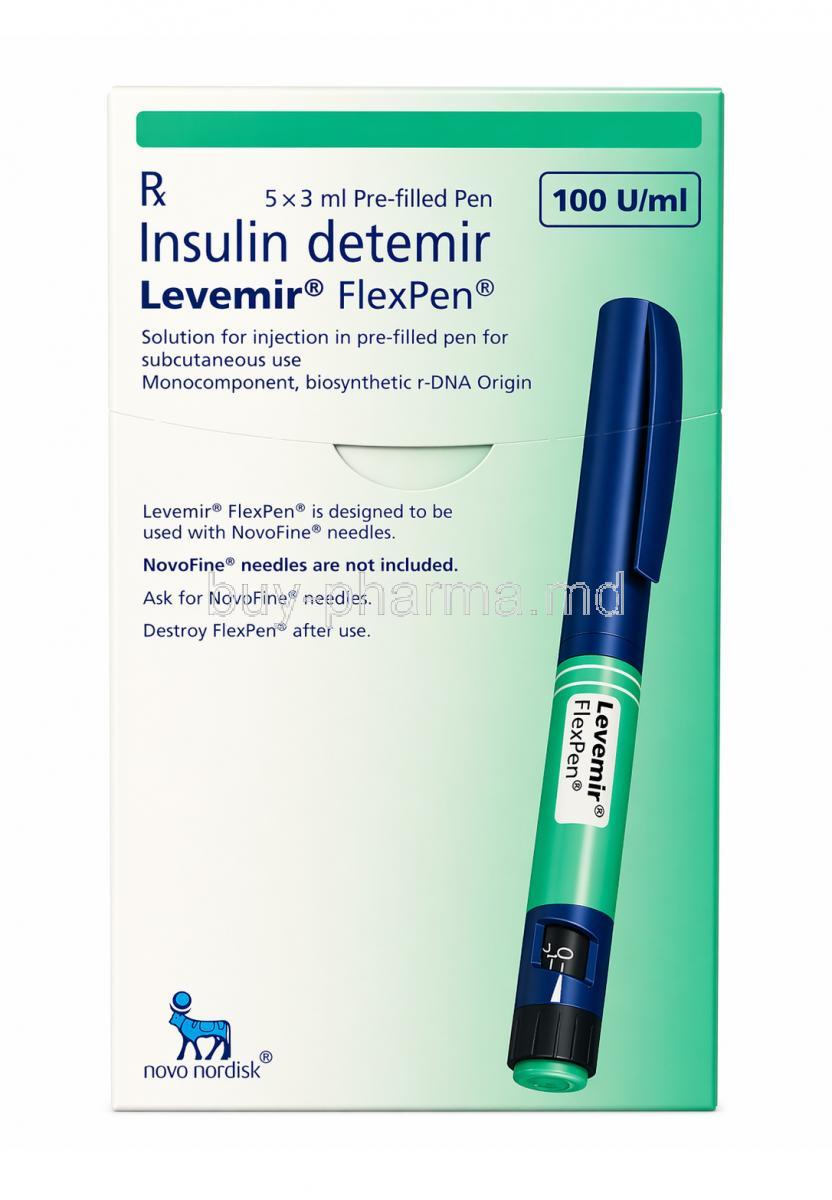
Introduction to Levemir FlexPen (Insulin Detemir)
Levemir FlexPen is a prefilled insulin delivery device containing insulin detemir, a long-acting basal insulin analogue engineered for sustained glycemic control. It is widely utilized in the management of diabetes mellitus, offering a predictable pharmacokinetic profile and reduced variability compared to older insulin formulations. This therapeutic agent is designed to mimic endogenous basal insulin secretion, thereby maintaining glucose homeostasis throughout the day and night.
Overview of Long-Acting Basal Insulin Therapy
Basal insulin therapy forms the cornerstone of diabetes management. It provides a continuous, low-level insulin supply that counteracts hepatic glucose production during fasting states.
- Maintains stable blood glucose levels between meals
- Reduces nocturnal hyperglycemia
- Supports overall metabolic equilibrium
Insulin detemir distinguishes itself by its prolonged duration and relatively flat action profile, minimizing glycemic excursions.
Brand vs Generic: Understanding Insulin Detemir
Insulin detemir is the active pharmaceutical ingredient in Levemir FlexPen. While the branded formulation ensures consistency in delivery and stability, biosimilar or generic versions may also be available in certain markets. These alternatives must demonstrate bioequivalence, ensuring comparable efficacy and safety.
Indications for Use in Diabetes Management
Levemir FlexPen is indicated for patients requiring basal insulin supplementation. It is appropriate for both insulin-dependent and non-insulin-dependent diabetes mellitus.
- Type 1 diabetes requiring full insulin replacement
- Type 2 diabetes with inadequate glycemic control on oral agents
- Patients transitioning from intermediate-acting insulin
Role in Modern Glycemic Control Strategies
Contemporary diabetes management emphasizes individualized therapy. Insulin detemir integrates seamlessly into various regimens, including basal-only and basal-bolus strategies. Its lower risk of hypoglycemia and weight neutrality enhances patient adherence and therapeutic outcomes.
Composition and Formulation of Levemir FlexPen
The formulation of Levemir FlexPen is meticulously designed to ensure stability, bioavailability, and ease of administration.
Active Ingredient: Insulin Detemir Structure and Properties
Insulin detemir is a recombinant DNA-derived insulin analogue. It features a fatty acid side chain attached to the B29 lysine residue, facilitating reversible albumin binding. This modification prolongs its duration of action and confers a more consistent pharmacodynamic profile.
Excipients and Stabilizing Components
The formulation includes several excipients that preserve the integrity and sterility of the solution:
- Glycerol for isotonicity
- Phenol and metacresol as preservatives
- Zinc for structural stability
- Sodium chloride and buffering agents
These constituents ensure optimal performance and extended shelf life.
FlexPen Delivery System: Design and Functionality
The FlexPen is an ergonomic, user-friendly injection device. It enables precise dose administration with minimal effort. Features include:
- Dial-a-dose mechanism for accurate dosing
- Prefilled cartridge reducing preparation time
- Compact design for portability
This device enhances compliance, particularly among patients requiring frequent injections.
Available Strengths and Packaging Options
Levemir FlexPen is typically available in concentrations of 100 units/mL. It is supplied in multi-dose prefilled pens, often packaged in cartons containing multiple devices to support long-term therapy.
Mechanism of Action: How Insulin Detemir Works
The therapeutic efficacy of insulin detemir lies in its ability to regulate glucose metabolism through multiple physiological pathways.
Pharmacodynamics of Long-Acting Insulin Analogues
Insulin detemir exerts its effects by binding to insulin receptors, promoting cellular glucose uptake and inhibiting gluconeogenesis. Its extended activity profile ensures sustained glucose control without pronounced peaks.
Albumin Binding and Prolonged Duration of Action
A distinctive feature of insulin detemir is its reversible binding to albumin in the bloodstream. This interaction creates a depot effect, gradually releasing active insulin over time. The result is a prolonged, steady action that reduces glycemic variability.
Glucose Uptake Enhancement and Hepatic Glucose Suppression
Insulin detemir facilitates glucose uptake in peripheral tissues such as muscle and adipose tissue. Simultaneously, it suppresses hepatic glucose output, thereby lowering fasting plasma glucose levels.
- Enhances glycogenesis
- Inhibits lipolysis
- Reduces proteolysis
Comparison with Other Basal Insulins (Glargine, Degludec)
Compared to insulin glargine and insulin degludec, insulin detemir exhibits:
- Lower intra-patient variability
- Potential for weight neutrality
- Flexible dosing schedules in certain cases
However, it may require twice-daily administration in some patients to maintain optimal glycemic control.
Approved Uses of Levemir FlexPen
Levemir FlexPen is approved for a range of indications in diabetes care, reflecting its versatility and clinical efficacy.
Management of Type 1 Diabetes Mellitus
In type 1 diabetes, insulin detemir serves as the basal component of a comprehensive insulin regimen. It is typically combined with rapid-acting insulin to replicate physiological insulin secretion.
Management of Type 2 Diabetes Mellitus
For patients with type 2 diabetes, Levemir FlexPen is introduced when oral antidiabetic medications fail to achieve target glycemic levels. It provides a stable baseline insulin supply, reducing fasting glucose levels.
Basal Insulin Support in Combination Therapy
Insulin detemir is frequently used alongside other therapeutic agents, including:
- Metformin
- SGLT2 inhibitors
- GLP-1 receptor agonists
This combinatorial approach enhances glycemic control while minimizing adverse effects.
Use in Intensive Insulin Regimens (Basal-Bolus Therapy)
In intensive insulin therapy, insulin detemir provides basal coverage, while short-acting insulin addresses postprandial glucose spikes. This regimen closely mimics endogenous insulin secretion patterns.
Expanded and Off-Label Uses of Insulin Detemir
Beyond its approved indications, insulin detemir has been explored in various off-label contexts, supported by emerging clinical evidence.
Use in Gestational Diabetes (Clinical Considerations)
Insulin detemir is sometimes employed in gestational diabetes when diet and exercise fail to achieve glycemic targets. Its safety profile and reduced risk of hypoglycemia make it a viable option under medical supervision.
Insulin Therapy in Prediabetes and Insulin Resistance
In select cases of severe insulin resistance or progressive prediabetes, insulin detemir may be used to restore glycemic balance and prevent disease progression.
Adjunctive Use in Polycystic Ovary Syndrome (PCOS)
Insulin resistance is a hallmark of polycystic ovary syndrome. Insulin detemir may be used adjunctively to improve metabolic parameters and enhance insulin sensitivity.
Off-Label Use in Hospitalized or Critically Ill Patients
In inpatient settings, insulin detemir may be utilized for basal insulin coverage, particularly in patients requiring tight glycemic control during acute illness.
Use in Steroid-Induced Hyperglycemia
Corticosteroid therapy often leads to elevated blood glucose levels. Insulin detemir can be employed to counteract this effect, maintaining euglycemia during treatment.
Application in Pediatric Growth Disorders (Emerging Evidence)
Emerging research suggests potential applications in pediatric populations with metabolic or growth-related disorders. While promising, such use remains investigational and requires further validation.
Dosage and Administration Guidelines
Appropriate dosing of insulin detemir requires clinical discernment and meticulous titration. The objective is to achieve optimal glycemic equilibrium while minimizing adverse events. Dosing is not static. It evolves in tandem with metabolic demands, lifestyle variables, and comorbid conditions.
Individualized Dosing Based on Patient Profile
Dosing must be individualized. No universal regimen exists.
- Body weight and insulin sensitivity
- Dietary patterns and caloric intake
- Physical activity levels
- Concurrent medications and comorbidities
Personalized titration enhances therapeutic precision and mitigates glycemic volatility.
Initiation of Therapy in Insulin-Naïve Patients
In insulin-naïve individuals, therapy is typically initiated conservatively. Gradual escalation reduces the risk of hypoglycemia.
- Low starting dose based on weight or clinical judgment
- Frequent glucose monitoring during initiation phase
- Incremental adjustments every few days
This cautious approach fosters adaptation and minimizes adverse glycemic excursions.
Dose Adjustment in Insulin-Experienced Patients
Patients transitioning from other insulin regimens may require recalibration. Pharmacokinetic disparities necessitate careful dose conversion.
- Adjustment based on prior insulin type and dose
- Monitoring fasting plasma glucose trends
- Consideration of hypoglycemia history
Once-Daily vs Twice-Daily Dosing Regimens
Insulin detemir may be administered once or twice daily. The decision hinges on glycemic patterns and individual response.
- Once-daily dosing for stable basal coverage
- Twice-daily dosing for patients with waning effect
Flexibility in dosing enhances therapeutic adaptability.
Injection Techniques and Rotation of Injection Sites
Proper injection technique is indispensable. Incorrect administration can compromise efficacy.
- Preferred sites: abdomen, thigh, upper arm
- Rotation prevents lipodystrophy
- Subcutaneous administration only
Timing of Administration Relative to Meals and Activity
Timing influences pharmacodynamic outcomes. Insulin detemir is typically administered at consistent times each day.
- Evening dosing for nocturnal glucose control
- Adjustment based on physical exertion
Administration Using the FlexPen Device
The FlexPen device simplifies insulin delivery. Precision. Convenience. Reliability.
Step-by-Step Guide to Using Levemir FlexPen
- Inspect the solution for clarity
- Attach a new needle
- Select the prescribed dose
- Inject subcutaneously
Priming, Dose Selection, and Injection Process
Priming ensures accurate dosing. It eliminates air bubbles.
- Prime with a small test dose
- Dial the required units
- Inject at a 90-degree angle
Needle Selection and Safe Disposal Practices
Appropriate needle selection enhances comfort and reduces tissue trauma.
- Use sterile, single-use needles
- Dispose in approved sharps containers
Common User Errors and Prevention Strategies
Errors can undermine therapeutic efficacy.
- Incorrect dose dialing
- Failure to rotate injection sites
- Skipping priming steps
Education remains paramount.
Side Effects of Levemir FlexPen
Like all pharmacologic agents, insulin detemir is associated with potential adverse effects. Most are manageable. Some require urgent attention.
Overview of Potential Adverse Reactions
Adverse reactions range from mild to severe. Their occurrence depends on dose, patient susceptibility, and external factors.
Frequency and Severity Classification
- Common: frequently observed but generally mild
- Uncommon: less frequent, may require monitoring
- Rare: serious, necessitating immediate intervention
Systemic vs Localized Side Effects
Side effects may be systemic, affecting the entire body, or localized, confined to the injection site.
Common Side Effects of Insulin Detemir
Hypoglycemia: Signs, Symptoms, and Management
Hypoglycemia is the most prevalent adverse effect. It can manifest abruptly.
- Sweating, tremors, palpitations
- Confusion, dizziness, visual disturbances
Immediate carbohydrate intake is essential.
Injection Site Reactions (Redness, Swelling, Pain)
Localized reactions are typically transient. Proper technique mitigates risk.
Weight Changes Associated with Insulin Therapy
Insulin therapy may influence weight. Insulin detemir is often associated with less weight gain compared to other basal insulins.
Mild Allergic Reactions
Minor hypersensitivity reactions may occur. These are usually self-limiting.
Serious and Rare Adverse Effects
Severe Hypoglycemia and Neurological Complications
Severe hypoglycemia can precipitate seizures or loss of consciousness. It constitutes a medical emergency.
Hypokalemia and Electrolyte Imbalance
Insulin promotes intracellular potassium shift, potentially leading to hypokalemia.
Lipodystrophy and Skin Changes
Repeated injections at the same site may cause adipose tissue alterations.
Systemic Hypersensitivity Reactions and Anaphylaxis
Although rare, systemic allergic reactions can occur and require immediate medical intervention.
Drug Interactions with Insulin Detemir
Drug interactions may potentiate or attenuate insulin effects, necessitating vigilant monitoring.
Interaction with Oral Antidiabetic Agents
Combination therapy may enhance glucose-lowering effects, increasing hypoglycemia risk.
Effects of Beta-Blockers, ACE Inhibitors, and Diuretics
These agents may mask hypoglycemia symptoms or alter glucose metabolism.
Corticosteroids and Their Impact on Blood Glucose Levels
Corticosteroids can induce hyperglycemia, necessitating dose adjustments.
Alcohol Interaction and Risk of Hypoglycemia
Alcohol consumption may unpredictably affect glucose levels. Caution is advised.
Herbal Supplements and Alternative Therapies
Some herbal products may influence glycemic control. Disclosure to healthcare providers is essential.
Warnings and Safety Considerations
Risk of Hypoglycemia with Improper Dosing
Inaccurate dosing is a principal cause of hypoglycemia. Precision is critical.
Monitoring Blood Glucose and HbA1c Levels
Regular monitoring ensures therapeutic efficacy and safety.
Risk in Patients with Renal or Hepatic Impairment
Impaired organ function may alter insulin metabolism, requiring dose adjustments.
Cardiovascular Considerations in Insulin Therapy
Insulin therapy may influence cardiovascular parameters. Clinical vigilance is warranted.
Contraindications of Levemir FlexPen
Known Hypersensitivity to Insulin Detemir or Excipients
Use is contraindicated in patients with known hypersensitivity.
Episodes of Hypoglycemia
Administration during hypoglycemia is contraindicated.
Conditions Requiring Alternative Insulin Therapy
Certain clinical scenarios necessitate alternative insulin formulations.
Careful Administration (Use with Caution)
Patients with Renal Dysfunction
Renal impairment necessitates careful dose titration.
Hepatic Impairment and Dose Adjustment Needs
Liver dysfunction may alter glucose metabolism.
Patients with Irregular Meal Patterns
Erratic eating habits increase hypoglycemia risk.
Individuals with Endocrine Disorders (Thyroid, Adrenal)
Endocrine abnormalities may influence insulin requirements.
Important Precautions for Safe Use
Avoiding Medication Errors Between Insulin Types
Confusion between insulin types can lead to serious complications.
Proper Storage Before and After Opening
Correct storage preserves potency.
Regular Monitoring of Blood Glucose Levels
Consistent monitoring supports optimal outcomes.
Patient Education and Adherence Importance
Education empowers patients. Adherence ensures efficacy.
Administration to Elderly Patients
Age-Related Pharmacokinetic Considerations
Aging alters insulin sensitivity and metabolism.
Increased Risk of Hypoglycemia
Elderly patients are particularly vulnerable.
Dose Individualization and Monitoring Strategies
Frequent assessment is essential.
Use in Pregnant and Nursing Women
Safety Profile During Pregnancy
Insulin detemir may be used when clinically indicated.
Insulin Requirements During Gestation
Requirements fluctuate throughout pregnancy.
Transfer into Breast Milk and Lactation Considerations
Minimal transfer into breast milk is expected.
Clinical Guidelines for Use in Gestational Diabetes
Use should align with clinical guidelines.
Pediatric Use of Insulin Detemir
Approved Age Groups and Indications
Approved for use in children with diabetes.
Dosing Considerations in Children and Adolescents
Dosing requires careful adjustment.
Growth and Development Monitoring
Regular monitoring ensures healthy development.
Safety and Efficacy in Pediatric Populations
Clinical studies support its use.
Overdosage and Emergency Management
Signs and Symptoms of Insulin Overdose
Overdose leads to profound hypoglycemia.
Immediate Management of Hypoglycemia
Rapid intervention is critical.
Use of Glucagon and Intravenous Glucose
Severe cases require medical treatment.
Long-Term Management Following Overdose
Monitoring and dose adjustment are essential.
Storage and Stability Guidelines
Recommended Storage Temperature for Unopened Pens
Store refrigerated. Avoid freezing.
Storage After First Use
May be kept at room temperature for a limited period.
Protection from Light and Heat
Exposure degrades insulin potency.
Shelf Life and Expiry Considerations
Adhere to labeled expiry dates.
Handling Precautions for Levemir FlexPen
Safe Handling and Transport of Insulin Pens
Transport in temperature-controlled conditions.
Avoiding Contamination and Maintaining Sterility
Maintain aseptic technique.
Disposal of Used Pens and Needles
Dispose responsibly using sharps containers.
Patient Counseling for Home Use Safety
Proper guidance ensures safe and effective use in home settings.
Levemir Flexpen, Insulin detemir FAQ
Popular Products




Similar Product