1. Introduction
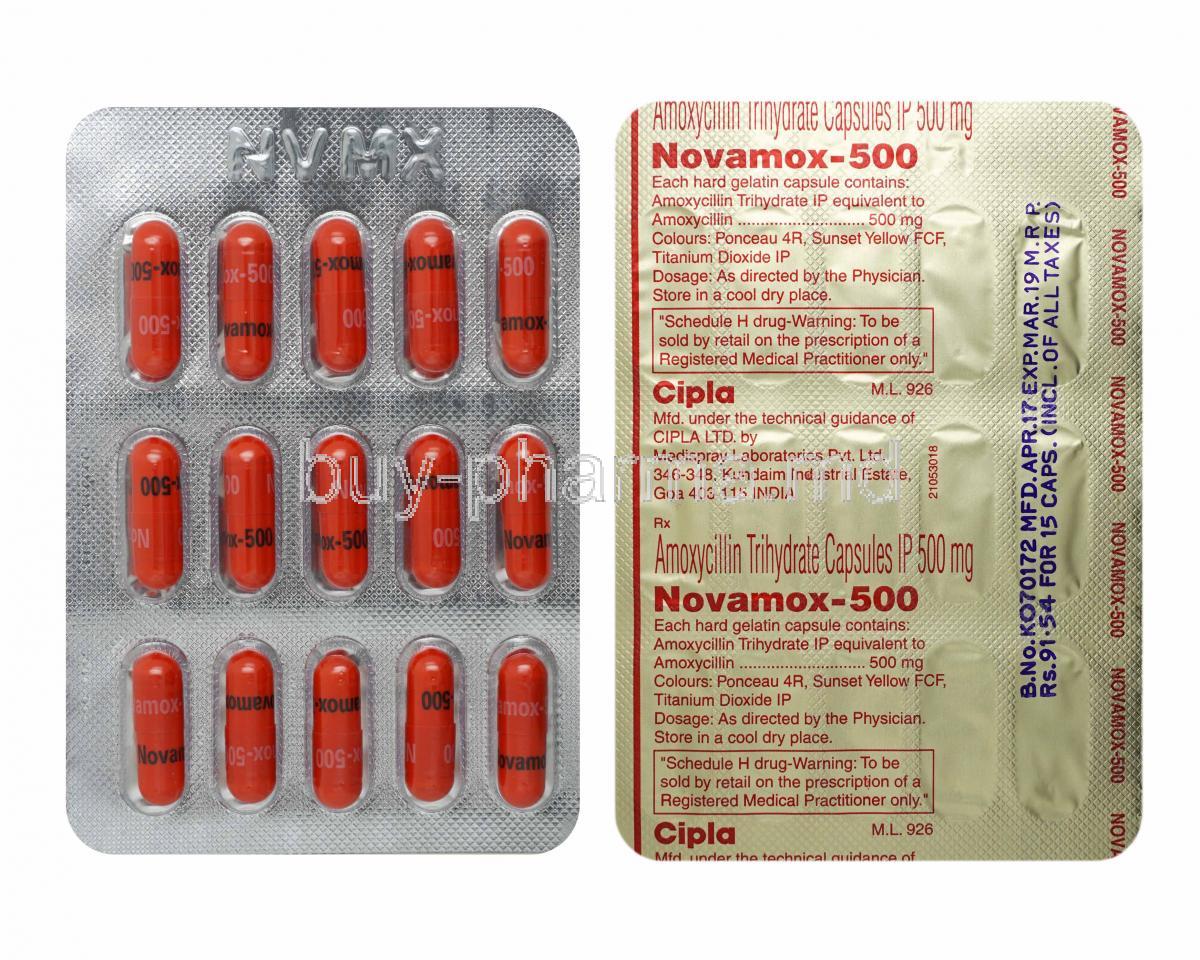
1.1 Overview of Novamox
Novamox is a widely trusted antibacterial medication formulated with amoxycillin, a potent agent effective against a broad spectrum of bacterial pathogens. It is frequently prescribed due to its reliability, clinical efficacy, and tolerability across diverse age groups. This medication is a cornerstone therapy for numerous community-acquired infections.
1.2 What is Amoxycillin?
Amoxycillin is a semi-synthetic penicillin antibiotic with enhanced absorption and stability in acidic environments. It belongs to the beta-lactam family, exerting significant bactericidal effects against susceptible organisms. Because of its broad antimicrobial profile, it is commonly recommended in both acute and chronic infections.
1.3 Therapeutic class and antibacterial profile
Classified as a broad-spectrum beta-lactam antibiotic, amoxycillin targets Gram-positive and selected Gram-negative bacteria. Its mechanism disrupts cell wall synthesis, leading to rapid bacterial death. Clinicians often select Novamox as a first-line therapy for respiratory, gastrointestinal, urinary, and dermatological infections.
1.4 Benefits of Novamox in clinical practice
- High oral bioavailability with predictable therapeutic responses
- Wide range of clinical indications
- Suitable for pediatric, adult, and elderly patients
- Well-studied safety profile
Its versatility makes Novamox indispensable across both outpatient and inpatient care settings.
1.5 Brand names, formulations, and availability
Novamox is available globally under various brand names including Amoxil, Amoxyclav combinations, and generic amoxycillin. It comes in capsules, tablets, dry syrup, dispersible tablets, and injectable formulations to suit individualized therapeutic requirements.
2. Composition
2.1 Active ingredient: Amoxycillin trihydrate
The primary component of Novamox is amoxycillin trihydrate, a stabilized form ensuring potency and consistent systemic absorption.
2.2 Mechanism-relevant chemical properties
Its beta-lactam ring structure enables amoxycillin to bind irreversibly to bacterial penicillin-binding proteins, interrupting peptidoglycan cross-linking. This interruption weakens bacterial cell walls, culminating in microbial destruction.
2.3 Inactive ingredients and formulation-specific additives
Depending on the dosage form, Novamox may contain excipients such as magnesium stearate, cellulose derivatives, flavoring agents for pediatric syrups, and stabilizers designed to enhance formulation durability.
2.4 Available strengths (capsules, tablets, dry syrup, injection)
- Capsules: 250 mg, 500 mg
- Tablets: 250 mg, 500 mg, 875 mg
- Dry syrup: 125 mg/5 mL, 250 mg/5 mL
- Injectable formulations for hospital use
3. Uses of Novamox (Approved Clinical Uses)
3.1 Bacterial respiratory tract infections
3.1.1 Acute otitis media
Novamox remains a first-line treatment for ear infections in both adults and children, offering rapid symptom resolution.
3.1.2 Sinusitis
The medication effectively combats sinus pathogens, reducing congestion, facial pressure, and purulent discharge.
3.1.3 Pneumonia and bronchitis
Amoxycillin helps eradicate bacterial pneumonia and acute bacterial exacerbations of chronic bronchitis.
3.2 Genitourinary tract infections
3.2.1 Urinary tract infections
Novamox treats uncomplicated UTIs caused by susceptible organisms, helping alleviate urinary discomfort and frequency.
3.2.2 Uncomplicated gonorrhea
In select cases, it may be used when recommended by infectious disease guidelines.
3.3 Skin and soft-tissue infections
3.3.1 Cellulitis
Amoxycillin is beneficial in treating superficial soft-tissue infections characterized by swelling, redness, and tenderness.
3.3.2 Impetigo
Widely prescribed for pediatric impetigo, reducing infectious spread and aiding rapid recovery.
3.4 Gastrointestinal and Helicobacter pylori eradication
3.4.1 Dual and triple therapy regimens
Novamox is part of standard eradication combinations with proton pump inhibitors and clarithromycin or metronidazole.
3.5 Dental infections and prophylaxis
Dentists often recommend Novamox for dental abscesses and procedural prophylaxis in patients at risk for infection.
3.6 Other common bacterial infections responsive to amoxycillin
- Streptococcal pharyngitis
- Bacterial gastroenteritis
- Post-surgical prophylaxis in select cases
4. Off-Label Uses
4.1 Lyme disease early-stage management
In early localized Lyme disease, Novamox may be used as an oral alternative when standard regimens are unsuitable.
4.2 Prevention of endocarditis in at-risk patients
For individuals undergoing dental or surgical procedures, amoxycillin may be prescribed prophylactically to prevent bacterial endocarditis.
4.3 Alternative therapy for certain streptococcal infections
In penicillin-tolerant individuals requiring alternative therapy, Novamox may be considered with specialist oversight.
4.4 Off-label pediatric uses under specialist guidance
Pediatric infectious disease specialists may recommend off-label dosing for rare infections requiring individualized therapy.
5. How Novamox (Amoxycillin) Works
5.1 Pharmacodynamic action: inhibition of bacterial cell wall synthesis
The drug interferes with the bacterial cell wall formation by anchoring to penicillin-binding proteins, halting structural integrity and inducing bacterial autolysis.
5.2 Beta-lactam mechanism and bactericidal activity
As a beta-lactam antibiotic, Novamox displays pronounced bactericidal action that ensures rapid pathogen elimination.
5.3 Pharmacokinetics
5.3.1 Absorption and bioavailability
Novamox exhibits excellent oral absorption that remains largely unaffected by food intake, offering reliable systemic delivery.
5.3.2 Distribution, plasma levels, and tissue penetration
It disperses efficiently into respiratory tissue, middle-ear fluid, urinary tract, and skin layers, ensuring comprehensive therapeutic coverage.
5.3.3 Metabolism and elimination
The drug is minimally metabolized and primarily excreted unchanged via renal pathways.
5.4 Impact of renal function on drug activity
Reduced renal function can impair elimination, necessitating dosage adjustments to prevent accumulation.
6. Dosage and Administration
6.1 Standard adult dosing guidelines
Typical adult doses range from 250 mg to 875 mg administered two to three times daily, depending on infection severity.
6.2 Pediatric dosage by weight
Children receive weight-based dosing, usually 20–40 mg/kg/day divided into multiple doses.
6.3 Dosing for renal impairment
Patients with decreased renal clearance may require extended dosing intervals or reduced total daily doses.
6.4 Recommended dosing frequency and duration
Therapeutic courses typically span 5–14 days, ensuring complete eradication of the pathogen.
6.5 Administration with or without food
Novamox can be taken without regard to meals, enhancing convenience and compliance.
6.6 Reconstitution instructions for oral suspension
Dry powder preparations should be reconstituted with purified water to the indicated level and shaken well before each use.
6.7 Missed dose instructions
If a dose is missed, it should be taken promptly unless the next scheduled dose is nearing. Doubling doses is discouraged.
6.8 Completing full antibiotic course
Patients should complete the entire regimen even if symptoms improve early to prevent treatment failure and resistance.
7. Side Effects
7.1 Overall adverse event profile
Most adverse events are mild and transient, although hypersensitivity reactions can occasionally occur.
7.2 Gastrointestinal side effects
Nausea, diarrhea, abdominal cramps, and rare antibiotic-associated colitis may be observed.
7.3 Dermatological and allergic reactions
Maculopapular rashes, urticaria, and pruritus occur in susceptible individuals.
7.4 Neurological and systemic reactions
Dizziness, fatigue, and mild headaches have been reported in a minority of patients.
7.5 Severe adverse reactions requiring urgent care
- Anaphylaxis
- Severe skin eruptions
- Persistent diarrhea suggesting C. difficile infection
8. Common Side Effects
8.1 Nausea and vomiting
Transient nausea may occur as the gastrointestinal tract adapts to the medication.
8.2 Diarrhea and abdominal discomfort
Altered gut flora may induce mild diarrhea, usually resolving without intervention.
8.3 Rash and mild hypersensitivity
Occasional skin redness or itching may develop, particularly in younger populations.
8.4 Headache and dizziness
These symptoms are infrequent and typically resolve spontaneously.
8.5 Oral or vaginal candidiasis
Disturbance of normal microbial flora may predispose patients to yeast overgrowth.
9. Drug Interactions
9.1 Interaction with anticoagulants (warfarin)
Amoxycillin may potentiate the effects of warfarin, necessitating INR monitoring.
9.2 Interaction with methotrexate
Concurrent use can elevate methotrexate levels, raising toxicity risk.
9.3 Interaction with oral contraceptives
Altered gut flora may reduce contraceptive efficacy; backup contraception may be advised.
9.4 Interaction with probenecid
Probenecid inhibits renal excretion of amoxycillin, increasing systemic exposure.
9.5 Effects on gut flora and impact on other drugs
Disruption of microflora can influence absorption of various medications.
9.6 Laboratory test interferences
False-positive glucose test results may occur with certain assays.
10. Warnings
10.1 Risk of severe allergic reactions (anaphylaxis)
Individuals with a history of penicillin allergy may experience life-threatening anaphylactic reactions.
10.2 Importance of screening for penicillin allergies
Thorough medical history is essential to prevent inadvertent administration to sensitized individuals.
10.3 Clostridioides difficile–associated diarrhea
Prolonged or severe diarrhea should prompt evaluation for C. difficile infection.
10.4 Risk of antibiotic resistance
Misuse or premature discontinuation of therapy may promote resistant bacterial strains.
10.5 Hepatic and renal concerns
Patients with organ impairment should be monitored for altered elimination.
10.6 Risk in patients with glandular fever (EBV)
Amoxycillin use in individuals with Epstein–Barr virus infection can cause a characteristic rash, necessitating alternative therapy.
11. Contraindications
11.1 Hypersensitivity to penicillins or beta-lactams
Novamox must not be administered to individuals with known hypersensitivity to penicillins, cephalosporins, or other beta-lactam antibiotics. Even minimal exposure in these patients can provoke severe immune-mediated reactions, ranging from urticaria to life-threatening anaphylaxis. The presence of cross-reactivity among beta-lactams necessitates strict avoidance in sensitized individuals.
11.2 History of severe allergy or anaphylaxis
A documented history of anaphylaxis or severe allergic responses to any beta-lactam medication represents an absolute contraindication. Symptoms such as airway swelling, rapid cardiovascular collapse, or widespread hives indicate a high probability of recurrence upon re-exposure.
11.3 Contraindication in mononucleosis due to rash risk
Use of Novamox is discouraged in patients with infectious mononucleosis, as it frequently induces a diffuse erythematous rash. Although not always harmful, this reaction complicates diagnosis and may be incorrectly interpreted as a true drug allergy.
11.4 Severe renal impairment without dose adjustment
Individuals with markedly reduced renal function should not receive standard dosing without proper adjustment. Accumulation of the drug can lead to neurotoxicity, crystalluria, and other complications. Dose modification is essential for safe administration.
12. Careful Administration
12.1 Patients with asthma or allergic disorders
Patients with underlying atopic conditions, such as asthma or eczema, exhibit heightened sensitivity to allergic drug reactions. Cautious initiation and vigilant symptom monitoring are advisable.
12.2 Patients with renal dysfunction
Renal impairment prolongs drug clearance. Reduced or spaced dosing may be required to prevent systemic accumulation and associated toxicity.
12.3 Patients with hepatic impairment
Liver dysfunction may alter the metabolism and distribution of Novamox. Although primarily renally excreted, hepatic compromise can intensify adverse effects or delay recovery.
12.4 Patients with gastrointestinal disease
Individuals with a history of gastrointestinal disturbances, particularly colitis, may experience exacerbation of symptoms. Antibiotic use can disrupt intestinal flora, triggering abdominal discomfort or severe diarrhea.
12.5 Patients on anticoagulant therapy
Concurrent use with anticoagulants such as warfarin can potentiate anticoagulant effects, increasing the risk of bleeding. Regular coagulation monitoring is essential.
12.6 Patients with a history of antibiotic-associated colitis
Novamox should be used cautiously in patients who previously developed colitis after antibiotic therapy. Disruption of gut microbiota can predispose these patients to recurrence.
13. Important Precautions
13.1 Completing therapy to prevent antibiotic resistance
Stopping therapy prematurely allows partially suppressed bacteria to survive and develop resistance. Completing the prescribed course maximizes clinical effectiveness and reduces resistance risk.
13.2 Avoiding unnecessary or inappropriate use
Novamox should not be used for viral infections such as influenza or the common cold. Misuse contributes to the global burden of antibiotic resistance.
13.3 Monitoring for hypersensitivity reactions
Early signs of allergy—such as rash, itching, swelling, or respiratory difficulty—should prompt immediate discontinuation and medical evaluation.
13.4 Danger of self-medicating with leftover antibiotics
Using previously prescribed antibiotics without professional evaluation is hazardous. Incorrect dosing or improper selection may delay recovery and increase complications.
13.5 Need for culture tests in recurrent infections
Persistent or recurrent infections may require culture and sensitivity testing to identify resistant organisms and guide appropriate therapy.
14. Administration to Elderly Patients
14.1 Age-related renal decline and dose adjustments
Aging reduces glomerular filtration rate, impairing drug elimination. Lower or extended-interval dosing may be warranted to prevent accumulation.
14.2 Increased susceptibility to gastrointestinal reactions
Elderly individuals frequently experience heightened sensitivity to gastrointestinal disturbances, including nausea and loose stools.
14.3 Infection risk profiles in older adults
Older adults often present with atypical infection symptoms and may require broader diagnostic evaluation. Their immune responses are less robust, increasing the significance of timely antibiotic therapy.
14.4 Polypharmacy considerations
Multiple concurrent medications elevate the risk of drug–drug interactions. Careful medication review reduces adverse outcomes and ensures safe administration.
15. Administration to Pregnant Women and Nursing Mothers
15.1 Pregnancy safety profile (Category B)
Novamox is generally considered safe during pregnancy, with no evidence of fetal harm in controlled studies. Regular monitoring ensures maternal and fetal wellbeing.
15.2 Use during pregnancy for common infections
Respiratory, urinary, and dental infections are frequent during pregnancy and respond well to Novamox. Prompt treatment minimizes maternal and fetal complications.
15.3 Transfer of amoxycillin into breast milk
Amoxycillin is excreted into breast milk in small quantities. Most infants tolerate this exposure without clinically significant effects.
15.4 Effects on nursing infants
Occasional disturbances such as mild diarrhea or thrush may occur in breastfed infants exposed to amoxycillin, though these symptoms are typically self-limiting.
15.5 Recommendations for breastfeeding mothers
- Monitor infants for signs of gastrointestinal upset or candidiasis.
- Seek medical guidance if persistent symptoms develop.
16. Administration to Children
16.1 Pediatric safety and dosing guidelines
Novamox is routinely prescribed for children due to its safety profile. Dosages are calculated based on body weight to ensure effective therapeutic concentrations.
16.2 Use in infants vs. older children
Infants may require more cautious dosing due to immature renal function. Older children generally tolerate standard pediatric regimens well.
16.3 Palatable formulations for children
Sweetened dry syrups and dispersible tablets enhance compliance, especially in younger patients who struggle with swallowing capsules.
16.4 Monitoring for allergy and gastrointestinal intolerance
Parents should observe children for rash, vomiting, diarrhea, or wheezing—common early signs of intolerance or hypersensitivity.
17. Overdosage
17.1 Symptoms of amoxycillin overdose
Excessive administration may trigger nausea, vomiting, agitation, or crystalluria. In severe cases, electrolyte imbalance or seizures may develop.
17.2 Gastrointestinal and electrolyte disturbances
Overdosage can induce severe diarrhea, dehydration, and metabolic abnormalities requiring correction.
17.3 Management of overdose
Supportive care remains the cornerstone of management. Hydration facilitates renal clearance, and symptomatic treatment addresses nausea or electrolyte imbalance.
17.4 When emergency intervention is needed
Urgent medical attention is mandatory if the patient exhibits breathing difficulty, seizures, or profound dehydration.
18. Handling Precautions
18.1 Safe storage and keeping out of children’s reach
All antibiotic products should be stored away from children to prevent accidental ingestion. Child-resistant packaging provides an added safeguard.
18.2 Disposal of unused antibiotic products
Unused or expired medications should be discarded appropriately to prevent misuse. Many pharmacies offer take-back programs for safe disposal.
18.3 Hygiene precautions when preparing pediatric suspension
Clean utensils, sterile water, and proper storage conditions ensure accurate dosing and reduce microbial contamination.
18.4 Avoiding contamination of measuring equipment
Dedicated measuring spoons or syringes should be rinsed thoroughly after each use to maintain dosing accuracy.
19. Storage
19.1 Room-temperature storage requirements
Tablets and capsules should be stored at controlled room temperature, away from direct sunlight and fluctuating heat.
19.2 Protecting tablets/capsules from moisture and heat
Moisture can degrade active components, compromising therapeutic potency. Airtight containers help preserve integrity.
19.3 Storage instructions for reconstituted oral suspension
Reconstituted syrup should be refrigerated and shaken vigorously before each dose. Most suspensions remain viable for 7–14 days.
19.4 Shelf life and expiry guidance
Expiry dates printed on packaging indicate the duration of optimal potency. Medications should not be used beyond these dates to ensure safety and efficacy.
Customers also bought

Popular Products
Similar Product