1. Introduction
1.1 Overview of Eukroma (Hydroquinone Cream)
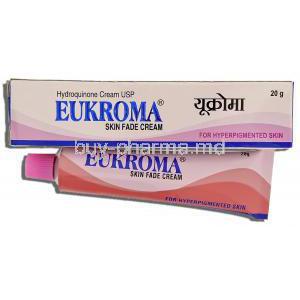
Eukroma is a dermatological formulation containing hydroquinone, a well-known skin-lightening compound widely used to diminish areas of excess pigmentation. Designed to target stubborn discoloration, it plays a pivotal role in restoring uniform skin tone. The cream is frequently recommended by dermatologists for its ability to interfere with melanin production and gradually brighten affected skin.
1.2 Purpose of Skin-Lightening Agents in Dermatology
Skin-lightening agents serve a crucial purpose in modern dermatology. They are used to:
- Correct uneven pigmentation arising from sun damage, inflammation, or hormonal changes
- Enhance the outcome of cosmetic procedures by preventing rebound pigmentation
- Improve aesthetic appearance by creating a smoother, brighter complexion
Hydroquinone remains the benchmark depigmenting ingredient due to its potent melanin-suppressing capabilities.
1.3 Common Dermatological Conditions Treated With Hydroquinone
Hydroquinone is frequently prescribed to manage a wide array of pigmentary disorders. These include:
- Melasma related to pregnancy or hormonal shifts
- Post-inflammatory hyperpigmentation (PIH) following acne or injury
- Sun-induced spots and age-related pigmentation
- Freckles, patchy discoloration, and uneven tone
Its versatility makes it central to pigment-correction strategies worldwide.
1.4 Safety Profile and Regulatory Considerations
Hydroquinone has a long history of medical use, though regulatory guidelines vary internationally. Many regions permit its availability through prescription, while others restrict over-the-counter purchase to ensure safe and appropriate use. When used correctly under dermatological guidance, Eukroma maintains a favorable safety profile, though long-term misuse may increase the risk of adverse reactions.
2. What Is Eukroma?
2.1 Definition and Therapeutic Classification
Eukroma is a topical depigmenting agent classified as a melanin synthesis inhibitor. Its primary role is to reduce hyperpigmented lesions through direct suppression of melanocyte activity.
2.2 Key Dermatological Benefits
The cream offers several notable benefits:
- Visible reduction of dark patches and localized discoloration
- Refinement of uneven tone and blotchy skin
- Supportive treatment for pigmentation disorders resistant to mild therapies
2.3 Hydroquinone Concentration Strengths and Formulation Types
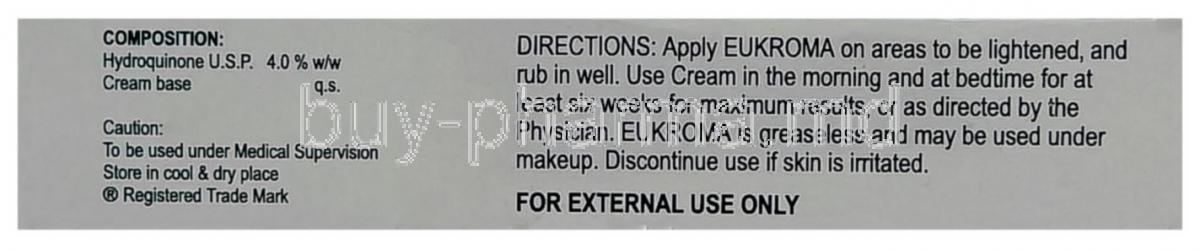
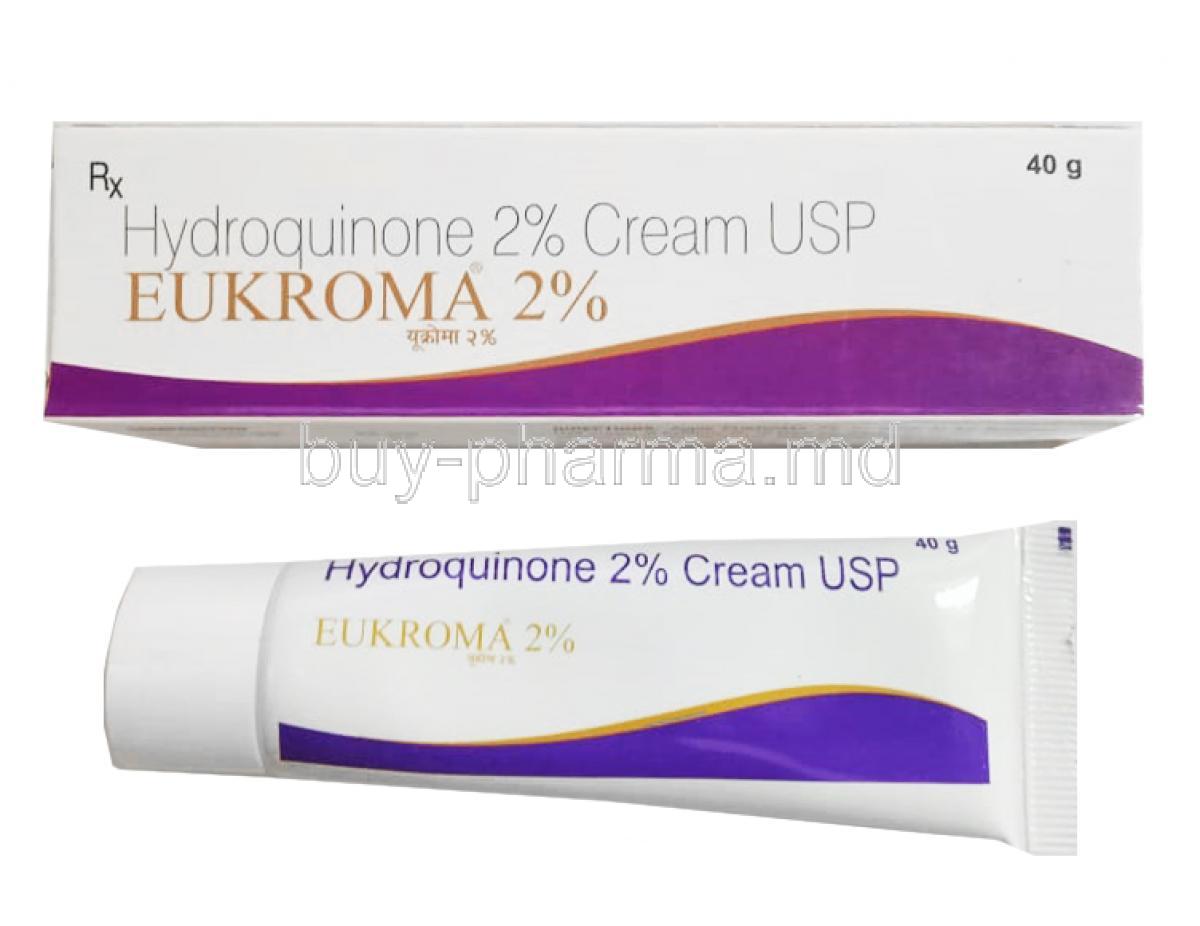
Eukroma is typically available in 2% or 4% concentrations. Higher concentrations provide stronger depigmenting power but require stricter clinical supervision. The formulation is optimized for quick absorption while minimizing surface residue.
2.4 Comparison With Other Topical Depigmenting Agents
Compared with agents such as kojic acid, azelaic acid, retinoids, and arbutin, hydroquinone remains one of the most potent melanin-inhibitory therapies. However, it is often used in combination with these alternatives to enhance results and reduce irritation.
3. Composition of Eukroma Cream
3.1 Active Ingredient: Hydroquinone
The primary ingredient—hydroquinone—directly targets melanin-producing cells and is responsible for the cream’s pigment-reducing effects.
3.2 Mechanism of Action Ingredients (Antioxidants, Stabilizers)
Formulations may include antioxidants and stabilizers to maintain hydroquinone stability, preventing rapid degradation and maximizing therapeutic effectiveness.
3.3 Role of Excipients and Preservatives
Excipients improve spreadability, skin penetration, and product shelf life. Preservatives safeguard the formulation from microbial contamination, ensuring consistent performance throughout use.
3.4 Available Strengths and Packaging
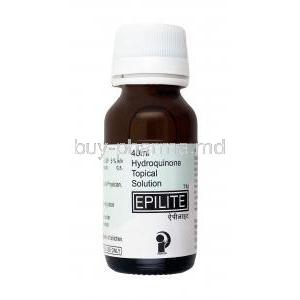
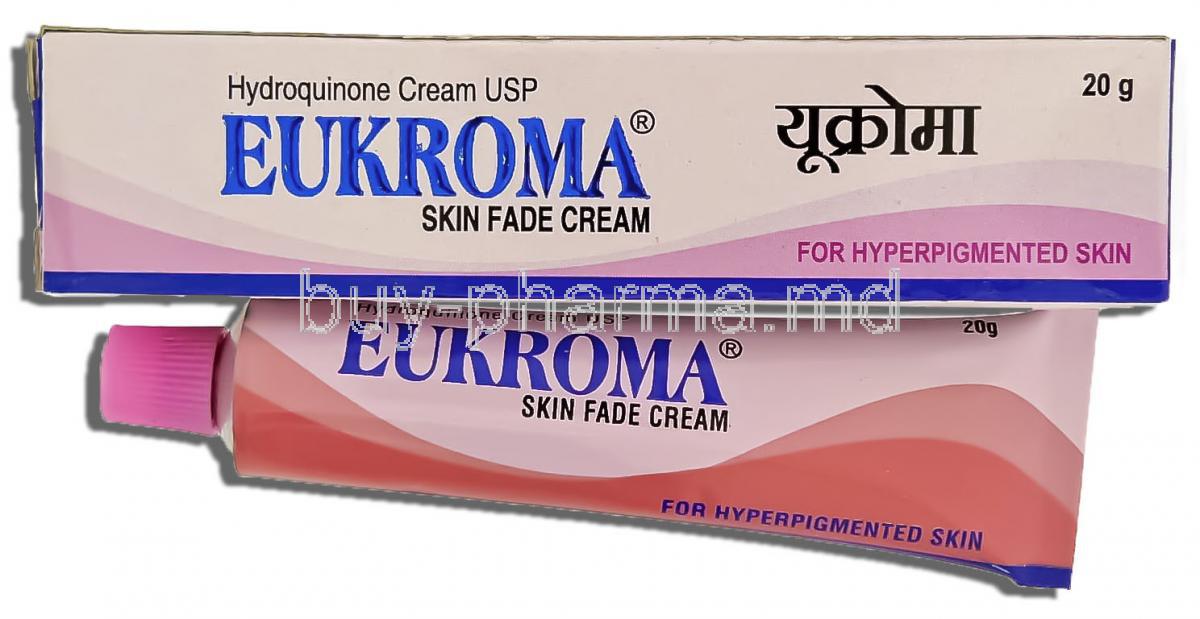
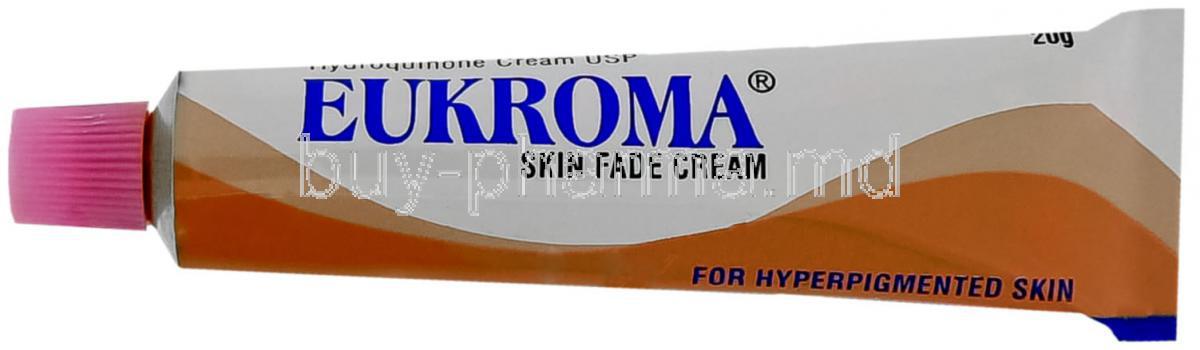
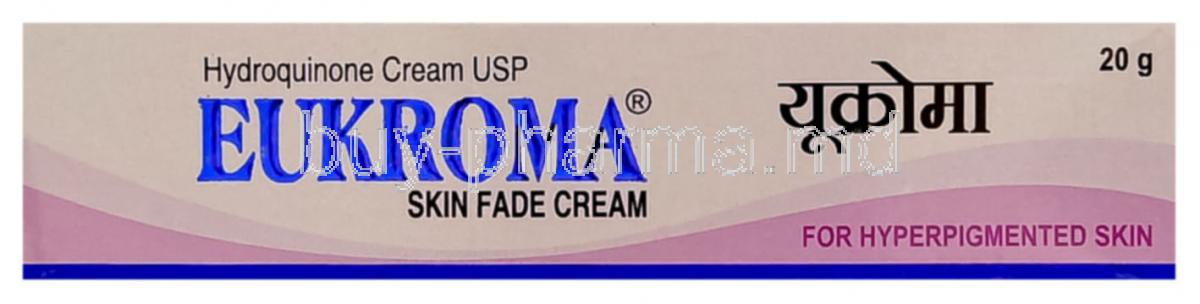
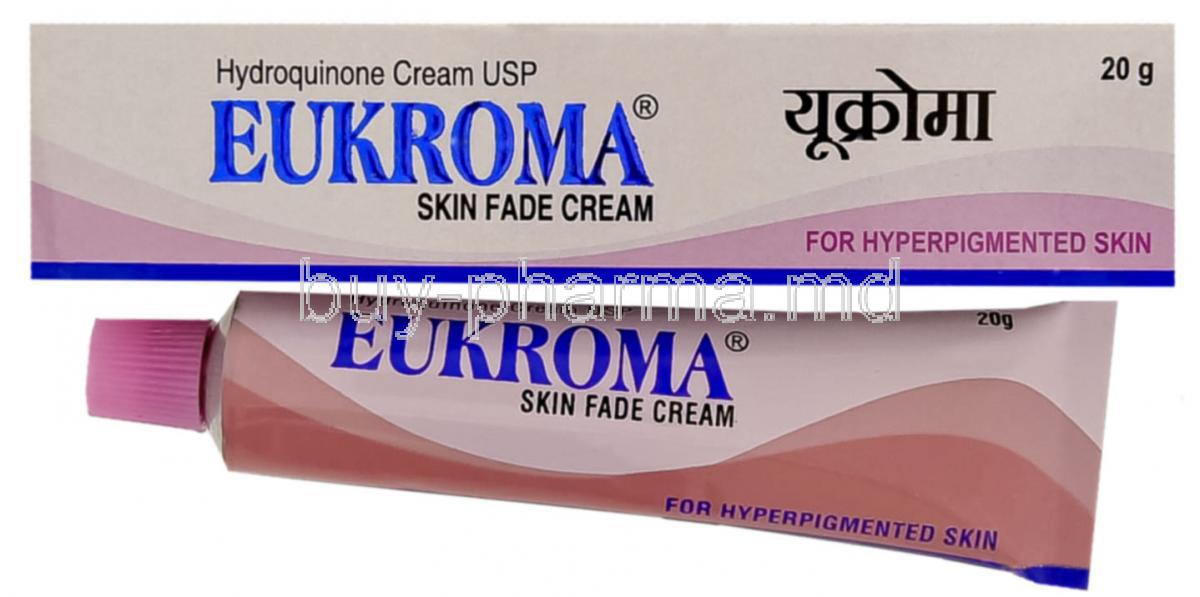
Eukroma typically comes in aluminum tubes designed to protect the light-sensitive ingredient. Variants differ in concentration, packaging size, and formulation base.
4. How Hydroquinone Works
4.1 Inhibition of Tyrosinase Activity
Hydroquinone functions primarily by inhibiting tyrosinase, a key enzyme responsible for melanin synthesis. Blocking this enzymatic activity significantly reduces pigment production.
4.2 Reduction of Melanocyte Metabolic Activity
Beyond tyrosinase inhibition, hydroquinone decreases melanocyte metabolic processes, effectively slowing pigment generation at the cellular level.
4.3 Gradual Depigmentation Process and Timeline
Depigmentation develops progressively. Most individuals begin noticing improvement within 4–8 weeks, with optimal outcomes achieved after several months of consistent use.
4.4 Reversibility of Effects and Long-Term Outcomes
Results may partially reverse if sun protection is inadequate or if underlying triggers remain active. Long-term maintenance often requires intermittent therapy or adjunctive agents.
5. Uses of Eukroma (Approved & Off-Label)
5.1 Treatment of Melasma
Eukroma is widely prescribed for melasma, particularly hormonal or sun-triggered variants. It helps fade symmetrical patches on the cheeks, forehead, and upper lip.
5.2 Management of Post-Inflammatory Hyperpigmentation (PIH)
PIH following acne, eczema, or injury responds well to hydroquinone therapy due to its targeted suppression of excess pigment.
5.3 Solar Lentigines (Age Spots)
Sun-induced brown spots on the face, hands, and arms often lighten significantly with consistent application.
5.4 Freckles and Ephelides
Although constitutional freckling is genetic, hydroquinone may soften their appearance over time.
5.5 Acne-Related Dark Spots
Post-acne marks frequently diminish under hydroquinone treatment, helping restore clarity and uniformity.
5.6 Hyperpigmentation After Cosmetic Procedures
Procedures such as chemical peels or lasers may trigger pigmentation rebound. Eukroma is often used to stabilize pigment production during recovery.
5.7 Off-Label Use: Triple-Combination Creams
Hydroquinone is an integral part of combination regimens containing tretinoin and corticosteroids, enhancing depigmenting outcomes in difficult cases.
5.8 Off-Label Use: Pre- and Post-Laser Pigmentation Control
Dermatologists may prescribe hydroquinone around laser treatments to reduce pigmentation risk and improve procedural results.
5.9 Off-Label Use: Localized Pigmentation Disorders
Conditions such as lichen planus pigmentosus or Riehl’s melanosis sometimes benefit from hydroquinone-based protocols.
6. Dosage and Administration
6.1 Recommended Strength and Amount of Application
Most patients use a thin layer of 2%–4% hydroquinone cream applied directly to affected regions. Only small amounts are needed due to the compound’s potency.
6.2 Frequency and Duration of Treatment
Once- or twice-daily application is typical. Treatment duration rarely exceeds 3 months of continuous use without medical supervision.
6.3 Correct Method of Application for Optimal Absorption
Apply only to clean, dry skin. Massage gently until absorbed, avoiding surrounding unaffected areas to prevent over-lightening.
6.4 Patch Testing and First-Time User Guidelines
A patch test on a small area is recommended to ensure tolerance before widespread application.
6.5 Photoprotection Requirements During Therapy
Broad-spectrum sunscreen is essential. Even brief UV exposure can trigger pigmentation and reverse treatment effects.
6.6 Discontinuation Criteria and Therapy Cycles
Stop treatment if irritation becomes severe or if no improvement occurs after several weeks. Many patients follow intermittent treatment cycles to maintain results.
7. Important Precautions
7.1 Avoiding Prolonged Use Beyond Recommended Duration
Extended use increases the risk of ochronosis and other adverse effects. Dermatological monitoring is advisable for long-term protocols.
7.2 Importance of Strict Sun Protection
Sun exposure can counteract therapy and cause rapid repigmentation. Daily sunscreen use is indispensable.
7.3 Risk of Ochronosis and Preventative Measures
Exogenous ochronosis, a rare but serious condition, may develop with chronic misuse. Limiting duration and avoiding high concentrations without supervision help reduce risk.
7.4 Avoiding Use on Broken or Irritated Skin
Damaged skin is more permeable, which may increase irritation or absorption. Only intact skin should be treated.
7.5 Preventing Accidental Ingestion or Contact With Mucous Membranes
The cream is strictly for topical use. Avoid the eyes, mouth, and nasal passages.
8. Side Effects of Eukroma
8.1 Overview of Possible Side Effects
Most side effects are mild and temporary, although individuals with sensitive skin may react more strongly.
8.2 Skin Irritation, Redness, or Mild Burning
Transient irritation is common, particularly during the first weeks of use.
8.3 Dryness and Peeling
Hydroquinone may induce dryness or mild desquamation, often manageable with moisturizers.
8.4 Allergic Contact Dermatitis
Rare but possible reactions include swelling, severe redness, or blistering, requiring immediate cessation.
8.5 Long-Term Risks Including Exogenous Ochronosis
Prolonged, unsupervised use may lead to bluish-black skin discoloration—a serious complication.
8.6 Increased Sun Sensitivity and Phototoxicity
Skin becomes more sensitive to UV radiation, reinforcing the need for diligent sun protection.
9. Common Side Effects
9.1 Mild Erythema or Redness
Mild redness may appear after application but usually subsides quickly.
9.2 Itching or Tingling Sensation
These sensations occur as the skin adjusts to hydroquinone’s active components.
9.3 Temporary Dryness or Scaling
Some users may experience slight dryness or flaking, especially in colder seasons.
9.4 Skin Discomfort at the Application Site
A momentary warm or stinging sensation is not unusual and typically resolves on its own.
9.5 Mild Post-Application Stinging
Brief stinging may occur but usually diminishes with continued use.
10. Contraindications
10.1 Known Hypersensitivity to Hydroquinone
Individuals with a documented allergy or hypersensitivity to hydroquinone should avoid using Eukroma. Exposure in such cases can provoke significant reactions such as intense redness, swelling, or blistering. Even minor contact may trigger disproportionate irritation, making alternative depigmenting agents a safer option.
10.2 Presence of Eczema, Dermatitis, or Open Wounds
Applying hydroquinone to areas affected by eczema, dermatitis, or open skin lesions may heighten inflammation and lead to increased absorption of the compound. This can compromise the skin barrier further and induce discomfort. Treatment should only begin once the skin has healed sufficiently.
10.3 Use in Individuals With History of Ochronosis
Patients who have developed exogenous ochronosis—characterized by bluish-black skin discoloration—should not use hydroquinone again. Re-exposure can aggravate the condition, making it progressively difficult to reverse.
10.4 Contraindication in Combination With Strong Oxidizing Agents
Hydroquinone should not be combined with strong oxidizing chemicals such as hydrogen peroxide. These agents may trigger chemical reactions that cause temporary staining or increase irritation.
11. Interaction
11.1 Interaction With Topical Retinoids
Retinoids enhance cell turnover but can intensify skin sensitivity when used with hydroquinone. Although the combination may accelerate pigmentation reduction, it may also increase dryness or erythema. Dermatologists often adjust frequency to reduce irritation.
11.2 Interaction With Chemical Exfoliants (AHAs/BHAs)
Alpha hydroxy acids and beta hydroxy acids exfoliate the skin, improving hydroquinone penetration. However, excessive exfoliation may cause heightened inflammation. Moderation is key when combining these products.
11.3 Interaction With Benzoyl Peroxide and Peroxides (Temporary Staining Risk)
When used with benzoyl peroxide or similar peroxide-containing agents, hydroquinone can cause temporary dark staining of the skin or fabrics. The discoloration is harmless but often alarming to users.
11.4 Interaction With Corticosteroids
Topical corticosteroids may reduce hydroquinone-induced irritation. The combination is used therapeutically in some regimens. However, prolonged steroid use carries distinct risks such as skin thinning.
11.5 Cosmetic and Skincare Product Incompatibilities
Products containing alcohol, fragrance, or abrasive particles may aggravate hydroquinone-related dryness and sensitivity. Using gentle, non-comedogenic skincare is recommended during treatment.
12. Careful Administration
12.1 Patients With Sensitive or Reactive Skin
Those with easily irritated skin should begin with reduced application frequency. A conservative approach helps prevent excessive inflammation while allowing gradual acclimatization.
12.2 Patients With Chronic Skin Disorders
Conditions such as rosacea or psoriasis may flare when exposed to hydroquinone. A dermatologist should assess suitability to prevent exacerbation of underlying disorders.
12.3 Individuals Undergoing Cosmetic Treatments
Procedures like chemical peels, microneedling, or laser therapy heighten skin sensitivity. Introducing hydroquinone too soon may provoke irritation. Appropriate spacing between sessions and topical use is crucial.
12.4 Patients Using Multiple Depigmenting Agents
Combining hydroquinone with other pigment suppressors can enhance results but also increase the risk of irritation. Layering should be supervised to prevent unwanted reactions.
12.5 Monitoring for Early Signs of Irritation or Ochronosis
Users should monitor for unusual darkening, persistent redness, or thickened skin. These signs may indicate early ochronosis or intolerance, warranting discontinuation.
13. Administration to Special Populations
13.1 Administration to Elderly Patients
13.1.1 Skin Fragility Considerations
Elderly skin tends to be thinner and more fragile, increasing susceptibility to irritation. Reduced frequency and careful observation are recommended.
13.1.2 Reduced Metabolic Recovery of Melanocytes
Aging melanocytes recover more slowly from inhibition, sometimes producing prolonged lightening effects. Strict adherence to application guidance helps maintain balance.
13.2 Administration to Pregnant Women
13.2.1 Safety Classification and Available Clinical Data
Hydroquinone is generally not recommended during pregnancy due to its comparatively high systemic absorption rate. Clinical research remains limited, and caution is advised.
13.2.2 Recommendations During Pregnancy
Alternative pregnancy-safe treatments such as azelaic acid may be preferable. If hydroquinone is required, medical guidance is essential.
13.3 Administration to Nursing Mothers
13.3.1 Risks of Dermal Absorption
Although systemic exposure is usually low, small amounts may still be absorbed. Avoiding application on the breast area is critical.
13.3.2 Avoiding Infant Contact With Treated Skin
Infants should not come into contact with treated regions to prevent accidental exposure.
13.4 Administration to Children
13.4.1 Age-Related Safety Concerns
Pediatric skin is more permeable and reactive, increasing the risk of irritation or systemic absorption. Hydroquinone is generally not recommended for young children.
13.4.2 Limiting Use in Pediatric Populations
If treatment is necessary, strict dermatological supervision and minimal application are required.
14. Overdosage
14.1 Clinical Signs of Excessive Topical Application
Excessive use may lead to pronounced irritation, intense redness, scaling, or paradoxical darkening. These symptoms indicate overexposure.
14.2 Potential Systemic Toxicity
Systemic toxicity is rare but may occur with excessive, long-term use over large areas of skin. Symptoms can include dizziness or unusual fatigue.
14.3 Management of Chronic Overuse (Ochronosis, Severe Irritation)
Chronic misuse may result in ochronosis or persistent dermatitis. Discontinuation and medical intervention are essential in such cases.
14.4 Emergency Measures and Medical Evaluation
Severe reactions require prompt consultation. Supportive care, including emollients or topical steroids, may be prescribed.
15. Handling Precautions
15.1 Proper Handling and Dispensing
Always dispense the cream from clean hands and ensure the tube remains sealed tightly to prevent degradation.
15.2 Preventing Contamination of Container
The nozzle should not touch the skin directly. Maintaining hygiene prevents microbial contamination.
15.3 Safe Disposal of Expired or Unused Cream
Expired hydroquinone should be discarded responsibly. Do not flush it into drainage systems; instead, follow local disposal guidelines.
15.4 Avoiding Exposure to Heat and Light
Hydroquinone oxidizes rapidly when exposed to heat or intense light. Such exposure may reduce potency and alter color.
16. Storage
16.1 Recommended Storage Temperature
Store at room temperature, ideally between 20°C–25°C. Excessive warmth accelerates deterioration.
16.2 Protection From Light and Air Exposure
Keeping the tube sealed and away from sunlight helps preserve stability. Air exposure contributes to oxidation.
16.3 Shelf Life and Stability Considerations
Hydroquinone gradually darkens as it oxidizes. Using it within the recommended shelf life ensures optimal effectiveness.
16.4 Indicators of Product Degradation
Dark brown or discolored cream indicates oxidation and should not be used. Fresh hydroquinone typically appears white or off-white.
Eukroma, Hydroquinone Cream FAQ
Customers also bought
Similar Product