1. Introduction to Exel GN Cream
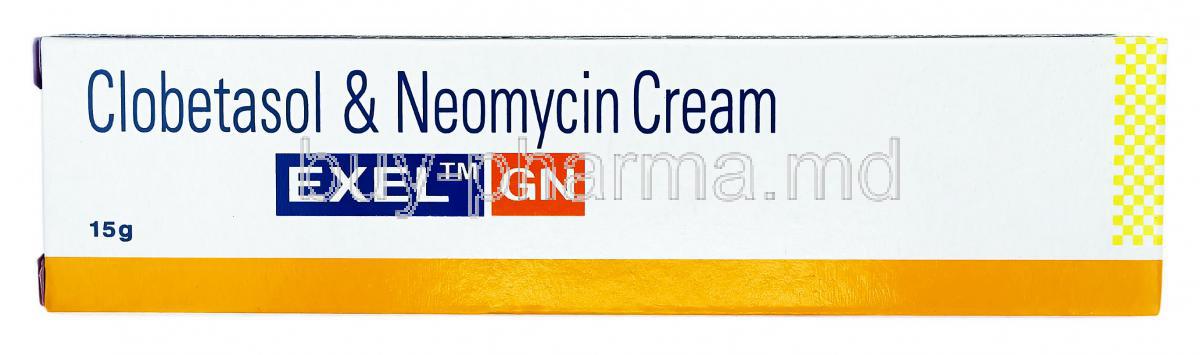
Exel GN Cream is a combination topical medication designed for the management of inflammatory skin disorders complicated by bacterial infection. It provides rapid symptomatic relief while simultaneously addressing microbial contamination. This dual-action approach is particularly valuable in dermatological conditions where inflammation and infection coexist.
Therapeutically, the formulation belongs to the category of:
- Super-potent topical corticosteroids (anti-inflammatory)
- Topical aminoglycoside antibiotics (antibacterial)
It is commonly prescribed for corticosteroid-responsive dermatoses that have become secondarily infected. Conditions characterized by erythema, edema, pruritus, and exudation often benefit from this targeted therapy.
Because of the high potency of clobetasol and the risk of adverse effects with inappropriate use, Exel GN Cream is intended for prescription use under medical supervision. Self-medication or prolonged unsupervised use is strongly discouraged.
2. Composition and Formulation
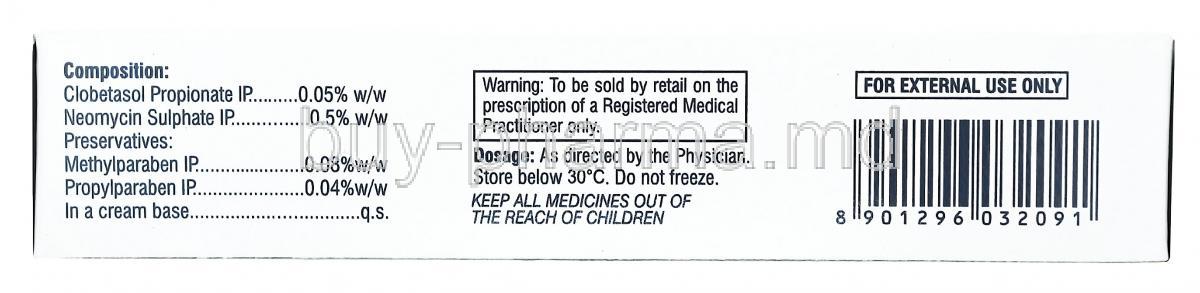
The therapeutic efficacy of Exel GN Cream derives from its carefully selected active components:
- Clobetasol propionate – a super-potent topical corticosteroid that suppresses inflammatory and immune responses.
- Neomycin sulfate – a broad-spectrum aminoglycoside antibiotic effective against many skin pathogens.
This combination is designed to interrupt the inflammatory cascade while eliminating bacterial proliferation. The mechanism-based synergy enhances clinical outcomes in infected dermatoses.
The cream base typically contains emollients, stabilizers, and emulsifying agents that facilitate smooth application, enhance skin penetration, and maintain moisture balance. Its semi-occlusive properties improve drug delivery without excessive maceration.
Exel GN Cream is supplied in convenient tubes of various sizes, ensuring hygienic dispensing and accurate dosing for short-term therapeutic use.
3. How Exel GN Cream Works (Mechanism of Action)
3.1 Anti-inflammatory and Immunosuppressive Action of Clobetasol
Clobetasol exerts powerful anti-inflammatory effects by inhibiting the synthesis and release of inflammatory mediators such as prostaglandins, leukotrienes, and cytokines. This results in rapid symptom relief.
- Reduces redness and swelling
- Alleviates itching and irritation
- Decreases epidermal hyperproliferation and thickening
- Produces vasoconstriction, minimizing local edema
The immunosuppressive effect also dampens exaggerated immune reactions that contribute to chronic dermatological inflammation.
3.2 Antibacterial Action of Neomycin
Neomycin disrupts bacterial protein synthesis by binding to ribosomal subunits. Its spectrum includes many gram-positive and gram-negative organisms commonly implicated in superficial skin infections.
This action:
- Controls existing bacterial colonization
- Prevents secondary infection in compromised skin
- Supports faster resolution of inflamed lesions
3.3 Synergistic Benefits of Combination Therapy
The combination enables simultaneous control of inflammation and eradication of bacterial pathogens. This dual mechanism promotes epithelial recovery, reduces exudation, and shortens healing time in infected dermatoses.
4. Uses of Exel GN Cream (Approved Indications)
4.1 Corticosteroid-Responsive Dermatoses with Secondary Infection
Exel GN Cream is indicated for inflammatory skin disorders complicated by bacterial involvement, including:
- Infected atopic, contact, or nummular eczema
- Allergic or irritant dermatitis with secondary infection
- Psoriasis with bacterial contamination
- Lichen simplex chronicus
- Seborrheic dermatitis with microbial overgrowth
- Infected insect bites, abrasions, or minor traumatic lesions
These conditions often present with erythema, oozing, crusting, and intense pruritus—symptoms that respond well to combination therapy.
5. Off-Label Uses of Exel GN Cream
Under professional guidance, the cream may be utilized in selected clinical scenarios:
- Infected intertrigo in skin folds
- Bacterial superinfection complicating fungal or inflammatory dermatoses
- Short-term management of severe inflammatory acne with secondary infection
- Carefully supervised treatment of infected diaper dermatitis
- Secondary infection in chronic pruritic disorders
- Post-procedural inflammatory reactions at risk of bacterial colonization
- Localized autoimmune skin diseases complicated by infection
Off-label use requires careful risk–benefit evaluation due to the high potency of the corticosteroid component.
6. Dosage and Administration
6.1 Recommended Application Method
A small amount should be applied as a thin film over the affected area. Excessive quantities do not enhance efficacy and may increase systemic absorption.
- Apply once or twice daily, as directed
- Gently rub until absorbed
- Limit treatment duration, typically 1–2 weeks for super-potent steroids
6.2 Areas of Application and Restrictions
Certain anatomical sites are more susceptible to adverse effects due to enhanced absorption.
- Avoid routine use on the face, groin, or axilla
- Do not use under occlusive dressings unless prescribed
- Avoid application to large body surface areas
6.3 Missed Dose Guidance
If a dose is missed, apply it as soon as remembered. If the next scheduled application is near, skip the missed dose. Do not apply excessive amounts to compensate.
7. Administration in Special Populations
7.1 Administration to Elderly Patients
Older adults may have thinner skin and increased permeability, heightening the risk of systemic exposure. Short treatment duration and periodic monitoring are recommended.
7.2 Use in Children and Infants
Pediatric patients are particularly susceptible to systemic corticosteroid effects.
- Use the lowest effective amount
- Limit duration and treatment area
- Monitor for signs of adrenal suppression
7.3 Administration to Pregnant Women
Use only if the potential benefit justifies the potential risk. Prolonged or extensive application should be avoided.
7.4 Use During Breastfeeding
Avoid application to the breast or surrounding area. Care should be taken to prevent accidental ingestion or contact by the infant.
8. Side Effects of Exel GN Cream
8.1 Common Side Effects
- Transient burning or stinging
- Dryness or mild irritation
- Redness or itching at the application site
8.2 Corticosteroid-Related Local Adverse Effects
- Skin atrophy or thinning
- Striae formation
- Telangiectasia
- Hypopigmentation
- Acneiform eruptions or folliculitis
8.3 Antibiotic-Related Reactions
- Allergic contact dermatitis
- Sensitization to neomycin
8.4 Serious or Rare Side Effects
- Secondary fungal infections
- Hypothalamic–pituitary–adrenal (HPA) axis suppression
- Systemic corticosteroid manifestations with prolonged use
- Rare ototoxicity with extensive neomycin absorption
9. Drug and Product Interactions
9.1 Topical Product Interactions
Concurrent use with other medicated topical products may alter absorption or increase adverse effects.
- Avoid combining with other potent corticosteroids
- Occlusive cosmetics or heavy emollients may enhance systemic absorption
9.2 Systemic Interaction Considerations
Systemic interactions are unlikely when used appropriately. However, extensive application may contribute to cumulative corticosteroid exposure, especially in patients using systemic steroids.
10. Warnings and Safety Information
- Risk of systemic absorption with prolonged or extensive use
- Potential development of antibiotic resistance with inappropriate application
- Avoid long-term continuous therapy
- Risk of rebound dermatitis after abrupt discontinuation
- Enhanced absorption through damaged, inflamed, or occluded skin
- Do not use in infections not susceptible to neomycin
Medical evaluation is recommended if symptoms worsen, fail to improve, or signs of adverse effects appear. Appropriate duration, dosage, and monitoring remain essential for safe and effective therapy.
11. Contraindications
Exel GN Cream should not be used in certain clinical situations where the risks outweigh the potential therapeutic benefit. Careful patient evaluation is essential prior to initiation, as inappropriate use may worsen underlying disease or precipitate complications.
- Known hypersensitivity to clobetasol, neomycin, aminoglycoside antibiotics, or any component of the formulation
- Untreated viral infections, including herpes simplex, herpes zoster, or varicella, where corticosteroids may enhance viral proliferation
- Cutaneous tuberculosis or syphilis, as immunosuppression may exacerbate these infections
- Fungal infections without appropriate antifungal therapy, since corticosteroids can mask symptoms and promote fungal spread
- Rosacea or perioral dermatitis, conditions that typically worsen with potent topical steroids
- Acne vulgaris, where corticosteroids may aggravate lesions and induce steroid acne
- Application on ulcerated, extensively eroded, or severely damaged skin without medical supervision, due to the risk of excessive systemic absorption
In these circumstances, alternative therapies should be considered. Clinical judgment remains paramount.
12. Careful Administration and Important Precautions
Exel GN Cream contains a super-potent corticosteroid. Precision in use is therefore essential. Even topical therapy can produce systemic consequences when misapplied.
- Limit the total duration of therapy, typically to 1–2 weeks unless otherwise directed
- Avoid application to large body surface areas to minimize systemic exposure
- Use the lowest effective dose capable of controlling symptoms
- Monitor for signs of local toxicity such as skin thinning, telangiectasia, or delayed healing
- Observe for systemic effects including fatigue, weight gain, or edema in prolonged use
- Avoid occlusive dressings unless specifically prescribed, as occlusion markedly increases absorption
In patients who require extended therapy, abrupt discontinuation may precipitate rebound inflammation. Gradual tapering or intermittent use is recommended to restore cutaneous homeostasis.
13. Overdosage and Excessive Use
Topical overuse may occur insidiously. The cumulative effect of frequent application, occlusion, or treatment of extensive areas can lead to systemic exposure.
Possible manifestations include:
- Cutaneous atrophy, striae, or persistent erythema
- Steroid-induced acne or folliculitis
- Delayed wound healing and increased susceptibility to infection
Systemic signs of corticosteroid excess may also develop:
- Hypothalamic–pituitary–adrenal (HPA) axis suppression
- Cushingoid features such as facial rounding or central weight gain
- Hyperglycemia or hypertension in susceptible individuals
Extensive or prolonged application of neomycin carries a rare but theoretical risk of systemic toxicity, particularly in compromised skin where absorption is enhanced.
Management involves:
- Gradual reduction or discontinuation of therapy
- Clinical monitoring for adrenal recovery
- Symptomatic treatment of complications when necessary
14. Storage and Stability
Proper storage preserves the pharmacological integrity of the formulation and prevents degradation of active ingredients.
- Store at room temperature, typically below 25°C (77°F)
- Protect from excessive heat, direct sunlight, and moisture
- Keep the container tightly closed when not in use
- Avoid freezing, which may alter the cream’s consistency and stability
Shelf life should be observed according to the manufacturer’s instructions. Discoloration, separation, or unusual odor may indicate compromised stability and should prompt disposal.
15. Handling Precautions
Exel GN Cream is intended strictly for dermatological use. Appropriate handling minimizes contamination and prevents accidental exposure.
- For external use only
- Avoid contact with eyes, mouth, and other mucous membranes
- Wash hands thoroughly after each application unless the hands are the treatment site
- Do not share the medication with others, even if symptoms appear similar
- Apply only to the prescribed area and avoid unnecessary spreading
Unused or expired medication should be disposed of according to local pharmaceutical waste guidelines. Improper disposal may contribute to environmental contamination or unintended exposure.
16. Patient Counseling and Safety Tips
Patient education is a cornerstone of safe and effective therapy. Clear instructions improve adherence while reducing the likelihood of complications.
- Use the medication exactly as prescribed and for the recommended duration
- Avoid self-medication or prolonged unsupervised use
- Do not apply excessive amounts or increase frequency without medical advice
Patients should be advised to monitor for warning signs, including:
- Worsening redness, swelling, or discharge
- Lack of improvement within the expected treatment period
- New rash, irritation, or signs of allergic reaction
- Skin thinning or unusual changes in texture or color
Medical attention should be sought promptly if symptoms deteriorate, spread, or systemic effects are suspected. Judicious use, combined with professional supervision, ensures optimal therapeutic benefit while minimizing risk.
Customers also bought
Popular Products
Similar Product