

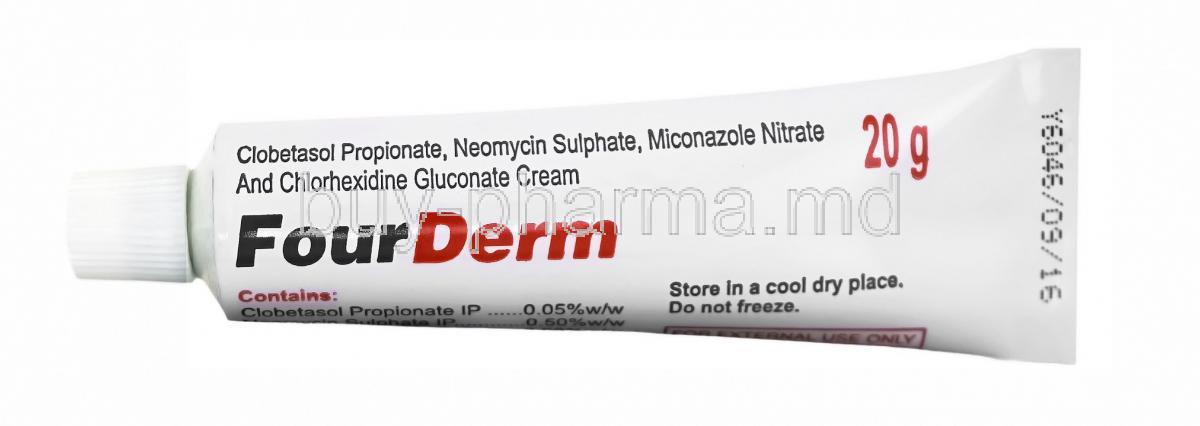
Fourderm Cream, Chlorhexidine Gluconate/ Clobetasol/ Miconazole/ Neomycin
- 1. Introduction to Fourderm Cream (Chlorhexidine Gluconate/ Clobetasol/ Miconazole/ Neomycin)
- 2. Fourderm Cream Composition and Active Ingredients
- 2.1 Chlorhexidine Gluconate: Antiseptic Properties and Spectrum
- 2.2 Clobetasol Propionate: Potent Topical Corticosteroid Effects
- 2.3 Miconazole Nitrate: Broad-Spectrum Antifungal Activity
- 2.4 Neomycin Sulfate: Aminoglycoside Antibiotic Action
- 2.5 Role of Each Ingredient in Combination Therapy
- 2.6 Inactive Ingredients and Formulation Base
- 3. Mechanism of Action (How It Works)
- 3.1 Antifungal Mechanism of Miconazole (Ergosterol Inhibition)
- 3.2 Anti-Inflammatory and Immunosuppressive Effects of Clobetasol
- 3.3 Antibacterial Action of Neomycin (Protein Synthesis Inhibition)
- 3.4 Antiseptic Action of Chlorhexidine (Cell Membrane Disruption)
- 3.5 Synergistic Effects in Mixed Skin Infections
- 4. Fourderm Cream Uses
- 4.1 Treatment of Fungal Skin Infections (Dermatophytosis, Candidiasis)
- 4.2 Management of Bacterial Skin Infections (Impetigo, Secondary Infection)
- 4.3 Treatment of Inflammatory Dermatoses with Infection
- 4.4 Use in Mixed Infections (Fungal + Bacterial + Inflammatory Conditions)
- 4.5 Relief of Itching, Redness, and Swelling
- 4.6 Use in Eczema with Secondary Infection
- 4.7 Use in Contact Dermatitis Complicated by Infection
- 5. Off-Label Uses of Fourderm Cream
- 5.1 Use in Seborrheic Dermatitis with Suspected Infection
- 5.2 Management of Intertrigo and Skin Fold Infections
- 5.3 Use in Infected Insect Bites or Minor Wounds
- 5.4 Application in Chronic Dermatitis with Superinfection
- 5.5 Use in Groin Infections (Tinea Cruris) with Inflammation
- 5.6 Use in AthleteâÂÂs Foot with Secondary Bacterial Infection
- 6. Dosage and Administration Guidelines
- 7. Storage Instructions
- 8. Fourderm Cream Side Effects
- 8.1 Common Side Effects (Burning, Itching, Irritation)
- 8.2 Local Skin Reactions (Dryness, Redness, Peeling)
- 8.3 Corticosteroid-Related Effects (Skin Thinning, Stretch Marks)
- 8.4 Antibiotic-Related Reactions (Allergic Contact Dermatitis)
- 8.5 Antifungal-Related Skin Sensitivity
- 8.6 Rare but Serious Side Effects
- 9. Drug Interactions
- 10. Warnings and Safety Considerations
- 11. Contraindications
- 12. Careful Administration (Use with Caution)
- 13. Important Precautions Before and During Use
- 14. Use in Special Populations
- 14.1 Administration to Elderly Patients
- 14.1.1 Increased Risk of Skin Thinning
- 14.1.2 Monitoring for Adverse Effects
- 14.2 Administration to Pregnant Women and Nursing Mothers
- 14.2.1 Safety Profile in Pregnancy
- 14.2.2 Use During Breastfeeding
- 14.2.3 Risk-Benefit Assessment
- 14.3 Administration to Children
- 14.3.1 Increased Absorption in Pediatric Patients
- 14.3.2 Risk of Systemic Corticosteroid Effects
- 14.3.3 Recommended Precautions in Infants and Children
- 15. Overdosage and Misuse
- 16. Handling and Safety Precautions
1. Introduction to Fourderm Cream (Chlorhexidine Gluconate/ Clobetasol/ Miconazole/ Neomycin)
1.1 Fourderm skin infection cream
1.2 Therapeutic Classification (Antifungal, Antibiotic, Corticosteroid, Antiseptic Combination)
1.3 Antifungal antibacterial anti-inflammatory cream
1.4 Key Benefits of Combination Therapy in Skin Infections
2. Fourderm Cream Composition and Active Ingredients
2.1 Chlorhexidine Gluconate: Antiseptic Properties and Spectrum
2.2 Clobetasol Propionate: Potent Topical Corticosteroid Effects
2.3 Miconazole Nitrate: Broad-Spectrum Antifungal Activity
2.4 Neomycin Sulfate: Aminoglycoside Antibiotic Action
2.5 Role of Each Ingredient in Combination Therapy
2.6 Inactive Ingredients and Formulation Base
3. Mechanism of Action (How It Works)
3.1 Antifungal Mechanism of Miconazole (Ergosterol Inhibition)
3.2 Anti-Inflammatory and Immunosuppressive Effects of Clobetasol
3.3 Antibacterial Action of Neomycin (Protein Synthesis Inhibition)
3.4 Antiseptic Action of Chlorhexidine (Cell Membrane Disruption)
3.5 Synergistic Effects in Mixed Skin Infections
4. Fourderm Cream Uses
4.1 Treatment of Fungal Skin Infections (Dermatophytosis, Candidiasis)
4.2 Management of Bacterial Skin Infections (Impetigo, Secondary Infection)
4.3 Treatment of Inflammatory Dermatoses with Infection
4.4 Use in Mixed Infections (Fungal + Bacterial + Inflammatory Conditions)
4.5 Relief of Itching, Redness, and Swelling
4.6 Use in Eczema with Secondary Infection
4.7 Use in Contact Dermatitis Complicated by Infection
5. Off-Label Uses of Fourderm Cream
5.1 Use in Seborrheic Dermatitis with Suspected Infection
5.2 Management of Intertrigo and Skin Fold Infections
5.3 Use in Infected Insect Bites or Minor Wounds
5.4 Application in Chronic Dermatitis with Superinfection
5.5 Use in Groin Infections (Tinea Cruris) with Inflammation
5.6 Use in Athleteâs Foot with Secondary Bacterial Infection
6. Dosage and Administration Guidelines
6.1 Recommended Application Frequency and Duration
6.2 Proper Method of Application (Topical Use Instructions)
6.3 Amount to Apply and Area Coverage
6.4 Duration of Treatment Based on Condition Severity
6.5 Missed Dose Instructions
6.6 When to Stop Treatment
7. Storage Instructions
7.1 Recommended Storage Temperature and Conditions
7.2 Protection from Heat, Light, and Moisture
7.3 Shelf Life and Expiry Considerations
7.4 Safe Disposal of Unused Medication
8. Fourderm Cream Side Effects
8.1 Common Side Effects (Burning, Itching, Irritation)
8.2 Local Skin Reactions (Dryness, Redness, Peeling)
8.3 Corticosteroid-Related Effects (Skin Thinning, Stretch Marks)
8.4 Antibiotic-Related Reactions (Allergic Contact Dermatitis)
8.5 Antifungal-Related Skin Sensitivity
8.6 Rare but Serious Side Effects
9. Drug Interactions
9.1 Interactions with Other Topical Medications
9.2 Systemic Absorption and Potential Interactions
9.3 Interaction with Other Corticosteroids or Antibiotics
9.4 Avoidance of Concurrent Irritating Agents
10. Warnings and Safety Considerations
10.1 Risk of Prolonged Corticosteroid Use (HPA Axis Suppression)
10.2 Risk of Antibiotic Resistance with Misuse
10.3 Avoid Use on Large Surface Areas or Broken Skin
10.4 Risk of Secondary Infections
10.5 Avoid Contact with Eyes, Mouth, and Mucous Membranes
11. Contraindications
11.1 Hypersensitivity to Any Component
11.2 Viral Skin Infections (Herpes Simplex, Varicella)
11.3 Tubercular or Syphilitic Skin Lesions
11.4 Rosacea and Acne Vulgaris
11.5 Use in Untreated Fungal Infections Without Proper Diagnosis
12. Careful Administration (Use with Caution)
12.1 Patients with Sensitive Skin
12.2 Application on Face, Groin, or Axilla
12.3 Use Under Occlusive Dressings
12.4 Long-Term Use in Chronic Skin Conditions
12.5 Patients with Compromised Skin Barrier
13. Important Precautions Before and During Use
13.1 Patch Testing for Allergic Reactions
13.2 Monitoring for Signs of Skin Thinning or Irritation
13.3 Avoiding Overuse and Self-Medication
13.4 Importance of Medical Supervision
13.5 Hygiene and Prevention of Reinfection
14. Use in Special Populations
14.1 Administration to Elderly Patients
14.1.1 Increased Risk of Skin Thinning
14.1.2 Monitoring for Adverse Effects
14.2 Administration to Pregnant Women and Nursing Mothers
14.2.1 Safety Profile in Pregnancy
14.2.2 Use During Breastfeeding
14.2.3 Risk-Benefit Assessment
14.3 Administration to Children
14.3.1 Increased Absorption in Pediatric Patients
14.3.2 Risk of Systemic Corticosteroid Effects
14.3.3 Recommended Precautions in Infants and Children
15. Overdosage and Misuse
15.1 Symptoms of Topical Overuse
15.2 Risk of Systemic Absorption and Toxicity
15.3 Management of Overdose or Excess Application
15.4 When to Seek Medical Attention
16. Handling and Safety Precautions
16.1 Proper Handling and Application Hygiene
16.2 Avoid Sharing Medication
16.3 Preventing Contamination of the Tube
16.4 Disposal of Expired or Contaminated Product
Fourderm Cream, Chlorhexidine Gluconate/ Clobetasol/ Miconazole/ Neomycin FAQ
- What is fourderm cream used for?
- How long does it take for fourderm to work?
- Can fourderm cure eczema?
- Is fourderm a strong steroid cream?
- Is fourderm safe?
- Can I apply fourderm on eczema?
- Can fourderm cure a yeast infection?
- How long should I use fourderm cream?
- Can we use fourderm for burn?
- Is fourderm good for boils?
- Is Fourderm cream an antibiotic?
- Is there a steroid in Fourderm?
- What is fourderm cream used for in inner thighs?
- How often should I apply Fourderm Cream?
- Where to apply FourDerm?
- Does FourDerm burn?
- What are the results of Fourderm Cream?
- Can I apply fourderm on eczema?
- Can fourderm be used for itching due to allergy?
- Is fourderm safe?
- Can I apply fourderm on my face?
- Who is the manufacturer of Fourderm Cream?
- What is Fourderm Cream used for?
- How should Fourderm Cream be applied?
- How long should I use Fourderm Cream?
- Can Fourderm Cream be used for fungal infections like ringworm or athlete’s foot?
- Is Fourderm Cream safe for the face or private areas?
- Can Fourderm Cream cause serious side effects?
- Can I use Fourderm Cream for acne or pimples?
- Is Fourderm Cream safe during pregnancy or breastfeeding?
- Can children use Fourderm Cream?
- What should I do if I miss a dose?
- Can I use Fourderm Cream for a long time?
- Can Fourderm Cream be used on open wounds or broken skin?
- Does Fourderm Cream treat bacterial infections?
- Can I use other creams along with Fourderm Cream?
- How should Fourderm Cream be stored?
- When should I stop using Fourderm Cream?
- Can Fourderm Cream be used for itching or rashes?
- Do I need a prescription for Fourderm Cream?
What is fourderm cream used for?
Fourderm cream is used for the treatment of various skin infections and inflammation caused by bacterial or fungal infections.
How long does it take for fourderm to work?
As soon as applied
Can fourderm cure eczema?
Yes
Is fourderm a strong steroid cream?
This is a potent corticosteroid that reduces inflammation by blocking the production of prostaglandins
Is fourderm safe?
Yes
Can I apply fourderm on eczema?
Yes
Can fourderm cure a yeast infection?
Yes
How long should I use fourderm cream?
As long as prescribed
Can we use fourderm for burn?
Yes
Is fourderm good for boils?
No
Is Fourderm cream an antibiotic?
Antiseptic antibacterial
Is there a steroid in Fourderm?
Yes
What is fourderm cream used for in inner thighs?
Jock itch
How often should I apply Fourderm Cream?
Daily
Where to apply FourDerm?
Clean skin
Does FourDerm burn?
Yes
What are the results of Fourderm Cream?
Reduces inflammation
Can I apply fourderm on eczema?
Yes
Can fourderm be used for itching due to allergy?
No
Is fourderm safe?
Yes
Can I apply fourderm on my face?
No
Who is the manufacturer of Fourderm Cream?
Cipla
What is Fourderm Cream used for?
Fourderm Cream is used to treat skin conditions such as inflammation, fungal and bacterial infections, and itching. It is commonly prescribed for conditions such as eczema with infection, dermatitis, ringworm, athlete’s foot, and mixed skin infections.
How should Fourderm Cream be applied?
To get the best results, apply a thin layer of cream to the affected area 1 or 2 times a day. You can also ask your healthcare provider for guidance on how often to apply it. Before you put the cream on, make sure the skin is clean and dry. Then, gently rub it in so it absorbs properly.
How long should I use Fourderm Cream?
It's generally suggested that you use it for a short time, like one to two weeks. If you need to use it for a longer period, you should really be under a doctor's care, especially because it has steroids in it.
Can Fourderm Cream be used for fungal infections like ringworm or athlete’s foot?
Yes
Is Fourderm Cream safe for the face or private areas?
Be careful when using it on your face, groin, or underarms, because these areas can absorb a lot of the medication, which might cause side effects like skin thinning. It's best to use it for a short time only.
Can Fourderm Cream cause serious side effects?
Rarely
Can I use Fourderm Cream for acne or pimples?
No
Is Fourderm Cream safe during pregnancy or breastfeeding?
Only as prescribed by the doctor
Can children use Fourderm Cream?
Yes
What should I do if I miss a dose?
Apply it as soon as you remember. If it is close to the next dose, skip the missed one.
Can I use Fourderm Cream for a long time?
It is not recommended.
Can Fourderm Cream be used on open wounds or broken skin?
No
Does Fourderm Cream treat bacterial infections?
Yes
Can I use other creams along with Fourderm Cream?
No
How should Fourderm Cream be stored?
Store at room temperature, away from heat, moisture, and direct sunlight. Keep the tube tightly closed and out of reach of children.
When should I stop using Fourderm Cream?
Stop using the medication and seek medical advice.
Can Fourderm Cream be used for itching or rashes?
Yes
Do I need a prescription for Fourderm Cream?
No
Customers also bought

150 mcg/g
Popular Products




Similar Product