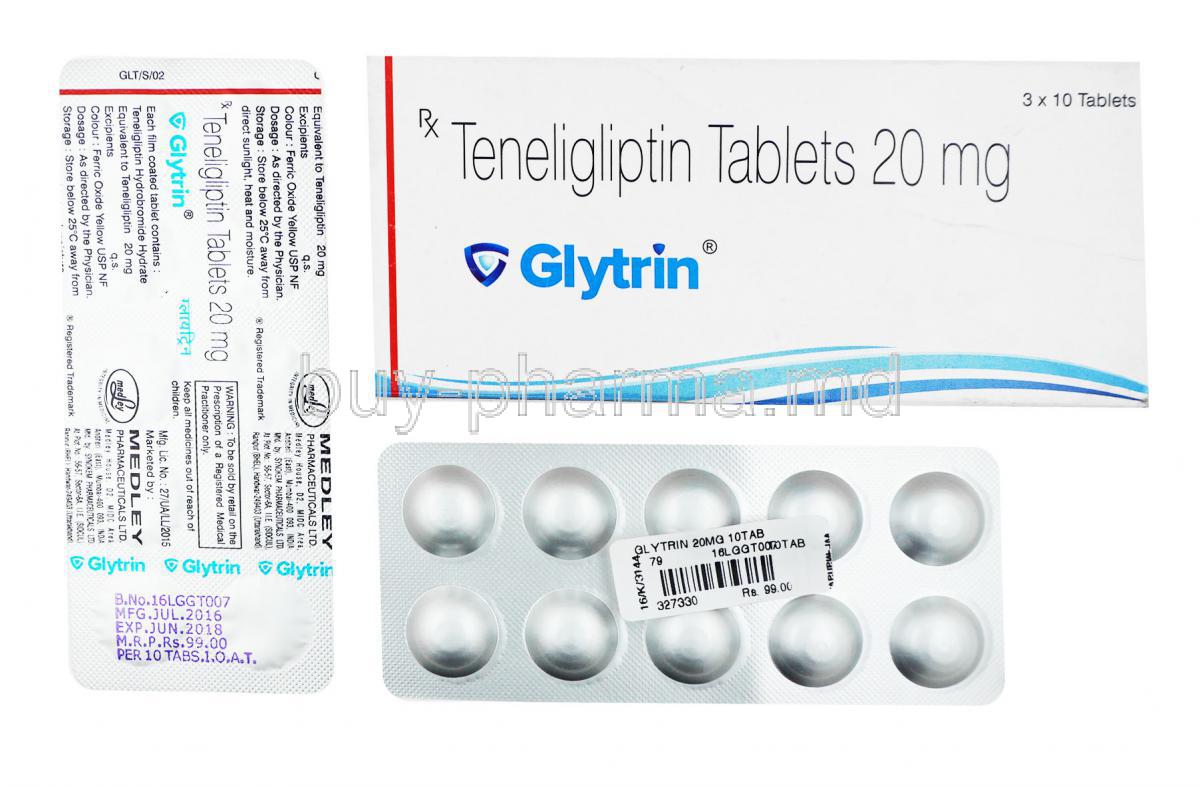
Introduction to Glytrin (Teneligliptin)
Glytrin is an oral antidiabetic medication containing teneligliptin, a modern dipeptidyl peptidase-4 (DPP-4) inhibitor developed to improve glycemic control in patients with type 2 diabetes mellitus. It is designed for long-term metabolic management, particularly in individuals where lifestyle modification alone is insufficient.
By targeting incretin degradation, Glytrin supports physiological glucose regulation without imposing excessive pancreatic stress. This pharmacodynamic profile has positioned teneligliptin as a practical option in contemporary diabetes care.
Overview of Glytrin as a DPP-4 Inhibitor
Teneligliptin belongs to the DPP-4 inhibitor class, a group of agents that enhance endogenous incretin activity. Unlike older antidiabetic drugs, it acts in a glucose-dependent manner, reducing the likelihood of abrupt hypoglycemia.
- Oral, once-daily administration
- Weight-neutral metabolic profile
- Suitable for combination therapy
Therapeutic Classification and Role in Diabetes Management
Glytrin is classified as an incretin-based therapy. It is primarily indicated for improving fasting and postprandial glucose levels in type 2 diabetes. Its role is particularly relevant for patients requiring stable glycemic control with minimal adverse metabolic burden.
Regulatory Status and Global Availability
Teneligliptin is approved and widely prescribed in several Asian markets and emerging healthcare systems. Its clinical adoption reflects growing demand for effective oral antidiabetic agents with a favorable safety margin.
Composition and Pharmaceutical Characteristics
Active Ingredient: Teneligliptin Hydrobromide Hydrate
The active pharmaceutical ingredient in Glytrin is teneligliptin hydrobromide hydrate. This salt form enhances chemical stability and oral bioavailability, ensuring consistent systemic exposure.
Chemical Structure and Pharmacological Class
Teneligliptin features a unique rigid “J-shaped” molecular structure that allows strong and prolonged binding to the DPP-4 enzyme. This structural specificity contributes to sustained enzyme inhibition over a 24-hour period.
Excipients and Formulation Considerations
Inactive components are included to support tablet integrity, dissolution, and absorption. These excipients do not exert pharmacological effects but are essential for product stability and patient usability.
Available Dosage Forms and Strengths
Glytrin is typically available as oral tablets in standardized strengths, facilitating once-daily dosing and simplifying adherence in long-term therapy.
How Glytrin (Teneligliptin) Works
Mechanism of Action as a DPP-4 Enzyme Inhibitor
Teneligliptin inhibits the DPP-4 enzyme responsible for degrading incretin hormones. By blocking this enzymatic activity, endogenous incretins remain active for a longer duration.
Effects on Incretin Hormones (GLP-1, GIP)
Sustained levels of glucagon-like peptide-1 (GLP-1) and glucose-dependent insulinotropic peptide (GIP) enhance insulin secretion when glucose levels are elevated.
Impact on Insulin Secretion and Glucagon Suppression
The drug increases insulin release from pancreatic β-cells while simultaneously suppressing glucagon secretion from α-cells. This dual modulation improves overall glucose homeostasis.
Glucose-Dependent Mechanism and Hypoglycemia Risk Profile
Because its activity is glucose-dependent, teneligliptin has a low intrinsic risk of hypoglycemia when used alone. This feature distinguishes it from insulin secretagogues.
Uses of Glytrin (Teneligliptin)
Management of Type 2 Diabetes Mellitus
Glytrin is primarily used to control blood glucose levels in adults with type 2 diabetes, particularly when diet and exercise alone are insufficient.
Use as Monotherapy in Newly Diagnosed Patients
In selected patients, teneligliptin may be initiated as monotherapy, especially when hypoglycemia avoidance is a clinical priority.
Use as Add-On Therapy with Other Antidiabetic Agents
It is commonly combined with metformin, sulfonylureas, or insulin to achieve tighter glycemic targets.
Role in Patients with Inadequate Glycemic Control
For patients failing to achieve glycemic goals on existing regimens, Glytrin offers an additive and complementary mechanism.
Off-Label and Investigational Uses
Use in Combination Regimens Beyond Standard Labeling
Clinical practice has explored its integration into complex combination regimens tailored to individual metabolic profiles.
Potential Benefits in Insulin Resistance–Predominant Patients
Emerging evidence suggests benefits in patients with marked insulin resistance, though this remains an area of active investigation.
Research on Cardiovascular and Metabolic Effects
Ongoing studies are evaluating cardiovascular neutrality and broader metabolic outcomes associated with long-term DPP-4 inhibition.
Exploratory Use in Patients with Renal Impairment
Teneligliptin has drawn attention for its relatively stable pharmacokinetics in renal dysfunction, prompting exploratory clinical use.
Dosage and Administration
Standard Recommended Dosage
Glytrin is generally administered once daily at a fixed dose, as determined by clinical guidelines and patient response.
Timing of Administration (With or Without Food)
The medication can be taken with or without meals, offering flexibility and improved adherence.
Dose Adjustments in Renal Impairment
Dose modification may be considered in patients with significant renal dysfunction, based on clinical assessment.
Dose Considerations in Hepatic Impairment
Caution is advised in hepatic impairment, with periodic monitoring of liver function.
Missed Dose Guidance
If a dose is missed, it should be taken as soon as remembered unless the next scheduled dose is imminent.
Side Effects of Glytrin (Teneligliptin)
Overview of Adverse Reaction Profile
Glytrin is generally well tolerated. Most adverse effects are mild and transient, resolving without intervention.
Frequency and Severity Classification
Adverse reactions are categorized as common, uncommon, or rare based on post-marketing data.
Comparison with Other DPP-4 Inhibitors
Its side-effect profile is broadly comparable to other agents in the DPP-4 inhibitor class.
Common Side Effects
- Hypoglycemia, mainly when combined with insulin or sulfonylureas
- Headache and dizziness
- Mild gastrointestinal discomfort
- Upper respiratory tract symptoms
Less Common and Serious Side Effects
Pancreatitis Risk and Warning Signs
Although rare, acute pancreatitis has been reported. Persistent abdominal pain warrants immediate evaluation.
Hypersensitivity Reactions
Allergic responses such as angioedema or urticaria may occur and require prompt discontinuation.
Skin Reactions and Rash
Cutaneous reactions, including pruritus and rash, have been observed in isolated cases.
QT Interval Prolongation Considerations
Electrocardiographic changes have been studied, with ongoing surveillance in patients at risk of arrhythmia.
Drug and Food Interactions
Interaction with Insulin and Sulfonylureas
Concomitant use increases hypoglycemia risk, necessitating careful dose titration.
Concomitant Use with Metformin, SGLT2 Inhibitors, or TZDs
These combinations are generally well tolerated and commonly employed in clinical practice.
CYP-Mediated Drug Interaction Profile
Teneligliptin demonstrates a low potential for clinically significant CYP-mediated interactions.
Food Interaction Considerations
Food does not meaningfully alter absorption or efficacy.
Warnings and Safety Information
Pancreatitis Warning
Patients should be informed of symptoms suggestive of pancreatitis and advised to seek medical attention promptly.
Cardiovascular Safety Considerations
Long-term cardiovascular safety remains under continuous evaluation, with current data supporting neutrality.
Risk of Hypoglycemia in Combination Therapy
The risk increases when combined with insulin secretagogues, requiring clinical vigilance.
Monitoring Recommendations During Long-Term Use
Routine monitoring of blood glucose, HbA1c, and overall metabolic status is recommended.
Contraindications
Known Hypersensitivity to Teneligliptin or Excipients
Use is contraindicated in patients with documented hypersensitivity reactions to the drug or formulation components.
History of Serious Allergic Reactions to DPP-4 Inhibitors
Patients with prior severe reactions to this drug class should avoid teneligliptin.
Situations Where Alternative Therapy Is Recommended
Alternative antidiabetic agents may be preferred in unstable metabolic states or acute illness.
Careful Administration and Important Precautions
Use in Patients with Renal Dysfunction
Renal function should be assessed periodically, with dosing individualized accordingly.
Use in Patients with Hepatic Impairment
Cautious use is advised, particularly in moderate to severe hepatic disease.
Monitoring Blood Glucose and HbA1c
Regular monitoring ensures therapeutic efficacy and early detection of treatment failure.
Avoidance of Abrupt Therapy Changes
Abrupt discontinuation may destabilize glycemic control. Any changes should be gradual and supervised.
Administration in Special Populations
Administration to Elderly Patients
Elderly patients often present with physiological changes that influence drug pharmacokinetics and pharmacodynamics. Reduced renal clearance, altered hepatic metabolism, and increased vulnerability to drug-related adverse effects require a cautious and individualized approach when administering teneligliptin.
Clinical experience suggests that older adults may exhibit heightened sensitivity, even when standard doses are used. Subtle symptoms may manifest earlier or persist longer.
- Increased susceptibility to hypoglycemia when used in combination therapy
- Higher likelihood of dizziness or fatigue
- Potential impact on cardiac conduction in predisposed individuals
Increased Sensitivity to Adverse Effects
Age-related decline in organ reserve can amplify adverse reactions. What is mild in younger patients may be clinically relevant in older populations. Continuous assessment is therefore essential.
Dose Selection and Monitoring Considerations
Dose selection should prioritize the lowest effective dose. Regular monitoring of blood glucose, renal parameters, and overall tolerability is advised to maintain therapeutic equilibrium while minimizing risk.
Administration to Pregnant Women and Nursing Mothers
The use of teneligliptin during pregnancy and lactation remains an area of limited clinical data. As such, treatment decisions require careful deliberation and a structured risk–benefit evaluation.
Pregnancy Safety Data and Risk–Benefit Assessment
Human pregnancy data are insufficient to establish definitive safety. Animal studies have not demonstrated overt teratogenicity; however, translational relevance remains uncertain.
- Consider therapy only if potential benefit justifies potential fetal risk
- Alternative agents with established pregnancy safety profiles may be preferred
Use During Breastfeeding and Excretion Considerations
It is not conclusively known whether teneligliptin is excreted in human breast milk. Given the possibility of neonatal exposure, caution is warranted.
Decisions should balance the importance of glycemic control for the mother against potential risks to the nursing infant.
Administration to Children
The use of Glytrin in pediatric populations is not routinely recommended. Clinical evidence supporting safety, efficacy, and optimal dosing in children is currently insufficient.
Lack of Established Safety and Efficacy
Pediatric pharmacotherapy demands robust age-specific data. In the absence of such evidence, teneligliptin use in children should be avoided outside of controlled clinical settings.
Regulatory Limitations and Clinical Guidance
Most regulatory authorities have not approved teneligliptin for pediatric use. Clinical guidelines emphasize reliance on therapies with established pediatric indications.
Overdosage Information
Expected Symptoms of Overdose
Overdose experience with teneligliptin is limited. Nevertheless, excessive intake may exaggerate pharmacological effects or provoke nonspecific systemic symptoms.
- Hypoglycemia, particularly with concomitant antidiabetic agents
- Dizziness or somnolence
- Gastrointestinal discomfort
Clinical Management and Supportive Care
There is no specific antidote for teneligliptin overdose. Management focuses on symptomatic treatment and supportive measures, guided by clinical presentation.
Importance of Medical Supervision
Immediate medical evaluation is essential in suspected overdose cases. Continuous monitoring ensures timely intervention and prevention of complications.
Storage and Stability
Recommended Storage Conditions
Glytrin should be stored at controlled room temperature, in accordance with pharmaceutical stability standards.
Protection from Moisture, Heat, and Light
Exposure to excessive moisture, heat, or direct sunlight may compromise tablet integrity and potency. Storage in the original packaging is recommended.
Shelf Life and Packaging Considerations
Shelf life is determined by manufacturer stability testing. Patients should always verify the expiration date before use and avoid consuming degraded products.
Handling Precautions
Safe Handling and Dispensing Practices
Tablets should be handled with clean, dry hands and dispensed according to prescribed instructions. Crushing or splitting is not advised unless specifically directed.
Patient Counseling Points
Patients should be counseled on correct storage, adherence to dosing schedules, and recognition of adverse effects that warrant
Glytrin, Teneligliptin FAQ
- What is the drug Glytrin used for?
- What is the use of Glytrin tablet?
- How do you use Glytrin spray?
- What is teneligliptin used for?
- What is the best time to take teneligliptin?
- Which is better, metformin or teneligliptin?
- Is teneligliptin safe for kidneys?
- What are the benefits of using teneligliptin?
- How quickly does teneligliptin work?
- Can metformin and teneligliptin be taken together?
- What are the side effects of teneligliptin?
- Is teneligliptin better than other diabetes drugs?
- Does teneligliptin increase creatinine?
- Which is better sitagliptin or teneligliptin?
- Can teneligliptin reduce HbA1c levels?
- Is teneligliptin safe for the heart?
- How quickly does teneligliptin start working?
What is the drug Glytrin used for?
Glytrin is used to treat angina at the onset of an attack. It is also used for the prevention of angina, which can be brought on from physical effort, emotional stress, exposure to cold, etc.
What is the use of Glytrin tablet?
Glytrin is used to treat angina at the onset of an attack. It is also used for the prevention of angina, which can be brought on from physical effort, emotional stress, exposure to cold, etc.
How do you use Glytrin spray?
- Open your mouth and bring the Glytrin nozzle as close as possible, aiming it under the tongue.
- Press the button firmly UNDER THE TONGUE while holding your breath.
- Keep the button held down until all the dose has been released.
- Close your mouth immediately but do not inhale the spray.
What is teneligliptin used for?
Teneligliptin is used in the treatment of type 2 diabetes mellitus
What is the best time to take teneligliptin?
Morning
Which is better, metformin or teneligliptin?
Teneligliptin
Is teneligliptin safe for kidneys?
Yes
What are the benefits of using teneligliptin?
Teneligliptin is used for its ability to improve glycemic control in type 2 diabetes
How quickly does teneligliptin work?
12 weeks
Can metformin and teneligliptin be taken together?
No
What are the side effects of teneligliptin?
- Low blood sugar
- Respiratory infection
- Headache
Is teneligliptin better than other diabetes drugs?
Yes
Does teneligliptin increase creatinine?
Yes
Which is better sitagliptin or teneligliptin?
Teneligliptin might offer advantages like potentially better glycemic control (lower FBS, PPBS, HbA1c), greater potency, and favorable effects on lipid profiles (LDL, TC),
Can teneligliptin reduce HbA1c levels?
Yes
Is teneligliptin safe for the heart?
No
How quickly does teneligliptin start working?
Within a few hours
Popular Products



Similar Product