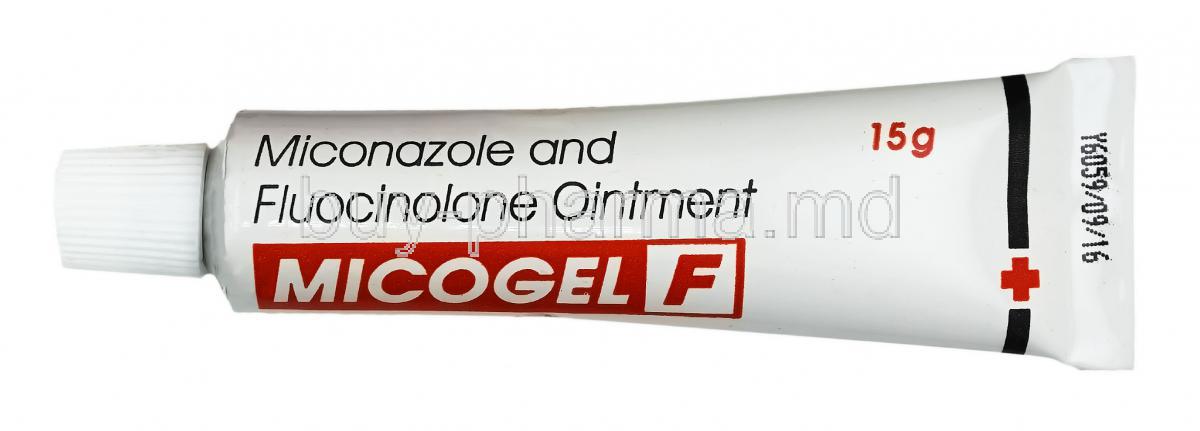
1. Introduction to Micogel F Ointment (Fluocinolone/Miconazole)
Micogel F Ointment is a combination dermatological preparation designed to address inflammatory fungal skin disorders. It integrates a potent corticosteroid with a broad-spectrum antifungal agent, offering both symptomatic relief and pathogen eradication. This dual-action formulation is particularly valuable in conditions where inflammation coexists with fungal colonization.
Classified as a topical corticosteroid-antifungal combination, it is commonly indicated for dermatoses complicated by fungal infection. The therapeutic objective is twofold:
- Rapid alleviation of inflammation, erythema, and pruritus
- Effective suppression of fungal proliferation
The synergy between its active components enhances clinical outcomes. Patients often experience expedited relief, reduced lesion severity, and improved skin restoration.
2. Composition and Active Ingredients
2.1 Fluocinolone Acetonide: Corticosteroid Component
Fluocinolone acetonide is a synthetic corticosteroid endowed with anti-inflammatory and immunosuppressive properties. It acts by inhibiting inflammatory mediators such as prostaglandins and cytokines, thereby mitigating cutaneous inflammation.
- Reduces swelling and erythema
- Alleviates itching and irritation
- Suppresses immune-mediated skin reactions
This component is particularly beneficial in hyper-reactive skin conditions where inflammation exacerbates symptoms.
2.2 Miconazole Nitrate: Antifungal Agent
Miconazole nitrate is an imidazole antifungal agent with extensive activity against dermatophytes, yeasts, and certain molds. It exerts its effect by disrupting ergosterol synthesis, a critical component of fungal cell membranes.
- Destabilizes fungal cell integrity
- Inhibits fungal growth and replication
- Effective against Candida and dermatophyte species
This mechanism leads to fungal cell death and resolution of infection.
2.3 Inactive Ingredients and Base Formulation
The ointment base plays a crucial role in enhancing drug penetration and maintaining hydration of the stratum corneum. Its occlusive nature facilitates deeper absorption of active ingredients.
Proper formulation ensures:
- Uniform distribution of active compounds
- Enhanced dermal bioavailability
- Improved patient adherence due to ease of application
3. Mechanism of Action (How Micogel F Works)
3.1 Dual Mechanism: Anti-inflammatory and Antifungal Effects
Micogel F operates through a bifunctional mechanism. Fluocinolone suppresses inflammatory cascades, while miconazole eradicates fungal pathogens. This coordinated action addresses both the cause and symptoms of the condition.
- Fluocinolone reduces vasodilation and immune response
- Miconazole compromises fungal cell membranes
3.2 Synergistic Action in Mixed Skin Infections
In many dermatological conditions, fungal infections coexist with inflammation. This formulation offers a synergistic therapeutic effect, ensuring comprehensive management.
Benefits include rapid symptomatic relief and efficient microbial clearance. Consequently, healing is accelerated, and recurrence risk may be minimized.
4. Uses of Micogel F Ointment
4.1 Approved Uses for Fungal Skin Infections with Inflammation
Micogel F is indicated for various inflammatory fungal dermatoses, including:
- Tinea corporis (ringworm of the body)
- Tinea cruris (jock itch)
- Tinea pedis (athlete’s foot)
- Cutaneous candidiasis
- Seborrheic dermatitis with fungal involvement
4.2 Dermatological Conditions with Secondary Fungal Infection
It is also utilized in conditions complicated by fungal colonization:
- Eczema with superimposed fungal infection
- Intertrigo in moist skin folds
- Infected contact dermatitis
4.3 Symptom Relief in Inflammatory Fungal Conditions
In addition to antimicrobial action, the ointment provides symptomatic relief:
- Reduction of pruritus
- Decreased erythema and scaling
- Improved skin comfort
5. Off-Label Uses of Fluocinolone/Miconazole Ointment
5.1 Use in Mixed Bacterial-Fungal Dermatoses (Adjunct Therapy)
In certain clinical scenarios, it may be used alongside antibacterial agents to manage polymicrobial infections. This approach is particularly relevant in chronic or resistant dermatoses.
5.2 Management of Chronic Dermatitis with Suspected Fungal Component
Chronic, lichenified eczema may harbor fungal overgrowth. The combination therapy helps control both inflammation and microbial presence.
5.3 Application in Seborrheic Dermatitis Beyond Standard Indications
Off-label use may extend to scalp and facial seborrheic dermatitis. Careful medical supervision is essential due to the sensitivity of these areas.
5.4 Use in Diaper Dermatitis with Fungal Involvement
Short-term use in infants may be considered for diaper dermatitis complicated by candidiasis. However, caution is imperative due to increased absorption in pediatric skin.
6. Dosage and Administration Guidelines
6.1 Recommended Application Frequency
The ointment is typically applied once or twice daily. Frequency depends on severity and clinical response.
6.2 Proper Method of Application
Correct application enhances efficacy and reduces adverse effects:
- Clean and dry the affected area thoroughly
- Apply a thin, even layer
- Avoid excessive rubbing
6.3 Duration of Treatment
Therapy should generally be short-term. Prolonged use increases the risk of corticosteroid-related adverse effects.
6.4 Missed Dose Instructions
If a dose is missed, it should be applied as soon as remembered. However, doubling applications is discouraged to prevent irritation.
7. Side Effects of Micogel F Ointment
7.1 Common Side Effects
Some patients may experience mild local reactions:
- Burning or stinging sensation
- Transient redness or itching
7.2 Dermatological Reactions
Cutaneous effects may include dryness, peeling, or contact dermatitis. These are typically reversible upon discontinuation.
7.3 Corticosteroid-Related Adverse Effects
Extended use may lead to:
- Skin atrophy
- Telangiectasia
- Hypopigmentation
7.4 Rare but Serious Side Effects
Although uncommon, systemic absorption may occur, particularly with prolonged or extensive use. This can result in adrenal suppression or hypersensitivity reactions.
8. Drug Interactions and Compatibility
8.1 Interactions with Other Topical Medications
Concurrent use with other topical agents may increase irritation or alter absorption dynamics.
8.2 Systemic Drug Interaction Considerations
Systemic interactions are rare due to minimal absorption. Nevertheless, caution is advised with potent enzyme inhibitors.
8.3 Cosmetic and Skincare Product Interactions
Avoid combining with harsh skincare products or occlusive cosmetics, as these may exacerbate irritation or enhance systemic exposure.
9. Warnings and Safety Considerations
9.1 Risk of Prolonged Corticosteroid Use
Chronic application can lead to skin thinning and systemic effects. Vigilant monitoring is recommended.
9.2 Avoid Use on Large Surface Areas
Application over extensive areas increases systemic absorption risk, particularly under occlusion.
9.3 Use on Sensitive Skin Areas
Special caution is required when applying to the face, groin, or axilla due to heightened absorption and sensitivity.
9.4 Risk of Masking Underlying Infections
Corticosteroids may obscure clinical signs of infection, potentially delaying accurate diagnosis and appropriate treatment.
10. Contraindications of Micogel F Ointment
10.1 Hypersensitivity to Fluocinolone, Miconazole, or Excipients
Use is contraindicated in individuals with known hypersensitivity to any component of the formulation.
10.2 Viral Skin Infections (e.g., Herpes Simplex, Varicella)
Corticosteroids may exacerbate viral infections and should be avoided in such conditions.
10.3 Untreated Bacterial Skin Infections
Application without appropriate antibacterial therapy may worsen the infection.
10.4 Tubercular or Syphilitic Skin Lesions
These conditions require specific systemic treatment and are not suitable for corticosteroid-antifungal combinations.
10.5 Rosacea and Acne Vulgaris
Use in these conditions may aggravate symptoms and is therefore contraindicated.
11. Careful Administration (Use with Caution)
11.1 Patients with Compromised Skin Barrier
Individuals with a disrupted epidermal barrier—such as those with abrasions, ulcerations, or severe dermatitis—require heightened vigilance. The permeability of compromised skin is significantly increased. This can potentiate systemic absorption of active constituents.
- Higher risk of corticosteroid-related adverse effects
- Enhanced penetration leading to local irritation
- Potential for delayed wound healing
Application should be conservative, with close monitoring for unexpected reactions.
11.2 Individuals with Chronic Skin Disorders
Chronic dermatological conditions, including psoriasis and long-standing eczema, may exhibit altered responsiveness to topical therapies. In such cases, intermittent or rotational treatment strategies may be preferable.
Prolonged exposure to corticosteroids in these populations may precipitate tachyphylaxis or exacerbate underlying pathology.
11.3 Use Under Occlusive Dressings
Occlusion markedly enhances transdermal absorption. While this may augment therapeutic efficacy, it simultaneously elevates the risk of systemic exposure.
- Increased corticosteroid bioavailability
- Higher likelihood of skin maceration
- Risk of secondary infection due to moisture retention
Occlusive use should only be undertaken under medical supervision.
11.4 Patients with Diabetes (Risk of Infection Persistence)
Diabetic individuals are predisposed to persistent and recurrent infections due to impaired immune responses and microvascular compromise. Fungal infections may be more recalcitrant in this cohort.
Careful monitoring is essential. Treatment duration may need adjustment based on clinical response.
11.5 Long-Term Use Monitoring
Extended application necessitates periodic evaluation. Subtle adverse effects may develop insidiously.
- Assessment for skin atrophy and telangiectasia
- Monitoring for diminished therapeutic response
- Evaluation for systemic corticosteroid effects
12. Important Precautions for Safe Use
12.1 Avoid Contact with Eyes and Mucous Membranes
The formulation is strictly intended for external cutaneous use. Accidental exposure to ocular or mucosal surfaces may provoke irritation or adverse reactions.
Immediate rinsing with copious water is recommended in case of accidental contact.
12.2 Proper Hygiene During Application
Maintaining optimal hygiene is indispensable for therapeutic success. Contamination can compromise treatment outcomes.
- Cleanse the affected area prior to application
- Use clean hands or applicators
- Avoid touching the tip of the container directly to the skin
12.3 Avoid Abrupt Discontinuation After Prolonged Use
Sudden cessation after extended corticosteroid use may result in rebound inflammation. Gradual tapering is often advisable to mitigate this phenomenon.
12.4 Monitoring for Secondary Infections
Topical corticosteroids may obscure clinical signs of infection. Secondary bacterial or fungal overgrowth can occur.
- Watch for worsening redness or exudation
- Assess for new lesion development
- Consider adjunct antimicrobial therapy if needed
12.5 Limiting Use in Pediatric Population
Children exhibit increased percutaneous absorption due to thinner epidermal layers. This necessitates cautious use.
Application should be limited in duration and surface area, with strict adherence to medical guidance.
13. Administration in Special Populations
13.1 Administration to Elderly Patients
Elderly individuals often present with attenuated dermal integrity and reduced regenerative capacity. These physiological changes heighten susceptibility to corticosteroid-induced skin atrophy.
- Use the lowest effective dose
- Limit duration of therapy
- Monitor for cutaneous fragility
Dose adjustments may be required to balance efficacy and safety.
13.2 Administration to Pregnant Women and Nursing Mothers
Use during pregnancy or lactation should be guided by a careful risk-benefit assessment. Although systemic absorption is limited, potential risks cannot be entirely excluded.
- Restrict application to small areas
- Avoid prolonged use
- Do not apply near the breast area during breastfeeding
13.3 Administration to Children and Infants
Pediatric patients are particularly vulnerable due to enhanced absorption and a higher surface area-to-body weight ratio. This can predispose them to systemic effects.
Strict medical supervision is imperative. Minimal effective dosing strategies should be employed.
14. Overdosage and Misuse
14.1 Signs of Topical Overuse
Excessive or prolonged use may manifest as local adverse effects. These are often dermatological in nature but can be clinically significant.
- Skin thinning and fragility
- Development of striae (stretch marks)
- Persistent irritation or burning sensation
14.2 Systemic Toxicity Risks
In rare instances, systemic absorption may lead to hypothalamic-pituitary-adrenal (HPA) axis suppression. This is more likely with extensive application or occlusive use.
Symptoms may include fatigue, weakness, and hormonal imbalance.
14.3 Management of Overdosage
Management is primarily supportive. Gradual discontinuation is recommended to prevent rebound effects.
- Taper frequency of application
- Introduce symptomatic treatments as needed
- Seek medical evaluation in severe cases
15. Storage Instructions
15.1 Recommended Storage Conditions
The ointment should be stored at controlled room temperature, away from excessive heat, humidity, and direct sunlight. Improper storage may compromise product stability.
15.2 Shelf Life and Expiry Considerations
Adherence to the indicated expiration date is essential. Degraded formulations may exhibit reduced efficacy or altered safety profiles.
15.3 Safe Storage Practices
To prevent accidental ingestion or misuse, the product should be kept out of reach of children and stored securely.
16. Handling Precautions
16.1 Safe Application Practices
Appropriate handling ensures both safety and effectiveness. Simple measures can significantly reduce the risk of contamination.
- Wash hands thoroughly before and after application
- Use only the prescribed amount
- Avoid unnecessary contact with unaffected skin
16.2 Avoiding Cross-Contamination
Sharing topical medications can facilitate transmission of infections. Each individual should use their own prescribed product.
16.3 Disposal of Unused or Expired Product
Unused or expired ointment should be disposed of responsibly. Follow local regulatory guidelines to minimize environmental impact and prevent misuse.
Popular Products
Similar Product