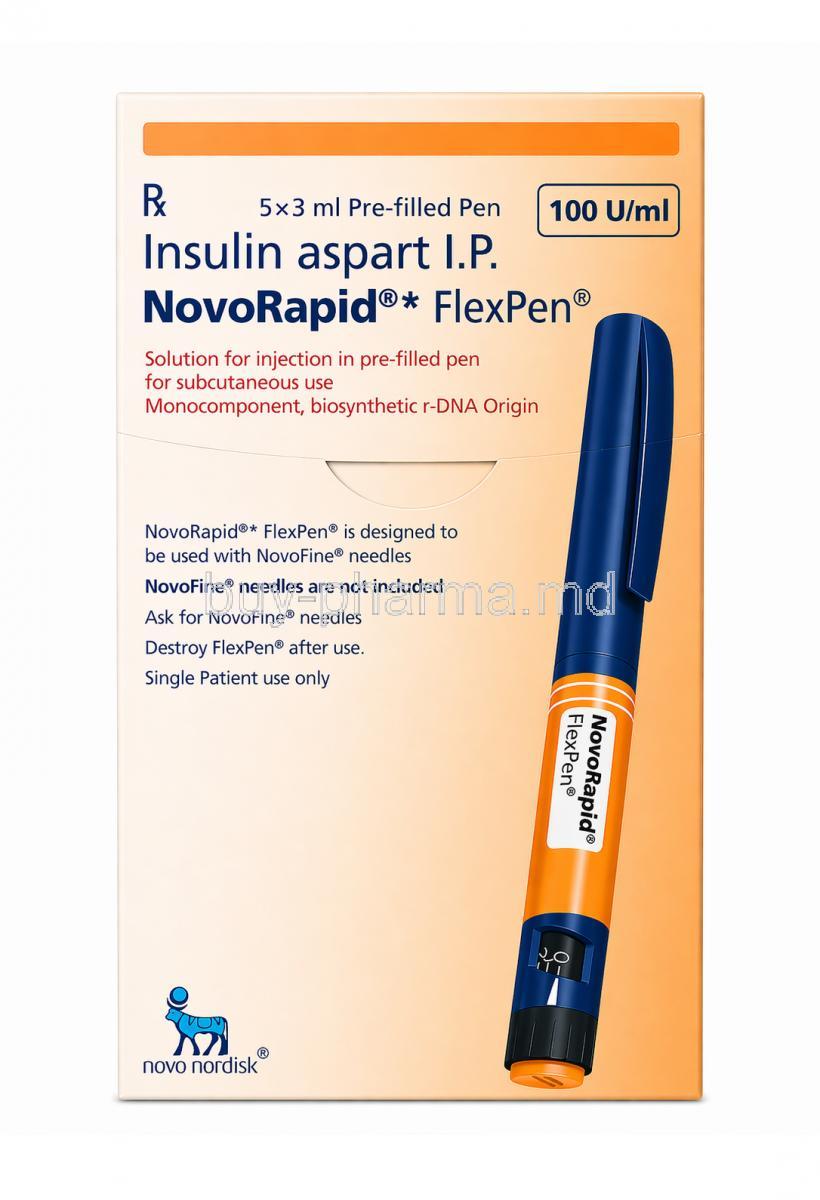
Introduction to NovoRapid FlexPen (Insulin Aspart)
NovoRapid FlexPen, containing insulin aspart, represents a modern advancement in prandial insulin therapy. It is engineered to mimic physiological insulin secretion during meals. Its rapid onset and predictable pharmacokinetics make it indispensable in contemporary diabetes management.
Overview of Rapid-Acting Insulin Analogues
Rapid-acting insulin analogues are structurally modified forms of human insulin designed for accelerated absorption. They act swiftly. Their primary purpose is to control postprandial glycemic excursions.
- Faster onset compared to regular insulin
- Shorter duration of action
- Improved flexibility in meal timing
What Is NovoRapid FlexPen and Its Clinical Role
NovoRapid FlexPen is a prefilled insulin delivery system containing insulin aspart. It is used for precise, convenient dosing. Clinically, it is integral to basal-bolus regimens, ensuring optimal glycemic control in both outpatient and inpatient settings.
Key Features and Benefits of Insulin Aspart Delivery via FlexPen
The FlexPen device enhances usability and adherence. Its ergonomic design reduces dosing errors. The formulation ensures rapid absorption.
- Prefilled and ready-to-use system
- Accurate dose titration
- Minimal preparation required
- Enhanced portability for active lifestyles
Differences Between NovoRapid and Other Insulin Preparations
Unlike regular human insulin, insulin aspart exhibits faster onset and reduced latency. Compared with long-acting insulins, it has a shorter duration. This pharmacodynamic distinction allows targeted control of mealtime glucose spikes.
Composition and Formulation
Active Ingredient: Insulin Aspart – Structure and Properties
Insulin aspart is a recombinant insulin analogue. A single amino acid substitution enhances its solubility and absorption rate. This molecular alteration prevents hexamer formation, facilitating rapid diffusion into circulation.
Excipients and Their Functional Roles
Excipients stabilize the formulation and maintain isotonicity. They also preserve sterility and prolong shelf life.
- Glycerol for tonicity adjustment
- Phenol and metacresol as preservatives
- Zinc for structural stabilization
- Sodium chloride for osmotic balance
Pharmaceutical Form: Prefilled Pen Device Design
The FlexPen is a disposable, prefilled injection device. It simplifies insulin administration. The integrated mechanism ensures consistent dosing with minimal user manipulation.
Concentration and Available Strengths
NovoRapid is typically available in a standard concentration of 100 units/mL. This uniformity facilitates dose calculations and compatibility with standard insulin regimens.
Mechanism of Action: How Insulin Aspart Works
Molecular Modifications and Rapid Absorption Profile
The substitution of proline with aspartic acid reduces molecular aggregation. Consequently, insulin aspart is absorbed rapidly following subcutaneous injection. This enables timely glucose regulation.
Glucose Uptake and Metabolic Effects
Insulin aspart promotes cellular glucose uptake, particularly in muscle and adipose tissue. It suppresses hepatic gluconeogenesis. Additionally, it facilitates glycogen synthesis and lipid metabolism.
Onset, Peak, and Duration of Action
The pharmacokinetic profile is characterized by rapid onset and short duration.
- Onset: approximately 10–20 minutes
- Peak effect: 1–3 hours
- Duration: 3–5 hours
Comparison with Human Insulin and Other Analogues
Compared to regular insulin, insulin aspart provides superior postprandial glucose control. It also reduces the risk of delayed hypoglycemia. Its performance is comparable to other rapid-acting analogues, with subtle differences in onset and variability.
Therapeutic Uses of NovoRapid FlexPen
Primary Indication: Type 1 Diabetes Mellitus
NovoRapid is essential for individuals with Type 1 diabetes. It replaces endogenous insulin during meals. Its rapid action ensures effective glycemic control.
Use in Type 2 Diabetes Mellitus
In Type 2 diabetes, it is used when oral agents are insufficient. It helps manage postprandial hyperglycemia. Often, it is combined with basal insulin therapy.
Role in Intensive Insulin Therapy and Basal-Bolus Regimens
Basal-bolus therapy mimics physiological insulin secretion. NovoRapid provides prandial coverage, while long-acting insulin maintains basal levels.
Use in Gestational Diabetes Mellitus
Insulin aspart may be used during pregnancy under medical supervision. It aids in maintaining strict glycemic targets, reducing maternal and fetal complications.
Use in Hospital Settings (Perioperative and Critical Care Glycemic Control)
In acute care environments, rapid-acting insulin is used for tight glucose control. It is particularly valuable during surgery and critical illness.
Use in Continuous Subcutaneous Insulin Infusion (CSII)
NovoRapid is compatible with insulin pumps. It delivers continuous basal infusion with programmable bolus doses. This enhances glycemic precision.
Expanded and Off-Label Uses
Management of Hyperglycemia in Acute Illness
Acute illness often induces stress hyperglycemia. Insulin aspart is used to manage transient elevations effectively.
Use in Steroid-Induced Hyperglycemia
Glucocorticoid therapy can elevate blood glucose levels. Rapid-acting insulin helps counteract these effects.
Adjunct Therapy in Diabetic Ketoacidosis (DKA) Protocols
Although intravenous insulin is standard, subcutaneous rapid-acting insulin may be used in selected mild cases under strict supervision.
Use in Pediatric Endocrinology Beyond Standard Indications
In specialized cases, insulin aspart may be utilized in pediatric populations requiring flexible dosing strategies.
Off-Label Use in Insulin Resistance Syndromes
Patients with severe insulin resistance may benefit from tailored regimens incorporating rapid-acting insulin analogues.
Dosage and Administration Guidelines
Individualized Dosing Based on Patient Needs
Dosing is highly individualized. It depends on factors such as body weight, diet, and glycemic targets.
Initiation of Therapy in Insulin-Naïve Patients
Initial doses are conservative. They are titrated gradually based on blood glucose monitoring.
Dose Adjustment in Insulin-Experienced Patients
Adjustments are made according to glycemic trends. Frequent monitoring is essential during transitions.
Mealtime (Prandial) Insulin Timing and Administration
Insulin aspart is typically administered immediately before meals. In some cases, it may be given shortly after eating.
Subcutaneous Injection Sites and Rotation Techniques
Common injection sites include the abdomen, thigh, and upper arm. Rotation prevents lipodystrophy and ensures consistent absorption.
Use with Insulin Pumps and Compatibility Considerations
When used in pumps, infusion sites must be changed regularly. Compatibility with pump systems should be verified.
Instructions for Using NovoRapid FlexPen Device
Step-by-Step Guide to Pen Preparation and Priming
Before injection, the pen must be primed. This ensures accurate dosing and removes air bubbles.
Dose Selection and Injection Technique
The dose selector allows precise adjustment. Injection should be performed at a 90-degree angle for optimal delivery.
Needle Selection and Safe Disposal Practices
Appropriate needle size improves comfort and accuracy. Used needles must be disposed of safely in sharps containers.
Common User Errors and Prevention Strategies
Errors may include incorrect dose selection or failure to prime. Proper training reduces these risks significantly.
Storage and Handling Requirements
Recommended Storage Conditions Before and After First Use
Unopened pens should be refrigerated. Once in use, they may be kept at room temperature for a limited period.
Shelf Life and Stability Considerations
The product has a defined expiration date. Stability is compromised if exposed to extreme conditions.
Protection from Heat, Light, and Freezing
Insulin must not be frozen. Excessive heat or light can degrade its efficacy.
Travel and Portability Guidelines
During travel, insulin should be stored in temperature-controlled containers. Portable cooling solutions are recommended.
Side Effects of NovoRapid FlexPen
Overview of Potential Adverse Reactions
NovoRapid FlexPen, containing insulin aspart, is generally well tolerated. However, adverse reactions may occur. These effects range from mild, transient discomfort to clinically significant metabolic disturbances. Vigilant monitoring is essential. Even subtle symptoms may herald more serious complications.
Common Side Effects Associated with Insulin Aspart
Common adverse effects are typically predictable and manageable. They often diminish with continued use.
- Mild hypoglycemia
- Injection site discomfort
- Localized erythema or swelling
- Transient visual disturbances during glycemic stabilization
These reactions are usually self-limiting. Nonetheless, persistent symptoms warrant clinical evaluation.
Injection Site Reactions and Lipodystrophy
Repeated injections in the same anatomical location can induce lipodystrophic changes. These include both lipoatrophy and lipohypertrophy. Such alterations may impair insulin absorption.
- Skin thickening or nodularity
- Localized fat loss or accumulation
- Variability in glycemic response
Systematic rotation of injection sites mitigates these risks effectively.
Weight Changes and Fluid Retention
Insulin therapy may promote anabolic processes. Consequently, modest weight gain can occur. Fluid retention is also possible, particularly during initiation of therapy.
These effects are influenced by improved glycemic control and reduced glucosuria. Dietary management and physical activity play a crucial role in minimizing these changes.
Hypoglycemia: Incidence and Clinical Presentation
Hypoglycemia is the most frequent and clinically significant adverse effect. It may occur abruptly. Recognition is critical.
- Early symptoms: sweating, tremors, palpitations
- Neuroglycopenic signs: confusion, dizziness, blurred vision
- Severe manifestations: seizures, loss of consciousness
Prompt intervention prevents progression to life-threatening states.
Serious and Rare Adverse Effects
Severe Hypoglycemia and Neurological Complications
Severe hypoglycemia can lead to profound neurological impairment. Recurrent episodes may contribute to cognitive decline. Immediate treatment is imperative.
Hypersensitivity Reactions and Anaphylaxis
Although rare, systemic hypersensitivity reactions may occur. These include urticaria, angioedema, and anaphylaxis.
- Generalized rash
- Respiratory distress
- Hypotension
Such reactions require urgent medical intervention and discontinuation of therapy.
Electrolyte Imbalances (e.g., Hypokalemia)
Insulin facilitates intracellular potassium uptake. This may precipitate hypokalemia. Severe cases can result in cardiac arrhythmias.
Cardiovascular Considerations
Rapid shifts in glucose levels may influence cardiovascular stability. Patients with underlying cardiac disease require careful monitoring.
Drug Interactions and Influencing Factors
Medications That Increase Hypoglycemic Risk
Certain medications potentiate insulin’s glucose-lowering effects. This increases the risk of hypoglycemia.
- Oral antidiabetic agents
- ACE inhibitors
- Salicylates
- Monoamine oxidase inhibitors
Drugs That May Reduce Insulin Effectiveness
Other agents may antagonize insulin action. This leads to hyperglycemia.
- Corticosteroids
- Thiazide diuretics
- Sympathomimetics
- Thyroid hormones
Impact of Alcohol on Blood Glucose Control
Alcohol exerts unpredictable effects on glucose metabolism. It may enhance or diminish insulin activity. Hypoglycemia can occur, especially during fasting states.
Interaction with Beta-Blockers and Masking of Symptoms
Beta-blockers may obscure adrenergic symptoms of hypoglycemia. Patients may not perceive early warning signs, increasing risk.
Dietary and Lifestyle Factors Affecting Insulin Action
Diet composition, physical activity, and stress levels significantly influence insulin requirements. Consistency is key. Sudden changes necessitate dose adjustments.
Warnings and Safety Considerations
Risk of Hypoglycemia and Its Prevention
Preventing hypoglycemia is paramount. This involves appropriate dosing, meal planning, and regular monitoring.
Dose Errors and Medication Mix-Ups
Incorrect dosing or confusion between insulin types can have serious consequences. Clear labeling and patient education are essential safeguards.
Use in Patients with Renal or Hepatic Impairment
Impaired organ function alters insulin metabolism. Dose reductions may be required. Frequent monitoring is advised.
Risk of Hypokalemia During Insulin Therapy
Electrolyte monitoring is recommended in high-risk patients. Early detection prevents complications.
Monitoring Requirements for Safe Use
Comprehensive monitoring includes:
- Blood glucose levels
- Electrolyte balance
- Clinical symptoms
Contraindications
Known Hypersensitivity to Insulin Aspart or Components
Patients with documented hypersensitivity must not use this therapy. Alternative treatments should be considered.
Episodes of Hypoglycemia at Time of Administration
Administration during hypoglycemia is contraindicated. Blood glucose should be corrected prior to dosing.
Situations Requiring Alternative Insulin Therapy
Certain clinical scenarios necessitate alternative regimens. These include severe instability or intolerance.
Careful Administration (Use with Caution)
Patients with Renal Impairment
Reduced renal clearance prolongs insulin action. Lower doses may be necessary.
Patients with Hepatic Dysfunction
Hepatic impairment affects gluconeogenesis and insulin metabolism. Close supervision is required.
Individuals with Unstable Glycemic Control
Frequent fluctuations necessitate meticulous titration and monitoring.
Concomitant Illness or Infection
Acute illness increases insulin requirements. Dynamic dose adjustments are often needed.
Patients with Endocrine Disorders
Conditions such as thyroid dysfunction may alter insulin sensitivity. Individualized management is essential.
Important Precautions
Blood Glucose Monitoring and Dose Adjustment
Regular monitoring ensures optimal glycemic control. Adjustments should be evidence-based.
Recognition and Management of Hypoglycemia
Patients must be educated to identify symptoms early. Rapid carbohydrate intake is the first-line response.
Transitioning Between Insulin Products
Switching formulations requires medical supervision. Dose recalibration is often necessary.
Patient Education and Self-Management Training
Empowering patients improves adherence and outcomes. Training includes injection technique and monitoring practices.
Importance of Adherence to Prescribed Regimen
Consistency is critical. Deviations may result in glycemic instability.
Administration in Special Populations
Use in Elderly Patients: Dose Sensitivity and Monitoring
Elderly patients may exhibit increased sensitivity. Conservative dosing and frequent monitoring are recommended.
Administration to Pregnant Women: Safety and Glycemic Targets
Strict glycemic control is essential during pregnancy. Insulin aspart may be used under medical supervision.
Use During Lactation and Breastfeeding Considerations
Insulin therapy is generally compatible with breastfeeding. Dose adjustments may be required.
Pediatric Use: Dosing, Safety, and Growth Monitoring
In pediatric populations, dosing must be individualized. Growth and development should be monitored closely.
Overdosage and Emergency Management
Signs and Symptoms of Insulin Overdose
Overdose typically manifests as hypoglycemia. Symptoms range from mild to severe neurological impairment.
Immediate Treatment of Hypoglycemia
Prompt administration of fast-acting carbohydrates is essential. In severe cases, glucagon or intravenous glucose may be required.
Severe Cases Requiring Medical Intervention
Hospitalization may be necessary for persistent or severe hypoglycemia. Continuous monitoring ensures recovery.
Long-Term Management After Overdose
Post-event evaluation identifies causative factors. Adjustments prevent recurrence.
Handling and Disposal Precautions
Safe Handling of Insulin Pens and Needles
Proper handling reduces contamination and dosing errors. Pens should be used by a single individual only.
Disposal of Used Needles and Medical Waste
Used needles must be disposed of in approved sharps containers. This prevents injury and infection.
Avoiding Contamination and Infection Risks
Maintaining aseptic technique is essential. Reuse of needles is discouraged.
Storage Safety in Household Settings
Insulin should be stored securely, away from children. Temperature control ensures therapeutic efficacy.
NovoRapid FlexPen,Insulin aspart FAQ
Customers also bought

Popular Products



Similar Product