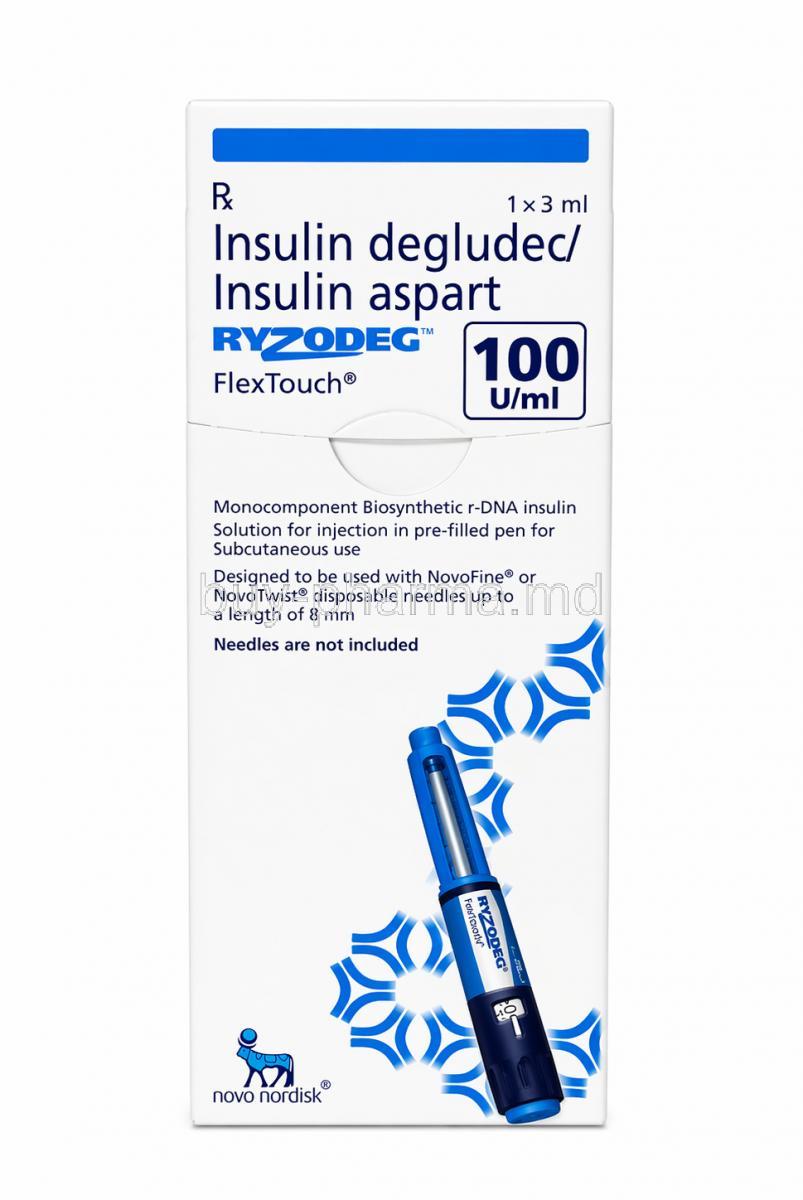
Introduction to Ryzodeg Flextouch (Insulin Degludec/Insulin Aspart)
Ryzodeg Flextouch represents an advanced insulin formulation designed to address both basal and prandial glycemic requirements within a single injectable solution. It combines two pharmacodynamically distinct insulin analogues, offering a pragmatic solution for individuals requiring comprehensive glucose regulation. This dual-action preparation is particularly valued in modern diabetology for its capacity to streamline complex insulin regimens.
Overview of Ryzodeg Flextouch as a Dual-Action Insulin Formulation
This formulation integrates ultra-long-acting insulin degludec with rapid-acting insulin aspart. The result is a biphasic pharmacological profile capable of:
- Maintaining stable baseline glucose levels over an extended duration
- Providing rapid postprandial glucose control following meals
- Reducing the need for multiple daily injections in certain patients
Such a configuration minimizes glycemic variability while enhancing therapeutic adherence.
Therapeutic Classification: Ultra-Long-Acting Basal Insulin + Rapid-Acting Prandial Insulin
Ryzodeg Flextouch is categorized as a combination insulin therapy. Insulin degludec functions as a basal insulin analogue with a prolonged half-life exceeding 24 hours, while insulin aspart serves as a rapid-acting prandial insulin. This duality enables simultaneous management of fasting and postprandial glucose excursions, a critical aspect in comprehensive diabetes care.
Indications in Diabetes Management and Clinical Positioning
The formulation is primarily indicated for individuals with Type 1 and Type 2 diabetes mellitus who require both basal and mealtime insulin coverage. It is particularly advantageous in:
- Patients transitioning from multiple daily injection regimens
- Individuals with inconsistent glycemic patterns
- Cases where adherence to complex regimens is suboptimal
Advantages of Combination Insulin Therapy in Glycemic Control
Combination insulin therapies offer several clinical benefits. They simplify dosing schedules, reduce injection burden, and provide synchronized glycemic coverage. Moreover, they can improve patient compliance while maintaining stringent glycemic targets, thereby reducing long-term complications associated with chronic hyperglycemia.
Composition and Formulation Details
The formulation is meticulously engineered to ensure stability, efficacy, and patient convenience. Each component plays a distinct and essential role in therapeutic performance.
Active Ingredients: Insulin Degludec and Insulin Aspart
Ryzodeg Flextouch contains:
- Insulin degludec – an ultra-long-acting basal insulin analogue
- Insulin aspart – a rapid-acting insulin analogue for postprandial control
These components are structurally modified to optimize absorption kinetics and receptor interaction.
Pharmacological Classification of Each Component
Insulin degludec belongs to the class of long-acting insulin analogues, characterized by a stable and prolonged glucose-lowering effect. Insulin aspart, conversely, is categorized as a rapid-acting analogue, designed to mimic physiological insulin secretion in response to meals.
Ratio and Concentration (e.g., 70/30 Formulation)
The formulation is typically available in a 70/30 ratio:
- 70% insulin degludec (basal component)
- 30% insulin aspart (prandial component)
This ratio is optimized to balance sustained glucose control with rapid correction of post-meal hyperglycemia.
Excipients and Formulation Stabilizers
In addition to active ingredients, the formulation includes excipients that ensure chemical stability and bioavailability. These may include:
- Phenol and metacresol as preservatives
- Zinc for structural stabilization
- Glycerol for isotonicity
Such constituents are essential for maintaining the integrity and shelf-life of the product.
Delivery System: Prefilled FlexTouch Pen Mechanism
The FlexTouch pen is a prefilled, user-friendly delivery device designed for precise dosing and ease of administration. Its ergonomic design allows:
- Accurate dose selection with minimal effort
- Smooth injection with reduced force
- Convenient portability for daily use
Mechanism of Action (How It Works)
The pharmacological efficacy of Ryzodeg Flextouch is derived from the complementary mechanisms of its two insulin components. Together, they orchestrate a balanced glycemic response.
Molecular Action of Insulin Degludec (Ultra-Long Basal Control)
Insulin degludec forms multi-hexamer chains upon subcutaneous injection, creating a subcutaneous depot. This depot slowly releases insulin monomers into circulation, ensuring a steady and prolonged glucose-lowering effect with minimal peak activity.
Rapid Onset Action of Insulin Aspart (Postprandial Glucose Control)
Insulin aspart exhibits rapid dissociation into monomers, allowing swift absorption into the bloodstream. This enables prompt reduction of postprandial glucose spikes, closely mimicking physiological insulin secretion following meals.
Synergistic Effect of Basal-Bolus Combination
The integration of basal and bolus insulin components results in a synergistic effect. It ensures:
- Continuous background insulin coverage
- Immediate response to dietary glucose intake
- Reduced glycemic excursions throughout the day
Glucose Uptake, Hepatic Glucose Suppression, and Metabolic Regulation
Insulin facilitates glucose uptake in peripheral tissues such as skeletal muscle and adipose tissue. Simultaneously, it suppresses hepatic gluconeogenesis and glycogenolysis. These combined actions contribute to effective metabolic homeostasis.
Duration of Action and Pharmacokinetic Profile
Ryzodeg Flextouch demonstrates a prolonged duration of action exceeding 24 hours for its basal component, while the prandial component acts within minutes. This dual-phase pharmacokinetic profile provides both immediate and sustained glycemic control.
Comprehensive Uses of Ryzodeg Flextouch
Ryzodeg Flextouch is utilized across a spectrum of clinical scenarios, offering versatility in diabetes management.
Approved Medical Uses
Management of Type 1 Diabetes Mellitus
In Type 1 diabetes, where endogenous insulin production is absent, Ryzodeg provides both basal and mealtime insulin coverage, reducing the need for separate injections.
Management of Type 2 Diabetes Mellitus
For individuals with Type 2 diabetes, particularly those with progressive beta-cell dysfunction, this formulation supports improved glycemic control when oral therapies are insufficient.
Glycemic Control in Patients Requiring Both Basal and Mealtime Insulin
Patients requiring intensified insulin therapy benefit from the integrated approach offered by Ryzodeg, simplifying complex regimens without compromising efficacy.
Expanded Clinical Applications
Simplification of Insulin Regimens in Insulin-Experienced Patients
Switching to Ryzodeg may reduce the number of daily injections while maintaining or improving glycemic outcomes.
Use in Patients with Fluctuating Blood Glucose Levels
The stable pharmacokinetic profile aids in minimizing glycemic variability, particularly in patients with unpredictable glucose patterns.
Role in Reducing HbA1c and Fasting Plasma Glucose
Clinical use has demonstrated improvements in key glycemic parameters, including reductions in HbA1c and fasting plasma glucose levels.
Off-Label Uses
Use in Gestational Diabetes Under Specialist Supervision
In select cases, specialists may consider its use during pregnancy when benefits outweigh potential risks.
Insulin Therapy in Steroid-Induced Hyperglycemia
Patients receiving corticosteroids may develop hyperglycemia, where Ryzodeg can be employed for glucose regulation.
Management of Diabetes in Hospitalized or Critically Ill Patients
In controlled clinical settings, this formulation may be used to manage complex glycemic conditions.
Use in Insulin Resistance Syndromes (Select Cases)
Certain rare metabolic conditions characterized by severe insulin resistance may benefit from tailored use under expert guidance.
Dosage and Administration Guidelines
Dosing must be individualized, taking into account patient-specific factors and therapeutic goals.
General Dosing Principles
Individualized Dosing Based on Patient Profile and Glycemic Targets
Dosing decisions are guided by blood glucose monitoring, lifestyle factors, and overall metabolic status.
Initiation in Insulin-Naïve Patients
Initial doses are typically conservative, with gradual titration to achieve optimal glycemic control.
Conversion from Other Insulin Regimens
Patients transitioning from other insulin therapies require careful dose adjustment to avoid hypoglycemia or hyperglycemia.
Administration Techniques
Subcutaneous Injection Sites and Rotation Practices
Recommended injection sites include:
- Abdomen
- Thigh
- Upper arm
Rotation of injection sites is essential to prevent lipodystrophy.
Timing of Administration Relative to Meals
Administration is typically aligned with meals to maximize the efficacy of the rapid-acting component.
Once-Daily vs. Flexible Dosing Schedules
Depending on patient needs, dosing may be once daily or adjusted flexibly while maintaining consistency.
FlexTouch Pen Usage Instructions
Step-by-Step Administration Process
The FlexTouch pen is designed for ease of use. The process includes attaching a needle, selecting the dose, and administering the injection subcutaneously.
Priming, Dose Dialing, and Injection Technique
Proper priming ensures accurate dosing. The dose is dialed using the pen mechanism, followed by a steady injection to ensure complete delivery.
Needle Selection and Disposal Practices
Single-use needles should be employed for each injection and disposed of safely in designated sharps containers to prevent injury and contamination.
Side Effects of Ryzodeg Flextouch
Ryzodeg Flextouch, as a combination insulin therapy, exhibits a safety profile consistent with other insulin analogues, yet its biphasic pharmacodynamics introduce distinct considerations. Adverse reactions may range from mild, transient symptoms to clinically significant events requiring prompt intervention. Vigilance remains essential. Always.
Overview of Adverse Reactions
Adverse reactions associated with insulin therapy primarily stem from its glucose-lowering action and immunogenic potential. These effects may be influenced by dosage, patient physiology, and external variables such as diet and concomitant medications.
- Metabolic disturbances (notably hypoglycemia)
- Local injection-related reactions
- Systemic hypersensitivity responses in rare cases
General Safety Profile of Insulin Therapy
Insulin analogues are generally well tolerated when used appropriately. However, due to their potent metabolic effects, even minor deviations in dosing or lifestyle can precipitate adverse outcomes. Long-term safety is well established, though continuous monitoring is indispensable for optimal therapeutic outcomes.
Common Side Effects
Hypoglycemia (Most Frequent Adverse Effect)
Hypoglycemia represents the most prevalent and clinically significant adverse effect. It occurs when insulin levels exceed physiological requirements, leading to abnormally low blood glucose levels.
- Symptoms include sweating, tremors, palpitations, and confusion
- Severe cases may progress to seizures or unconsciousness
- Risk increases with missed meals, excessive dosing, or increased physical exertion
Injection Site Reactions (Pain, Redness, Swelling)
Localized reactions at the injection site are relatively common, particularly during the initiation phase. These manifestations are typically mild and self-limiting.
- Erythema and tenderness
- Pruritus or localized irritation
- Transient swelling
Weight Gain and Fluid Retention
Insulin therapy may promote anabolic processes, leading to modest weight gain. Additionally, fluid retention can occur, especially during the initiation of intensive insulin therapy.
These effects are often manageable through dietary adjustments and careful dose optimization.
Less Common and Serious Side Effects
Severe Hypoglycemia and Loss of Consciousness
Severe hypoglycemia constitutes a medical emergency. It may impair cognitive function and result in loss of consciousness if not promptly addressed.
- Requires immediate glucose administration
- May necessitate assistance from caregivers
- Potential for neurological sequelae if prolonged
Allergic Reactions (Localized and Systemic)
Hypersensitivity reactions, though uncommon, may occur. These range from localized cutaneous reactions to rare systemic responses.
- Localized rash or urticaria
- Generalized pruritus
- Anaphylaxis in extremely rare instances
Lipodystrophy (Lipoatrophy or Lipohypertrophy)
Repeated injections at the same site may lead to structural changes in subcutaneous tissue. This can impair insulin absorption and glycemic control.
- Lipoatrophy: localized loss of adipose tissue
- Lipohypertrophy: thickened or enlarged fatty deposits
Drug Interactions and Influencing Factors
Multiple pharmacological and lifestyle factors can influence the efficacy and safety of Ryzodeg Flextouch. Understanding these interactions is crucial for minimizing adverse effects and maintaining glycemic stability.
Medications That Increase Hypoglycemic Risk
Certain agents potentiate the glucose-lowering effect of insulin, increasing the likelihood of hypoglycemia.
- Sulfonylureas and other antidiabetic agents
- Beta-blockers, which may also mask hypoglycemia symptoms
- ACE inhibitors and salicylates
Drugs That May Reduce Insulin Efficacy
Conversely, some medications antagonize insulin action, necessitating dose adjustments.
- Corticosteroids
- Thiazide and loop diuretics
- Sympathomimetic agents
Alcohol Interaction and Impact on Glucose Levels
Alcohol consumption exerts unpredictable effects on glucose metabolism. It may enhance hypoglycemia or delay its onset, particularly in fasting states.
Effect of Physical Activity and Diet on Insulin Action
Lifestyle variables significantly modulate insulin sensitivity and glucose utilization.
- Exercise increases insulin sensitivity and glucose uptake
- Irregular meal patterns can destabilize glycemic control
- Dietary composition influences postprandial glucose excursions
Warnings and Safety Considerations
Appropriate use of Ryzodeg Flextouch requires careful attention to safety warnings. These considerations are pivotal in preventing both acute and chronic complications.
Risk of Hypoglycemia and Its Clinical Management
Hypoglycemia remains the principal risk associated with insulin therapy. Patients must be educated to recognize early symptoms and respond promptly.
Risk of Hyperglycemia Due to Missed Doses
Omission of insulin doses may result in hyperglycemia and, in severe cases, diabetic ketoacidosis. Consistency in administration is therefore critical.
Caution in Patients with Renal or Hepatic Impairment
Impaired renal or hepatic function can alter insulin metabolism, increasing susceptibility to hypoglycemia. Dose adjustments and close monitoring are recommended.
Cardiovascular Considerations in Diabetic Patients
Patients with diabetes often present with comorbid cardiovascular conditions. Insulin therapy should be integrated into a broader risk management strategy.
Importance of Blood Glucose Monitoring
Frequent monitoring enables timely dose adjustments and reduces the risk of glycemic excursions. It is an indispensable component of therapy.
Contraindications
Hypersensitivity to Insulin Degludec, Insulin Aspart, or Excipients
Use is contraindicated in individuals with known hypersensitivity to any component of the formulation.
Episodes of Hypoglycemia at the Time of Administration
Administration during hypoglycemic episodes is contraindicated, as it may exacerbate the condition.
Situations Requiring Rapid Insulin Adjustment (e.g., Diabetic Ketoacidosis)
Ryzodeg is not suitable for acute metabolic emergencies requiring rapid titration of insulin.
Careful Administration (Use with Caution)
Patients with Renal Impairment
Reduced renal clearance may prolong insulin action, necessitating cautious dose titration.
Patients with Hepatic Dysfunction
Hepatic impairment can affect glucose production and insulin metabolism, increasing variability in response.
Individuals with Endocrine Disorders Affecting Glucose Metabolism
Conditions such as thyroid dysfunction or adrenal disorders may alter insulin requirements.
Patients with Irregular Meal Patterns
Inconsistent food intake may increase the risk of hypoglycemia, particularly with fixed-dose regimens.
Important Precautions for Safe Use
Regular Blood Glucose Monitoring Requirements
Routine monitoring facilitates optimal dose adjustments and enhances treatment safety.
Avoiding Dosing Errors and Confusion with Other Insulin Products
Clear labeling and patient education are essential to prevent medication errors.
Educating Patients on Hypoglycemia Recognition and Management
Patients should be equipped with the knowledge and tools necessary to manage hypoglycemic events effectively.
Importance of Adherence to Prescribed Regimen
Consistent adherence is fundamental to achieving and maintaining glycemic targets.
Administration in Special Populations
Administration to Elderly Patients
Elderly patients may exhibit increased sensitivity to insulin, necessitating cautious dosing and vigilant monitoring.
- Higher risk of hypoglycemia
- Potential for impaired symptom recognition
Administration to Pregnant Women and Nursing Mothers
Insulin requirements fluctuate during pregnancy. Close monitoring is required to maintain euglycemia and ensure fetal safety.
- First trimester: potential reduction in insulin needs
- Later trimesters: increased insulin resistance
- Breastfeeding: generally safe with monitoring
Administration to Pediatric Patients
Use in children and adolescents requires individualized dosing strategies and careful supervision.
- Consideration of growth and developmental factors
- Monitoring for hypoglycemia during physical activity
Overdosage and Emergency Management
Signs and Symptoms of Insulin Overdose
Overdose typically manifests as hypoglycemia of varying severity.
- Dizziness and confusion
- Seizures in severe cases
- Loss of consciousness
Management of Mild to Severe Hypoglycemia
Treatment depends on severity. Mild cases may be managed with oral glucose, while severe cases require medical intervention.
Use of Oral Glucose, Glucagon, or Intravenous Dextrose
Emergency management may involve:
- Rapid administration of oral carbohydrates
- Glucagon injection by trained individuals
- Intravenous dextrose in clinical settings
Preventive Strategies to Avoid Dosing Errors
Preventive measures include proper patient education, adherence to dosing schedules, and use of reliable delivery devices.
Storage and Stability Requirements
Recommended Storage Temperature Before and After Opening
Unopened pens should be stored under refrigeration. Once in use, they may be kept at controlled room temperature within specified limits.
Shelf Life and Expiration Considerations
Adherence to expiration dates is critical to ensure potency and safety.
Handling During Travel and Extreme Temperature Conditions
Insulin should be protected from excessive heat or freezing. Specialized storage solutions may be required during travel.
Handling and Disposal Precautions
Safe Handling of Insulin Pens and Needles
Proper handling minimizes contamination and ensures accurate dosing.
Proper Disposal of Sharps and Medical Waste
Used needles must be disposed of in approved sharps containers to prevent injury and environmental contamination.
Avoiding Contamination and Maintaining Sterility
Maintaining aseptic technique during administration preserves the integrity of the formulation and reduces infection risk.
Ryzodeg Flextouch, Insulin degludec/ Insulin aspart FAQ
- What is the use of Ryzodeg FlexTouch?
- What kind of insulin is in ryzodeg?
- When is the best time to inject ryzodeg insulin?
- What kind of insulin is FlexTouch?
- Can I take Ryzodeg 3 times a day?
- Is Ryzodeg a good insulin?
- What should I avoid while taking Ryzodeg?
- How long does Ryzodeg last?
- What are the side effects of Ryzodeg?
- Can I take Ryzodeg after dinner?
- Who should not use Ryzodeg?
- How many units of Ryzodeg should I take?
- What are the benefits of using Ryzodeg?
- What are the alternative treatments to Ryzodeg?
- Which is better Lantus or Ryzodeg?
- What are the benefits of ryzodeg?
- Is Ryzodeg a good insulin?
- Who should not use Ryzodeg?
- What do I need to know about Ryzodeg FlexTouch?
- Is Ryzodeg a regular insulin?
- What type of insulin is degludec?
- Why is insulin degludec taken at night?
- Is degludec insulin safe for kidneys?
- What are the common side effects of degludec?
- How long is insulin degludec good for?
- What are the benefits of taking degludec?
What is the use of Ryzodeg FlexTouch?
Ryzodeg 70/30 is a treatment for diabetes that helps lower blood sugar levels in people aged 6 and up. It's made up of two types of insulin that work together to control blood sugar. One type, called insulin degludec, is a basal insulin that has a long-lasting effect on lowering blood sugar levels. This means it can help keep blood sugar under control for a longer period of time.
What kind of insulin is in ryzodeg?
70% ultra-long-acting basal insulin (degludec) and 30% rapid-acting mealtime insulin (aspart)
When is the best time to inject ryzodeg insulin?
With main meals
What kind of insulin is FlexTouch?
Insulin degludec/ Insulin aspart
Can I take Ryzodeg 3 times a day?
No
Is Ryzodeg a good insulin?
Yes
What should I avoid while taking Ryzodeg?
Alcohol
How long does Ryzodeg last?
24 hours
What are the side effects of Ryzodeg?
- Low blood sugar
- Weight gain
- Allergic reaction
- Redness and swelling
Can I take Ryzodeg after dinner?
Yes
Who should not use Ryzodeg?
- If you are allergic to ingredients
- Hypoglycemic
How many units of Ryzodeg should I take?
10 units
What are the benefits of using Ryzodeg?
Controlling blood glucose levels is key to reducing the symptoms and complications of diabetes. Taking Ryzodeg with a main meal helps in two ways: it provides long-acting insulin to control blood sugar until the next dose, and short-acting insulin to manage the extra sugar from the meal. This helps to keep blood sugar levels in check, making it easier to manage diabetes and prevent related problems.
What are the alternative treatments to Ryzodeg?
- Mounjaro
- Awiqli
Which is better Lantus or Ryzodeg?
Ryzodeg often offers fewer daily injections, reduced risk of nocturnal hypoglycemia, and higher convenience.
What are the benefits of ryzodeg?
It helps control blood sugar.
Is Ryzodeg a good insulin?
Yes
Who should not use Ryzodeg?
- If you are allergic to the ingredients
- Hypoglycemic
What do I need to know about Ryzodeg FlexTouch?
It is a prefilled dial insulin.
Is Ryzodeg a regular insulin?
Yes
What type of insulin is degludec?
Insulin degludec is a special kind of insulin that helps people with type 1 and type 2 diabetes. It works by giving a steady and slow release of insulin that lasts for more than 24 hours. This means that people can take it at different times of the day and it will still help control their blood sugar levels. It's used by adults and kids who are at least 1 year old to keep their blood sugar in check.
Why is insulin degludec taken at night?
To help keep blood sugar levels steady during the night, and to fight against the "dawn phenomenon" which is when blood sugar levels are high in the morning. This also helps reduce the risk of having low blood sugar at night.
Is degludec insulin safe for kidneys?
Yes
What are the common side effects of degludec?
- Swelling
- Weight gain
- Bloating
How long is insulin degludec good for?
2-8 weeks
What are the benefits of taking degludec?
Insulin degludec treats diabetes by controlling blood sugar levels.
Popular Products

Similar Product