1. Introduction to Cosart-H (Losartan / Hydrochlorothiazide)
1.1 Overview of Combination Antihypertensive Therapy
Cosart-H represents a strategic amalgamation of two pharmacological agents designed to combat hypertension through complementary pathways. Combination therapy is often employed when monotherapy proves insufficient. It enhances efficacy while minimizing dose-dependent adverse effects. In clinical practice, this dual approach is both pragmatic and widely endorsed.
- Improves blood pressure control rates
- Targets multiple physiological mechanisms
- Reduces pill burden compared to separate medications
1.2 Therapeutic Classification: ARB + Thiazide Diuretic
This formulation combines an angiotensin II receptor blocker (ARB) with a thiazide diuretic. The ARB component mitigates vasoconstriction, whereas the diuretic promotes natriuresis. Together, they create a balanced antihypertensive effect with synergistic benefits.
1.3 Indications for Fixed-Dose Combination Use
Fixed-dose combinations are typically indicated for patients whose blood pressure remains uncontrolled despite single-agent therapy. They are particularly advantageous in moderate to severe hypertension and in individuals with multiple cardiovascular risk factors.
1.4 Brand Names, Generic Availability, and Formulations
Cosart-H is available under various brand names and as a generic formulation. Tablets are commonly manufactured in multiple strengths to accommodate individualized dosing regimens. Accessibility and affordability are enhanced through generic alternatives.
2. Cosart H Composition
2.1 Active Ingredients: Losartan Potassium and Hydrochlorothiazide
The formulation contains losartan potassium, an ARB, and hydrochlorothiazide, a thiazide diuretic. Each component contributes uniquely to blood pressure modulation. Their pharmacodynamic interplay is essential for therapeutic success.
2.2 Strength Variations and Dosage Forms
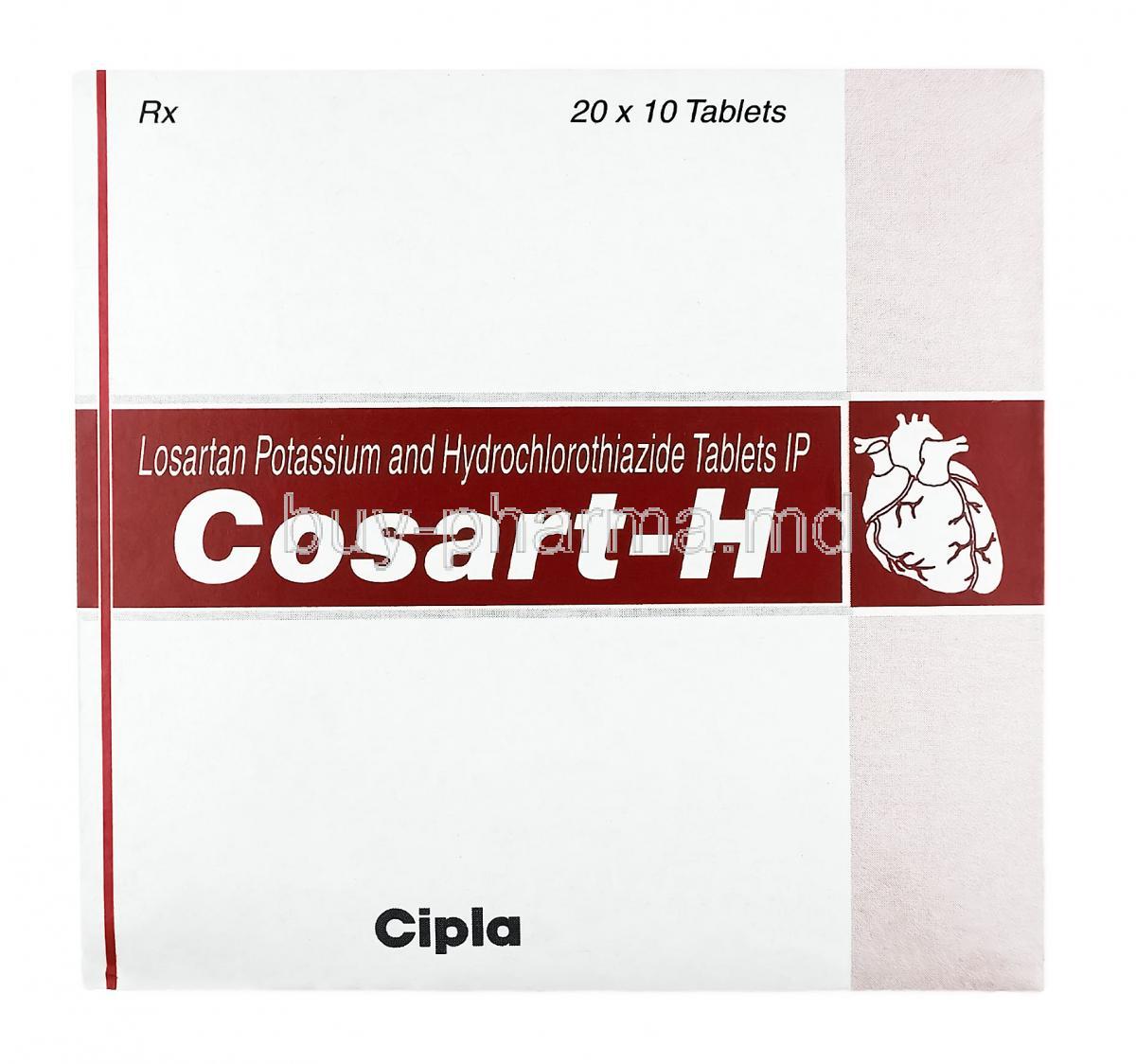
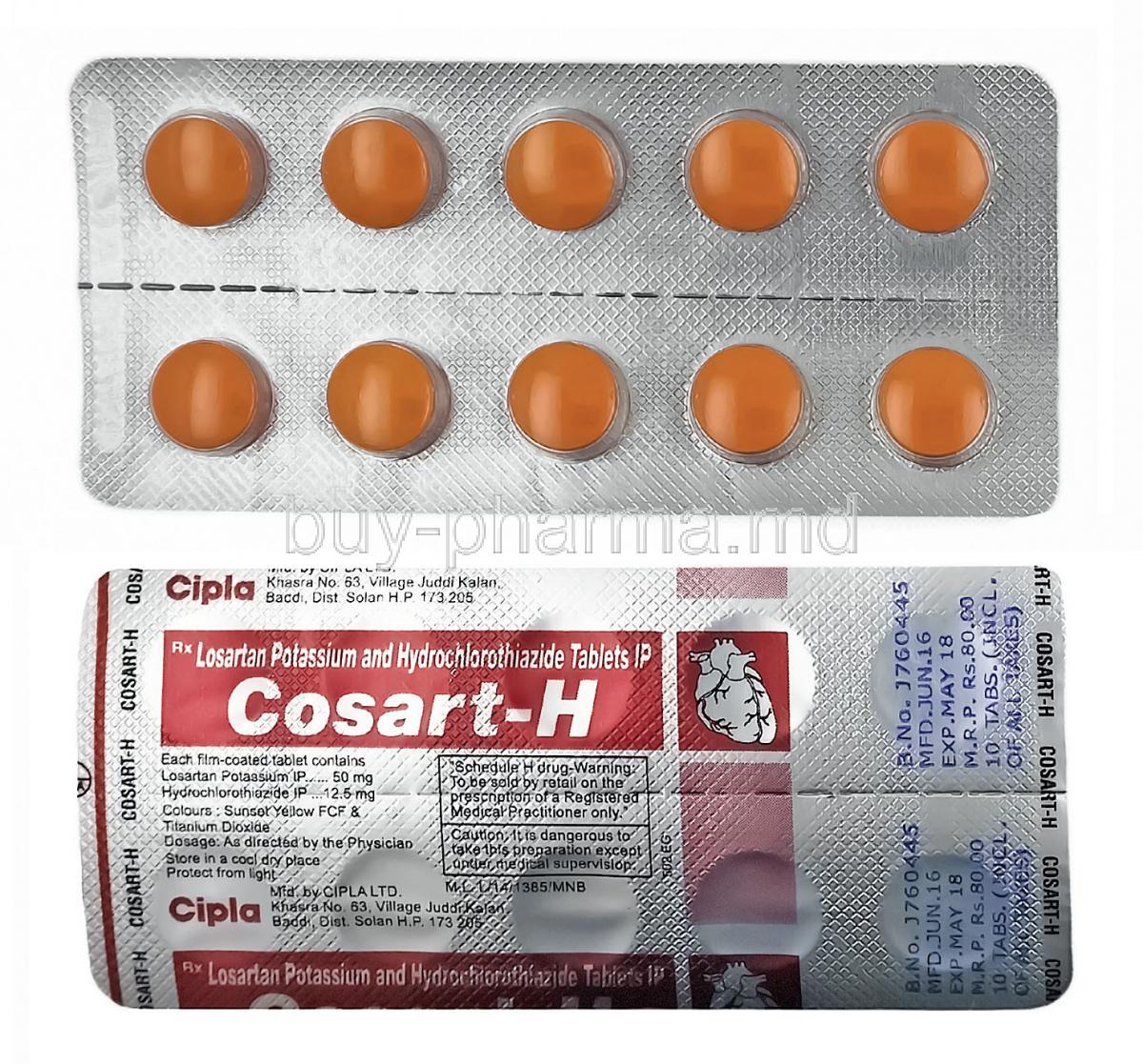
Available strengths may vary, often including combinations such as 50 mg/12.5 mg or 100 mg/25 mg. These allow clinicians to tailor therapy with precision. Tablets are the predominant dosage form, designed for oral administration.
2.3 Role of Each Component in Blood Pressure Control
- Losartan: Blocks angiotensin II receptors, reducing vasoconstriction
- Hydrochlorothiazide: Enhances sodium and water excretion
The dual mechanism ensures both vascular relaxation and volume reduction. This integrative effect leads to sustained blood pressure lowering.
2.4 Excipients and Tablet Design
Inactive ingredients support tablet stability, bioavailability, and manufacturability. Coating agents may also enhance swallowability and protect active components from degradation.
3. Mechanism of Action (How Cosart-H Works)
3.1 Angiotensin II Receptor Blockade by Losartan
Losartan selectively inhibits AT1 receptors, preventing angiotensin II from exerting its vasoconstrictive effects. This results in arterial dilation. Blood pressure decreases as systemic vascular resistance declines.
3.2 Diuretic Effect of Hydrochlorothiazide on Sodium and Fluid Balance
Hydrochlorothiazide acts on the distal convoluted tubules of the nephron. It promotes excretion of sodium and water. Consequently, plasma volume diminishes, contributing to reduced blood pressure.
3.3 Synergistic Blood Pressure Reduction Mechanism
The combination yields a potentiated antihypertensive effect. While losartan addresses hormonal pathways, hydrochlorothiazide manages fluid dynamics. Together, they produce a robust and sustained response.
3.4 Effects on Renin-Angiotensin-Aldosterone System (RAAS)
Losartan modulates the RAAS, attenuating aldosterone secretion. This reduces sodium retention and vascular stiffness. The cascade is effectively interrupted, enhancing cardiovascular outcomes.
3.5 Impact on Vascular Resistance and Fluid Volume
By reducing both vascular tone and circulating volume, Cosart-H addresses two primary determinants of blood pressure. This dual modulation is particularly advantageous in resistant cases.
4. Uses of Cosart-H (Approved Indications)
4.1 Management of Essential Hypertension
Cosart-H is primarily prescribed for essential hypertension. It is effective in lowering systolic and diastolic pressures. Consistent use contributes to long-term cardiovascular protection.
4.2 Treatment of Hypertension in Patients Uncontrolled on Monotherapy
Patients who do not achieve adequate control with a single agent often benefit from this combination. It enhances therapeutic outcomes without necessitating multiple prescriptions.
4.3 Reduction of Cardiovascular Risk in Hypertensive Patients
Lowering blood pressure reduces the incidence of myocardial infarction, stroke, and other cardiovascular events. Cosart-H plays a pivotal role in risk mitigation.
4.4 Blood Pressure Control in Patients with Left Ventricular Hypertrophy
Effective blood pressure management can regress left ventricular hypertrophy. This reduces cardiac workload and improves overall cardiac function.
4.5 Role in Preventing Stroke in High-Risk Individuals
In patients with elevated risk profiles, maintaining optimal blood pressure is critical. Cosart-H contributes to stroke prevention through sustained hemodynamic control.
5. Off-Label Uses of Losartan / Hydrochlorothiazide
5.1 Management of Diabetic Nephropathy and Proteinuria
Losartan has renoprotective properties. It reduces proteinuria and slows progression of diabetic kidney disease.
5.2 Chronic Kidney Disease (CKD) with Hypertension
In CKD patients, blood pressure control is essential. This combination supports renal preservation and cardiovascular stability.
5.3 Heart Failure Management (Adjunct Therapy)
Losartan may be used as an adjunct in heart failure. It alleviates afterload and improves cardiac output.
5.4 Edema Associated with Fluid Retention Disorders
Hydrochlorothiazide aids in fluid elimination. This is beneficial in conditions characterized by edema.
5.5 Prevention of Recurrent Kidney Stones (Hypercalciuria)
Thiazide diuretics reduce urinary calcium excretion. This helps prevent calcium-based kidney stones.
5.6 Use in Resistant Hypertension
Combination therapy is often required in resistant hypertension. Cosart-H provides a viable option for such cases.
5.7 Metabolic Syndrome and Cardiometabolic Risk Reduction
By addressing hypertension, Cosart-H contributes to broader cardiometabolic risk reduction. It is often part of a multifaceted treatment strategy.
6. Dosage and Administration Guidelines
6.1 Losartan-hydrochlorothiazide dosage
Hydrochlorothiazide 12.5 to 25 mg-Losartan 50 to 100 mg orally once a day. Maximum dose: Hydrochlorothiazide 25 mg-Losartan 100 mg orally once a day.
6.2 Dose Titration Based on Blood Pressure Response
Gradual titration ensures optimal efficacy while minimizing adverse effects. Regular monitoring is essential.
6.3 Administration with or without Food
Cosart-H can be taken with or without meals. Consistency in administration timing enhances adherence.
6.4 Missed Dose and Compliance Considerations
- Take the missed dose as soon as remembered
- Avoid doubling doses
Adherence is crucial for sustained blood pressure control.
6.5 Duration of Therapy and Long-Term Use
Hypertension often requires lifelong management. Cosart-H is suitable for long-term use under medical supervision.
6.6 Switching from Monotherapy to Combination Therapy
Transitioning to combination therapy should be guided by clinical evaluation. It is often seamless and beneficial.
7. Side Effects of Cosart-H
7.1 Overview of Adverse Drug Reactions
Adverse reactions may occur, though many are mild and transient. Monitoring enhances safety.
7.2 Side effects of losartan/hydrochlorothiazide
- Dizziness and lightheadedness
- Fatigue
- Increased urination
- Electrolyte imbalance
7.3 Less Common Side Effects
- Hypotension
- Muscle cramps
- Gastrointestinal disturbances
7.4 Serious Side Effects
- Severe dehydration
- Acute kidney injury
- Angioedema
- Severe electrolyte disturbances
7.5 When to Seek Medical Attention
Immediate medical attention is warranted if severe symptoms develop. Early intervention prevents complications.
8. Losartam/Hydrochlorothiazide Interactions
8.1 Interactions with Other Antihypertensive Agents
Concurrent use may potentiate hypotensive effects. Dose adjustments may be necessary.
8.2 NSAIDs and Risk of Reduced Efficacy or Kidney Impairment
NSAIDs can attenuate antihypertensive effects and impair renal function. Caution is advised.
8.3 Potassium Supplements and Potassium-Sparing Diuretics
Risk of hyperkalemia increases with concomitant use. Monitoring is essential.
8.4 Lithium Toxicity Risk
Lithium levels may rise, leading to toxicity. Regular monitoring is recommended.
8.5 Interaction with Antidiabetic Medications
Blood glucose levels may be affected. Adjustments in antidiabetic therapy may be required.
8.6 Alcohol and Additive Hypotensive Effects
Alcohol may enhance blood pressure-lowering effects. Patients should exercise caution.
9. Warnings and Safety Considerations
9.1 Risk of Hypotension in Volume-Depleted Patients
Patients with low fluid volume are at increased risk. Careful initiation is ضروری.
9.2 Renal Function Monitoring Requirements
Regular assessment of renal parameters is crucial. Early detection of dysfunction improves outcomes.
9.3 Electrolyte Imbalance Risks
Electrolyte disturbances can occur. Monitoring sodium and potassium levels is imperative.
9.4 Photosensitivity Due to Hydrochlorothiazide
Patients may experience increased sensitivity to sunlight. Protective measures are recommended.
9.5 Risk of Hyperuricemia and Gout
Hydrochlorothiazide may elevate uric acid levels. Patients with gout require caution.
9.6 Hepatic Impairment Considerations
Liver dysfunction may alter drug metabolism. Dose adjustments may be necessary.
10. Contraindications
10.1 Hypersensitivity to Losartan or Sulfonamide-Derived Drugs
Allergic reactions contraindicate use. Alternative therapies should be considered.
10.2 Pregnancy (Especially Second and Third Trimester)
Use during pregnancy is contraindicated due to risk of fetal harm.
10.3 Severe Renal Impairment or Anuria
Patients with severe renal dysfunction should avoid this medication.
10.4 Concomitant Use with Aliskiren in Diabetic Patients
This combination increases risk of adverse outcomes and is contraindicated.
10.5 Severe Hepatic Dysfunction
Severe liver impairment limits safe use. Clinical judgment is essential.
11. Careful Administration (Use with Caution)
11.1 Patients with Renal Artery Stenosis
In individuals with renal artery stenosis, the administration of Cosart-H necessitates heightened vigilance. Losartan influences renal hemodynamics by modulating the renin-angiotensin-aldosterone system. In compromised renal perfusion states, this may precipitate a decline in glomerular filtration rate. The consequence can be insidious or abrupt.
- Monitor serum creatinine and blood urea nitrogen regularly
- Assess for signs of worsening renal function
- Consider alternative therapies in severe bilateral stenosis
11.2 Individuals with Electrolyte Imbalances
Electrolyte disequilibrium, whether pre-existing or drug-induced, requires meticulous correction before and during therapy. Hydrochlorothiazide may exacerbate hyponatremia, hypokalemia, or hypomagnesemia. Subtle disturbances can evolve into clinically significant abnormalities.
11.3 Patients with History of Gout
Hydrochlorothiazide has the propensity to elevate serum uric acid levels. This hyperuricemic effect can trigger gout flares in predisposed individuals. Patients with a history of gout should be monitored closely.
- Evaluate uric acid levels periodically
- Watch for joint pain or inflammation
- Consider prophylactic measures if necessary
11.4 Volume-Depleted or Dehydrated Patients
Patients presenting with hypovolemia are particularly susceptible to pronounced hypotension upon initiation. Even a modest reduction in circulating volume can amplify the pharmacodynamic effects of the drug.
11.5 Elderly Patients with Comorbidities
In geriatric populations, comorbid conditions such as renal insufficiency, diabetes, or cardiovascular disease complicate therapeutic decisions. Polypharmacy further increases the risk of adverse interactions. Individualized dosing becomes indispensable.
12. Important Precautions Before and During Use
12.1 Regular Monitoring of Blood Pressure
Consistent monitoring of blood pressure is fundamental. Fluctuations may indicate inadequate control or excessive pharmacologic effect. Home-based measurements can complement clinical assessments.
12.2 Monitoring Kidney Function and Electrolytes
Renal parameters and electrolyte levels should be evaluated at baseline and periodically thereafter. Even asymptomatic changes can herald impending complications.
- Serum potassium and sodium levels
- Renal function markers (creatinine, eGFR)
- Periodic laboratory reassessment
12.3 Maintaining Adequate Hydration
Adequate hydration mitigates the risk of excessive diuresis and hypotension. Patients should be advised to maintain fluid intake, particularly during hot weather or illness.
12.4 Avoiding Sudden Discontinuation
Abrupt cessation may lead to rebound hypertension. Gradual tapering is often preferable when discontinuation is necessary. Continuity of therapy ensures sustained blood pressure control.
12.5 Sun Protection Due to Photosensitivity Risk
Hydrochlorothiazide may induce photosensitivity reactions. Cutaneous manifestations can range from mild erythema to more pronounced dermatologic responses.
- Use broad-spectrum sunscreen
- Wear protective clothing
- Avoid prolonged sun exposure
12.6 Lifestyle Modifications (Diet, Exercise, Sodium Restriction)
Pharmacotherapy is most effective when complemented by lifestyle modifications. Dietary sodium restriction, regular physical activity, and weight management enhance therapeutic outcomes.
13. Administration in Special Populations
13.1 Administration to Elderly Patients
Elderly patients often exhibit increased pharmacodynamic sensitivity. Age-related decline in renal function necessitates cautious dosing. The risk of hypotension and renal impairment is heightened.
- Initiate therapy at lower doses when feasible
- Monitor for orthostatic hypotension
- Assess renal function periodically
13.2 Administration to Pregnant Women
Cosart-H is contraindicated during pregnancy, particularly in the second and third trimesters. Exposure may result in fetal toxicity, including renal dysfunction and oligohydramnios.
Alternative antihypertensive agents with established safety profiles should be utilized during pregnancy.
13.3 Administration to Nursing Mothers
The excretion of components into breast milk remains a clinical consideration. Although data may be limited, the potential for adverse effects in the infant necessitates a careful risk-benefit evaluation.
13.4 Administration to Pediatric Patients
Safety and efficacy in pediatric populations are not universally established. Dosing must be individualized, taking into account body weight and clinical condition.
14. Overdosage and Management
14.1 Symptoms of Overdose (Hypotension, Electrolyte Imbalance)
Overdose may manifest as profound hypotension, electrolyte disturbances, or dehydration. Symptoms can vary in severity depending on the ingested dose.
- Dizziness and syncope
- Severe weakness
- Irregular heart rhythms due to electrolyte imbalance
14.2 Immediate Management and Supportive Care
Prompt medical intervention is essential. Supportive care remains the cornerstone of management. Stabilization of vital signs takes precedence.
14.3 Role of Fluid Replacement and Monitoring
Intravenous fluids may be administered to restore circulatory volume. Continuous monitoring of electrolytes and renal function is critical during recovery.
14.4 Dialysis Considerations
Losartan is not effectively removed by hemodialysis. However, management of hydrochlorothiazide-related effects may still require supportive measures. Dialysis decisions should be individualized.
15. Storage and Stability
15.1 Recommended Storage Conditions (Temperature, Humidity)
Cosart-H should be stored at controlled room temperature, away from excessive humidity. Stability is contingent upon appropriate environmental conditions.
15.2 Protection from Light and Moisture
Exposure to light and moisture may degrade active components. Tablets should remain in their original packaging until use.
15.3 Shelf Life and Expiry Considerations
Adherence to expiry dates is imperative. Potency and safety cannot be guaranteed beyond the designated shelf life.
15.4 Safe Storage Away from Children
Medications should be kept out of reach of children. Accidental ingestion can have serious consequences.
16. Handling Precautions
16.1 Proper Handling and Dispensing Guidelines
Healthcare professionals should adhere to established dispensing protocols. Accuracy in labeling and patient instructions is paramount.
16.2 Avoiding Exposure to Moisture and Heat
Handling should minimize exposure to environmental stressors. Excess heat or moisture can compromise drug integrity.
16.3 Safe Disposal of Unused Medication
Unused or expired medication should be disposed of in accordance with local regulations. Improper disposal may pose environmental risks.
16.4 Patient Counseling Points for Safe Use
Patients should be educated on correct usage, potential side effects, and adherence أهمية. Clear communication enhances therapeutic outcomes and minimizes risks.
Cosart - H, Losartan/ Hydrochlorothiazide FAQ
- What is Cosart H used for?
- What happens if I overuse Cosart H?
- How often should I use Cosart H?
- What are the side effects of Cosart?
- What are the ingredients in Cosart H?
- What does losartan hydrochlorothiazide do?
- What are the side effects of losartan and hydrochlorothiazide together?
- What is the best time of day to take Losartan Hydrochlorothiazide?
- What is the most common side effect of hydrochlorothiazide?
- Can I stop taking losartan if my blood pressure is normal?
- How long does it take for losartan and hydrochlorothiazide to work?
- What medicine should I not take with hydrochlorothiazide?
- Should you drink a lot of water when taking losartan?
- Which organ does losartan affect?
- What happens if you suddenly stop taking hydrochlorothiazide?
- What organ does hydrochlorothiazide affect?
- How long until losartan lowers BP?
- What is a good replacement for losartan?
- Why add hydrochlorothiazide to losartan?
- Can I take losartan at night?
- Does losartan affect sleep?
What is Cosart H used for?
Cosart H tablet is used to manage high blood pressure when it cannot be controlled with losartan or hydrochlorothiazide alone. It works by relaxing the blood vessels and removing more water and salt from the body, which helps lower elevated blood pressure.
What happens if I overuse Cosart H?
Dizziness and weakness
How often should I use Cosart H?
Everyday
What are the side effects of Cosart?
- Tiredness
- Hypoglycemia
- Cold hands and feet
- Diarrhea
What are the ingredients in Cosart H?
Losartan and Hydrochlorothiazide
What does losartan hydrochlorothiazide do?
It combines an angiotensin II receptor blocker (losartan) that relaxes blood vessels with a diuretic (hydrochlorothiazide) that removes excess fluid, often reducing the risk of stroke in patients with hypertension and left ventricular hypertrophy.
What are the side effects of losartan and hydrochlorothiazide together?
- Stomachache
- Headache
- Dizziness
- Insomnia
- Faintness
What is the best time of day to take Losartan Hydrochlorothiazide?
Anytime
What is the most common side effect of hydrochlorothiazide?
- Electrolyte imbalances
- Dizziness
- Weakness
Can I stop taking losartan if my blood pressure is normal?
No
How long does it take for losartan and hydrochlorothiazide to work?
3-6 weeks
What medicine should I not take with hydrochlorothiazide?
- alcohol
- barbiturates, like phenobarbital
- cholestyramine
- colestipol
- digoxin
- diuretics
- iron salts
Should you drink a lot of water when taking losartan?
Yes
Which organ does losartan affect?
Kidneys
What happens if you suddenly stop taking hydrochlorothiazide?
High blood pressure
What organ does hydrochlorothiazide affect?
Kidneys
How long until losartan lowers BP?
1-6 hours
What is a good replacement for losartan?
Why add hydrochlorothiazide to losartan?
Losartan and hydrochlorothiazide combination is also used to reduce the risk of stroke in patients with high blood pressure and enlargement of the heart.
Can I take losartan at night?
Yes
Does losartan affect sleep?
Yes
Popular Products

Similar Product