
1. Introduction to Modula (Tadalafil)
1.1 What Is Modula?
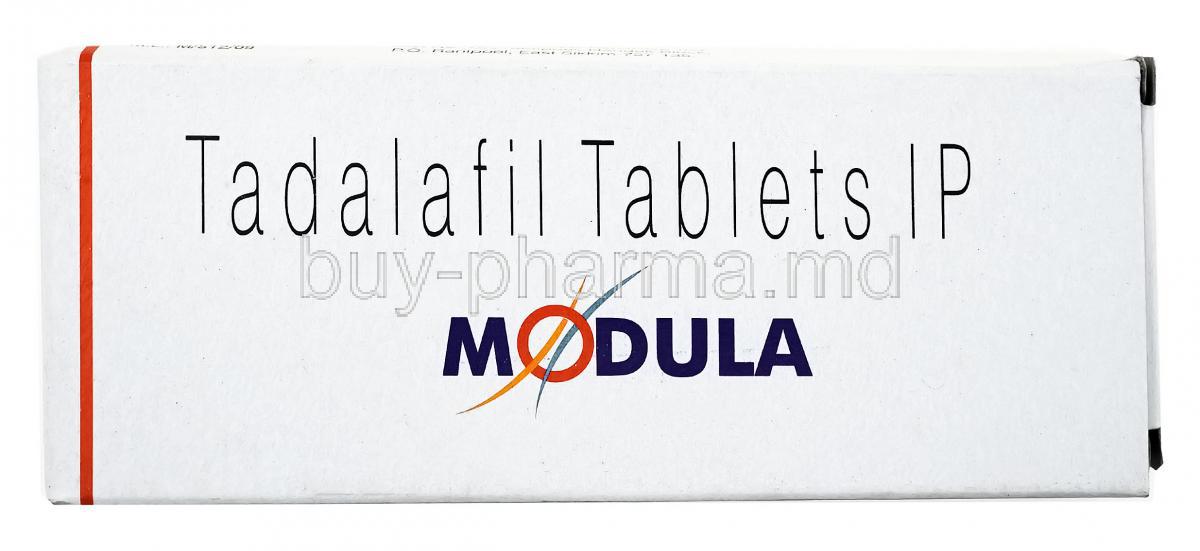
Modula is a branded formulation of tadalafil, an orally administered therapeutic agent primarily prescribed for vascular-related dysfunctions. It is widely recognized for its role in improving erectile performance and alleviating urinary symptoms associated with prostatic enlargement. The medication exerts prolonged activity compared to many agents in its class, offering extended therapeutic latitude.
Clinically, Modula is valued for:
- Its sustained duration of action
- Flexible dosing strategies
- Established efficacy in multiple urological conditions
Its pharmacological profile allows patients greater spontaneity, a characteristic that distinguishes it within the therapeutic armamentarium.
1.2 Active Ingredient: Tadalafil
Tadalafil is the principal bioactive compound in Modula. It is a selective inhibitor of phosphodiesterase type 5 (PDE5), an enzyme that regulates cyclic guanosine monophosphate (cGMP) degradation in smooth muscle cells. Through enzymatic modulation, tadalafil enhances vasodilatory pathways and augments blood perfusion in targeted tissues.
1.3 Drug Class: Phosphodiesterase Type 5 (PDE5) Inhibitor
As a PDE5 inhibitor, tadalafil belongs to a class of vasoactive agents that facilitate smooth muscle relaxation. These medications amplify endogenous nitric oxide signaling rather than directly inducing erections. The distinction is clinically significant. Sexual stimulation remains necessary for pharmacodynamic activation.
This mechanism supports:
- Improved erectile rigidity
- Reduced lower urinary tract tension
- Decreased pulmonary arterial pressure in specific indications
1.4 Regulatory Status and Approved Indications
Tadalafil has received regulatory approval in numerous jurisdictions for:
- Erectile dysfunction (ED)
- Benign prostatic hyperplasia (BPH)
- Combination therapy for ED with BPH
- Pulmonary arterial hypertension (PAH) in specialized formulations
Each indication is supported by controlled clinical trials demonstrating statistically significant symptomatic improvement.
1.5 Overview of Therapeutic Applications
Modula serves as a multifunctional vasomodulator. Its therapeutic versatility extends beyond sexual medicine into urology and cardiopulmonary domains. The breadth of application underscores its importance in contemporary practice.
2. Composition and Pharmaceutical Information
2.1 Active Ingredient: Tadalafil
Each tablet contains tadalafil in precisely calibrated quantities to ensure predictable bioavailability and reproducible plasma concentrations.
2.2 Inactive Ingredients and Excipients
Excipients may include lactose monohydrate, microcrystalline cellulose, croscarmellose sodium, magnesium stearate, and film-coating agents. These substances provide structural integrity, dissolution optimization, and enhanced stability.
2.3 Available Strengths (2.5 mg, 5 mg, 10 mg, 20 mg)
Modula is available in graduated strengths to accommodate individualized therapeutic needs:
- 2.5 mg and 5 mg for daily regimens
- 10 mg and 20 mg for on-demand therapy
Dose selection is contingent upon clinical response and tolerability.
2.4 Dosage Forms (Film-Coated Tablets)
The medication is formulated as film-coated tablets, engineered for oral administration. The coating improves swallowability and protects the active compound from environmental degradation.
2.5 Packaging and Presentation
Modula tablets are typically packaged in blister packs to preserve integrity and minimize moisture exposure. Clear labeling ensures accurate dosing compliance.
3. How Modula (Tadalafil) Works
3.1 Mechanism of Action: PDE5 Inhibition
Tadalafil selectively inhibits PDE5, preventing the breakdown of cGMP. Elevated cGMP levels facilitate smooth muscle relaxation. The result is augmented vascular inflow in specific tissues.
3.2 Role of Nitric Oxide and cGMP in Erectile Function
During sexual stimulation, nitric oxide is released in penile tissue. This activates guanylate cyclase, increasing cGMP production. Tadalafil preserves cGMP by inhibiting its enzymatic degradation, thereby enhancing erectile response.
3.3 Vasodilation Effects on Penile Tissue
Relaxation of cavernosal smooth muscle permits enhanced arterial influx and reduced venous outflow. This hemodynamic synergy supports sustained erection.
3.4 Mechanism in Benign Prostatic Hyperplasia (BPH)
In prostatic and bladder smooth muscle, PDE5 inhibition reduces muscular tone. The outcome includes improved urinary flow and diminished urgency.
3.5 Mechanism in Pulmonary Arterial Hypertension (PAH)
Within pulmonary vasculature, tadalafil decreases arterial pressure by promoting vasodilation. This reduces right ventricular strain and enhances exercise tolerance.
3.6 Duration of Action and Pharmacokinetics
Tadalafil exhibits a prolonged half-life of approximately 17.5 hours. This extended duration allows therapeutic activity for up to 36 hours. Absorption is rapid, with peak plasma concentrations occurring within two hours.
3.7 Onset of Action and Half-Life
Clinical onset may occur within 30 to 60 minutes. The long elimination half-life supports once-daily or intermittent use without abrupt decline in efficacy.
4. Approved Uses of Modula (Tadalafil)
4.1 Erectile Dysfunction (ED)
Modula is indicated for the treatment of erectile dysfunction across severity spectrums.
Treatment of Mild, Moderate, and Severe ED
Clinical studies demonstrate improved International Index of Erectile Function (IIEF) scores in diverse patient populations, including those with diabetes and hypertension.
On-Demand vs. Daily Therapy
- On-demand dosing: Taken prior to anticipated sexual activity
- Daily dosing: Continuous low-dose regimen for spontaneous readiness
4.2 Benign Prostatic Hyperplasia (BPH)
Modula reduces lower urinary tract symptoms linked to prostatic enlargement.
Relief of Lower Urinary Tract Symptoms (LUTS)
Symptoms such as frequency, nocturia, and urgency may improve within weeks.
Improvement of Urinary Flow
Smooth muscle relaxation reduces outlet resistance, facilitating improved voiding dynamics.
4.3 Erectile Dysfunction with BPH
Dual Treatment Approach
A single agent addressing both erectile and urinary dysfunction simplifies therapeutic regimens and enhances adherence.
4.4 Pulmonary Arterial Hypertension (PAH) (Specific Formulations)
In specialized dosing formats, tadalafil improves exercise capacity and delays clinical worsening in PAH patients.
5. Off-Label Uses of Tadalafil
5.1 Raynaud’s Phenomenon
Vasodilatory properties may reduce vasospastic episodes in selected cases.
5.2 Female Sexual Arousal Disorder (Investigational Use)
Research continues to evaluate potential benefits in enhancing genital blood flow in women.
5.3 Altitude-Induced Pulmonary Hypertension
Limited data suggest possible mitigation of hypoxia-related pulmonary pressure increases.
5.4 Chronic Heart Failure (Under Clinical Evaluation)
Ongoing trials are exploring hemodynamic improvements in select heart failure populations.
5.5 Exercise Capacity Improvement in Certain Cardiovascular Conditions
Enhanced endothelial function may improve exertional tolerance.
5.6 Lower Urinary Tract Symptoms Not Related to BPH
Some clinicians investigate broader applications in functional urinary disorders.
6. Dosage and Administration Guidelines
6.1 Recommended Dosage for Erectile Dysfunction (On-Demand Use)
Typical starting dose: 10 mg prior to sexual activity. May increase to 20 mg or decrease to 5 mg based on response.
6.2 Daily Low-Dose Regimen for ED
2.5 mg to 5 mg once daily at approximately the same time each day.
6.3 Dosage for Benign Prostatic Hyperplasia
5 mg once daily is commonly prescribed.
6.4 Dosage for ED with BPH
5 mg once daily addresses both conditions concurrently.
6.5 Dosage Adjustments in Renal Impairment
Reduced dosing frequency may be necessary in moderate to severe renal dysfunction.
6.6 Dosage Adjustments in Hepatic Impairment
Caution is advised in hepatic insufficiency; lower doses are typically recommended.
6.7 Administration with or Without Food
Food does not significantly affect absorption. Tablets may be taken irrespective of meals.
6.8 Missed Dose Instructions
If a daily dose is missed, it should be taken as soon as remembered unless near the next scheduled dose.
6.9 Duration of Therapy
Long-term use is permissible under medical supervision. Periodic evaluation is advised.
7. Common Side Effects of Modula (Tadalafil)
7.1 Headache
The most frequently reported adverse event. Typically mild and transient.
7.2 Flushing
Cutaneous vasodilation may cause warmth or erythema.
7.3 Dyspepsia (Indigestion)
Gastrointestinal discomfort may occur due to smooth muscle relaxation in the esophageal sphincter.
7.4 Nasal Congestion
Vasodilatory effects may extend to nasal mucosa.
7.5 Back Pain
Musculoskeletal discomfort is generally self-limiting.
7.6 Myalgia (Muscle Pain)
Diffuse muscle soreness has been reported in some individuals.
7.7 Limb Pain
Peripheral discomfort may manifest but is usually mild.
8. Serious and Less Common Side Effects
8.1 Hypotension and Dizziness
Excessive vasodilation may precipitate symptomatic blood pressure reduction, particularly when combined with nitrates.
8.2 Priapism (Prolonged Erection)
An erection lasting longer than four hours requires immediate medical intervention.
8.3 Sudden Vision Loss (NAION)
Rare cases of non-arteritic anterior ischemic optic neuropathy have been reported.
8.4 Sudden Hearing Loss
Abrupt auditory impairment necessitates urgent evaluation.
8.5 Cardiovascular Events (Myocardial Infarction, Stroke)
Patients with preexisting cardiovascular disease should undergo risk stratification prior to therapy.
8.6 Allergic Reactions and Hypersensitivity
Rash, urticaria, or angioedema may indicate hypersensitivity. Immediate discontinuation is warranted.
9. Drug Interactions
9.1 Nitrates and Nitric Oxide Donors
Concomitant administration of tadalafil with nitrates or nitric oxide donors is contraindicated due to the potential for profound, precipitous hypotension. Both agents potentiate the nitric oxide–cGMP pathway. When combined, this synergistic vasodilatory effect may result in severe systemic blood pressure reduction.
- Nitroglycerin (sublingual, transdermal, intravenous)
- Isosorbide dinitrate or mononitrate
- Amyl nitrite (“poppers”)
Even intermittent nitrate use may pose substantial risk. A clinically significant interval must elapse between tadalafil ingestion and nitrate administration, given tadalafil’s extended half-life.
9.2 Alpha-Blockers
Alpha-adrenergic antagonists, commonly prescribed for hypertension or benign prostatic hyperplasia, may amplify the blood pressure–lowering effects of tadalafil. Orthostatic hypotension can ensue. Patients stabilized on alpha-blocker therapy should initiate tadalafil at the lowest feasible dose.
Careful titration is prudent. Sudden positional changes should be approached cautiously.
9.3 Antihypertensive Medications
Tadalafil may modestly augment the antihypertensive effects of:
- ACE inhibitors
- Angiotensin receptor blockers
- Calcium channel blockers
- Diuretics
While clinically manageable in most individuals, additive vasodilatory responses warrant monitoring. Blood pressure surveillance is advisable during initiation or dose escalation.
9.4 CYP3A4 Inhibitors (Ketoconazole, Ritonavir, Erythromycin)
Tadalafil is predominantly metabolized via the cytochrome P450 3A4 (CYP3A4) pathway. Potent inhibitors of this isoenzyme may significantly elevate systemic tadalafil exposure. Plasma concentrations may increase. Adverse events may intensify.
Strong inhibitors include:
- Ketoconazole
- Ritonavir
- Erythromycin
- Clarithromycin
Dose adjustment is often required. In certain cases, coadministration may be discouraged.
9.5 CYP3A4 Inducers (Rifampin)
Conversely, CYP3A4 inducers such as rifampin may reduce tadalafil plasma levels, potentially diminishing therapeutic efficacy. The pharmacodynamic response may be attenuated. Clinical reassessment may be necessary if symptom control becomes suboptimal.
9.6 Alcohol Interaction
Alcohol possesses intrinsic vasodilatory properties. When consumed concomitantly with tadalafil, additive hypotensive effects may occur. Symptoms may include:
- Dizziness
- Syncope
- Palpitations
Moderation is strongly advised. Excessive ethanol intake should be avoided.
9.7 Grapefruit and Grapefruit Juice
Grapefruit products inhibit intestinal CYP3A4 enzymes, potentially increasing tadalafil bioavailability. Although the magnitude of interaction varies, consistent consumption may alter pharmacokinetics. Prudence suggests limiting grapefruit intake during therapy.
9.8 Other PDE5 Inhibitors
Simultaneous use with other phosphodiesterase type 5 inhibitors is contraindicated. Overlapping mechanisms may precipitate exaggerated vasodilation and heightened adverse reactions. Monotherapy is the standard of care.
10. Warnings and Important Safety Information
10.1 Cardiovascular Risk Assessment Before Initiation
Sexual activity imposes cardiac workload. Therefore, individuals with preexisting cardiovascular pathology require thorough evaluation prior to therapy initiation. A comprehensive risk stratification should assess:
- Recent myocardial infarction
- Unstable angina
- Decompensated heart failure
The balance between therapeutic benefit and cardiovascular risk must be judiciously weighed.
10.2 Risk of Prolonged Erection
Priapism, defined as an erection persisting beyond four hours, constitutes a urological emergency. Prolonged ischemia may lead to irreversible tissue damage. Immediate medical intervention is imperative.
10.3 Vision and Hearing Risk Warnings
Rare instances of non-arteritic anterior ischemic optic neuropathy (NAION) have been reported. Sudden visual disturbance warrants urgent evaluation. Similarly, abrupt hearing reduction or tinnitus necessitates discontinuation and clinical assessment.
10.4 Blood Pressure Monitoring
Given tadalafil’s systemic vasodilatory effects, periodic blood pressure monitoring is recommended, particularly in patients receiving concomitant antihypertensive therapy. Hypotensive episodes should be promptly addressed.
10.5 Use in Patients with Anatomical Penile Deformation
Individuals with anatomical deformities such as Peyronie’s disease may have elevated risk of mechanical complications. Clinical discretion is essential.
10.6 Risk in Patients with Bleeding Disorders
Though not directly anticoagulant, tadalafil may influence vascular dynamics. Patients with coagulopathies or active peptic ulceration should use the medication cautiously.
11. Contraindications
11.1 Concomitant Use with Nitrates
Absolute contraindication. The combination may precipitate life-threatening hypotension.
11.2 Hypersensitivity to Tadalafil
Known hypersensitivity reactions, including angioedema or severe rash, preclude further use.
11.3 Severe Cardiovascular Disorders
Patients with unstable cardiovascular conditions should not initiate therapy until stabilized. Hemodynamic compromise must be avoided.
11.4 Recent Stroke or Myocardial Infarction
Recent cerebrovascular or coronary events represent contraindications due to potential hemodynamic stress.
11.5 Severe Hypotension or Uncontrolled Hypertension
Marked blood pressure instability heightens risk of adverse outcomes. Stabilization is required prior to consideration of therapy.
12. Careful Administration and Important Precautions
12.1 Patients with Renal Impairment
Reduced renal clearance may increase systemic exposure. Dose adjustment is often warranted in moderate to severe renal dysfunction. Clinical monitoring is advised.
12.2 Patients with Hepatic Impairment
Hepatic metabolism via CYP3A4 necessitates caution in patients with hepatic insufficiency. Lower starting doses are typically recommended.
12.3 Patients with Retinal Disorders
Individuals with hereditary retinal degenerative conditions should exercise caution, as PDE inhibition may theoretically affect phototransduction pathways.
12.4 Patients with Peptic Ulcer Disease
Although direct mucosal injury is uncommon, vasodilatory effects may exacerbate bleeding tendencies in active ulceration.
12.5 Patients with Sickle Cell Anemia, Leukemia, or Multiple Myeloma
These hematologic conditions predispose patients to priapism. Vigilant monitoring is essential.
12.6 Concomitant Antihypertensive Therapy
Combined vasodilatory regimens may necessitate dose recalibration. Gradual titration minimizes symptomatic hypotension.
13. Administration in Special Populations
13.1 Administration to Elderly Patients
Dose Considerations
Elderly individuals may exhibit altered pharmacokinetics due to age-related organ function decline. Lower initial doses may be appropriate.
Increased Sensitivity to Hypotension
Age-associated vascular stiffness and polypharmacy increase susceptibility to hypotensive episodes. Close supervision is recommended.
13.2 Administration to Pregnant Women
Lack of Indication in Pregnancy
Tadalafil is not indicated for use in pregnancy. Its primary approved indications pertain to male-specific conditions.
Risk Assessment
If exposure occurs inadvertently, clinical evaluation should assess potential maternal and fetal implications.
13.3 Administration to Nursing Mothers
Excretion in Breast Milk
Data regarding excretion into human breast milk remain limited. Theoretical transfer cannot be excluded.
Clinical Considerations
Risk-benefit assessment is required. Alternative therapies may be considered.
13.4 Administration to Pediatric Patients
Safety and Efficacy in Children
Routine use in pediatric populations has not been established for erectile or prostatic indications.
Restricted Use Except for Specific PAH Indications (If Applicable)
Certain pulmonary arterial hypertension formulations may be employed in carefully selected pediatric cases under specialist supervision.
14. Overdosage
14.1 Symptoms of Tadalafil Overdose
Excessive dosing may amplify known adverse effects, including:
- Severe headache
- Hypotension
- Prolonged erection
- Visual disturbances
14.2 Supportive Treatment Measures
Management is primarily supportive. Vital sign stabilization is paramount. Symptomatic therapy should be instituted as clinically indicated.
14.3 Role of Hemodialysis
Hemodialysis is unlikely to significantly enhance elimination due to tadalafil’s high protein binding and large volume of distribution.
14.4 Emergency Medical Attention Guidelines
Immediate medical evaluation is required for severe hypotension, chest pain, or prolonged erection. Delay may result in irreversible sequelae.
15. Storage and Stability
15.1 Recommended Storage Temperature
Store at controlled room temperature, generally between 20°C and 25°C. Avoid excessive heat.
15.2 Protection from Moisture and Light
Tablets should remain in original packaging until use. Protection from humidity preserves chemical stability.
15.3 Shelf Life Information
Shelf life is determined by manufacturer testing. Expired tablets should not be consumed.
15.4 Disposal Recommendations
Unused medication should be disposed of in accordance with local pharmaceutical waste regulations. Avoid flushing unless explicitly instructed.
16. Handling Precautions
16.1 Safe Handling Instructions
Handle tablets with clean, dry hands. Avoid crushing unless specifically directed by a healthcare professional.
16.2 Keeping Out of Reach of Children
Accidental ingestion may pose significant risk. Store securely in child-resistant packaging.
16.3 Avoiding Tablet Splitting Unless Directed
Altering tablet integrity may compromise dosing accuracy. Splitting should occur only if tablet design permits and professional guidance is provided.
16.4 Avoiding Use of Damaged Tablets
Tablets exhibiting discoloration, fragmentation, or structural compromise should be discarded. Product integrity ensures predictable pharmacological performance.
Modula, Tadalafil FAQ
- What is a Modula Tablet used for?
- What are the side effects of Modula 20 mg?
- How many hours does tadalafil work?
- When to eat modula?
- Do Modula tablets require a prescription?
- Can I take Modula 10 mg?
- Are Modula tablets good for seniors?
- How long does it take for Modula to work?
- What does tadalafil do for a man?
- Is tadalafil stronger than Viagra?
- What is the most common side effect of tadalafil?
- Can a normal man take tadalafil?
- Will tadalafil help you last longer in bed?
- How long does tadalafil last?
- Who should not take tadalafil?
- What is the best time to take tadalafil?
- How quickly does tadalafil start working?
- Can tadalafil damage kidneys?
- What is a Modula Tablet used for?
- Do Modula tablets require a prescription?
- Can I take Modula 10 mg?
- Are Modula tablets good for seniors?
- Is tadalafil stronger than Viagra?
- Is it safe to take tadalafil daily?
What is a Modula Tablet used for?
Modula Tablet is a medicine used to treat erectile dysfunction (ED) and benign prostate hyperplasia (BPH) in men. It helps in improving blood flow to the penile region, thereby facilitating and sustaining an erection
What are the side effects of Modula 20 mg?
- Fatigue
- Stomachache
- Back pain
How many hours does tadalafil work?
30 minutes
When to eat modula?
1 hour before sexual activity
Do Modula tablets require a prescription?
Yes
Can I take Modula 10 mg?
Yes
Are Modula tablets good for seniors?
Yes
How long does it take for Modula to work?
30 minutes to 1 hour
What does tadalafil do for a man?
Tadalafil (Cialis) is used to treat erectile dysfunction (ED, impotence; inability to get or keep an erection), and the symptoms of benign prostatic hyperplasia (BPH; an enlarged prostate) which include difficulty urinating (hesitation, dribbling, weak stream, and incomplete bladder emptying), painful urination
Is tadalafil stronger than Viagra?
Yes
What is the most common side effect of tadalafil?
- Muscle ache
- Indigestion
- Headache
Can a normal man take tadalafil?
Men aged 18 and up
Will tadalafil help you last longer in bed?
Yes
How long does tadalafil last?
Up to 36 hours
Who should not take tadalafil?
- Patients with heart failure, irregular heartbeat, liver disease
What is the best time to take tadalafil?
30 minutes before sexual activity
How quickly does tadalafil start working?
30 minutes to 1 hour
Can tadalafil damage kidneys?
No
What is a Modula Tablet used for?
Modula Tablet is a medicine used to treat erectile dysfunction (ED) and benign prostate hyperplasia (BPH) in men. It helps in improving blood flow to the penile region, thereby facilitating and sustaining an erection
Do Modula tablets require a prescription?
Yes
Can I take Modula 10 mg?
Yes
Are Modula tablets good for seniors?
Yes
Is tadalafil stronger than Viagra?
Yes
Is it safe to take tadalafil daily?
Yes
Customers also bought

Popular Products
Similar Product