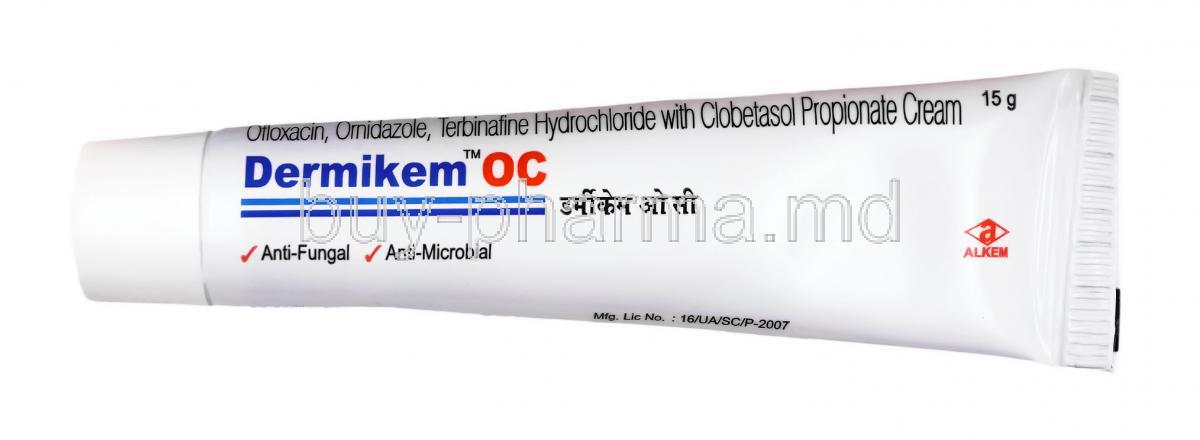
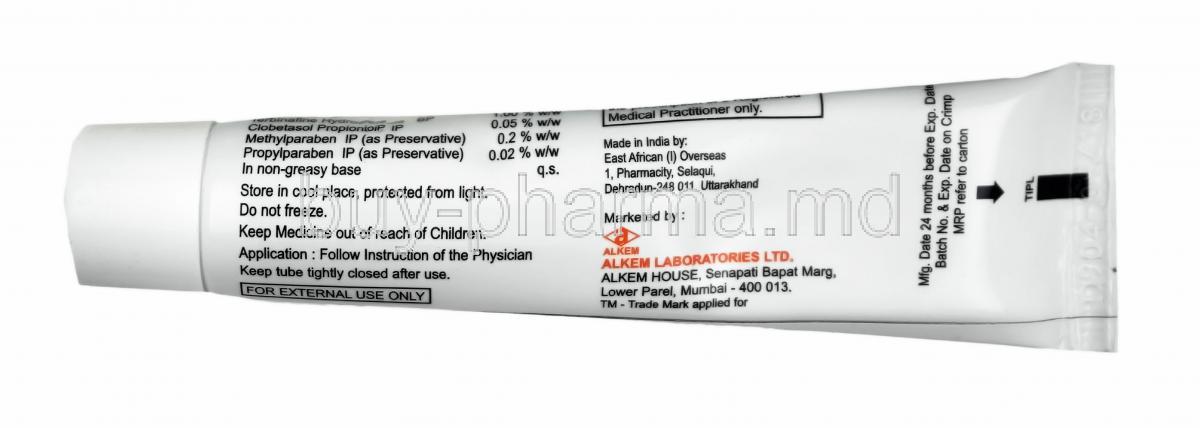


```html
1. Introduction to Dermikem OC Cream (Terbinafine / Clobetasol / Ofloxacin / Ornidazole)
1.1 Overview of Combination Therapy in Dermatology
Combination dermatological therapy represents a strategic approach to managing complex skin conditions. Rather than relying on a single pharmacological pathway, multi-agent formulations address multiple etiologies simultaneously. This is particularly advantageous in conditions where fungal, bacterial, and inflammatory components coexist.
- Targets polymicrobial infections
- Reduces the need for multiple separate medications
- Enhances patient adherence and therapeutic outcomes
1.2 Therapeutic Classification: Antifungal, Corticosteroid, Antibiotic, and Antiprotozoal
Dermikem OC Cream is a polypharmaceutical topical preparation. It integrates:
- An antifungal agent for dermatophyte eradication
- A corticosteroid to mitigate inflammation and pruritus
- An antibiotic for bacterial suppression
- An antiprotozoal compound targeting anaerobic organisms
This multifaceted classification underscores its utility in mixed and refractory dermatoses.
1.3 Indications for Multi-Component Topical Treatments
Multi-component creams are typically indicated when monotherapy proves insufficient. Such scenarios include:
- Mixed infections involving fungi and bacteria
- Inflammatory dermatoses with superimposed infection
- Chronic dermatological conditions prone to recurrence
1.4 Clinical Rationale for Combination Formulations in Mixed Infections
The coexistence of pathogens necessitates a comprehensive therapeutic approach. Inflammatory responses often exacerbate microbial proliferation, creating a cyclical pathology. By simultaneously addressing inflammation and infection, combination creams interrupt this cycle efficiently.
2. Composition and Active Ingredients
2.1 Terbinafine: Broad-Spectrum Antifungal Agent
Terbinafine inhibits fungal growth by disrupting ergosterol synthesis, a critical component of fungal cell membranes. Its fungicidal activity is particularly potent against dermatophytes.
2.2 Clobetasol Propionate: Potent Topical Corticosteroid
Clobetasol propionate is classified as a super-potent corticosteroid. It exerts anti-inflammatory, antipruritic, and vasoconstrictive effects, rapidly alleviating erythema and edema.
2.3 Ofloxacin: Fluoroquinolone Antibiotic Component
Ofloxacin interferes with bacterial DNA replication by inhibiting DNA gyrase. This bactericidal mechanism ensures effective eradication of susceptible organisms.
2.4 Ornidazole: Nitroimidazole Antiprotozoal and Antibacterial Agent
Ornidazole targets anaerobic bacteria and protozoa by disrupting DNA structure and synthesis. It is particularly useful in infections involving anaerobic microflora.
2.5 Role of Excipients and Cream Base in Drug Delivery
The cream base facilitates optimal dermal penetration. Excipients stabilize the formulation, enhance absorption, and ensure uniform distribution across affected areas.
3. Mechanism of Action (How It Works)
3.1 Antifungal Action of Terbinafine on Ergosterol Synthesis
Terbinafine inhibits squalene epoxidase, leading to ergosterol depletion. This results in fungal cell membrane instability and eventual cell death.
3.2 Anti-inflammatory and Immunosuppressive Effects of Clobetasol
Clobetasol reduces cytokine production and leukocyte migration. The result is a marked decrease in inflammation and symptomatic relief.
3.3 Bactericidal Activity of Ofloxacin via DNA Gyrase Inhibition
By inhibiting bacterial DNA gyrase, ofloxacin prevents DNA replication. This leads to rapid bacterial cell death.
3.4 Antiprotozoal Mechanism of Ornidazole on Anaerobic Microorganisms
Ornidazole induces DNA strand breaks in anaerobic organisms. This mechanism is highly effective in environments with low oxygen tension.
3.5 Synergistic Effects in Mixed Dermatological Infections
The combination of agents produces a synergistic therapeutic effect. Each component complements the others, resulting in comprehensive pathogen eradication and inflammation control.
4. Therapeutic Uses of Dermikem OC Cream
4.1 Treatment of Fungal Skin Infections (Dermatophytosis, Tinea Infections)
Common fungal infections such as ringworm, athlete’s foot, and jock itch respond effectively to this formulation.
4.2 Management of Inflammatory Dermatoses with Secondary Infection
Conditions like eczema complicated by microbial colonization benefit significantly from combined therapy.
4.3 Treatment of Bacterial Skin Infections with Inflammatory Components
Inflamed bacterial infections can be controlled through simultaneous antimicrobial and anti-inflammatory action.
4.4 Use in Mixed Microbial Skin Infections (Fungal + Bacterial + Protozoal)
This cream is particularly effective in polymicrobial infections where multiple pathogens coexist.
4.5 Application in Eczematous Conditions Complicated by Infection
Infected eczema often presents with severe irritation. Rapid symptom relief is achieved through corticosteroid action.
4.6 Management of Intertrigo and Moist Skin Fold Infections
Warm, moist environments foster microbial growth. This formulation addresses both infection and inflammation.
4.7 Use in Infected Dermatitis and Contact Dermatitis
Contact dermatitis complicated by infection requires targeted therapy, which this combination provides.
4.8 Role in Seborrheic Dermatitis with Secondary Infection
Seborrheic dermatitis with microbial involvement can be effectively managed with this multi-agent cream.
5. Off-Label Uses and Clinical Applications
5.1 Use in Chronic Resistant Dermatophytosis
Recalcitrant fungal infections may respond to this combination when standard therapies fail.
5.2 Application in Steroid-Responsive Dermatoses with Infection Risk
Certain dermatoses require corticosteroids but carry infection risks. This cream provides dual protection.
5.3 Management of Infected Psoriasis (Selected Cases Under Supervision)
In carefully monitored cases, infected psoriatic lesions may benefit from this therapy.
5.4 Use in Secondary Infected Insect Bites and Minor Skin Trauma
Inflamed insect bites with bacterial contamination can be managed effectively.
5.5 Application in Mixed Vaginal or Perineal Infections (External Use Only)
External perineal infections involving mixed flora may respond to topical application.
5.6 Off-Label Use in Acneiform Eruptions with Bacterial Component
Certain acneiform lesions with bacterial involvement may show improvement.
5.7 Use in Post-Surgical or Wound-Associated Skin Infections (Topical Adjunct)
As an adjunct therapy, it may support wound healing by reducing microbial load.
6. Dosage and Administration Guidelines
6.1 Standard Application Frequency and Duration
Typically applied once or twice daily, depending on severity and clinical judgment.
6.2 Proper Method of Topical Application for Maximum Efficacy
- Clean and dry the affected area before application
- Apply a thin, even layer
- Avoid excessive rubbing
6.3 Recommended Duration Based on Severity of Infection
Treatment duration varies. Short courses are preferred to minimize corticosteroid exposure.
6.4 Use on Different Body Areas (Face, Groin, Limbs)
Sensitive areas require cautious application due to increased absorption.
6.5 Avoidance of Occlusive Dressings Unless Directed
Occlusion may enhance absorption but increases risk of systemic effects.
6.6 Missed Dose Instructions and Continuation of Therapy
If a dose is missed, apply as soon as remembered. Do not double the application.
7. Common Side Effects
7.1 Local Skin Irritation (Burning, Stinging, Itching)
Transient irritation may occur, especially during initial application.
7.2 Dryness and Peeling of Skin
Keratinocyte turnover may be affected, leading to dryness.
7.3 Redness and Mild Inflammatory Reactions
Mild erythema may be observed.
7.4 Transient Discomfort at Application Site
Usually self-limiting and resolves without intervention.
8. Less Common and Serious Side Effects
8.1 Skin Thinning (Atrophy) Due to Corticosteroid Component
Prolonged use may result in dermal atrophy and striae formation.
8.2 Hypopigmentation or Hyperpigmentation Changes
Alterations in melanocyte activity may occur.
8.3 Secondary Fungal or Bacterial Overgrowth with Prolonged Use
Immunosuppression may predispose to opportunistic infections.
8.4 Allergic Reactions (Rash, Swelling, Contact Dermatitis)
Hypersensitivity reactions require discontinuation.
8.5 Systemic Absorption Effects (Rare but Possible with Extensive Use)
Extensive application may lead to systemic corticosteroid effects.
9. Drug Interactions and Topical Compatibility
9.1 Interaction with Other Topical Corticosteroids
Concurrent use increases risk of cumulative steroid exposure.
9.2 Concomitant Use with Systemic Antibiotics or Antifungals
May enhance therapeutic efficacy but requires monitoring.
9.3 Potential Interaction with Immunosuppressive Therapies
Combined immunosuppression may increase infection risk.
9.4 Avoidance of Concurrent Irritating Topical Agents
Irritants may exacerbate skin sensitivity.
9.5 Impact on Skin Barrier and Absorption of Other Medications
Altered barrier function may influence drug permeability.
10. Warnings and Safety Information
10.1 Risk of Misuse in Non-Infectious Skin Conditions
Improper use may worsen underlying conditions.
10.2 Potential for Steroid Dependence and Rebound Dermatitis
Sudden discontinuation after prolonged use may trigger rebound symptoms.
10.3 Development of Antimicrobial Resistance with Improper Use
Indiscriminate use may contribute to resistance.
10.4 Risk of Masking Underlying Severe Skin Disorders
Symptoms may be suppressed, delaying accurate diagnosis.
10.5 Avoidance of Prolonged or Indiscriminate Use
Therapy should be limited to the shortest effective duration.
```
11. Contraindications
11.1 Known Hypersensitivity to Any Component of the Cream
Dermikem OC Cream should not be used in individuals with a known hypersensitivity to terbinafine, clobetasol, ofloxacin, ornidazole, or any inactive ingredient present in the formulation. Allergic susceptibility may manifest as a localized or disseminated cutaneous reaction, and continued application under such circumstances may intensify the inflammatory cascade rather than relieve it.
Potential manifestations of hypersensitivity may include:
- Severe itching or burning after application
- Redness, rash, or swelling beyond the treated area
- Contact dermatitis or blistering eruptions
- Worsening irritation instead of clinical improvement
Any suspicion of an allergic reaction warrants immediate discontinuation and prompt medical evaluation.
11.2 Viral Skin Infections (e.g., Herpes Simplex, Varicella)
This cream is contraindicated in viral skin infections such as herpes simplex, herpes zoster, and varicella. The corticosteroid component, clobetasol, can suppress local immune defenses, potentially aggravating viral replication and obscuring the clinical appearance of the infection. That is a significant concern. It may delay recognition, prolong illness, and increase the risk of dissemination.
Topical corticosteroid use on untreated viral lesions may result in:
- Expansion of the infected area
- Delayed healing
- Secondary infection of fragile lesions
- Masking of characteristic symptoms
11.3 Untreated Tubercular or Syphilitic Skin Lesions
Patients with cutaneous tuberculosis or syphilitic skin lesions should not use Dermikem OC Cream unless specifically directed by a qualified clinician. In such conditions, the anti-inflammatory effect of clobetasol may temporarily suppress visible signs without treating the primary disease process. This can create a deceptive improvement while the underlying pathology continues to progress.
Because these infections require targeted systemic therapy, reliance on a potent combination cream is inappropriate and potentially hazardous.
11.4 Rosacea and Perioral Dermatitis
Dermikem OC Cream is not suitable for rosacea or perioral dermatitis. Potent topical steroids often exacerbate both conditions. In the short term, erythema and irritation may appear to improve, but repeated use can precipitate steroid-induced rebound, persistent flushing, papulopustular eruptions, and increased dermal fragility.
This is especially important for facial skin, which is thinner, more reactive, and more susceptible to adverse corticosteroid effects.
11.5 Use on Open Wounds or Ulcerated Skin Without Medical Advice
Application to open wounds, fissured skin, ulcerated areas, or denuded lesions should be avoided unless a healthcare professional has specifically recommended it. Damaged skin permits greater drug penetration. That can significantly increase systemic absorption of clobetasol and intensify local irritation from the antimicrobial components.
Use on compromised skin may lead to:
- Enhanced absorption and toxicity risk
- Delayed wound healing
- Increased irritation or pain
- Potential alteration of tissue repair processes
12. Careful Administration (Use with Caution)
12.1 Patients with Pre-existing Skin Atrophy or Fragile Skin
Individuals with already thinned, fragile, or senescent skin should use this cream with substantial caution. Clobetasol, being a highly potent corticosteroid, may further reduce dermal integrity and accelerate atrophic changes. This is especially relevant in patients with a history of chronic topical steroid use, connective tissue fragility, or age-related skin thinning.
Potential complications include:
- Visible skin thinning
- Easy bruising
- Telangiectasia
- Striae formation
- Delayed recovery from minor trauma
12.2 Use on Sensitive Areas (Face, Groin, Axillae)
The face, groin, and axillae exhibit greater percutaneous absorption than many other body sites. Because of this, even standard quantities may produce disproportionately strong effects. Potent corticosteroids should be used sparingly, briefly, and only when clearly justified in these regions.
Use on sensitive areas may increase the likelihood of:
- Skin atrophy
- Perioral irritation
- Hypopigmentation
- Folliculitis
- Secondary fungal overgrowth
12.3 Patients with Chronic Dermatological Conditions
Patients with chronic dermatoses such as eczema, psoriasis, seborrheic dermatitis, or recurrent fungal infections should be monitored carefully when using this medication. Mixed presentations can be diagnostically complex. Symptoms may fluctuate. A potent combination product may relieve certain manifestations while concealing others, making accurate long-term management more difficult.
For chronic or relapsing disease, ongoing reassessment is prudent to ensure that treatment remains appropriate and that the diagnosis has not shifted.
12.4 Individuals with History of Allergic Reactions to Topicals
People with a prior history of allergic or irritant reactions to creams, ointments, gels, medicated cosmetics, or topical antibiotics should proceed with caution. Their skin may be more reactive to active agents, preservatives, fragrances, or vehicle ingredients. Even a therapeutically appropriate medication can become problematic when cutaneous reactivity is pronounced.
Clinical vigilance is recommended if the patient has a history of:
- Contact dermatitis
- Topical antibiotic allergy
- Steroid intolerance
- Persistent irritation from medicated creams
12.5 Long-Term Use Monitoring Requirements
Dermikem OC Cream is generally better suited for short-duration therapy than prolonged use. Extended application, particularly over wide body areas or under occlusion, increases the risk of steroid-related adverse effects and may promote microbial imbalance. Monitoring is essential when treatment extends beyond the initial intended course.
Long-term observation may include:
- Evaluation for skin thinning or pigment changes
- Assessment of treatment response and recurrence
- Inspection for secondary infection
- Review of total quantity and duration used
13. Important Precautions for Safe Use
13.1 Limiting Duration to Prevent Steroid-Related Complications
The duration of therapy should be kept as short as clinically feasible. Clobetasol is highly effective, but potency carries consequence. Prolonged use may lead to atrophy, striae, telangiectasia, steroid acne, and, in some cases, systemic corticosteroid absorption.
To reduce complications:
- Use the thinnest effective layer
- Do not continue unnecessarily after symptoms resolve
- Seek reassessment if there is no improvement
- Avoid unsupervised repeated courses
13.2 Avoiding Contact with Eyes, Mouth, and Mucous Membranes
This cream is intended for external dermatological use only. It should not be applied to the eyes, inside the mouth, inside the nose, or to mucous membranes unless specifically directed by a clinician. Contact with these areas may cause marked irritation and unintended absorption.
If accidental exposure occurs, the affected area should be rinsed thoroughly with water. Persistent discomfort requires medical attention.
13.3 Proper Hygiene Before and After Application
Appropriate hygiene is integral to both efficacy and safety. The affected site should be gently cleansed and dried before application so that the medication can adhere evenly and act effectively. Hands should be washed before and after use, unless the hands themselves are being treated.
Good hygiene practices help:
- Reduce contamination of the product
- Minimize spread of infection to other sites
- Improve drug contact with the skin
- Lower the chance of reinfection
13.4 Avoiding Use Under Occlusion Unless Prescribed
Occlusive dressings, plastic coverings, or tightly sealed bandages should generally be avoided unless specifically prescribed. Occlusion increases skin hydration and enhances drug penetration. This may intensify both therapeutic effect and toxicity. With a potent corticosteroid-containing product, that increase can be clinically meaningful.
Unsupervised occlusion may raise the risk of:
- Systemic steroid absorption
- Skin maceration
- Folliculitis
- Secondary infection
13.5 Monitoring for Signs of Worsening Infection
Patients should be advised to watch for signs that the treated condition is deteriorating rather than improving. Not every rash is suitable for this medication. Some may worsen if the diagnosis is incorrect or if resistance, allergy, or an untreated viral condition is present.
Warning signs include:
- Increasing redness or swelling
- Pus formation or oozing
- Expansion of the lesion
- Severe pain or tenderness
- Failure to improve after appropriate use
14. Administration in Special Populations
14.1 Use in Elderly Patients
Older adults often have thinner epidermal and dermal layers, reduced barrier function, and greater susceptibility to irritation. These physiological changes can make the skin more permeable and more vulnerable to corticosteroid-induced adverse effects. Accordingly, treatment in elderly patients should be conservative, measured, and periodically reviewed.
14.1.1 Increased Susceptibility to Skin Thinning
The aging integument is inherently more delicate. Potent corticosteroids may accelerate dermal atrophy, bruising, and telangiectatic change in elderly individuals, particularly when treatment is repeated or extended. Even modest overuse can have outsized effects.
14.1.2 Dose Adjustment and Monitoring Considerations
While topical products are not usually “dose-adjusted” in the same way as oral medicines, elderly patients often benefit from smaller treatment areas, thinner application layers, and shorter treatment intervals. Regular inspection for adverse effects is advisable, especially when the cream is applied to flexural or thin-skinned regions.
14.2 Use in Pregnant Women and Nursing Mothers
Use during pregnancy and lactation should be based on a careful risk-benefit assessment. Topical absorption is generally lower than systemic exposure, yet potent corticosteroids and antimicrobial agents should still be used judiciously. Therapy should be limited to the smallest effective amount for the shortest necessary duration.
14.2.1 Risk-Benefit Assessment During Pregnancy
Pregnant patients should use Dermikem OC Cream only when the anticipated benefit justifies potential risk. Large treatment areas, prolonged application, and occlusive use should be avoided because these factors may increase systemic absorption. Clinical discretion is essential.
14.2.2 Safety of Topical Corticosteroids in Lactation
During breastfeeding, topical corticosteroids are generally approached with caution, particularly when potent agents are involved. Although systemic exposure may remain limited with appropriate use, inadvertent infant exposure must be prevented. The preparation should not be applied excessively or unnecessarily.
14.2.3 Avoidance of Application on Breast Area
The cream should not be applied to the breast or nipple area before breastfeeding. Residual medication could be transferred directly to the infant during feeding, which is undesirable. If treatment near the chest is medically necessary, careful cleansing and timing considerations are essential.
14.3 Use in Pediatric Patients
Children require heightened caution. Their skin surface area relative to body weight is larger than that of adults, which may increase systemic absorption of topical medications. A potent corticosteroid-containing combination cream should therefore be used only when clearly indicated and under appropriate supervision.
14.3.1 Increased Absorption in Children
Pediatric skin is more permeable, and occlusion can occur naturally in diapers, skin folds, or tightly covered areas. This can markedly enhance the absorption of clobetasol. For that reason, indiscriminate use in infants and young children is inappropriate.
14.3.2 Risk of Growth Suppression with Steroid Component
Excessive systemic absorption of potent corticosteroids in children may theoretically suppress the hypothalamic-pituitary-adrenal axis and interfere with normal growth parameters. This risk is uncommon with prudent use, but it becomes more relevant with prolonged treatment, large surface areas, or repeated courses.
14.3.3 Recommended Age Restrictions and Duration Limits
Use in pediatric patients should generally be limited, brief, and guided by a qualified healthcare professional. The exact suitability depends on age, treatment site, lesion type, and severity. Extended unsupervised use is inadvisable. Short treatment windows are preferred.
15. Overdosage and Toxicity Management
15.1 Signs of Excessive Topical Application
Applying excessive quantities or using the cream too frequently may increase both local and systemic adverse effects. Overuse does not necessarily improve efficacy. In fact, it often does the opposite by increasing irritation and toxicity risk.
Possible signs of excessive topical use include:
- Persistent burning or irritation
- Marked skin thinning
- Worsening redness
- Striae or discoloration
- Secondary infection
15.2 Systemic Effects Due to Corticosteroid Absorption
Although uncommon with correct topical use, systemic absorption of clobetasol may occur when the cream is used over large areas, under occlusion, on damaged skin, or for prolonged periods. In such circumstances, features of corticosteroid excess may emerge. These may be subtle at first. They still matter.
Potential systemic consequences may include:
- Suppression of adrenal function
- Hyperglycemia in predisposed individuals
- Cushingoid features with chronic misuse
- Growth effects in children
15.3 Management of Accidental Ingestion
Accidental ingestion requires prompt medical advice, especially in children. While a small amount may not always produce severe toxicity, the presence of multiple active ingredients means that observation is prudent. Patients should not attempt self-treatment beyond basic first aid measures unless instructed by a healthcare professional.
Important immediate steps may include:
- Removing the product from the mouth
- Rinsing the mouth gently with water
- Seeking medical assistance or poison center advice
- Providing the product name and composition if possible
15.4 Recommended Medical Interventions and Monitoring
Management of overdose is generally supportive and symptom-directed. The exact response depends on the amount used, route of exposure, duration, age of the patient, and presence of symptoms. Discontinuation of the product may be required. In cases of chronic corticosteroid overuse, abrupt withdrawal may not always be ideal without clinical oversight.
Medical monitoring may involve:
- Assessment of skin integrity
- Review of adrenal suppression risk
- Observation for systemic symptoms
- Treatment of secondary infection or allergic reaction if present
16. Storage and Stability Information
16.1 Recommended Storage Temperature and Conditions
Dermikem OC Cream should be stored according to the product labeling, typically in a cool, dry place at controlled room temperature unless otherwise specified by the manufacturer. Extreme conditions should be avoided. Proper storage helps preserve formulation stability, texture, and therapeutic reliability.
16.2 Protection from Heat, Moisture, and Direct Sunlight
Heat, humidity, and direct sunlight can compromise the integrity of topical preparations. Repeated exposure may alter consistency, reduce stability, or affect the performance of active ingredients and excipients. Bathrooms, window ledges, and overheated vehicles are poor storage locations.
To maintain product quality:
- Store away from sunlight
- Keep the cap tightly closed
- Avoid damp or humid environments
- Do not expose to excessive heat
16.3 Shelf Life and Expiry Considerations
The cream should not be used beyond its expiry date. An expired topical medicine may have reduced potency, altered physical characteristics, or diminished microbiological stability. If the cream changes color, odor, or texture, it should be considered unsuitable for use even if the labeled expiry date has not yet passed.
16.4 Safe Storage Away from Children and Pets
As with all medicated products, the cream should be stored out of reach of children and pets. Accidental exposure through touching, licking, or ingestion can create avoidable risk. Secure storage is a basic but essential safety measure.
17. Handling and Application Precautions
17.1 Safe Handling Practices for Topical Medications
Topical medications should be handled with clean hands and applied only to the intended area. The tube or container opening should be kept clean, and direct contact between the nozzle and infected skin should be minimized whenever possible. Small measures matter. They reduce contamination and preserve product integrity.
17.2 Avoiding Cross-Contamination During Use
Cross-contamination can occur when the product is shared, when infected areas are touched repeatedly, or when the applicator comes into contact with multiple surfaces. This may spread pathogens to other body sites or to other individuals. Dermikem OC Cream is for personal use only and should not be shared.
Helpful precautions include:
- Using clean hands for each application
- Not touching the tube tip directly to lesions
- Not sharing towels, clothing, or topical products
- Washing hands after application
17.3 Proper Disposal of Unused or Expired Cream
Unused, contaminated, or expired cream should be discarded responsibly according to local pharmaceutical disposal guidance whenever available. It should not be kept indefinitely “just in case,” particularly if the original diagnosis is uncertain or the product is past its recommended use period.
Do not use deteriorated medication. Do not pass it to someone else. Both practices are unsound.
17.4 Hygiene Practices to Prevent Reinfection
Successful treatment depends not only on the medicine but also on hygienic discipline. Reinfection is common when fungal or bacterial reservoirs remain in clothing, bedding, footwear, towels, or skin folds. Without hygiene control, recurrence becomes more likely even after apparent improvement.
Preventive hygiene measures may include:
- Keeping the affected area clean and dry
- Changing socks, undergarments, or dressings regularly
- Washing towels and clothing separately when needed
- Avoiding scratching or rubbing the lesion
- Maintaining proper skin-fold hygiene in moist areas
Customers also bought
Popular Products
Similar Product