1. Introduction to Exel M Cream (Clobetasol / Miconazole)
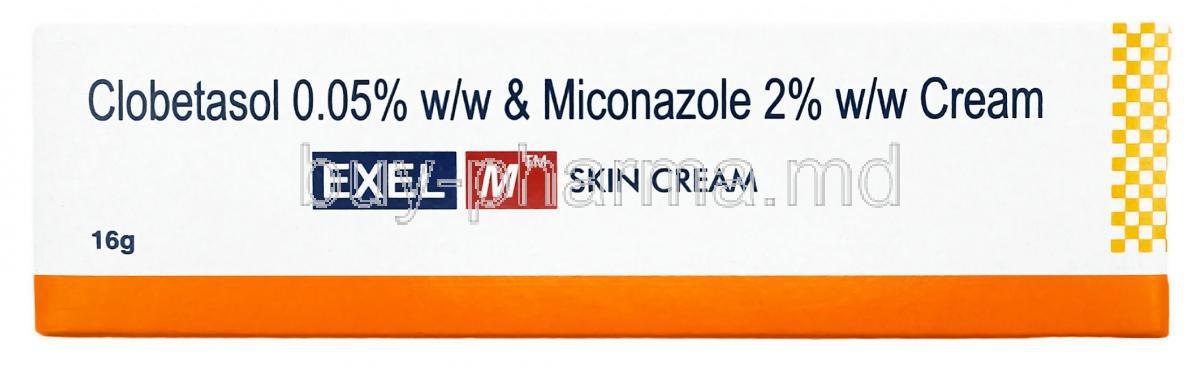
Exel M Cream is a prescription topical medication designed for dermatological conditions characterized by both inflammation and fungal infection. It belongs to a specialized therapeutic category that combines an ultra-potent corticosteroid with a broad-spectrum antifungal agent. This dual-action formulation is intended to relieve symptoms rapidly while addressing the underlying infectious etiology.
The preparation integrates two pharmacologic classes:
- Topical corticosteroid for anti-inflammatory and immunomodulatory effects
- Antifungal agent targeting pathogenic fungi
Exel M Cream is commonly indicated for inflammatory fungal dermatoses presenting with erythema, pruritus, edema, or scaling. Because of the high potency of clobetasol, medical supervision is essential. The formulation is typically recommended when simple antifungal therapy alone is insufficient and the inflammatory component is pronounced, persistent, or debilitating.
2. Composition and Formulation
2.1 Active Ingredients
The therapeutic efficacy of Exel M Cream derives from its two principal components:
- Clobetasol propionate – an ultra-potent topical corticosteroid that suppresses inflammatory and immune responses
- Miconazole nitrate – a broad-spectrum antifungal effective against dermatophytes, Candida species, and certain molds
2.2 Mechanism-Based Roles of Each Component
Clobetasol exerts multiple pharmacodynamic effects. It reduces vasodilation, inhibits inflammatory mediators, and alleviates pruritus. Miconazole complements this action by disrupting fungal cell membrane integrity. Together, they address both symptomatology and microbial burden.
Key therapeutic roles include:
- Anti-inflammatory and antipruritic activity
- Reduction of erythema and edema
- Eradication or suppression of fungal organisms
2.3 Excipients and Base Formulation
The cream base is engineered to optimize dermal penetration while maintaining cosmetic acceptability. Emollient and stabilizing excipients enhance drug dispersion, improve patient adherence, and support uniform absorption. Proper formulation significantly influences therapeutic performance, especially in hyperkeratotic or inflamed skin.
3. How Exel M Cream Works (Mechanism of Action)
3.1 Anti-Inflammatory and Immunosuppressive Action
Clobetasol modulates the inflammatory cascade by inhibiting phospholipase activity and reducing the synthesis of cytokines, prostaglandins, and leukotrienes. The result is rapid attenuation of redness, swelling, and itching. This action is particularly beneficial in acute exacerbations of inflamed fungal infections.
3.2 Antifungal Mechanism
Miconazole interferes with ergosterol biosynthesis, a critical component of fungal cell membranes. Structural destabilization leads to altered permeability and eventual fungal cell death. Depending on concentration and organism susceptibility, the effect may be fungistatic or fungicidal.
3.3 Dual-Action Therapeutic Benefit
The combination approach provides several clinical advantages:
- Simultaneous control of inflammation and infection
- Rapid symptomatic relief
- Prevention of deterioration that may occur with corticosteroid monotherapy
4. Approved Uses of Exel M Cream
4.1 Dermatophyte Infections with Inflammation
Exel M Cream is frequently prescribed for dermatophyte infections accompanied by significant inflammatory features, including:
- Tinea corporis (ringworm of the body)
- Tinea cruris (jock itch)
- Tinea pedis (athlete’s foot)
4.2 Candida-Related Skin Infections
The formulation is also effective in yeast-related dermatoses such as:
- Cutaneous candidiasis
- Intertrigo involving fungal colonization
4.3 Inflammatory Fungal Dermatoses
Clinical use extends to conditions where inflammation complicates fungal infection:
- Eczematous fungal lesions
- Dermatitis with secondary fungal involvement
5. Expanded and Off-Label Uses
5.1 Steroid-Responsive Dermatoses with Suspected Fungal Component
In selected cases, clinicians may prescribe Exel M Cream for:
- Seborrheic dermatitis associated with Malassezia species
- Chronic lichenified lesions with fungal colonization
5.2 Mixed or Secondary Infections
Under medical guidance, the cream may be used for inflammatory eczema complicated by microbial superinfection, particularly when fungal participation is suspected.
5.3 Short-Term Management of Severe Inflammatory Dermatoses
Short courses may be considered in complex presentations such as:
- Psoriasiform lesions with secondary fungal involvement
- Contact dermatitis exacerbated by fungal colonization
5.4 Off-Label Situations Requiring Specialist Supervision
Specialist-directed use may include resistant intertriginous infections or flare-ups following inappropriate steroid monotherapy.
6. Dosage and Administration Guidelines
6.1 Recommended Application Method
A thin film should be applied to the affected area once or twice daily, depending on clinical severity. Excessive quantity does not enhance efficacy and may increase adverse effects.
6.2 Duration of Therapy
Because clobetasol is highly potent, treatment duration should be limited. Prolonged continuous use increases the risk of skin atrophy and systemic absorption. Therapy is generally restricted to short-term courses.
6.3 Special Application Instructions
- Avoid occlusive dressings unless specifically prescribed
- Clean and dry the affected area before application
- Wash hands before and after use
7. Administration in Special Populations
7.1 Administration to Elderly Patients
Aging skin exhibits reduced resilience and increased permeability. Elderly patients should be monitored closely for signs of thinning, bruising, or systemic corticosteroid effects.
7.2 Use in Pregnant Women
Use during pregnancy requires careful risk–benefit evaluation. Application to large surface areas or prolonged therapy should be avoided to minimize systemic exposure.
7.3 Use During Breastfeeding
The cream should not be applied to the breast or nipple area. Direct infant contact with treated skin must be prevented.
7.4 Pediatric Administration
Children are more susceptible to systemic absorption due to a higher surface-area-to-body-weight ratio. Treatment should be short-term and limited to small areas.
8. Common Side Effects
Most adverse reactions are localized and transient. Frequently reported effects include:
- Burning or stinging sensation
- Mild skin irritation or redness
- Dryness or scaling
- Pruritus at the application site
9. Less Common and Serious Adverse Effects
With prolonged or inappropriate use, more significant complications may occur:
- Skin atrophy and dermal thinning
- Telangiectasia and striae formation
- Pigmentary alterations
- Secondary bacterial or fungal infections
- Systemic corticosteroid effects, including hypothalamic–pituitary–adrenal axis suppression
Prompt medical evaluation is recommended if unusual skin changes, worsening infection, or systemic symptoms develop.
10. Drug and Product Interactions
10.1 Topical Interactions
Exel M Cream is intended for localized dermatological therapy; however, concomitant use with other topical preparations may alter its therapeutic profile. The simultaneous application of multiple corticosteroid-containing products can lead to cumulative exposure, increasing the risk of local adverse effects such as skin thinning, telangiectasia, or delayed wound healing.
Special consideration should be given to the following:
- Concurrent use with other high-potency corticosteroids may potentiate dermal atrophy and systemic absorption.
- Combining multiple antifungal agents may not enhance efficacy and may increase irritation or sensitization.
- Sequential layering of medicated creams without medical advice may compromise absorption dynamics.
Cosmetic products, emollients, or occlusive moisturizers can significantly influence percutaneous penetration. Occlusive formulations create a humid microenvironment that enhances drug absorption. While this may improve efficacy in certain conditions, it also increases the likelihood of corticosteroid-related complications.
10.2 Systemic Interaction Considerations
Systemic drug interactions are uncommon due to the topical route of administration. Nevertheless, caution is warranted when Exel M Cream is applied to extensive body surface areas, used for prolonged periods, or applied under occlusive conditions.
- Enhanced systemic absorption may occur with chronic or widespread application.
- Patients using systemic corticosteroids may experience additive glucocorticoid exposure.
- Individuals with endocrine disorders or receiving long-term steroid therapy should be monitored carefully.
Although rare, cumulative corticosteroid burden may contribute to suppression of endogenous adrenal function.
11. Warnings and Safety Information
Exel M Cream contains clobetasol propionate, an ultra-potent corticosteroid. Improper use may lead to significant local and systemic complications. Careful adherence to prescribed duration and application guidelines is essential.
Key safety considerations include:
- Risk of hypothalamic–pituitary–adrenal (HPA) axis suppression: Excessive or prolonged use may impair endogenous cortisol production.
- Avoid long-term continuous therapy: Chronic exposure increases the likelihood of dermal atrophy, striae, and systemic effects.
- Rebound dermatitis: Abrupt discontinuation after extended use may lead to exacerbation of inflammation or flare recurrence.
- Enhanced absorption: Damaged, inflamed, or thin skin permits greater drug penetration.
- Large surface area treatment: Application over extensive regions elevates systemic exposure risk.
Patients should be instructed to report unusual skin changes, persistent irritation, or lack of therapeutic response.
12. Contraindications
Exel M Cream should not be used in certain clinical circumstances where the risk outweighs potential benefit. Contraindications include hypersensitivity reactions and dermatological conditions that may be aggravated by corticosteroid therapy.
- Known allergy to clobetasol, miconazole, or any formulation component
- Untreated bacterial, viral, or parasitic infections such as herpes simplex, varicella, or scabies
- Rosacea or perioral dermatitis, which may worsen with potent steroids
- Acne vulgaris or steroid-induced acne
- Application to broken, ulcerated, or extensively damaged skin without medical supervision
Appropriate diagnosis is essential before initiating therapy to avoid masking underlying infections or delaying definitive treatment.
13. Careful Administration and Important Precautions
Optimal therapeutic outcomes depend on judicious use. Excessive application does not accelerate recovery and may precipitate adverse effects.
- Apply the lowest effective amount for the shortest possible duration.
- Avoid routine use on sensitive areas such as the face, groin, or axilla unless specifically prescribed.
- Monitor for signs of fungal resistance, persistent infection, or clinical deterioration.
- Do not use occlusive dressings unless directed by a healthcare professional.
Periodic reassessment is recommended during extended treatment to ensure continued clinical necessity.
14. Overdosage and Excessive Use
Topical overuse may occur through prolonged application, excessive quantity, or treatment of large body areas. While acute toxicity is uncommon, chronic misuse may result in significant dermatological and systemic complications.
Possible manifestations include:
- Skin thinning, striae, or easy bruising
- Telangiectasia and delayed wound healing
- Suppression of the HPA axis
- Features of hypercortisolism in severe cases
If overuse is suspected, gradual withdrawal rather than abrupt cessation may be advisable to reduce the risk of rebound dermatitis. Medical evaluation is recommended for patients exhibiting systemic symptoms or extensive skin changes.
15. Storage and Stability
Proper storage preserves product integrity and therapeutic potency. The formulation should be kept under controlled environmental conditions to prevent degradation.
- Store at room temperature, away from excessive heat or cold.
- Protect from moisture and direct sunlight.
- Keep the container tightly closed when not in use.
After opening, the product should be used within the recommended period indicated by the manufacturer. Discoloration, separation, or changes in texture may indicate compromised stability.
16. Handling Precautions and Patient Safety Tips
Exel M Cream is intended exclusively for external dermatological use. Appropriate handling minimizes contamination, accidental exposure, and therapeutic failure.
- Apply only to intact skin unless otherwise directed.
- Avoid contact with eyes, mouth, and mucous membranes.
- Wash hands before and after application.
- Do not share the medication with others, even if symptoms appear similar.
- Complete the prescribed course to reduce the risk of recurrence or resistance.
Medical advice should be sought if:
- Symptoms persist beyond the expected treatment period
- The condition worsens or spreads
- Severe irritation, allergic reaction, or unusual skin changes develop
Careful adherence to instructions enhances safety, promotes therapeutic success, and reduces the likelihood of complications.
Customers also bought
Popular Products
Similar Product